

Colorado legislation requires public schools to call students by ‘preferred name’

Colorado public schools would be required to use a student’s “preferred name” under a proposal that would also label the refusal to do so “discriminatory.”
The bill is among several measures that deal with identity and gender. Another bill aims to make it easier for individuals convicted of a felony to change their legal change to conform with their gender identity.
Proponents argue that socially affirming transgender youth’s identities increase their school performance, while critics say it’s yet another attack on parents’ rights.
If passed, HB 24-1039 would require public and charter schools beginning in July next year to use a student’s preferred name, regardless of whether it is their legal name, for school documents, such as rosters, yearbooks and identification cards.
The bill does not specify the penalty for schools that refuse to comply with its provisions, but critics said it would open them up to legal liabilities.
The legislation – sponsored by Rep. Stephanie Vigil, D-Colorado Springs and Democratic Sens. Faith Winter of Westminster and Janice Marchman of Loveland – also calls for the creation of a nine-member task force within the Department of Education to examine school policies and recommend guidelines to implement the measure’s provisions.
As drafted, the task force does not include any parent.
For its members, the task force would have superintendents, a Department of Education representative, school counselors, and educators from the primary and secondary levels. The group must also have at least one of the superintendents and one of the counselors come from a rural district.
The bill mandates the task force to submit recommendations by Jan. 1, 2025.
“Trans youth in schools deserve a clear path to change their names in the school system, and currently schools in rural areas are less likely to have an administrative process for this,” said Marchman. “The rates of graduation and college continuation, as well as test results increase significantly for trans and gender expansive youth who are affirmed in their identities socially.”
Marchman, who teaches at the Thompson R2-J School District in Loveland, said statewide rules already exist requiring schools to use student-requested nicknames, as long as they’re appropriate. Marchman said district guidelines state that students have the right to be addressed by a name and pronoun that corresponds to their gender identity and that intentionally or persistently refusing to call a student by their preferred name or pronouns is a violation.
Marchman and the bill’s sponsors anticipate modifications to the initial version, such as adding parents and students to the task force. Additionally, the bill sponsors are considering incorporating a provision addressing situations in which school staffers accidentally or unknowingly call students by a name they don’t want to be called.
Critics said the proposal takes away parents’ rights.
Jarvis Caldwell, a former House GOP communications director and House District 20 candidate, said the proposal offers “no carve-out whatsoever for a parent to refuse the child to pick whatever ‘preferred name’ they want.”
So, if a parent tells the school to not call the child by the name the student prefers, “the school will legally not be allowed to follow the parent’s demand,” Caldwell said.
Meanwhile, HB 24-1071 would include gender identity as a “good cause” reason that the courts may consider for a name legal change.
Currently, the law requires individuals convicted of a felony – or juveniles adjudicated for an offense that would have constituted a felony if committed by an adult – to demonstrate to the courts a “good cause” for a name change.
Rep. Lorena Garcia, D-Boulder, said the law does not provide a clear definition of “good cause.”
“This particular bill is necessary because even though trans people convicted of felonies can already petition for a name change, there has been a lot of confusion that have led to limited access for this community to seek legal support for their name change,” Garcia said. “This bill is necessary to clarify ambiguities in our laws. We are not creating a new right; we are clarifying this right exists.”



Judge grants partial injunction to GEO in fight against state health inspection law
Kyla Pearce
kyla.pearce@gazette.com
Updated 8 hours ago
A judge ruled Thursday that The GEO Group does not have to follow parts of a new state law requiring more frequent health and safety inspections at the U.S. Immigration and Customs Enforcement processing center in Aurora. Under the order...

Parker man faces 20 years to life for serial sexual assaults
Nicholas Fogleman
nicholas.fogleman@denvergazette.com
Updated 10 hours ago
A 25-year-old Parker man who sexually assaulted three women in 2025 pleaded guilty Wednesday and will serve 20 years to life in prison. Javier Rodriguez-Andrade pleaded guilty to charges stemming from three sexual assaults involving women ages 19 to 24. ...

Buttigieg performs best among Democrats against Rubio or Vance in possible 2028 contest: Poll
David Zimmermann
david-zimmermann@coloradopolitics.com
Updated 12 hours ago
Former Transportation Secretary Pete Buttigieg appears to be the Democratic Party’s best chance at winning the presidency against Secretary of State Marco Rubio or Vice President JD Vance in 2028, according to a poll released on Thursday. In hypothetical matchups...

Douglas County moves to Stage 1 fire restrictions following recent rain
Nicholas Fogleman
nicholas.fogleman@denvergazette.com
Updated 10 hours ago
Douglas County has downgraded its fire restrictions from Stage 2 to Stage 1 on Thursday following recent rainfall and moderate fire conditions, according to the Douglas County Sheriff’s Office. The change applies to unincorporated Douglas County, as well as the...
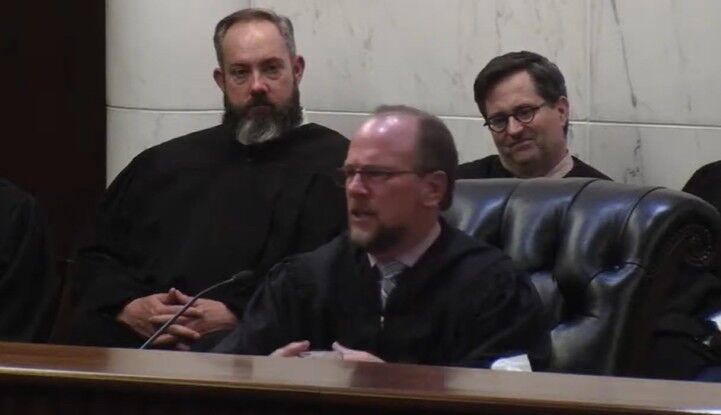
Divided appeals court upholds warrantless DNA collection in Colorado cold case, cautions of government overreach
Michael Karlik
michael.karlik@coloradopolitics.com
Updated 9 hours ago
Colorado’s second-highest court upheld the warrantless collection of a suspect’s DNA from a discarded soda can as constitutional on Thursday, while warning about potential abuse of DNA privacy in the absence of further guardrails. By 2-1, a three-judge Court of...

Democratic gubernatorial candidate Phil Weiser promises to appoint rural outreach director, water adviser
Marianne Goodland
marianne.goodland@coloradopolitics.com
Updated 9 hours ago
Democratic gubernatorial candidate and current Attorney General Phil Weiser told the Colorado Water Congress Thursday he intends to appoint a rural outreach director and a water policy adviser should he win the election in November. Weiser’s speech at the Steamboat...
Man charged in Northglenn homicide of wife
Matt Kyle
matt.kyle@denvergazette.com
Updated 10 hours ago
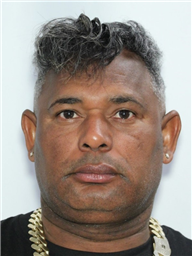
A man has been formally charged with murder and burglary relating to a homicide last week in Northglenn. Alexei Munive-Rodriguez, 48, was arrested Sunday after he was at large following the homicide, which occurred Friday. Police were dispatched around 10:30...

Attorney General candidates present priorities at Colorado Water Congress
Marianne Goodland
marianne.goodland@coloradopolitics.com
Updated 9 hours ago
The two major-party candidates for attorney general — Republican Michael Allen, the district attorney for Teller and El Paso counties, and Democratic Secretary of State Jena Griswold — on Thursday outlined their priorities at the Colorado Water Congress. Griswold attended...

US aircraft carrier arrives in Middle East, relieving long-deployed USS Lincoln
The Associated Press
the-associated-press@coloradopolitics.com
Updated 14 hours ago
WASHINGTON (AP) — The Asia-based USS George Washington aircraft carrier is now operating in the Middle East, the U.S. military said Thursday, relieving a long-deployed carrier following reports of mental health challenges and supply shortages aboard while it was supporting...

Denver named finalist for 2028 Democratic Convention site
Thelma Grimes
thelma.grimes@coloradopolitics.com
Updated 8 hours ago
The Mile High City competes with Boston and Philadelphia The list of cities being considered to host the 2028 Democratic National Convention has narrowed even further, with Denver making the cut as one of the final three, along with Boston...
PREV
PREVIOUS

State Board of Ed member Stephen Varela, a former Democrat, joins GOP primary in Colorado's 3rd CD
Colorado State Board of Education member Stephen Varela on Thursday announced that he’s entering the Republican primary for the congressional seat represented by U.S. Rep. Lauren Boebert, who switched late last year to run in another district. An Army combat veteran and former Democrat from Pueblo, Varela said he believes voters in the 3rd Congressional […]

Proposal allowing Colorado counties to ban flavored tobacco, nicotine products introduced
A bill introduced by the Senate will allow Colorado counties to regulate or prohibit the sale and distribution of flavored cigarettes, tobacco and nicotine products. Senate Bill 24-022 defines flavored nicotine and tobacco products as anything with a scent or flavor other than tobacco itself, including products that induce a cooling or numbing sensation. Citing […]