

Federal judge dismisses challenge to ‘frustrating’ delays in sex offender treatment behind bars
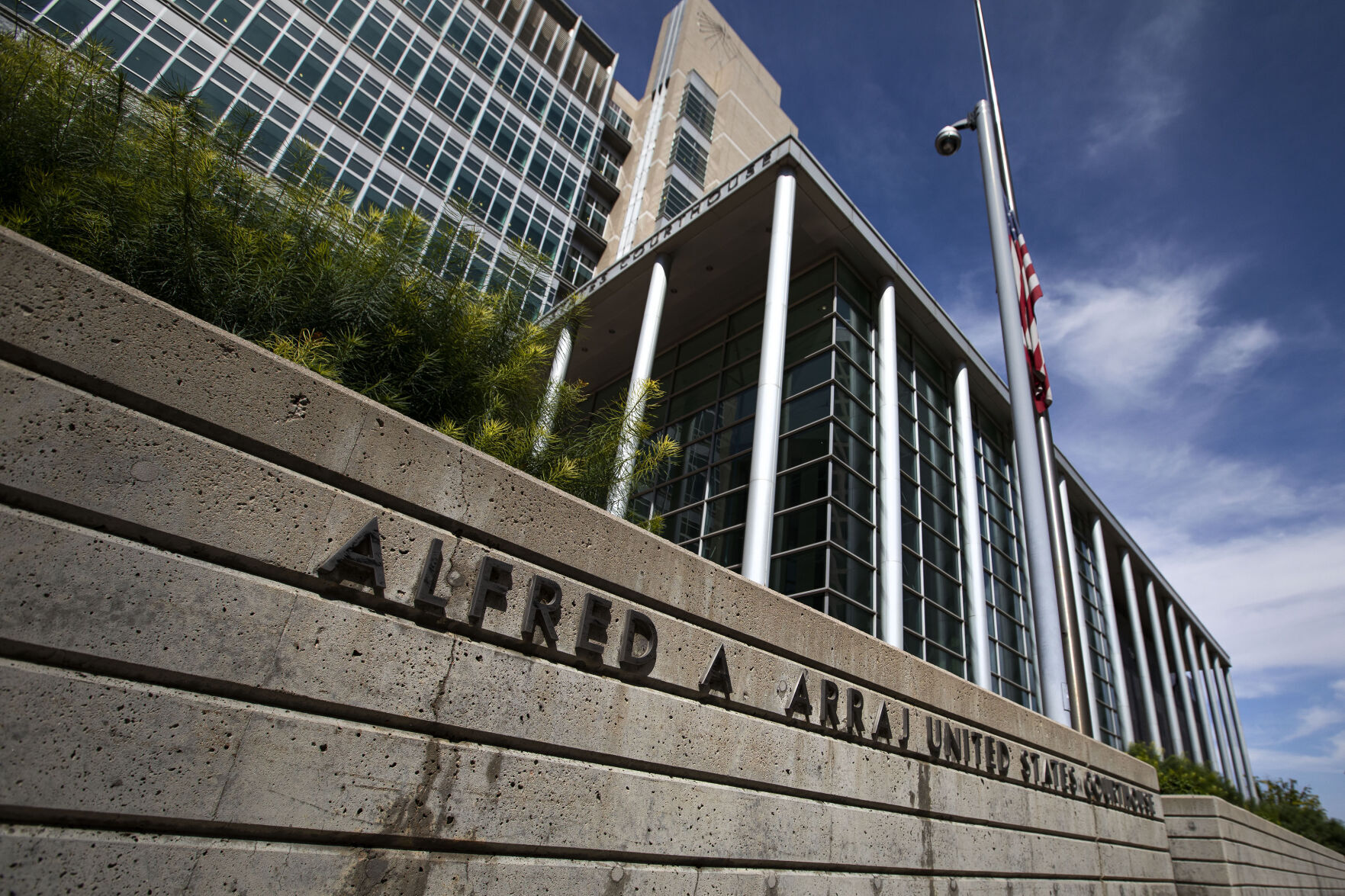
A federal judge recently dismissed an incarcerated man’s challenge to his lack of sex offender treatment in the Colorado Department of Corrections, despite having no idea when he will have access to that mandatory component of his criminal sentence.
U.S. District Court Senior Judge William J. Martínez determined David A. Wismer III did not sufficiently allege Colorado committed a constitutional violation by repeatedly de-prioritizing him for treatment and keeping him incarcerated beyond his parole eligibility date.
“While the Court acknowledges that it must be endlessly frustrating for Plaintiff not to have a date certain on which he will receive treatment, he has not alleged facts showing an arbitrary or capricious scheme that rises to the level of a substantive due process violation,” Martínez wrote in a Nov. 3 order.
Martínez is one of multiple judges in recent months to examine whether it is constitutionally problematic for Colorado to leave prisoners in limbo who require sex offender treatment in order to be eligible for parole. The litigation implicates two connected issues: Colorado’s Sex Offender Lifetime Supervision Act of 1998, which authorizes indefinite sentences up to life, and a backlog of people awaiting treatment in the Department of Corrections.
“The scale of the problem is massive,” said Laurie Rose Kepros, director of sexual litigation with the state public defender’s office. “These are people who have served the time imposed by the judge and – through no fault of their own – remain in the DOC indefinitely at taxpayer expense. There are people who have been in prison for more than 20 years on ‘two-to-life’ sentences. It is unconscionable for Colorado to tell people that if they follow the rules and take the treatment, they will be allowed to rejoin their community, and then to deny them the required treatment.”
Colorado lawmakers enacted SOLSA with an assumption that the “majority” of people convicted of sex offenses will continue to be dangerous unless they are treated and supervised, sometimes for the rest of their lives.
“There is no cure for sex offenders,” claimed then-Rep. Norma Anderson, R-Lakewood. More recent studies have noted the rate of recidivism tends to decrease as a person ages.
According to a Department of Corrections report submitted to the legislature last month, 828 people were newly incarcerated for sex offenses in the past fiscal year. At the same time, only 156 entered treatment. In addition to acknowledging the backlog, the department disclosed that more than half of staff positions in the treatment and monitoring program are vacant.
Given those constraints, Wismer alleged he may never receive treatment in his lifetime, amounting to a violation of his constitutional right to due process.
Wismer pleaded guilty to a sex offense in 2018 in El Paso County. He received a sentence of four years to life on sex offender probation, requiring him to receive treatment. Wismer’s complaint alleged he was making “substantial progress” in treatment until late 2019, when he committed a probation violation. A judge resentenced Wismer to serve three years to life in prison as a consequence.
Wismer alleged that shortly after his incarceration, the CDOC’s prioritization system for treatment, known as the Global Referral List, designated him as number 140, based on the established criteria of parole eligibility date, risk and good behavior. However, Wismer continued to move lower in priority, first to number 142 and then to number 157, reportedly because people with earlier release dates bumped him in line.

Eventually, Wismer’s parole eligibility date came and went – twice – but parole officials were unable to release him because he had not yet completed treatment.
“As a result, he has not received treatment, it is impossible to know when he will receive treatment, therefore, he cannot be considered for parole and will likely spend the remainder of his life in prison,” his lawyers argued, noting that was not the intent of Colorado lawmakers in passing SOLSA.
The state countered that Wismer’s only concern was the timeliness of his treatment, and he had no constitutional interest in not being moved further down the priority list.
“While that change may be unfavorable for Mr. Wismer, it does not indicate that the Global Referral List is an irrational or arbitrary system,” wrote Ann Stanton and Cole Woodward with the Colorado Attorney General’s Office.
Martínez ultimately agreed with the state about two technical failures of Wismer’s lawsuit: He failed to allege he was totally deprived of treatment at the facility where he resided and he neglected to say whether he ever requested a transfer to another facility where he could receive treatment.
Martínez threaded the needle between recent decisions on the subject from his colleagues. On the one hand, he cited U.S. District Court Judge Daniel D. Domenico, who ruled in February that a detainee does not have a constitutional interest in receiving treatment – even as Domenico acknowledged the backlog was “frustrating” and “a detriment to the people of Colorado.”
On the other hand, Martínez agreed in principle with U.S. District Court Judge Nina Y. Wang, who concluded in May that two men had credibly alleged the state was violating their constitutional rights by depriving them of the ability to complete sex offender treatment as a component of their sentences. Martínez indicated he was “generally in agreement” with her, but Wismer’s case appeared to involve only a delay of treatment, not “deprivation” of treatment.
Martínez permitted Wismer to submit an amended complaint based on his ruling. On Dec. 8, Wismer’s attorneys filed a more detailed list of allegations, explicitly contending that he could not receive any treatment at his current facility, could not transfer to a prison that did offer treatment, and that there were no steps he could take to improve his position on the priority list.
The case is Wismer v. Stancil et al.



10th Circuit rejects invitation for full-court review of tax-avoidance case
Michael Karlik
michael.karlik@coloradopolitics.com
Updated 2 hours ago
The Denver-based federal appeals court declined to reconsider the standards for holding entities liable for their tax-avoidance schemes, with a majority of judges voting against full-court review on Monday. In April, a three-judge panel of the U.S. Court of Appeals...
Colorado judge blasts state forensics lab in dismissing child sex case
Jenny Deam
jenny.deam@gazette.com
Updated 3 hours ago
In a potentially widely consequential action, a Weld County district judge dismissed a child sexual assault case, citing the ongoing scandal at the Colorado Bureau of Investigation’s forensic lab that “has left a dark mark on the history of Colorado...
10th Circuit sympathetic to Colorado consumer protection law governing interest rates
Michael Karlik
michael.karlik@coloradopolitics.com
Updated 1 day ago
Members of the Denver-based federal appeals court appeared sympathetic on Tuesday to Colorado’s assertion that it can lawfully require certain out-of-state banks to abide by the state’s own ceilings on interest rates when they lend to consumers in Colorado. The...

Colorado justices to decide insurance companies’ obligation to disclose relevant policies
Michael Karlik
michael.karlik@coloradopolitics.com
Updated 3 hours ago
The Colorado Supreme Court announced on Monday that it will decide whether an insurance company violated state law by withholding an at-fault driver’s policy for nearly a year when there was no dispute that the policy was not in effect...

Judicial performance evaluations released, Montezuma County judge disciplined | COURT CRAWL
Michael Karlik
michael.karlik@coloradopolitics.com
Updated 2 days ago
Welcome to Court Crawl, Colorado Politics’ roundup of news from the third branch of government. Colorado’s citizen-led judicial performance commissions released their voter narratives for the judges standing for retention in November, plus a disciplinary panel imposed consequences on a...

DA justifies CSPD officers in fatally shooting man at McDonald’s
Cleo Westin
cleo-westin@coloradopolitics.com
Updated 1 day ago
The deadly shooting of a man by Colorado Springs police officers at a McDonald’s was ruled justified by the 4th Judicial District Attorney’s Office on Monday, the office announced in a news release. The ruling determined officers Daniel White, Mitchell...
Federal judge holds off on dismissing formerly bankrupt medical contractor from Jeffco jail death lawsuit
Michael Karlik
michael.karlik@coloradopolitics.com
Updated 24 hours ago
A federal judge declined on Monday to dismiss the formerly bankrupt medical contractor from a lawsuit over a detainee’s death in Jefferson County jail, but indicated she would do so if the plaintiffs’ attorneys go through the process to ensure...
Castle Rock caregiver sentenced after stealing more than $110,000 in jewelry from family
Nicholas Fogleman
nicholas.fogleman@denvergazette.com
Updated 1 day ago
A judge sentenced a Castle Rock caregiver to 90 days in jail after she pleaded guilty to stealing more than $110,000 worth of jewelry from the family of a disabled son under her care. Elsa Montejo-Fuentes, 32, had worked for...
Federal judge green-lights excessive force, retaliation claims for trial against Fort Collins officers
Michael Karlik
michael.karlik@coloradopolitics.com
Updated 4 days ago
A federal judge green-lit a jury trial last week against multiple Fort Collins police officers on claims that they used excessive force on one man who was standing unarmed in his underwear, and retaliated against another man for exercising his...

10th Circuit revives wage violation lawsuit against Papa John’s operator
Michael Karlik
michael.karlik@coloradopolitics.com
Updated 5 days ago
The Denver-based federal appeals court on Tuesday reinstated a former Papa John’s delivery driver’s lawsuit alleging violations of federal and state wage law. Steve Mighell worked for one month at a Denver Papa John’s location in summer 2023. He alleged...
PREV
PREVIOUS

Denver Mayor Mike Johnston's successful campaign to get 1,000 homeless out of city streets cost $45 million
Denver Mayor Mike Johnston on New Year’s Eve claimed his administration reached the goal of getting 1,000 homeless people out of the city’s streets. Johnston, who made curbing homelessness his priority upon taking office in July, vowed to house 1,000 people by Dec. 31. In pursuit of that goal, his administration and Denver officials spent tens of […]

Judicial branch ends 2023 with a bang | YEAR IN REVIEW
Several key developments occurred in the third branch of government this year, ranging from cases of international significance and appeals that reached the nation’s highest court to new initiatives being taken out for a spin. Here is a look at the year’s top issues, decisions and events. Trump off the ballot The Colorado Supreme Court […]