

Aurora public defenders critical of privatization effort
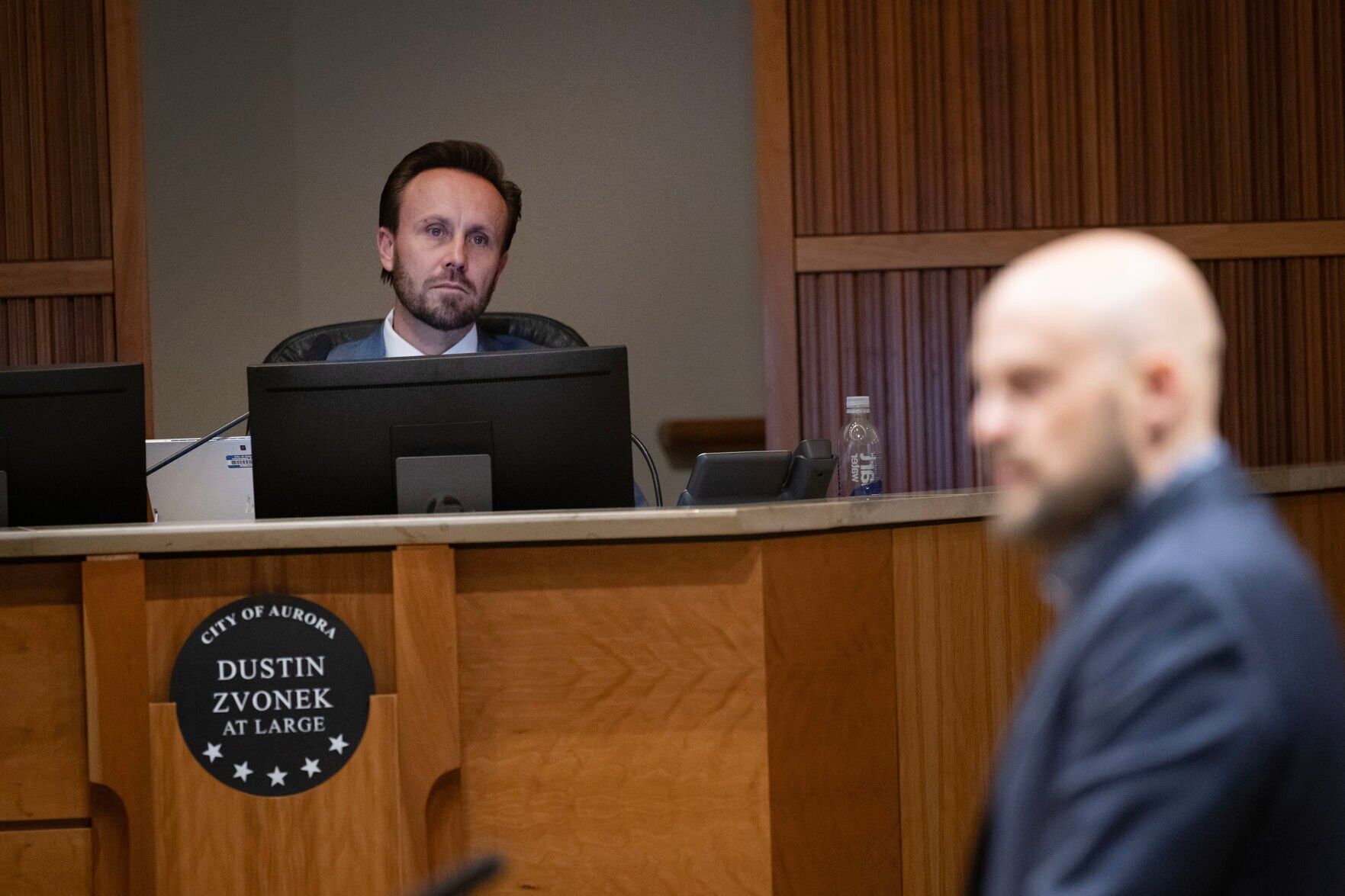
Aurora will send out a request for proposals to determine what the financial effects of privatizing its public defender’s office would be following heated debate at Monday’s City Council study session.
The council originally voted to send out the RFP, which would show whether court-appointed defense counsel would be more cost effective than maintaining the city’s public defense office, in October.
Aurora’s chief deputy public defender, two Aurora councilmembers and other officials identified numerous issues with the RFP, saying that, in its current form, it does not fully encompass the public defender’s role or the extra costs that come with privatization of the office.
Proponents of the RFP in its current form pushed for it to go forward so the council can get an analysis of the costs of privatization to decide whether or not they will go forward.
Privatizing the service would not get rid of access to a public defender for those who qualify but would likely save the city money, said Councilmember Dustin Zvonek. He favors privatization.
The request is for qualified firms interested in contracting with the city to represent indigent people and will go out in early January, with proposals due back by the second week of February.
In March, staff will present findings to the council, at which time it will decide whether to move forward with privatization.
Councilmember Alison Coombs brought in guest speakers to discuss the risks of privatization.
Aurora Chief Deputy Public Defender Elizabeth Cadiz said that privatization of the office impacts the constitutional rights of those they represent.
The current RFP draft does not take into account the quality and constitutionality of services indigent people receive from an in-house public defender’s office and fails to account for costs that tend to come along with privatization – such as increased incarceration costs, Cadiz said.
“The decision that you’re making tonight, and that you’ve already made, impacts the constitutional rights of the people who live in your city and enter the courthouse you run,” Cadiz said.
Aurora Interim City Manager Jason Batchelor said the city is an “outlier” in that almost all other Colorado municipalities, other than Denver, do not have an in-house public defender’s office.
Cadiz asked the council to consider other ways in which Aurora is an outlier.
Only Aurora and Denver have prosecuted well over 1,000 domestic violence cases a year for the last five years, she said, and Aurora is the most diverse city in the state.
“(Diversity is) really important when you’re talking about the constitutional rights of the people who are accused of crime,” Cadiz said, noting the increased risk of criminal charges against those not from the United States. “It’s because we’re an outlier that you should consider with great caution the decisions in this matter.”
The Aurora Public Defender’s Commission wrote a letter to the council opposing the RFP as well, saying the decision to request proposals was made without consulting the commission.
In the letter, the commission states that public defender’s offices cost cities less than privatized systems due to extra costs associated with privatization.
“For example, private defense representation often leads to increased costs on pre-trial and post-sentence incarceration costs, more court delays and continuances, and more unnecessary settings,” according to the letter.
Under private defense models, private counsels don’t have the same partnerships and community resources that public defenders do, it states, meaning they don’t do as much for clients in terms of recidivism.
The ACLU of Colorado also wrote a letter to in advance of Monday’s session to oppose the RFP.
Catherine Ordoñez, the ACLU of Colorado’s policy counsel, said the move toward privatization will cost the city more money and lead to worse representation of Aurora’s indigent residents.
Along with myriad other reasons for opposing the RFP, Ordoñez said privatization would limit government accountability.
Since the public defender’s office is a “repeat player” in the court system with knowledge about misconduct that has taken place in the city and a history of whistleblowing on police and prosecutorial misconduct, privatizing the office should concern the public, she said.
University of Michigan law professor Eve Primus said there is a lot of research showing that flat fee contracts, like that in the RFP, are not necessarily constitutional.
While the language “flat fee contract” is not necessarily mentioned in the RFP, it mentions a fee cap, making it a “flat fee” contract system, Cadiz said.
In flat fee contracts, independent contractors end up with “inherent conflicts” between financial interests and ethical obligations due to their being paid to move through cases quickly and avoid specialty courts rather than being paid for their time, Primus said.
Councilmembers Coombs and Crystal Murillo requested to add details to the RFP that account for some of the extra costs mentioned by guest speakers and those who wrote to the council.
Added details to the RFP do not need to be approved by the council, but need to be brought to the city manager and presiding judge.
Councilmember Danielle Jurinsky said she took offense to the implication that the council wouldn’t take care in choosing competent defense for its constituents.
“This is not solely about money and what potential savings would be, there would have to be a standard,” Jurinsky said. “I also find it very disingenuous to potentially say that there are no public defenders in this area who have access to investigators and can do research and investigations.”
Zvonek said the “disinformation” about the RFP was “wasting everybody’s time,” adding if opponents of the RFP are so sure it will show added costs from privatization, then they should go along with it as quickly as possible so they can move on from the matter.
“There’s so much disinformation about all of this, it’s disheartening,” Zvonek said. “The RFP simply asks the city manager to get us a cost estimate so we can determine whether or not we should have a subsequent conversation.”
Opponents said they do not oppose the RFP as a whole, but rather the RFP without accounting for costs beyond direct services contractors would provide.



Iranians in Colorado weigh in on Khamenei’s death
Mark Samuelson Special to The Denver Gazette
mark.samuelson@denvergazette.com
Updated 16 hours ago
As the joint U.S.-Israeli attack on Iranian targets continued into a second day following the death of leader Ayatollah Khomeini, Iranians living in Denver weighed in, saying they welcome the opportunity for a regime change in the Islamic Republic. “The...

Male wolf dies after capture attempt in Colorado
Marianne Goodland
marianne.goodland@coloradopolitics.com
Updated 14 hours ago
One of the original wolves brought to Colorado from Colorado has died after an attempt to capture it, the’s state wildlife agency said. The Colorado Parks and Wildlife identified the wolf as No. 2305 — meaning it was one of...

Indian Health Service to phase out dental fillings containing mercury by 2027 | OUT WEST ROUNDUP
The Associated Press
the-associated-press@coloradopolitics.com
Updated 2 weeks ago
NEW MEXICO Indian Health Service phases out mercury fillings ALBUQUERQUE — The federal agency that provides health care to Native Americans and Alaska Natives has announced it will phase out the use of dental fillings containing mercury. The Indian Health...

Democrat Michael Bennet turns in petitions for Colorado’s gubernatorial primary, plans to skip caucuses
Ernest Luning
ernest.luning@coloradopolitics.com
Updated 18 hours ago
U.S. Sen. Michael Bennet, a Democratic candidate for governor, submitted nominating petitions for Colorado’s June primary ballot on Friday, his campaign and the Colorado Secretary of State’s Office said. Bennet plans to rely on his petitions to get on the...

Israeli officials say Iran’s Supreme Leader Khamenei is dead. No word from US or Iran
Aamer Madhani
aamer.madhani@associatedpress.com
Updated 2 days ago
DUBAI, United Arab Emirates (AP) — Supreme Leader Ayatollah Ali Khamenei has died in a major attack on Iran launched by Israel and the United States, Israeli officials told The Associated Press on Saturday. There was no immediate comment from...

Colorado Republicans, Democrats clash over Iran military operation
Thelma Grimes
thelma.grimes@coloradopolitics.com
Updated 1 day ago
Colorado’s congressional delegation split sharply along party lines Saturday after the U.S. and Israel attacked Iran, triggering a fresh debate in America over presidential war powers. Trump announced early Saturday morning that U.S and Israeli forces had begun “Operation Epic...

What to know about U.S.-Israel attacks on Iran
The Associated Press
the-associated-press@coloradopolitics.com
Updated 2 days ago
The attack The U.S. and Israel attacked Iran on Saturday in what President Donald Trump said was a massive operation to destroy the country’s military capabilities and eliminate the threat of it creating a nuclear weapon. Iran’s Foreign Ministry said it would...

World leaders react cautiously to US and Israeli strikes on Iran
The Associated Press
the-associated-press@coloradopolitics.com
Updated 2 days ago
BRUSSELS • World leaders reacted warily to U.S. and Israeli strikes on Iran on Saturday that triggered worries of a broader conflict. European leaders held emergency meetings and took measures to protect their citizens in the Middle East, with key leaders calling...

US and Israel launch a major attack on Iran and Trump urges Iranians to ‘take over your government’
The Associated
the-associated@gazette.com
Updated 2 days ago
The U.S. and Israel launched a major attack on Iran on Saturday, and President Donald Trump called on the Iranian public to “seize control of your destiny” by rising up against the Islamic leadership that has ruled the nation since 1979. Some of the first...

Additional thoughts on State of the Union address/rally | Cronin and Loevy
Tom Cronin Bob Loevy
tom-cronin-bob-loevy@coloradopolitics.com
Updated 2 days ago
The U.S. Constitution’s Article II states that “He (the president) shall from time to time give to the Congress Information of the State of the Union, and recommend to their Consideration such Measures as he shall judge necessary and expedient...
PREV
PREVIOUS

Former US senator, CU prez Hank Brown endorses Republican Scott James in Colorado's 8th CD primary
Former U.S. Sen. Hank Brown on Wednesday endorsed Weld County Commissioner Scott James in the Republican primary in Colorado’s 8th Congressional District. James is one of three Republicans running for the nomination to challenge first-term U.S. Rep, Yadira Caraveo, a Thornton Democrat, in the state’s newest congressional district. “Scott James will be a great Congressman,” […]

10th Circuit tosses 'frivolous' claims against Dominion Voting brought by Michigan residents
The federal appeals court based in Denver agreed on Wednesday that a handful of Michigan residents lacked standing to sue Dominion Voting Systems, Inc. solely because they each received a letter asking them to stop making defamatory statements about the election technology supplier. Dominion, which is headquartered in Colorado, became the subject of election-rigging conspiracies […]