

Could Weiser or Bennet as governor each be an improvement over Polis? | Miller Hudson
The weekend before last was a forerunner to numerous forums and debates where U.S. Sen. Michael Bennet and Attorney General Phil Weiser will jostle for position in the Democratic primary for governor. The victor seems certain to be headed to the governor’s mansion on 8th Avenue. Advertised as a discussion focused on Colorado’s Housing & Transportation issues, this forum attracted an eclectic assortment of sponsors from grassroots activists to Shea homebuilders as well as the American Automobile Association. Capably moderated by genial AAA lobbyist and government affairs manager Skyler McKinley, the format consisted of 30 to 40 minutes of questioning from designated experts on housing and then transportation.
Nearly 300 citizens showed up on another balmy Saturday afternoon at the Denver Athletic Club. I’m conflicted about what the best format may be for showcasing candidates, but this probably wasn’t the most enlightening. Assigning the questioning to sponsors confines the discussion to elite rather than public concerns. I suspect the two stakeholder caucuses huddled beforehand to develop their respective queries, which seemed to skip over several burning conflicts blazing at the Capitol this session. It’s always useful for voters to witness how adeptly candidates handle questions from an audience. There are usually a few concerns which fly in from far right or left field that test both the experience and often the patience of aspirants.
As an example, I happened to be in Pagosa Springs in 2002, as Wayne Allard was seeking re-election to the U.S. Senate in a rematch with his 1996 opponent, attorney and lobbyist Tom Strickland. The senator was conducting a town hall meeting, so I decided to drop by. He was taking questions when an older man stood up, quite evidently exercised and quivering with anger. A retired federal worker, he was furious about changes that had severely reduced his retirement benefits. Allard replied, “I’m glad you’re here this morning,” chuckling sympathetically, “We don’t understand what they’ve done or why, but I know it’s a problem and quite unfair.” Then, pointing to one of his staffers who was accompanying him, he instructed the complainant, “Please give Lisa your contact information and tell her the full story of what happened to your pension because we need specifics when I return to fight with the bureaucrats about fixing this back in Washington.” He so skillfully defused the situation, I had to shake my head in admiration. Tom Strickland proved toast once more.
The current contest is difficult for Colorado Democrats. Generally, primary voters admire and respect both candidates, who are perceived as having served competently in their respective jobs. They are each gentlemanly combatants and for the most part speak well of one another. While holding their verbal jabs to matters of process — their positions on policy and priorities are frequently indistinguishable. This is a pair of thoughtful, center-left liberals. Weiser emphasizes his on-the-job and in-the-state presence over the past eight years, touting his full-press defense against the Trump regime in court. Wherever he appears, you will hear about his more than 50 lawsuits, many of which have already been decided in Colorado’s favor. As harsh as he gets with his opponent is, “Weiser for Governor, Bennet for Senate.” Approaching caucuses and conventions, Weiser seems to have a slight advantage with rank-and-file Democrats, although commitments to either candidate remain soft.

Bennet, in contrast, explains his candidacy as motivated by a recognition Colorado faces a virtual panoply of immediate challenges that must be resolved by Coloradans — no help, no cavalry is on the way. He frames Weiser’s legal jousting as worthy, but perhaps in his most effective response states, “We can’t sue our way to more affordable housing. We can’t sue our way to better roads. We can’t sue our way to solutions.” Arriving at the forum with a severe case of laryngitis, his rasping voice carried an emotional intensity that was surprising. He frames his agenda as a search for “social justice” that affords every citizen an opportunity to own a home, hold a decent job and raise their family. When a recent study was cited that predicts Colorado will need to build 511,000 new housing units before 2050, the senator emphasized this can’t be achieved with a one-size-fits-all policy, in what appeared a backhanded swipe at the legislature.
Both clarified market-rate housing isn’t necessarily working-class housing. The problem is blue-collar families can’t afford market-rate housing. Weiser noted virtually no truly low-cost housing has been constructed in Colorado since the Great Recession of 2008. Bennet went so far as to say he intends to serve as Colorado’s housing czar if elected governor. He also took a swipe at his fellow “Boomers” who have been content to drive up housing prices as a means of preparing for retirement. Both supported the notion of financial incentives for low-cost and modular housing units. With little hope of assistance from Washington before the 2028 election, neither translated reliance on incentives into the more familiar “taxes.”
The same went for the discussion of transportation needs. In the week when CDOT reported it was scrounging for funding to maintain its popular Bustang shuttle services past 2026, although serving fewer than 1% of passengers along their highway corridors, we also discovered USDOT is clawing back $60 million appropriated for implementing Front Range Rail. Little wonder Front Range Passenger Rail is looking to be bailed out by RTD. When asked whether they supported a pending ballot initiative that would earmark additional dollars for roads, both men seemed honestly unfamiliar with the specifics of this proposal which has local government leaders running around with their hair on fire. In any case, they each agreed we would need to start spending more to restore Colorado roads. This also sounds like more taxes.
The proposed Mountain Rail which will extend ski train service past Winter Park and on to Craig, only year-round, earned a shout-out from both candidates. It seems unlikely it will pay for itself any more than Bustang does, which presents another fiscal challenge for CDOT. Don’t expect significant congestion relief along Interstate 70. Mountain rail service will only divert one-tenth of 1% of autos from the Interstate. What did distinguish both candidates’ remarks was their use of the words cooperate and coordinate with respect to local government. Consultation with local elected officials would be a refreshing change of style after eight years when Colorado’s governor has functioned as the smartest person in every room he enters, wherever the room or whatever the subject — constituting a majority of one.
As the forum adjourned, a former legislator now returned to private life curtly observed, “One thing is certain. Whoever wins will provide a substantial improvement.” Jared Polis is not popular among his Democratic colleagues on the second floor of the Capitol. Michael Bennet’s desire for a “just society” where Colorado’s kids can afford to live and prosper is hard to quarrel with. And Phil Weiser’s commitment to “servant leadership” sounds equally promising. A Democratic primary vote in June will prove far more important than your November choice. Listen carefully now and choose wisely. This advice also goes for unaffiliated voters who opt to cast a Democratic ballot.
Miller Hudson is a public affairs consultant and a former Colorado legislator.


Colorado students push AI task force as schools navigate new tech era
Marissa Ventrelli
marissa.ventrelli@coloradopolitics.com
Updated 3 hours ago
A group of students is urging lawmakers to establish a task force on artificial intelligence in education to advise districts on how to ensure that students and educators use the technology effectively without becoming overly reliant on it. The students...
A right to buy a product? | Hal Bidlack
Hal Bidlack
hal-bidlack@coloradopolitics.com
Updated 16 hours ago
A recent story in Colorado Politics caught my eye, as I learned of a “citizen initiative” that has qualified for the November ballot. It seems supporters of Initiative 177 have collected enough signatures, 146,165 legitimate ones out of a total...
Fourteen years after Aurora — we can’t afford to go backward | GUEST COLUMN
Colorado Politics
colorado-politics@coloradopolitics.com
Updated 16 hours ago
By John Hickenlooper and Gabby Giffords Two Saturdays ago, a gunman shot and killed three people and wounded several others in Twin Falls, Idaho. This latest deadly shooting comes only days after we remembered the lives we lost 14 years...

U.S. Rep. Lauren Boebert’s son arrested, faces charges of sexual exploitation of minor
Matt Kyle
matt.kyle@denvergazette.com
Updated 20 hours ago
U.S. Rep. Lauren Boebert’s son Tyler Jay Boebert has been arrested and accused of recording and sharing a video depicting himself having intercourse with a minor, according to court records. The case originated in Garfield County in Western Colorado and...
Hunter shot Colorado wolf after mistaking it for a coyote, wildlife office says
Marianne Goodland
marianne.goodland@coloradopolitics.com
Updated 22 hours ago
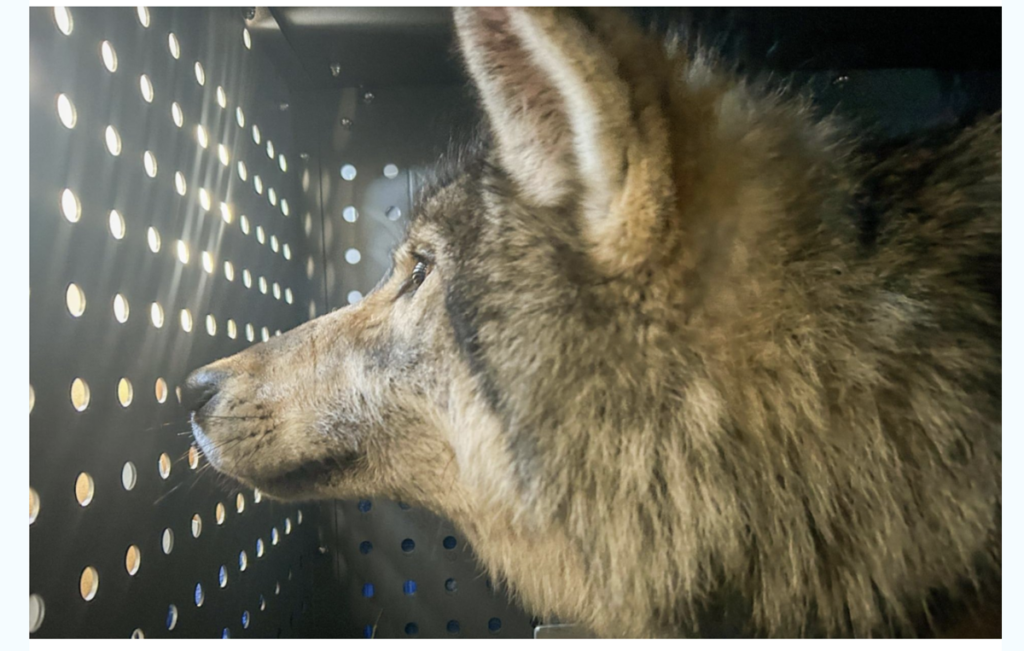
Colorado Parks and Wildlife said Monday that a female wolf from British Columbia that died in January was shot by a hunter who mistook her for a coyote. The wolf, identified as 2504‑BC, was one of 17 wolves relocated since...

A daring and fearless rescuer — is afraid of a debate | Dick Wadhams
Dick Wadhams
dick-wadhams@coloradopolitics.com
Updated 3 days ago
Victor Marx, the Republican nominee for governor who says he can exorcize demons and who claimed he has fearlessly rescued 45,000 women and children during 150 “high-risk” missions around the world, appears to be intimidated by the notion of debating...

Colorado’s ballot-initiative process again a battleground for deep pockets, special interests — not the people | Miller Hudson
Miller Hudson
miller-hudson@coloradopolitics.com
Updated 1 day ago
The Oxford English Dictionary defines a constitution as, “The set of fundamental principles according to which a state is constituted and governed, a body of rules prescribing the major elements of the structure and activities of any organization.” Somewhere in...

Colorado’s troubled guardianship office pursues ‘cultural reset’
Marianne Goodland
marianne.goodland@coloradopolitics.com
Updated 19 hours ago
Colorado’s guardianship program, long criticized for mismanagement and high staff attrition, is undergoing a “cultural reset,” as its new director works to repair partnerships and prepare for a major expansion under recent legislation. Created by lawmakers in 2017, the Office...

Colorado Democrats, your time is coming | Jon Caldara
Jon Caldara
jon-caldara@coloradopolitics.com
Updated 3 days ago
Hey, Colorado Democrats! All the fun you’ve had watching Republican dysfunction in Colorado for the last 20 years was just a preview of what is about to happen to you. The Colorado Republican Party no longer exists as a competitive...

Democratic group aims Spanish-language TV ad at Gabe Evans in Colorado’s battleground 8th CD
Ernest Luning
ernest.luning@coloradopolitics.com
Updated 4 days ago
A national group tied to House Democratic leadership launched a six-figure Spanish-language TV ad in Colorado this week targeting Republican U.S. Rep. Gabe Evans and the GOP’s signature budget legislation. The 30-second spot is part of $15 million in new...
PREV
PREVIOUS

Poison, poultry and prostitution — the Colorado legislature marches on | Rachel Gabel
Many weeks my search history is odd but the past two weeks might worry our county sheriff if he didn’t know me as well as he does. This week has been the week of poison, poultry and prostitution. Not to be confused, of course, by brodifacoum, beavers and butorphanol. In other words, the Colorado legislature […]

Competing overtime bills for agriculture workers split Colorado Democrats
Competing bills setting the overtime threshold for farmworkers have split legislators at the Colorado state Capitol, with one group saying a law passed in 2021 has harmed, rather than helped, farming operations and workers alike, while the other side insists that farmworkers should be treated like any other employee. The first group, which is bipartisan, […]