

Pear Harbor Day memories of a grandfather who defended America in 3 wars | LOEVY
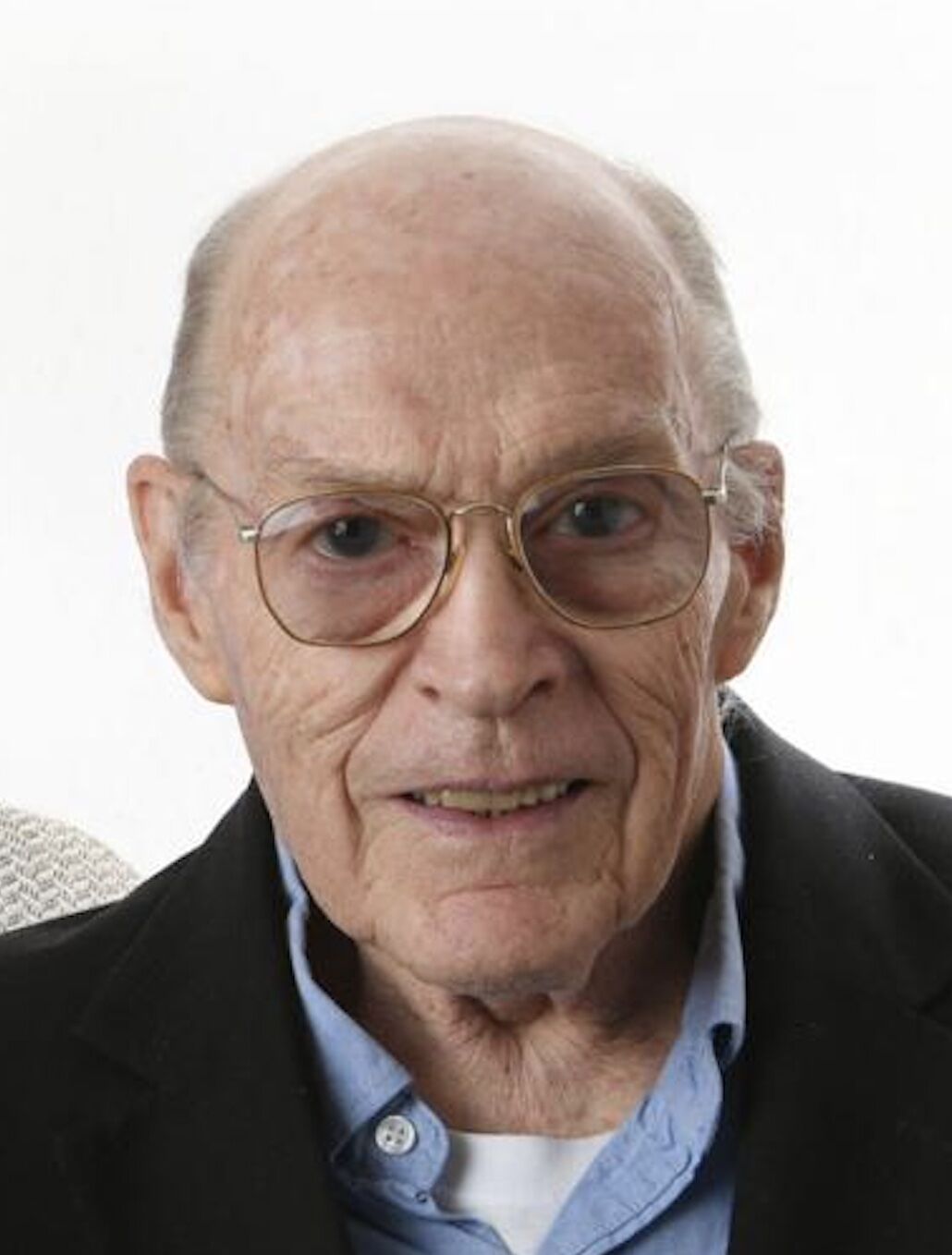

Thursday marked the 82nd anniversary of the Japanese attack on the U.S. Naval Station at Pearl Harbor. It was that raid, launched from aircraft carriers, that brought the United States into World War II.
Pearl Harbor Day brings back memories of my grandfather, Perry Topping, a man who served his country in three different major wars.
He served in the U.S. Navy in the Spanish-American War. He was in the U.S. Army in World War I. During World War II, he was the top civilian employee in the U.S. Army Transportation Corps, working at the War Department building on Constitution Avenue in Washington, D.C.
Later in the war, his office moved to the newly opened Pentagon building in northern Virginia.
Perry Topping was only 18 years old when he served in the U.S. Navy during the Spanish-American War aboard the auxiliary cruiser U.S.S. Yale. The ship plied the Atlantic Ocean, taking U.S. Army troops to battle on the islands of Puerto Rico and Cuba. He was in service from May 22 to September 12, 1898.
He described his naval squadron at sea as one of the finest sights he ever witnessed. “The ships were sailing along, nearly two abreast, with the Yale nearly at the head of the column. Although one could see miles and miles on the ocean, the last ships of the squadron were not in sight.”
Topping witnessed the bombardment of SS Morro Castle. He also was aboard the Yale when it was chased by the Spanish warship Alphonso XIII, with the cruiser Yale in the lead. Fortunately, the Yale could steam faster than the Spanish warship and escaped capture.
The Yale’s captain, however, “during the most critical exigencies of the chase, stood be the sea valves ready to sink the Yale rather than surrender his ship to the enemy.”
Stay up to speed: Sign-up for daily opinion in your inbox Monday-Friday
After the peace protocol was issued, the Yale was sent to the U.S. Navy shipyard in New York. The seamen were paid and sent to their homes. A short time afterward, Topping received his discharge papers from the Navy.
After the war, he became an on-the-job trained civil engineer for the Saint Louis-San Francisco railroad, known as the “Frisco.” He worked his way up to chief engineer at the Frisco and became familiar with both the capacity and the problems of the American railroad industry.
Topping was about 37 years old when he served in the U.S. Army during World War I. He was a captain in the 5th Engineers. He saw military combat in the trenches in Europe and was wounded in a poison gas attack by the Germans.
For the remainder of his life, he wore a silver medallion in his lapel buttonhole to mark his service in World War I. The silver color indicated he had been wounded in action.
Because of his knowledge and experience in railroading, Topping was hired after World War I to work for the Interstate Commerce Commission, the government agency in Washington, D.C., that regulated and promoted American railroads.
When Japanese airplanes attacked the United States naval base at Pearl Harbor, Hawaii, on Dec. 7, 1941, Topping and his wife Lois were already living in Washington, D.C. The army hired Topping to be the resident expert on how best to manage American railroads to be able to win the war.
His immediate superior and working partner at the Army Transportation Corps was the U.S. Army general in charge of seeing the weapons and supplies needed to win World War II – rifles, ammunition, tanks, warplanes, jeeps, trucks, gasoline, etc. – were successfully transported to the major battle areas, both in Europe and the South Pacific.
The job involved organizing and supervising railroad operations, highway trucking, ocean shipping and air freight.
It was said in the family that Topping had been offered a commission in the U.S. Army and the right, despite his advanced age, of doing the job as a military officer in uniform. The story was that he turned the commission down, preferring to work as a civilian.
As an Army officer, Topping reasoned, he could not say no and argue with his military superiors about the wisdom of various proposed military actions. As a civilian, however, he could give his opinions freely and provide strong criticism of what the army “brass” was proposing to do.
Apparently that independence of thought became important. According to a family story, one general, anxious to win World War II quickly, ordered a passenger ship leaving for Europe to be loaded with every U.S. soldier possible, way overcrowding the boat.
Topping realized the main result of putting so many soldiers in one ship would produce mainly illness and disease, not fighting men, by the time the ship arrived in Europe.
He mobilized the Surgeon General of the United States and other medical personnel based in Washington, D.C., to get the general’s order countermanded and the boat properly loaded with the correct number of military personnel.
The job of being the top civilian employee in the Army Transportation Corps was taxing for a man in his early 60s. Topping would work an eight-hour day, come home at 5 p.m., take a nap, eat dinner with Lois and then go back to the office and work until 10 p.m., or so.
His office was in the War Department, a large building on Constitution Avenue in downtown Washington that served as the national headquarters for the U.S. Army.
Toward the end of the war, as the Germans and Japanese were being defeated, Topping’s office was moved to the Pentagon, the giant office building in northern Virginia erected during World War II to house all the U.S. military commands in one structure.
In the course of his work, Topping met many of the great U.S. military leaders of World War II and heard many stories about them. He noted Dwight D. Eisenhower, the commanding general of all the Allied armies in Europe, was known as “The Smile” because of the pleasant and friendly attitude he maintained with all of America’s World War II allies, no matter how grim the immediate military situation might be.
In the meantime, Topping’s wife Lois was serving as a Grey Lady, helping to wrap bandages and otherwise attend to the needs of wounded American soldiers, sailors and airmen in the military hospitals in Washington, D.C.
Perry Topping passed away 11 years after World War II ended, on Oct. 17, 1956. He was buried with full military honors in Arlington Cemetery in Virginia, just across the Potomac River from Washington, D.C., and close by the Pentagon.
Bob Loevy is a retired professor of political science at Colorado College.

Not-so-public comment in Douglas County | Paula Noonan
Paula Noonan
paula-noonan@coloradopolitics.com
Updated 9 hours ago
Let’s do some high and low history. First, the high history. England’s King George III didn’t like the complaining he heard from the American colonies, so he went to war to shut the people up. President Donald Trump doesn’t like...
Why Colorado should stop charging swipe fees on sales taxes | OPINION
Colorado Politics
colorado-politics@coloradopolitics.com
Updated 22 hours ago
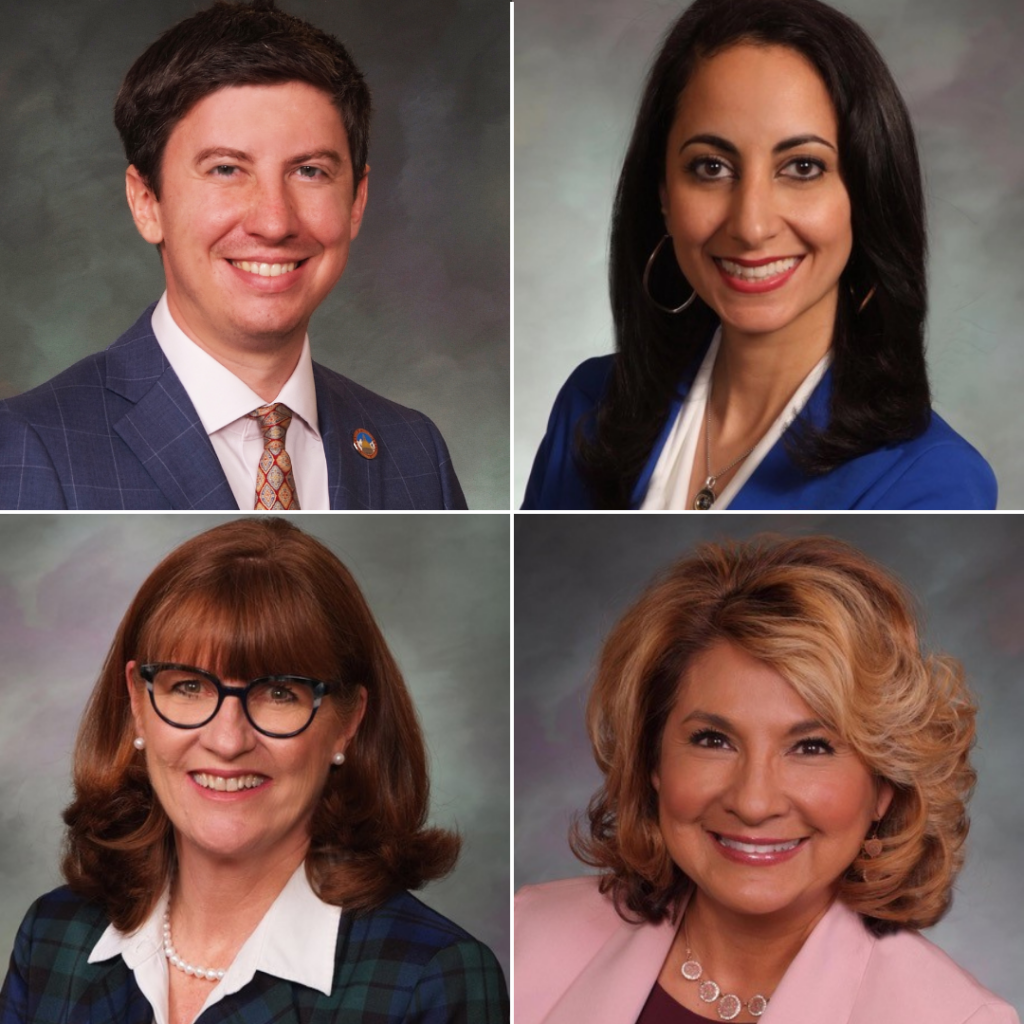
By William Lindstedt, Iman Jodeh, Julie McCluskie and Monica Duran Small businesses across Colorado are working harder than ever right now to keep their doors open, hire local workers and serve their communities. But every day, they are forced to...

Colorado can be a gamechanger in regulating GLP-1 weight loss drugs | OPINION
Colorado Politics
colorado-politics@coloradopolitics.com
Updated 22 hours ago
By Nancy Glick “As goes California, so goes the nation” is a phrase reflecting California’s reputation as a bellwether in setting regulations that often become a precedent for national policy. Now, Colorado can play this role, setting new safety standards...
Colorado can be a gamechanger in regulating GLP-1 weight loss drugs | OPINION
Colorado Politics
colorado-politics@coloradopolitics.com
Updated 22 hours ago
By Nancy Glick “As goes California, so goes the nation” is a phrase reflecting California’s reputation as a bellwether in setting regulations that often become a precedent for national policy. Now, Colorado can play this role, setting new safety standards...

The public health hazards in sports betting | PODIUM
Colorado Politics
colorado-politics@coloradopolitics.com
Updated 9 hours ago
By Brandon Zelasko As Colorado lawmakers revisit sports betting policy this session, the state has an opportunity to widen the lens. Beyond revenue projections and regulatory frameworks lies a critical question: Are we fully reckoning with the human effect of...
Colorado’s public lands are not for sale | OPINION
Colorado Politics
colorado-politics@coloradopolitics.com
Updated 2 days ago
By Jonathan Houck Our state is defined by its public land. It shapes our communities, our economy and our Colorado way of life. Just driving through Gunnison County, where I have lived for more than 30 years, sometimes I can’t...
The real impact of regulations on businesses, employees and Colorado’s way of life | OPINION
Colorado Politics
colorado-politics@coloradopolitics.com
Updated 3 days ago
By Loren Furman and Steve Swinney Every day in Colorado, business owners are faced with decisions most people never see, shaped by rising costs and a regulatory environment that has grown more complex over time. Those choices eventually reveal themselves...
Should we have recall votes for all Colorado elected officials? | Hal Bidlack
Hal Bidlack
hal-bidlack@coloradopolitics.com
Updated 3 days ago
As I write this on the Sunday before you read it, we’ve just learned of the first American casualties of our, what — war? conflict? attack? — on Iran. The Supreme Leader of Iran, for the past 36 years or...
Colorado legislature should not reverse lottery modernization | OPINION
Colorado Politics
colorado-politics@coloradopolitics.com
Updated 3 days ago
By Bill Clayton Four years ago, the Colorado General Assembly passed bipartisan legislation to modernize the state’s lottery system and strengthen funding for Colorado’s outdoor projects and open spaces. Lawmakers recognized a simple reality: consumer behavior has evolved. Most Coloradans...

Could Weiser or Bennet as governor each be an improvement over Polis? | Miller Hudson
Miller Hudson
miller-hudson@coloradopolitics.com
Updated 10 hours ago
The weekend before last was a forerunner to numerous forums and debates where U.S. Sen. Michael Bennet and Attorney General Phil Weiser will jostle for position in the Democratic primary for governor. The victor seems certain to be headed to...
PREV
PREVIOUS

Denver’s mayor is off to a fitful start | Denver Gazette
Between his boyish looks and his early start in politics, critics once looked upon Mike Johnston as the proverbial young man in a hurry. But now 49 years old and Denver’s mayor, Johnston no longer seems all that young. Given his slow and meandering pace in picking the key people needed to run Denver City […]

Insurrection corrections | CALDARA
Jon Caldara Yes, it was an insurrection. Let’s call it what it was – an insurrection designed to prevent duly elected lawmakers from moving forward with the people’s will. Thousands stormed the Capitol. Doors were ripped from hinges. Law enforcement was overwhelmed. Despite the optics of spontaneousness, the event was planned well in advance. And though […]