

The reckoning over property taxes is here | Grand Junction Daily Sentinel

In the wake of Proposition HH’s rejection at the ballot box, state lawmakers passed a short-term property tax relief package during the recent special legislative session, but Gov. Jared Polis is asking local governments to play a role in lowering tax bills.
On Nov. 20, the state passed a bill to lessen the impact of rising property taxes on Coloradans by reducing the assessment rate to 6.7% and subtracting the first $55,000 in a primary home’s value. Now, where possible, Polis is urging taxing districts to drop mill levies – something he says they can now do without risking the notorious “ratchet-down effect” of yesteryear. If valuations dip or flatten out, districts can float their mills back upward.
“It’s up to our local elected officials to reach that balance” between affordability and each taxing entity’s core functions, Polis said at Colorado Mountain College in Breckenridge on Thursday.
We noted that Prop HH’s failure would likely result in more discretion for local taxing districts. Prop HH called for using surplus state TABOR revenue to backfill all local governments for a 10-year drop in the state’s assessment rate and an increase in the exemption. Voters were clear that they didn’t want any alteration of the current TABOR formula.
Stay up to speed: Sign-up for daily opinion in your inbox Monday-Friday
But unlike HH, the stop-gap legislative bill that passed did not include a provision to backfill all budgets – only school districts and certain special districts, such as fire and ambulance services. So now elected officials have to decide if they can get by on less than what they’re entitled to by adjusting mill levies downward.
Reaction has been interesting to say the least. On one hand, circumstances have dictated local control and local solutions – generally considered an improvement over the Legislature’s propensity for statewide solutions. But some critics feel any burden on local governments due to a failure to provide permanent and equitable property tax relief is unfair.
Mesa County Commissioners are no strangers to dealing with the prospect of excess revenues under TABOR. Last year, for example, the county issued refunds to taxpayers through direct checks to all registered voters in the county. It did that because most of the excess stemmed from sales tax.
This year, higher valuations are expected to provide the lion’s share of excess revenue, so a reduction in mills is a possibility.
“We are looking at all our options to save our residents the maximum amount of money possible, and lowering the mill levy will be considered,” said Commissioner Bobbie Daniel.
That, in our estimation, is an appropriate local solution.
But Polis has asked school districts to consider lowering mills for non-instructional bonds or mill levy overrides since the property tax relief bill backfills school districts and the proposed budget increases per-pupil funding. His proposal drew a quick and critical response from District 51 Board of Education President Andrea Haitz.
“The notion that such reductions won’t affect teacher pay or classroom instruction is optimistic at best. The intricacies of budgeting for school districts are far more complex, and your proposal oversimplifies the potential consequences. It’s disingenuous to assume that the suggested cuts won’t have a ripple effect on the overall quality of education and the well-being of educators,” she wrote to the governor.
Considering that D51’s per-pupil funding will still rank 174 out of 178 districts in Colorado, we think Haitz makes a strong point.
Meanwhile, pressure mounts for the bipartisan Property Tax Task Force established during the special session to devise long-term, locally driven solutions to property taxation in Colorado.
Grand Junction Daily Sentinel Editorial Board
Read the original article here.

Not-so-public comment in Douglas County | Paula Noonan
Paula Noonan
paula-noonan@coloradopolitics.com
Updated 12 hours ago
Let’s do some high and low history. First, the high history. England’s King George III didn’t like the complaining he heard from the American colonies, so he went to war to shut the people up. President Donald Trump doesn’t like...
Why Colorado should stop charging swipe fees on sales taxes | OPINION
Colorado Politics
colorado-politics@coloradopolitics.com
Updated 1 day ago
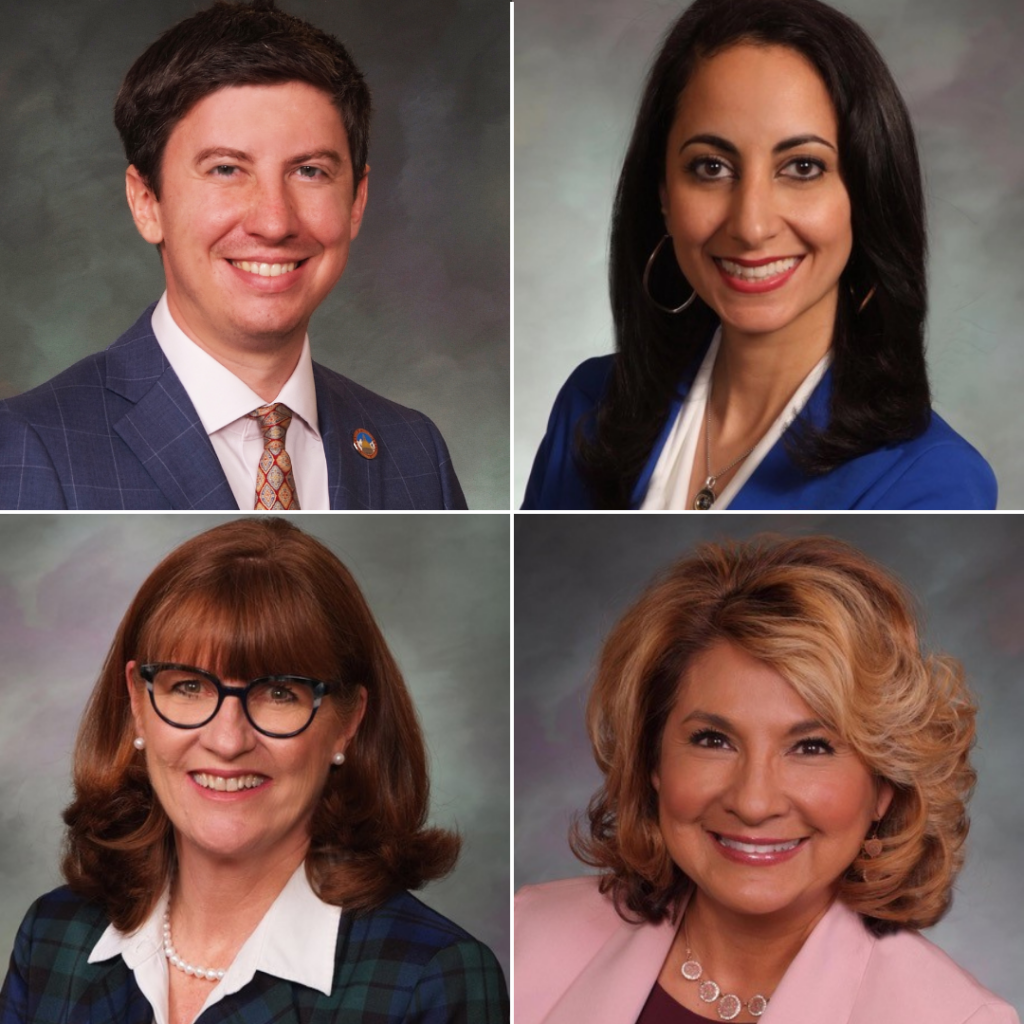
By William Lindstedt, Iman Jodeh, Julie McCluskie and Monica Duran Small businesses across Colorado are working harder than ever right now to keep their doors open, hire local workers and serve their communities. But every day, they are forced to...

Colorado can be a gamechanger in regulating GLP-1 weight loss drugs | OPINION
Colorado Politics
colorado-politics@coloradopolitics.com
Updated 1 day ago
By Nancy Glick “As goes California, so goes the nation” is a phrase reflecting California’s reputation as a bellwether in setting regulations that often become a precedent for national policy. Now, Colorado can play this role, setting new safety standards...
Colorado can be a gamechanger in regulating GLP-1 weight loss drugs | OPINION
Colorado Politics
colorado-politics@coloradopolitics.com
Updated 1 day ago
By Nancy Glick “As goes California, so goes the nation” is a phrase reflecting California’s reputation as a bellwether in setting regulations that often become a precedent for national policy. Now, Colorado can play this role, setting new safety standards...

The public health hazards in sports betting | PODIUM
Colorado Politics
colorado-politics@coloradopolitics.com
Updated 12 hours ago
By Brandon Zelasko As Colorado lawmakers revisit sports betting policy this session, the state has an opportunity to widen the lens. Beyond revenue projections and regulatory frameworks lies a critical question: Are we fully reckoning with the human effect of...
Colorado’s public lands are not for sale | OPINION
Colorado Politics
colorado-politics@coloradopolitics.com
Updated 2 days ago
By Jonathan Houck Our state is defined by its public land. It shapes our communities, our economy and our Colorado way of life. Just driving through Gunnison County, where I have lived for more than 30 years, sometimes I can’t...
The real impact of regulations on businesses, employees and Colorado’s way of life | OPINION
Colorado Politics
colorado-politics@coloradopolitics.com
Updated 3 days ago
By Loren Furman and Steve Swinney Every day in Colorado, business owners are faced with decisions most people never see, shaped by rising costs and a regulatory environment that has grown more complex over time. Those choices eventually reveal themselves...
Should we have recall votes for all Colorado elected officials? | Hal Bidlack
Hal Bidlack
hal-bidlack@coloradopolitics.com
Updated 3 days ago
As I write this on the Sunday before you read it, we’ve just learned of the first American casualties of our, what — war? conflict? attack? — on Iran. The Supreme Leader of Iran, for the past 36 years or...
Colorado legislature should not reverse lottery modernization | OPINION
Colorado Politics
colorado-politics@coloradopolitics.com
Updated 3 days ago
By Bill Clayton Four years ago, the Colorado General Assembly passed bipartisan legislation to modernize the state’s lottery system and strengthen funding for Colorado’s outdoor projects and open spaces. Lawmakers recognized a simple reality: consumer behavior has evolved. Most Coloradans...

Could Weiser or Bennet as governor each be an improvement over Polis? | Miller Hudson
Miller Hudson
miller-hudson@coloradopolitics.com
Updated 12 hours ago
The weekend before last was a forerunner to numerous forums and debates where U.S. Sen. Michael Bennet and Attorney General Phil Weiser will jostle for position in the Democratic primary for governor. The victor seems certain to be headed to...
PREV
PREVIOUS
Yes, Gov. Polis, marijuana kills | Colorado Springs Gazette
For President George H. W. Bush, it was his 1988 campaign pledge, “Read my lips: no new taxes,” that haunted him. Pundits said when he later broke that promise as president, in a budget compromise with congressional Democrats, it helped doom his 1992 reelection bid. For Gov. Jared Polis – a rumored presidential hopeful – […]
Oaths of office and the Trump Colorado ballot-access case | BIDLACK
Hal Bidlack Back in the 1990s, when I was teaching political science at the U.S. Air Force Academy, I was promoted to lieutenant colonel on the same day as another instructor. Now, if you’ve ever been to a military promotion ceremony, you will recall there are parts of the ceremony that are traditional, such as […]