

Denver manslaughter conviction overturned due to constitutional violation
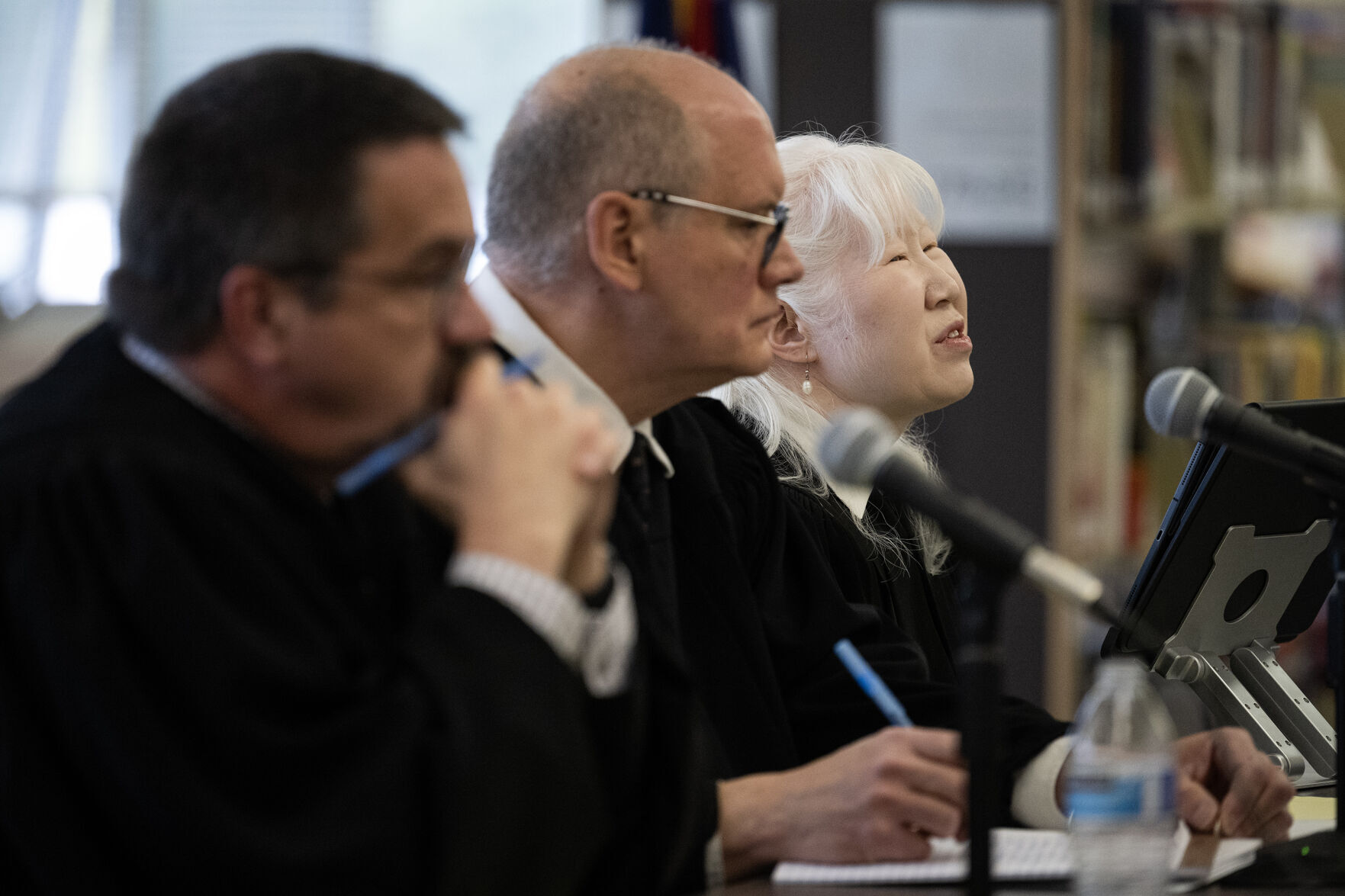
A man convicted of manslaughter in Denver will receive a new trial after the state’s second-highest court determined last month that a judge violated his constitutional right to confront the witnesses against him.
There was no dispute that Donte Carl Ellis physically attacked his mother’s boyfriend, Willie Caldwell, and that Caldwell later died of his injuries. Ellis claimed he was acting in defense of his mother, the alleged victim of domestic violence. Jurors acquitted Ellis of murder, but convicted him of reckless manslaughter. He received a sentence of six years in prison.
Ellis’ mother did not testify at trial, but the prosecution nonetheless questioned Ellis about statements his mother made previously to police. The mother’s message was that Ellis had not, in fact, acted to protect her, and instead “just went off” on Caldwell.
A three-judge panel for the Court of Appeals concluded the prosecution’s extensive use of the mother’s testimony was improper because the defense had no way of cross-examining her and letting jurors assess her credibility.
“And cross-examining the police officers or detectives would be ineffective and insufficient confrontation because law enforcement had no personal knowledge of whether mother told the truth about the events of that day or the reasons why she might have lied,” wrote Judge Sueanna P. Johnson in the panel’s Nov. 9 opinion.
Case: People v. Ellis
Decided: November 9, 2023
Jurisdiction: Denver
Ruling: 3-0
Judges: Sueanna P. Johnson (author)
John Daniel Dailey
Katharine E. Lum
In February 2018, Ellis arrived at his mother’s apartment and noticed she had an eye injury. He stayed to watch a movie with his mother and Caldwell until his mother told him to leave. Ellis testified he then saw Caldwell slap his mother.
Ellis reacted by attacking Caldwell, kicking him until he stopped moving. While his mother called 911, Ellis went outside to wait for police. He told officers many times he “killed” and “wanted to kill” Caldwell. Caldwell died of his injuries weeks later.
In Ellis’ telling, his mother had long been abused by her boyfriends and Ellis tried to protect her. Caldwell allegedly assaulted her multiple times, but the mother refused medical treatment and would not speak with police. Ellis said that if he did not intervene after Caldwell’s alleged slap, “I probably would have been at my mom’s funeral instead of being in jail.”
Among the evidence, jurors saw an officer’s body-worn camera footage, but the audio of the mother’s statements to police was redacted. After Ellis testified about the slap and acknowledged he was familiar with what his mother told police, prosecutor Joe Morales asked Ellis about his mother’s statements. Effectively, the exchange illustrated to the jury that her story completely contradicted her son’s:
? “Your mom indicated in all those statements … that there were no problems between her and Willie Caldwell on the morning of Feb. 10, 2018, is that right?”
? “And that you were upset the minute you walked in the door?”
? “You would agree with me your mom says that at no point on Feb. 10, 2018 did William Caldwell put a hand on her?”
Although the defense objected to the hearsay testimony – meaning out-of-court statements intended to prove the truth – District Court Judge J. Eric Elliff allowed the jury to hear it. During closing arguments, Morales told jurors the mother’s testimony showed there was “no domestic violence” and Ellis “just went off the wheels and started punching and kicking” Caldwell.
On appeal, Ellis argued the prosecution violated his constitutional right to confront the witnesses against him. The Colorado Attorney General’s Office countered that jurors were not supposed to accept the mother’s statements as truth, but “merely to consider that she gave a different version of events.”
The Court of Appeals panel agreed Caldwell was deprived of his opportunity to ask his mother, under oath, why she made those statements and whether she was being truthful. Moreover, it would eviscerate Ellis’ claim that he was defending his mother if jurors believed what she told police.
“Essentially, the prosecutor was attempting to have introduced all of mother’s statement that the jury had not heard on the bodycam footage,” Johnson wrote.
Because jurors heard repeatedly, through the mother’s statements, that Ellis attacked Caldwell for no reason, the panel agreed the testimony could have affected the verdict. It ordered a new trial.
Following the decision, the government asked the panel to reconsider, arguing Ellis’ own testimony about assaulting Caldwell established that he committed reckless manslaughter, regardless of anything his mother said.
“Thus, there is no possibility whatsoever, much less a reasonable possibility, that any trial error contributed to Defendant’s conviction,” wrote Assistant Attorney General Josiah Beamish.
The case is People v. Ellis.


Judicial performance evaluations released, Montezuma County judge disciplined | COURT CRAWL
Michael Karlik
michael.karlik@coloradopolitics.com
Updated 9 hours ago
Welcome to Court Crawl, Colorado Politics’ roundup of news from the third branch of government. Colorado’s citizen-led judicial performance commissions released their voter narratives for the judges standing for retention in November, plus a disciplinary panel imposed consequences on a...
Federal judge holds off on dismissing formerly bankrupt medical contractor from Jeffco jail death lawsuit
Michael Karlik
michael.karlik@coloradopolitics.com
Updated 12 hours ago
A federal judge declined on Monday to dismiss the formerly bankrupt medical contractor from a lawsuit over a detainee’s death in Jefferson County jail, but indicated she would do so if the plaintiffs’ attorneys go through the process to ensure...
Federal judge green-lights excessive force, retaliation claims for trial against Fort Collins officers
Michael Karlik
michael.karlik@coloradopolitics.com
Updated 2 days ago
A federal judge green-lit a jury trial last week against multiple Fort Collins police officers on claims that they used excessive force on one man who was standing unarmed in his underwear, and retaliated against another man for exercising his...
10th Circuit revives wage violation lawsuit against Papa John’s operator
Michael Karlik
michael.karlik@coloradopolitics.com
Updated 3 days ago
The Denver-based federal appeals court on Tuesday reinstated a former Papa John’s delivery driver’s lawsuit alleging violations of federal and state wage law. Steve Mighell worked for one month at a Denver Papa John’s location in summer 2023. He alleged...
Colorado appeals judge’s delays in releasing opinions noted by performance commission
Michael Karlik
michael.karlik@coloradopolitics.com
Updated 2 days ago
The citizen-led performance commission that provides guidance to voters about whether to retain members of Colorado’s second-highest court raised concerns by judges and attorneys that Judge Elizabeth L. Harris sometimes struggles with releasing opinions promptly. Harris, who joined the Court...
Colorado judge explores sanctions against DOJ, ICE for rearresting man 4 days after release on bond
Michael Karlik
michael.karlik@coloradopolitics.com
Updated 3 days ago
A federal judge in Colorado is considering sanctions against the government after immigration agents rearrested a man four days after an immigration judge found him suitable for release on bond. On July 28, U.S. Magistrate Judge N. Reid Neureiter ordered...
Divided disciplinary panel censures Montezuma County judge after agreement reached
Michael Karlik
michael.karlik@coloradopolitics.com
Updated 3 days ago
A disciplinary panel formally imposed a public censure, suspension, and further training on Montezuma County Court Judge Ian J. MacLaren on Tuesday by a 2-1 vote. Under constitutional Amendment H, which voters adopted in November 2024, MacLaren was set to...
Colorado’s Western Slope magistrate judges describe unique role in federal judiciary
Michael Karlik
michael.karlik@coloradopolitics.com
Updated 5 days ago
Two of Colorado’s federal judges stationed on the Western Slope spoke to lawyers on Wednesday about their unique roles, the ways their workloads differ, and the need for more criminal defense lawyers to take cases outside the Front Range. “Here...

Denver sues Philip Morris, other tobacco companies over cigarette butt litter
Deborah Grigsby
deborah.smith@denvergazette.com
Updated 4 days ago
Denver is demanding that some of the biggest tobacco companies in the world pay for the cleanup of discarded cigarette butts on its streets, following a similar campaign that cities in other states have pursued. Denver’s lawsuit, filed this week...
Federal judge rules that request for bond hearing not necessary to challenge immigration detention
Michael Karlik
michael.karlik@coloradopolitics.com
Updated 3 days ago
A federal judge in Colorado ruled last week that it is not mandatory for a person to seek a bond hearing with an immigration judge before they challenge the lawfulness of their detention in federal court. For the past year,...
PREV
PREVIOUS

Colorado River Drought Task Force offers slate of potential fixes to drought-proof ailing waterway
Colorado could spend millions more to replace water-hungry lawns, keep extra water in streams to protect fish and their habitats, and repair water-wasting farm and city delivery systems, according to a list of potential fixes from a state task force hoping to drought-proof the Colorado River. The 17-member panel finished its preliminary list of recommendations […]

Two former longtime legislators join crowded GOP primary in Colorado's 4th Congressional District
The field of Republicans running to replace retiring U.S. Rep. Ken Buck in Colorado’s 4th Congressional District grew on Thursday, as former state Sens. Jerry Sonnenberg and Ted Harvey threw their hats in an already crowded ring. The announcements bring to six the number of declared GOP candidates for the heavily Republican seat, which covers […]