

Survey finds Western ag producers willing to engage in water conservation, with caveats
A new survey finds Western ag producers hold significant concerns about future water shortages, with 80% of respondents saying their greatest concern centers on the potential for new constraints on water use.
The survey also found that 70% of agricultural water users are already responding to water shortages through one or more water conservation strategies.
The survey conducted by the University of Wyoming asked more than 1,000 ag producers in six of the seven states on the Colorado River about their strategies for water conservation, as well as the barriers they face.
The 1,020 respondents mostly came from the Upper Colorado River Basin states of Wyoming, Utah, New Mexico and Colorado, with the largest group of respondents, 460, from Colorado.
Survey respondents worry about water use constraints was followed by concerns on water management policy.
Respondents also indicated concerns over the high costs of water and water saving-technology. The also articulated worries about an inability to continue their operations, particularly in the Lower Basin states of Arizona and California.
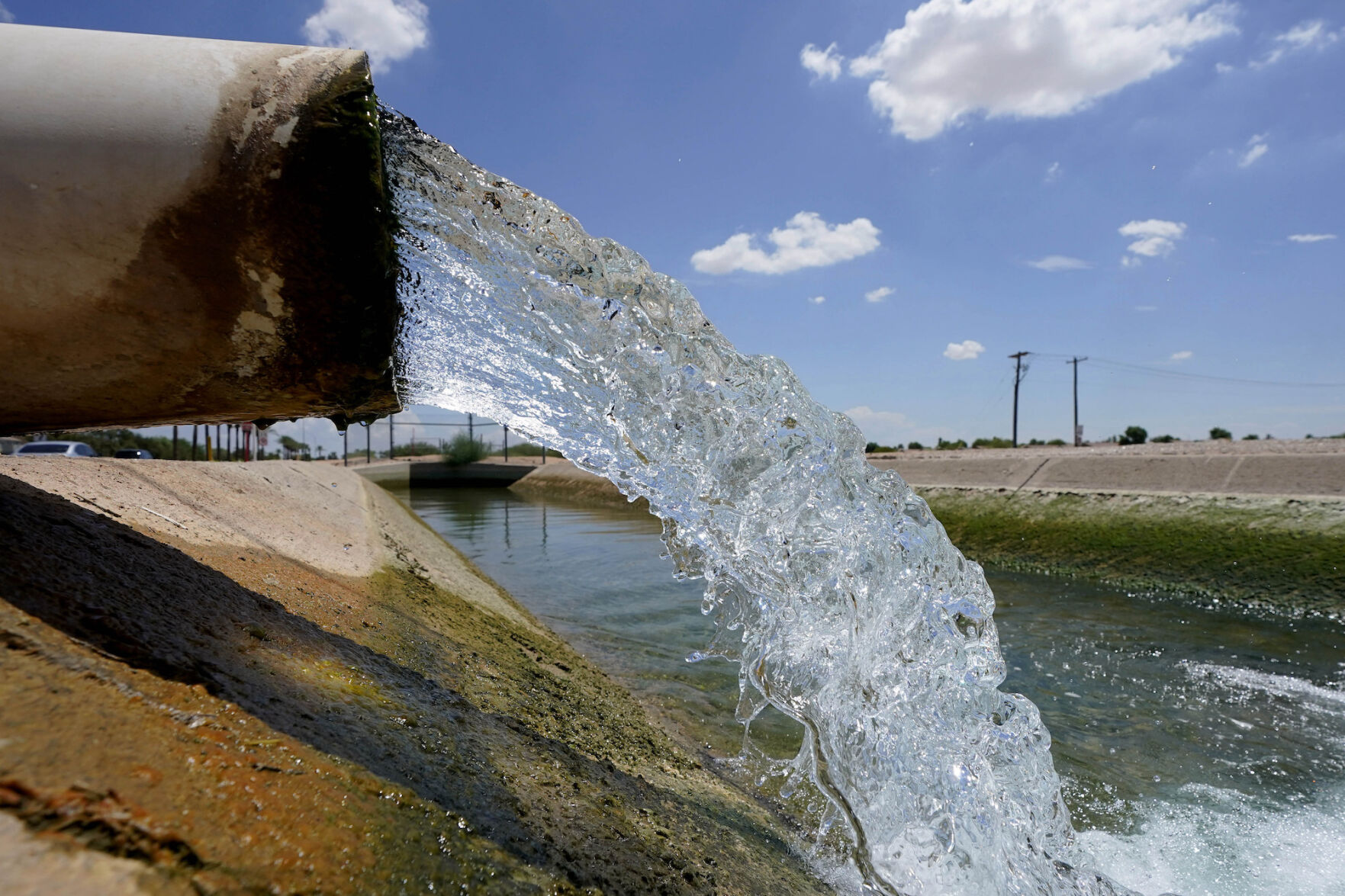
The survey reported those concerns may be related to historical overuse by the Lower Basin states of their allocation from the Colorado River, with cuts in water deliveries taking place as the drought got worse. The survey pointed out that cuts in water allocations to the Central Arizona Project, the 336-mile diversion ditch that runs from the Colorado to central and southern Arizona, have resulted in ag producers relying more on groundwater or fallowing fields.
One farmer who gets water from the Central Arizona Project told interviewers he sees little hope for agriculture, with groundwater as the only source in the future.
Less a concern for ag producers was how urban areas would deal with less water, but one Western Slope rancher in Colorado said in an interview: “I have very senior [water] rights, but when the tap runs dry in Denver, we’ll see how much that means.”
The current state of water management policies got a thumbs down from survey respondents, which the report said reflected a “low level of trust in state water management institutions to effectively manage shortages.”
Where ag producers put their trust: local water management policies. The report said this was bolstered by interviews in which respondents said local conditions are critically important to consider in implementing water management practices and policies. But the gap between how ag producers view state and local water management policies could show a perception of a lack of coordination between state and local levels, the report said.
What was encouraging, according to Drew Bennett, the lead researcher and a professor of practice in private lands stewardship at the University of Wyoming, is that water managers are adopting conservation practices.
“It shows people are responding to strategies and finding win-win-solutions going forward,” Bennett said in a Tuesday webinar on the survey.
Conservation strategies
The survey asked about 11 water conservation strategies, and whether respondents used them, either in the past or currently.
The strategies:
- plant crops that require less water
- grow less water intensive varieties of the same crops
- temporarily fallow fields
- permanently reduce irrigated acreage
- split season irrigation
- switch irrigation method to one less water intensive
- explore opportunities to purchase or lease more water
- change to a livestock operation
- reduce livestock herd
- change to a crop operation
- change the location of farm/ranch
Results showed 69% of Upper Basin producers and 74% of Lower Basin producers have used one or more of the strategies. But the strategies chosen also varied depending on the basin. Lower Basin producers were more likely to temporarily fallow fields or plant crops that require less water. Only 20% of producers in the Upper Basin states were likely to use those strategies, preferring to reduce the size of livestock herds over other means.
The survey pointed out the availability of federal funds for conservation purposes through the Bipartisan Infrastructure Act and the Inflation Reduction Act, as well as existing federal and other water conservation programs. But respondents were largely unaware of the federal programs, save for the federal government’s Environmental Quality Incentives Program, in which 33% of respondents had participated. The survey noted few respondents were aware of leasing or banking programs, such as the Colorado Water Trust’s leasing programs for instream or environmental flows.
The federal EQIP program most respondents were aware of did not win kudos from producers, with some claiming the benefits were not worth the effort.
State programs, such as those available through Colorado Water Conservation Board and a wildlife habitat protection program available through Colorado Parks and Wildlife, got much better reviews from ag producers.
Colorado specific responses
Bennett addressed the high number of Colorado responses to the survey, pointing out that Colorado has the largest number of irrigators in the entire basin. That said, there were more similarities among the irrigators in the Upper Basin states than differences, he explained.
The survey also includes an interactive tool for looking at a few Colorado-specific responses.
On the question on which conservation strategies Colorado ag producers use, the strongest response, at 60%, was for switching irrigation methods to those that use less water, which reflected both producers already using those strategies and those who would consider it if water shortages got worse. In second place, 48% of respondents in Colorado said they were already using or would consider a strategy on growing less water-intensive varieties of the same crops.
Among the strategies that got the least-favorable responses: changing from livestock to crops or vice versa.
Demand management
The survey also took a look at the elephant in the room: demand management, as well as the system conservation pilot program being restarted by the Upper Colorado River Commission.
Lower Basin respondents were more likely to agree to participate in eight strategies identified as part of a demand management or a system conservation program. Upper Basin respondents, however, only favored one: “investments that reduce water use by enhancing delivery systems.” And respondents in both basins were overwhelmingly in favor of seeing a demand management program administered at the local level, instead of at the state or federal level.
Water transfers from ag to other users, whether ag or non-ag and whether permanent or temporary, was also overwhelmingly rejected by survey respondents. The reason? Concern about losing water rights, even temporarily. That also came in interviews and the focus group, Bennett said Tuesday. The fears over losing water rights should be addressed in the future, he added.
One focus group participant said: “If we go and put in all of these water conservation programs where we are actually consuming less water, is the state going to come in and say ‘you purposefully just devalued your asset in water because now you’re using less of it’… Are we actually digging our own grave by participating?”
Another concern over water transfers: the low compensation, including the per acre-foot price being considered for the Upper Basin’s system conservation program. While some respondents agreed that “more water users would be willing to consider water transfers or demand management practices if the compensation was sufficient,” others cited the negative effects of transferring water – including the potential for “buy and dry” – would have on ag communities.
The survey concluded that voluntary efforts in water conservation show the most hope.
“We see a willingness among producers to experiment with new approaches to water management on their properties and act as partners in managing water under shortage conditions,” the report concluded. “However, many agricultural water users are highly risk-averse and reluctant to take actions that may jeopardize their water rights, which are often their most valuable asset.”
Bennett added Tuesday that it is essential that the “trust gap” between ag producers and government agencies be addressed, in order for producers to become comfortable with some of the solutions going forward.
Nevada was not included in the survey because its share of the Colorado River is primarily used for municipal purposes, not agriculture.
The survey also leaned toward respondents in the Upper Basin: 863 came from Colorado, Wyoming, Utah and New Mexico versus 157 total for California and Arizona.
The survey included qualitative data, culled from a dozen interviews with agricultural water users and other experts involved with water management in the entire Colorado River Basin, and a focus group with 10 agricultural water users in North Park, Colorado, on April 17, 2023. The additional data provided “context for water management at the local level and helped us interpret the quantitative survey data.”
The survey’s margin of error is 3.9%, which Bennett said is standard for these kinds of surveys.


Colorado board permits state to appeal injunction against arthritis drug price cap
Marissa Ventrelli
marissa.ventrelli@coloradopolitics.com
Updated 9 hours ago
A Colorado board voted Friday to allow the Attorney General’s Office to fight an injunction against a price cap on a drug that treats arthritis. A U.S. district court judge had granted the company Amgen a preliminary injunction, temporarily blocking...

Federal judge rejects constitutional claims, ‘expressions of hatred’ by Club Q defendant
Michael Karlik
michael.karlik@coloradopolitics.com
Updated 9 hours ago
A federal judge rejected a defendant’s claims that he received constitutionally ineffective assistance of counsel while facing federal hate crime and firearms charges for murdering five people at a Colorado Springs LGBTQ nightclub in 2022. Anderson Lee Aldrich is serving...

Divided 10th Circuit upholds Colorado congestion fee on car rentals
Michael Karlik
michael.karlik@coloradopolitics.com
Updated 5 hours ago
The Denver-based federal appeals court concluded on Monday that a 2024 “congestion impact fee” that lawmakers imposed on short-term vehicle rentals did not conflict with a federal prohibition on certain airport-related charges. Beginning in the 1970s, Congress began limiting the...

Space Force should measure workforce needs as it prepares to double in size, GAO report says
Mary Shinn
mary-shinn@coloradopolitics.com
Updated 15 hours ago
The Space Force needs more people. It’s just not precisely sure how many more. A Government Accountability Office report released earlier this month found that the youngest and smallest military branch does not have a process to consistently or accurately...

Colorado schools receive $24 million for free meals program
Marissa Ventrelli
marissa.ventrelli@coloradopolitics.com
Updated 9 hours ago
The Colorado Department of Education is providing Colorado schools with nearly $24 million in grant funding to implement a free lunch program. Approved by voters in 2022, the Healthy School Meals for All provides free breakfast and lunch to all...

Secret Service agent placed on administrative leave after arrest for near-deadly hazing ritual
Claire Carter
claire.carter@washingtonexaminer.com
Updated 16 hours ago
A Miami Secret Service agent in Florida was placed on administrative leave following his arrest on Sunday in connection with a near-deadly hazing incident at a University of Miami fraternity. Marquez Christopher Pinder, 29, was arrested alongside two other individuals...
Forest fire west of Sedalia prompts evacuations in Douglas County
Nicholas Fogleman
nicholas.fogleman@denvergazette.com
Updated 19 hours ago
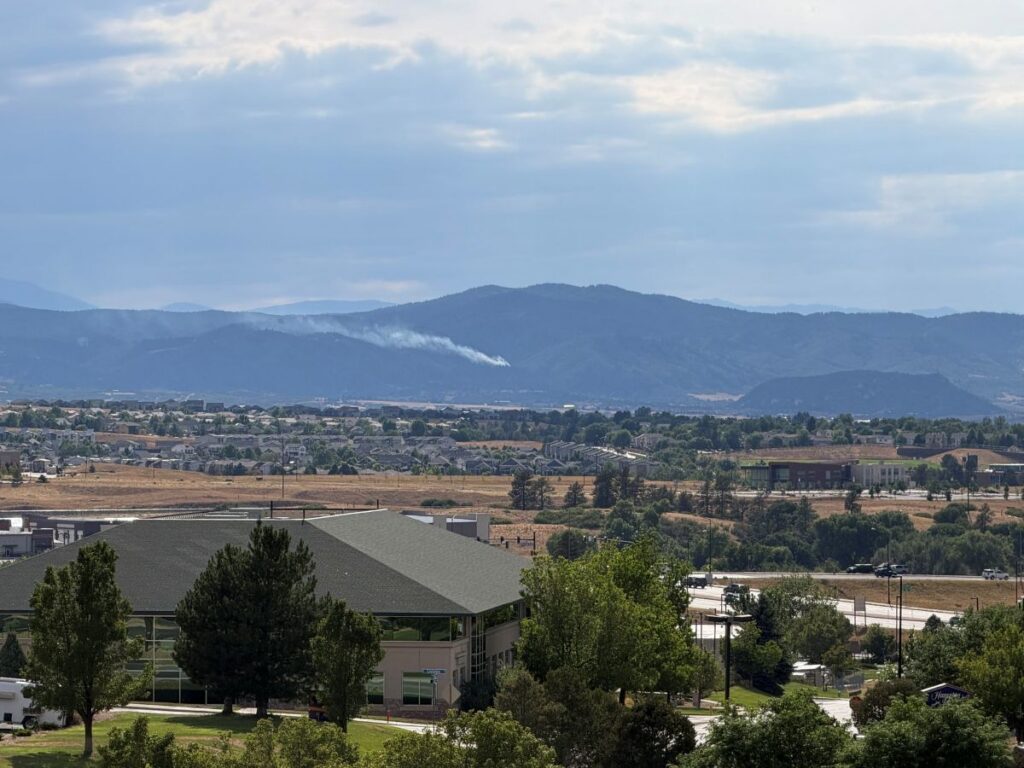
Emergency crews are responding to a forest fire burning west of Sedalia, prompting evacuation orders for nearby residents Sunday afternoon. At about 5 p.m. Sunday, the Douglas County Sheriff’s Office issued an evacuation order for residents within a 2-mile radius...

Airstrikes have paused and talks are pressing forward. But can the US and Iran take the off-ramp?
The Associated Press
the-associated-press@coloradopolitics.com
Updated 19 hours ago
WASHINGTON (AP) — The U.S. military has paused its airstrikes on Iran after nearly two weeks of intensifying bombing, while diplomatic efforts have pushed forward to try to avert a return to all-out war. But it remains to be seen...
Penrose fortune paved the way for Colorado Springs to be a military, space and sports town
Mary Shinn
mary-shinn@coloradopolitics.com
Updated 19 hours ago
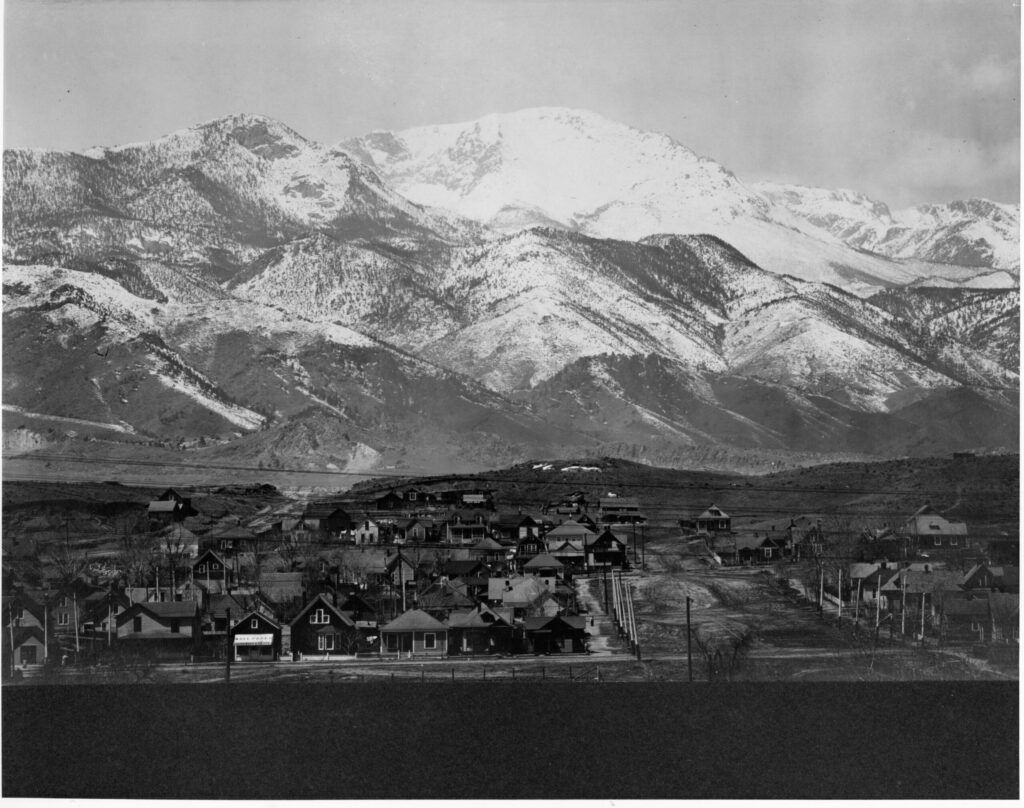
Colorado Springs is always working to catch the next big economic wave. “We’re always trying to figure out what the next thing is going to be,” explained Matt Mayberry, director of the Colorado Springs Pioneers Museum. In the early days,...
Colorado Politics Calendar July 27-Aug. 2
Rachael Wright, Special to Colorado Politics
rachael.wright@coloradopolitics.com
Updated 6 days ago
CoPo’s weekly political calendar will help you find political and public-policy events throughout Colorado. It includes candidate and issue campaign events, public policy meetings, court hearings, state and local party conventions, assemblies, debates, rallies, parades, speaking engagements, traveling dignitary appearances,...
PREV
PREVIOUS
Colorado's Joe Neguse warns shutdown looms amid House GOP disarray as Congress returns to Washington
As Congress prepared to return to Washington on Tuesday, a prominent member of Colorado’s House delegation warned that the federal government could be barreling toward a shutdown, even as the chamber’s leading Republican worked furiously to corral factions of his party. “I think until cooler heads prevail within the House Republican conference and they decide […]

Colorado Counties, Inc. names Kelly Flenniken new executive director
For the first time in its history, a woman is set to lead Colorado Counties, Inc. The statewide county association announced Tuesday that Kelly Flenniken, formerly of Xcel Energy, will become its next executive director, effective Oct. 16. She will replace John Swartout, who is retiring after more than four years at the helm. CCI represents […]