

Meet Lisi Owen, the former civil rights attorney running for Denver DA

Editor’s note: The race to be Denver’s next District Attorney has the potential to be crowded. The Denver Gazette is writing a series of question-and-answer profiles on district attorney candidates who are running for the four-year-term. Answers have been edited for length.
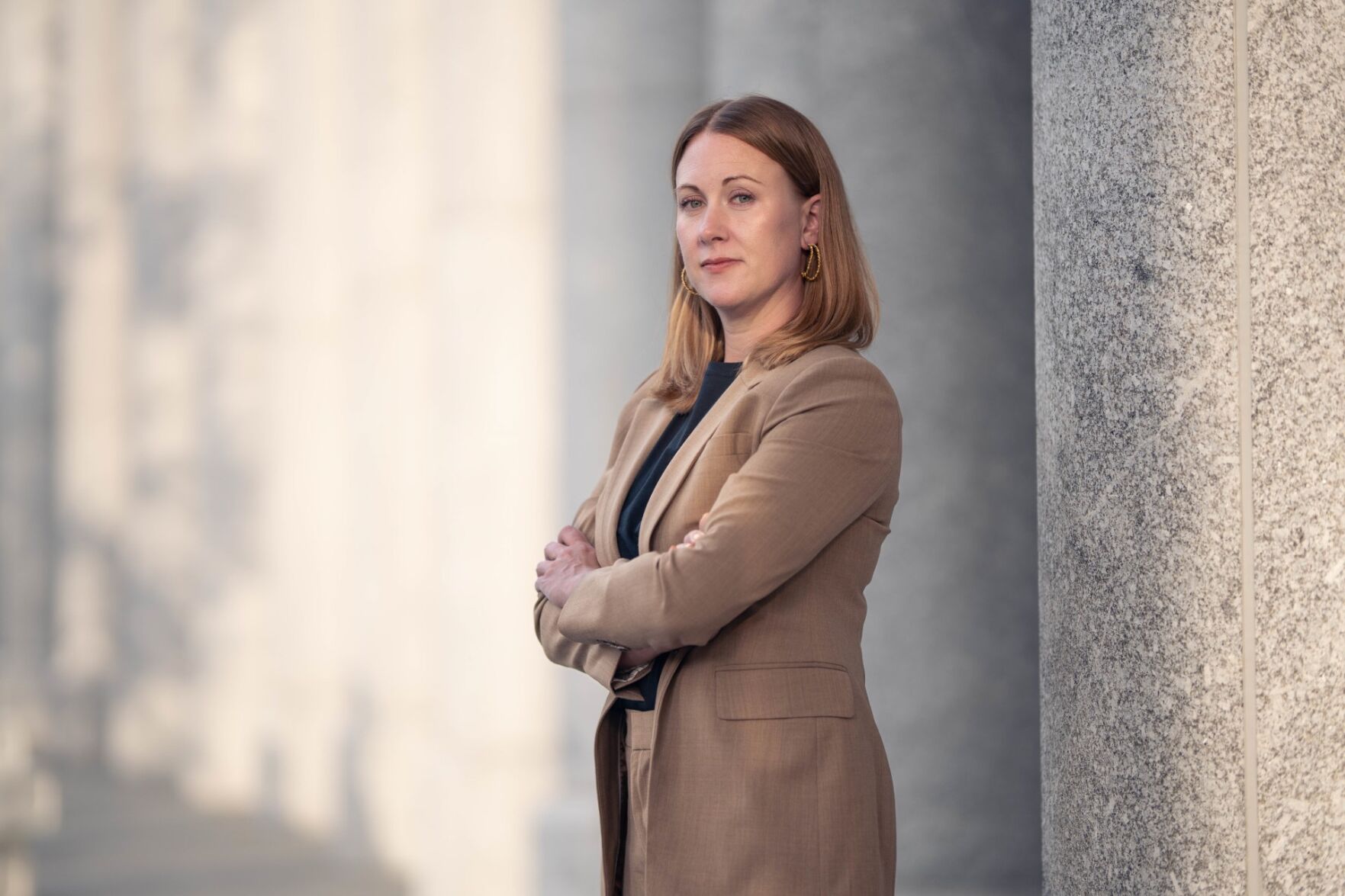
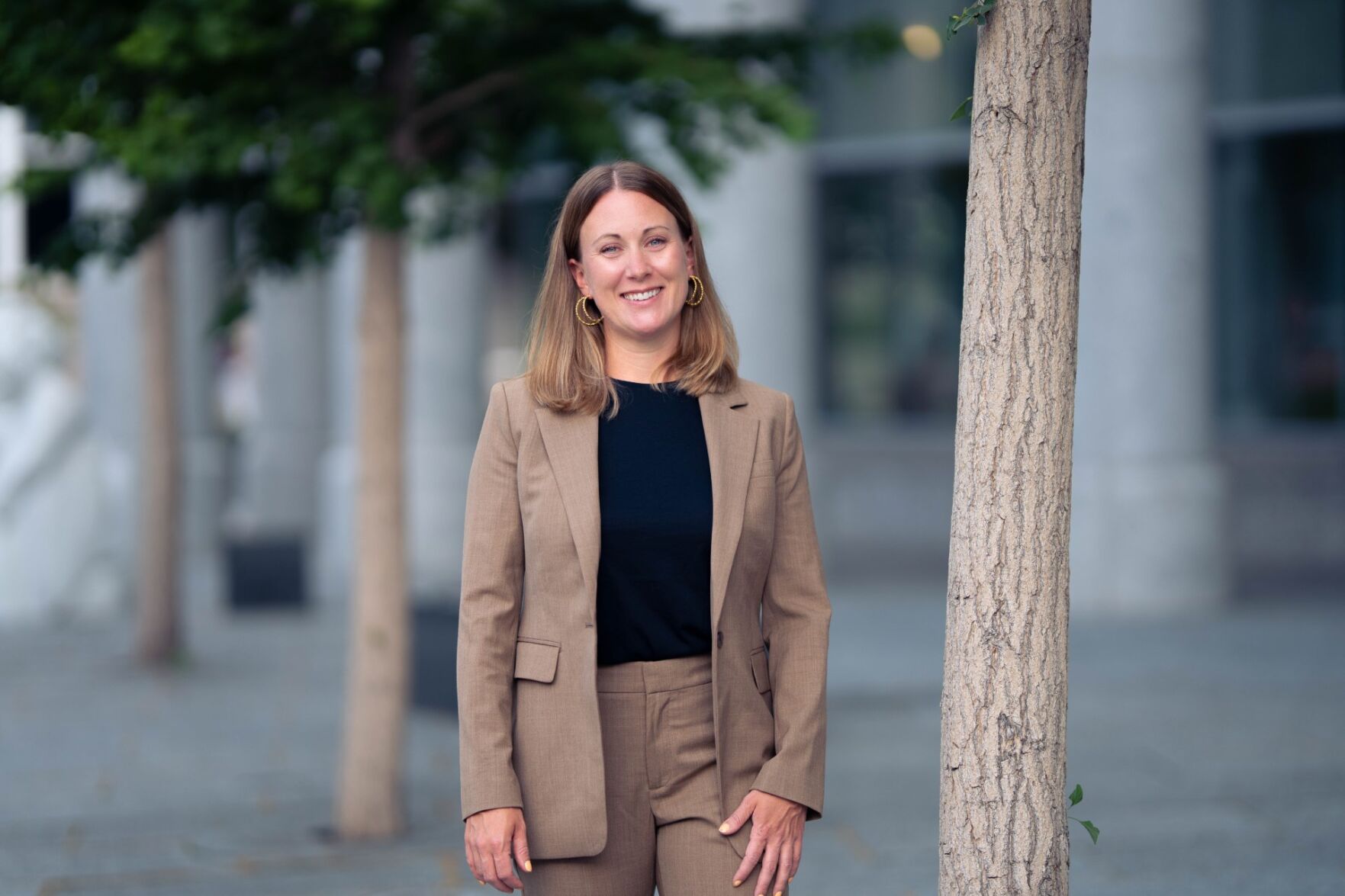
Lisi Owen, a candidate seeking the Democratic nomination for Denver’s district attorney election in 2024, plans to address problems she believes exist in the criminal legal system from inside it. She doesn’t have a background typical for a candidate for the office: She hasn’t been a prosecutor and doesn’t have a background in criminal law.
Owen spent years practicing civil rights law, with a focus on representing prisoners. She then practiced insurance law full-time from 2017 to 2021, after feeling that the court system isn’t an adequate mechanism to address what she believes is over-reliance on incarceration with little return in the way of deterrence or reducing re-offending.
But she believes her background gives her perspective on how to exercise the vast power a district attorney wields with responsibility. Hailing from Park Hill, she has fond memories of growing up in Denver. She didn’t see violence firsthand, but her worldview was shaped by fear sowed in the community in the 1990s about gun violence – along with the racial overtones it took on – and efforts to portray Park Hill as an unsafe place.
Owen doesn’t expect to singularly change the criminal legal system from within the Denver District Attorney’s office. But among her priorities, she wants to create an institutional accountability unit specifically dedicated to prosecution of institutions and their people, such as law enforcement officers and corporate actors.
Denver DA Beth McCann will not seek third term in 2024
The Denver Gazette: Tell me a little bit about your background.
Lisi Owen: The broad umbrella I put my work under is institutional accountability. I’ve always represented people in cases about big institutions, government or companies. So, sitting here today with that professional background, I look back on my childhood in Denver a lot with a different perspective, which is that there was a lot of effort, I think, by law enforcement to create fear in our community – justifiably, when horrible things are happening. But what I’m concerned about today, is that these decades of being really afraid and policies that come from that fear have gotten us not to a better place, but to a worse place.
When I was in law school, I was in the civil rights clinic at the University of Denver and represented people in the federal Supermax prison. And immediately, I realized that prison in this country is a human rights crisis.
I think after the first time I went to that prison, I thought, ‘This is what I’m going to do for the rest of my life, is try to fix this problem.’ Almost all of my early career was representing prisoners in conditions of confinement cases.
I eventually got to the place where I was convinced that the courts in this country are not going to do anything about the prison problem. So I frankly started to feel complicit in making the problem worse if I would continue to participate in the system. So I stopped doing that work. That’s when I did insurance litigation full time, which I’m very good at and have the record to show for that. And I love it. It’s just not my life’s work. It’s not my passion.
And so after I stopped representing prisoners, I had to start thinking about what I was going to do instead. I can’t unsee what I’ve seen in prisons in this country. And so I had to figure out how I was going to come back to this work. And in 2020, the idea that I came up with was to run for district attorney in Denver. And so that’s been a seed germinating for the past three years.
The Denver Gazette: What, then, is the appeal to you to have a job that is part of a system that disproportionately affects certain groups of people, and where a big component of the job is arguing for people to be sent away, for sometimes for very long periods of time?
Owen: That’s the thing that makes this decision the hardest for me, actually. I’m a very pragmatic idealist. This is about power. The way that the criminal justice system in this country is set up is the power is concentrated in an exceptional way in the district attorney’s office. I would not want this job if it was not for the purpose of doing everything I can do to fix the problems that you’ve just described.
I don’t take issue with one certain district attorney or another. It’s not about Beth. It’s not about anybody else who’s running who’s been a career prosecutor. It is about the system itself and the power.
This is about taking a leadership role in ensuring the responsible exercise of power in a district attorney’s office. This country is not in a place where we are prepared to really deconstruct the social, political and legal causes of racism; classism, and those are the two big ones, (but) also social exclusion. So, the way that this system is constructed is that we use carceral tactics as punishment. And I won’t take a position on whether that should or will change. It’s the reality that we live in today. What we can do is exercise that massive power and responsibility in a fair and minimally harmful way. To be blunt, that’s a tricky moral position to be in, but this is the next right thing that needs to be done, in my humble opinion.
DG: On avoiding incarceration when possible:
Owen: Succinctly, I think the principle should be jail and prison only when necessary. You really have to balance the harm that we do by putting people in jail and prison with the benefit. And so, for example, one of my policy positions is ensuring complete investigations before charging decisions get made, which sounds really basic, right? So, part of that is just triple checking that we’ve done a complete investigation, but also that investigatory function is an investigation into what we are trying to accomplish with this punishment. So, linking the proposed charges with the sentence that would come with those charges to the goal of the prosecution, right? If your goal is to stabilize somebody (and) if this crime was caused by some destabilizing effect like poverty, sending them to prison has a further destabilizing effect, which is getting farther from the goal than closer.
DG: It seems like a 3,000-foot view, to sum up of some of the things you’re saying, is looking at each case through the lens of “what is the goal of prosecution?” and we really should be making decisions about how to handle a case based on what we want the goal of prosecution to be, not just prosecution itself?
Owen: Yeah, absolutely. I am informed by, for example, human rights law that requires prison to serve one of the recognized philosophical justifications. So, of course, you have pure punishment, which we would call retributive. You have rehabilitation. You have incapacitation. (Editor’s note: Deterrence is the fourth major justification for criminal punishment traditionally identified by scholars and criminologists.)
And if the goal is rehabilitation, for example, we’re talking about behavior modification. I think that’s what we mean when we say rehabilitation. If a treatment provider, a jail, or a prison can’t demonstrate the ability to actually modify behavior, and our goal is behavior modification, it makes no sense to send somebody to one of those outcomes.
DG: On the role of data in public transparency about the office’s functioning:
Owen: One of my other policy platform positions is real data transparency. Of course, I appreciate the strides we’ve made in having any data available. But in terms of understanding the function and effectiveness of the office, we do not have the data that we need.
So, for example, you’re telling me you charged however many cases as felonies. And then you tell me that this percentage of cases were resolved by plea bargains. Well, what I want to know is what was the first-level charge of the felony compared with what was the plea? How big a departure are we making? Because that gives us information about overcharging.
The DA office’s job is to enforce the law as written by the legislature. So that (also) gives us information about whether that enforcement aligns with the legislative vision. So, anyway, transparency is really important, but it’s a particular type of transparency.
Zach McCabe, Denver’s assistant district attorney, announces run to replace Beth McCann
DG: How big of a role do you think a district attorney’s office should have in rehabilitative programs, whether it’s the Handgun Intervention Program, whether it’s diversion, things like that?
Owen: In strict principle terms, because I have concerns about the amount of power that the district attorney’s office has, I think it’s not appropriate for the office itself to be taking responsibility for effectuating rehabilitation.
I think it’s back to the idea of which branch of government does what. A prosecutors’ office’s job is to handle the legal case. You’ve got other agencies whose job it is to do that (rehabilitative) work. There are so many criminal justice agencies out there. Why is the DA’s office, whose budget is quite small relative to the other public safety entities, having to take on that burden?
It should be a last resort that the DA’s office is handling rehabilitative programming in-house. But if the audit revealed that nobody out there who’s getting billions of dollars of taxpayer money to do this job is capable of doing the job, then perhaps we need to shift around resources within the DA’s office to provide this rehabilitative programming.
If the DA’s office is going to take on the responsibility of doing the job the Department of Corrections is supposed to do, it seems like it’d be nice if some of the Department of Corrections’ billion-dollar budget could go to the DA’s office to actually do that work.
DG: I want to know about what role you think the DA’s office can have in preventing crime.
Owen: As an elected official, as somebody who speaks on behalf of the people of Denver and frankly, the people of the state of Colorado, it is, in my mind, incumbent on somebody who assumes that leadership role to understand the bigger social picture and legal picture in which they operate. So, in terms of crime prevention, I do think that the district attorney has an incredibly important role to play in working with community partners and government partners to get out ahead of the crime. The DA can play a really valuable role in saying, ‘This is what I’m seeing, and this is what I think the causal mechanism of what I’m seeing is.’
Housing is a great example of this. There are a remarkable number of trespassing cases in the city of Denver. That creates an indication that it could be houseless-ness that is resulting in trespassing charges. The DA’s office should work closely with the mayor’s office to draw that connection – and city council – and problem solve together in order both to prevent the crime of trespassing, and to resolve the underlying social issue. That’s what crime prevention looks like to me. And so I think, in sum, the district attorney has a really important role to play in leveraging the platform that’s given to find ways to prevent the cases from ever being in the office to begin with.
Experts emphasize presence of adult, early intervention in tackling youth violence in Denver
DG: What is your position on direct filing on children? More broadly, what’s your position on kids’ cases being in adult court at all?
Owen: My position on direct filing is that – somebody’s going to find me the case that’s the exception to this rule, I guess – but it shouldn’t happen. Kids shouldn’t be in adult court, because adult court means adult prison.


Trump threatens to withdraw support for Lauren Boebert over Thomas Massie dispute
Thelma Grimes
thelma.grimes@coloradopolitics.com
Updated 11 minutes ago
President Donald Trump on Saturday on Saturday threatened to withdraw his endorsement for U.S. Rep. Lauren Boebert, who is seeking reelection in Colorado’s 4th Congressional District, over the latter’s support for a Kentucky Republican facing a primary challenge. “Is anyone...

Jeffco murder conviction overturned due to improper evidence
Michael Karlik
michael.karlik@coloradopolitics.com
Updated 16 minutes ago
Colorado’s second-highest court reversed a defendant’s convictions for murder and aggravated robbery earlier this month, finding that a Jefferson County judge allowed evidence that improperly suggested the man had “bad character” for possessing guns generally. Under the rules for criminal...
Girls and their bright futures were celebrated at annual luncheon | NONPROFIT REGISTER
Joanne Davidson Special to Colorado Politics
joanne-davidson-special-to-colorado-politics@coloradopolitics.com
Updated 5 hours ago
GIRLS INC. OF METRO DENVER Denver News: With United Airlines as the presenting sponsor, My Bold Future, the annual fundraising luncheon hosted by Girls Inc. of Metro Denver, provided a figurative takeoff to success for the 2026 scholarship recipients and a smooth landing for the...

Daniel Domenico nominated for 10th Circuit, state Supreme Court hears arguments | COURT CRAWL
Michael Karlik
michael.karlik@coloradopolitics.com
Updated 7 hours ago
Welcome to Court Crawl, Colorado Politics’ roundup of news from the third branch of government. Colorado’s chief federal trial judge is the choice for an upcoming vacancy on the Denver-based federal appeals court, plus the state Supreme Court heard oral...

Supreme Court to decide if Title IX discrimination protections include employees
Jack Birle, Washington Examiner
jack.birle.washington.examiner@gazetteedit.wpenginepowered.com
Updated 7 hours ago
The Supreme Court announced Monday it will hear a case determining if employees of a federally funded school may sue for sex discrimination under Title IX, something students at those schools may already do under federal law. The high court...
Man who asked mom to lie to parole officer can stand convicted, Colorado Supreme Court decides
Michael Karlik
michael.karlik@coloradopolitics.com
Updated 7 hours ago
Attempting to influence a public servant is a crime that can include a defendant’s use of a third party to convey false information, the Colorado Supreme Court decided on Monday. There was no dispute that Michael Thomas Hupke asked his...

Children’s Colorado must resume care to transgender plaintiffs, state Supreme Court rules by 5-2
Michael Karlik
michael.karlik@coloradopolitics.com
Updated 29 minutes ago
The Colorado Supreme Court, by a 5-2 vote, ordered Children’s Hospital Colorado on Monday to resume providing certain medical services to a group of transgender plaintiffs, which it had ceased in the face of funding threats from the federal government...

Trump approval rating drops to 37% thanks to Iran and economic anxiety
Rena Rowe, Washington Examiner
rena.rowe.washington.examiner@gazetteedit.wpenginepowered.com
Updated 7 hours ago
President Donald Trump’s approval rating continues to take a hit thanks to prices rising amid the Iran war, according to new polling. More than 60% of respondents said Trump’s decision to go to war was the wrong choice, according to...

Trump moves to drop $10 billion IRS lawsuit as DOJ weighs weaponization victims fund
Kaelan Deese, Washington Examiner
kaelan.deese.washington.examiner@gazetteedit.wpenginepowered.com
Updated 7 hours ago
President Donald Trump on Monday moved to dismiss his $10 billion lawsuit against the IRS over the leak of his confidential tax returns, as the Justice Department reportedly weighs the creation of a $1.7 billion compensation fund for alleged victims...

Supreme Court rejects appeals from drug manufacturers over Medicare price negotiations
Mark Sherman
mark-sherman@coloradopolitics.com
Updated 11 hours ago
WASHINGTON (AP) — The Supreme Court on Monday rejected appeals from pharmaceutical companies that object to negotiating Medicare drug prices with the federal government. The justices did not comment in leaving in place rulings from the federal appeals court in...