

Colorado justices ponder dismissal of Jeffco criminal appeal during oral arguments
Following her convictions for felony menacing and child abuse, news reports surfaced describing Adrienne Marie Stone’s history of threatening neighbors, endangering her kids and maintaining an unsanitary “hoarder” household.
But on Tuesday, the mess that members of the Colorado Supreme Court were concerned about was the unclear sequence of events underlying Stone’s prosecution.
In an unusual move that further complicated matters, some members of the court wondered openly during oral arguments whether it had been a mistake to hear Stone’s appeal in the first place.
Initially, the justices agreed to review Stone’s convictions to answer the unsettled legal question of whether a police officer who enters a home without a warrant, but with the consent of an occupant, may leave the home and reenter for a different purpose without seeking consent again.
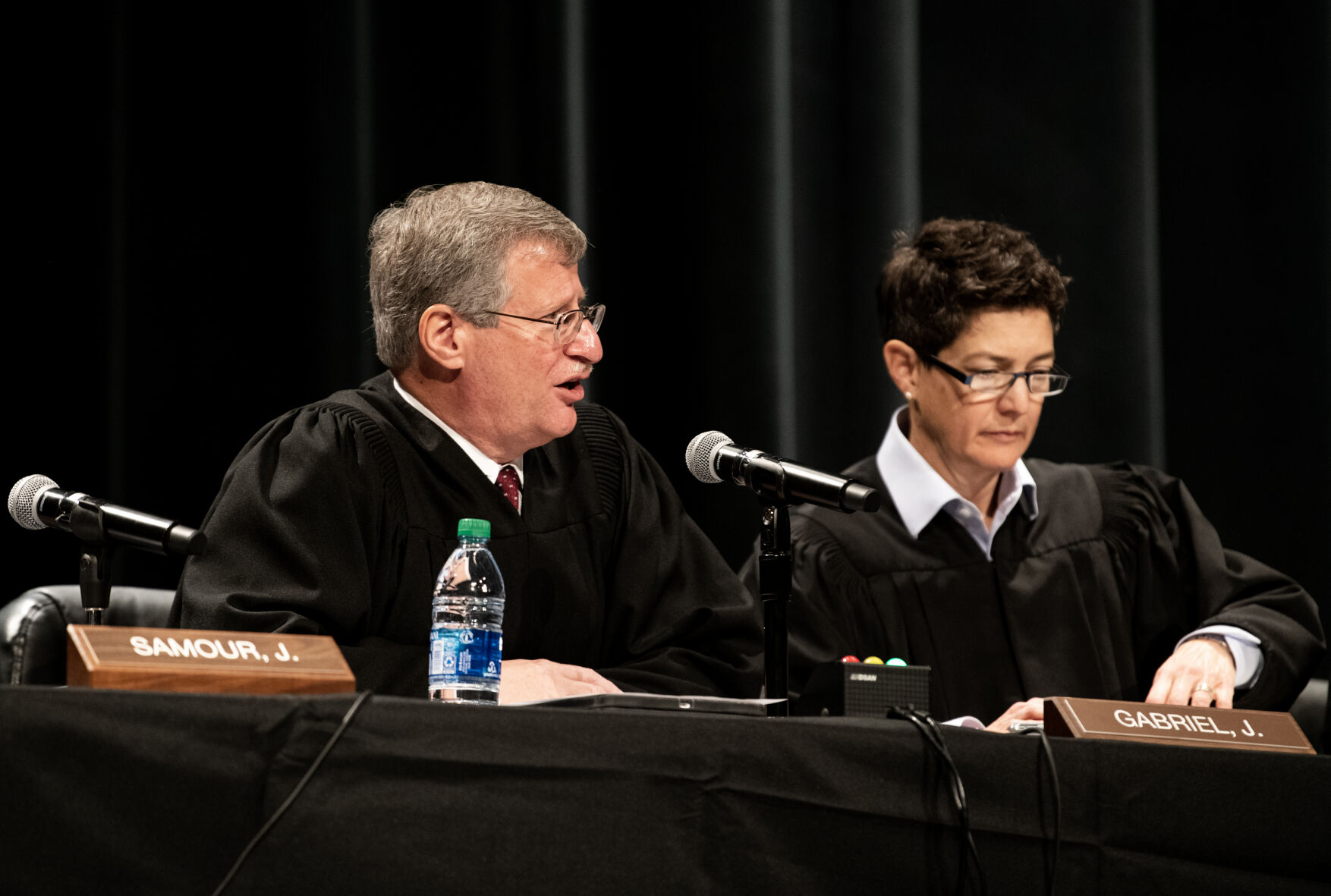
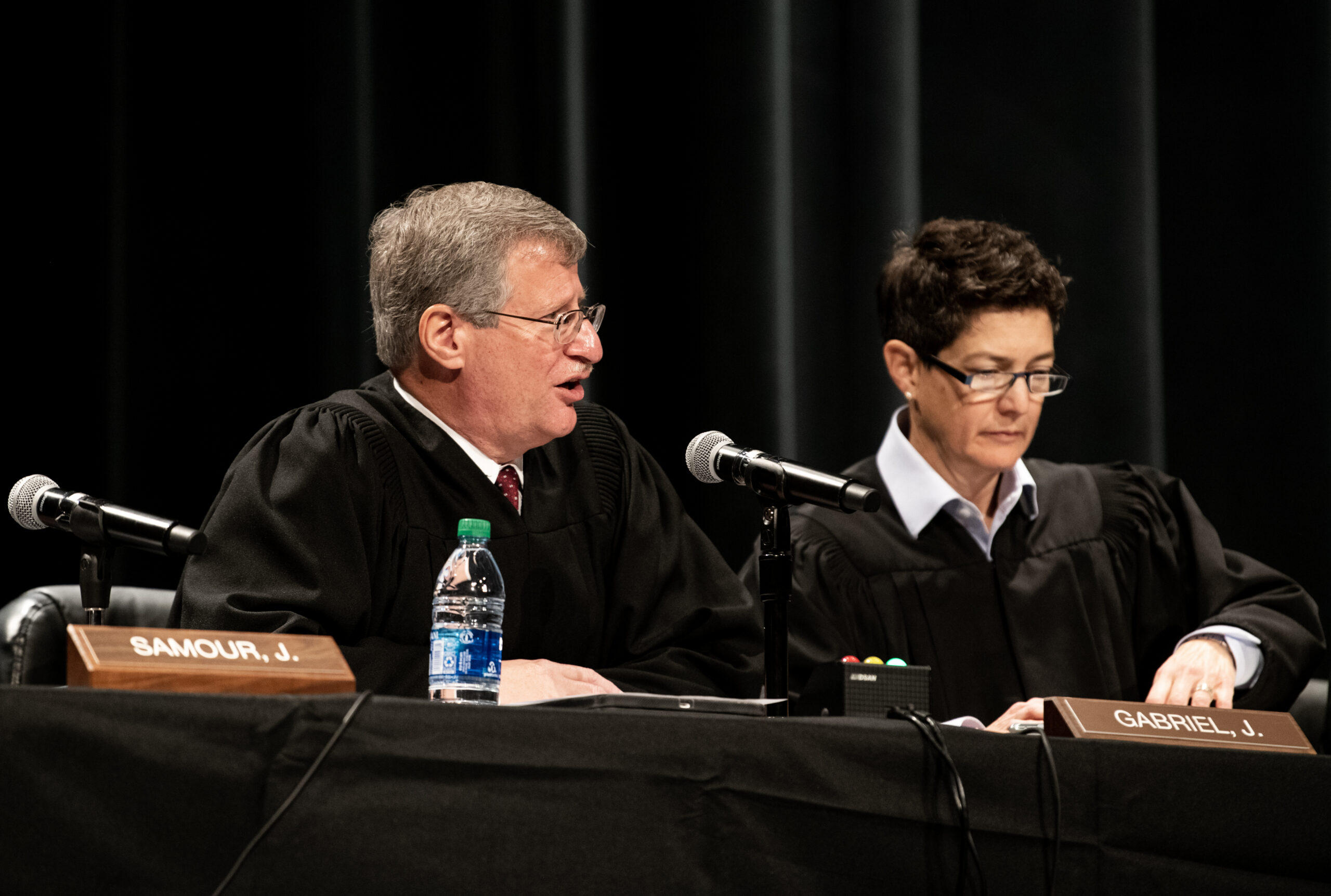
The problem, pointed out Justice Richard L. Gabriel, was that neither the trial judge nor the state’s Court of Appeals found Arvada police Sgt. Betsy Westbrook reentered Stone’s home “for a different purpose.”
Moreover, Westbrook, who was the first officer to enter Stone’s home in 2018 to investigate allegations of menacing, contradicted her own testimony and that of fellow responders when explaining her movements in and out of Stone’s house without a warrant.
“My problem, with all due respect to Officer Westbrook: her testimony was all over the place. And the trial court tried desperately to figure out what the chronology was,” said Gabriel. “This case is a factual mess.”
There was no dispute that Westbrook arrived at Stone’s house after receiving a report that she had threatened her teenage son with a knife. The son, Nicholas Maerz Jr., who later spoke with FOX31 about his mother’s case, invited Westbrook inside. Westbrook took pictures of the knife with her cell phone and observed the cluttered and hazardous interior of the home.
She then stepped outside to retrieve her camera from her vehicle. At that point, Stone returned home and was enraged at the police presence.
The testimony about what happened next was unclear and contradictory. Westbrook spoke with a neighbor for some unknown period and reentered the home – perhaps with a caseworker, perhaps with a school resource officer, or perhaps without either of them. Law enforcement and other government officials streamed in and out of the house, never obtaining consent, and documented the interior.
Upon her arrest, Stone moved to suppress evidence obtained from the warrantless entries into her home, arguing they violated the Fourth Amendment’s prohibition on unreasonable searches.
Chief Judge Jeffrey R. Pilkington, after hearing the muddled retelling of the officers’ story, decided Maerz had validly allowed Westbrook into his and his mother’s home “for the limited purpose” of talking about Stone’s menacing. The consent was limited to the kitchen and entryway, and no one gave permission “to search the entire Home, or to take photographs or otherwise document the Home,” he wrote.
Consequently, Westbrook’s first and second entrances were lawful, but all others were not. The evidence obtained beyond Westbrook’s own photos and observations was largely inadmissible at trial.
In 2021, a three-judge panel for the Court of Appeals affirmed Stone’s convictions, although it found other problems with the case. Specifically, the prosecution told Pilkington on the first day of trial that Westbrook, who is now deputy police chief in Brighton, had taken more photos than originally believed. Pilkington allowed the surprise evidence to be used at trial, but the Court of Appeals found the prosecution’s representation was untrue, as another officer actually took the photos as part of the unlawful entry.
Nevertheless, the appellate panel upheld Pilkington’s core finding that Westbrook’s exit and reentry into Stone’s home was constitutional, as Maerz was entitled to give consent to her entrance and never revoked it.
“Thus, for consent to encompass a subsequent re-entry, the entry and re-entry must be closely related in time and purpose,” wrote Judge Lino S. Lipinsky de Orlov.
On appeal, Stone’s questioned how the Court of Appeals concluded Westbrook’s exit and reentry were close in time.
“The record unambiguously shows that Officer Westbrook did not reenter the home quickly after a brief exit,” said attorney Tillman Clark. Moreover, upon Westbrook’s reentry, she allegedly pivoted from the initial menacing call to investigating child neglect.
“I’m asking this court to hold that where consent is given to officers to enter a home for the purposes of criminal investigation,” Clark continued, “such consent does not extent to an additional entry for a different investigatory purpose, regardless of the amount of time that passes.”
“And the reason we care about purpose – it goes to the scope of the consent, right?” asked Gabriel.
Correct, responded Clark.
Although the prosecution countered in its written filings that Stone was inappropriately trying to relitigate the facts of Westbrook’s reentry to the Supreme Court, Gabriel repeatedly slammed the government for insisting its version of events was the one the court should stick with.
“I don’t meant to disparage Sgt. Westbrook or anybody’s motives here, but it seems to me there’s an unfairness to Ms. Stone when the record is really jumbled because the prosecutors’ witnesses either didn’t remember the facts or whatever else,” he said. “Do you understand why that’s troubling? Ms. Stone didn’t create this problem.”
“We agree with opposing counsel that there was some contradictory testimony,” conceded Daniel R. Magalotti of the Colorado Attorney General’s Office.
Ultimately, several members of the court suggested that for a variety of reasons – unclear facts, the Court of Appeals’ potential misinterpretation of what happened, a wrongly framed legal question – they may dismiss the appeal without a decision. Magalotti and Clark both opposed that notion.
On the other hand, Justice Maria E. Berkenkotter attempted to engage with the undisputed issue in the case: that Westbrook gained consent to enter with a particular understanding of what she was investigating.
Maerz “consented to her going and getting the camera and coming back to take a better picture of the knife. And it’s undisputed that she didn’t get the camera and she didn’t take a picture of the knife,” Berkenkotter said.
If the scope of the investigation changed after the exit, she wondered, “Does that matter here?”
The case is Stone v. People.

Federal judge green-lights civil trial against ex-Fort Collins DUI officer
Michael Karlik
michael.karlik@coloradopolitics.com
Updated 2 days ago
A federal judge ruled on Thursday that Fort Collins’ former “DUI officer” will face a civil trial for allegedly investigating a motorist for impaired driving without any reasonable suspicion to do so. In recent years, several people arrested by Officer...

Colorado Supreme Court suspends Mesa County judge pending misconduct investigation
Michael Karlik
michael.karlik@coloradopolitics.com
Updated 20 hours ago
The Colorado Supreme Court suspended Mesa County Court Judge Michael J. Grattan on Thursday amid a misconduct investigation. The court’s Sept. 10 order gave Grattan 21 days to explain why his paid suspension should not continue through the end of...
Colorado Supreme Court changes course, dismisses case about special district bonds
Michael Karlik
michael.karlik@coloradopolitics.com
Updated 20 hours ago
The Colorado Supreme Court declined on Friday to decide a dispute between a large-scale Commerce City development and the various districts financing it, after initially showing interest in the ongoing case. Colorado has roughly 2,800 special districts, which are local...

10th Circuit tosses GEO Group’s pretrial appeal in human trafficking lawsuit
Michael Karlik
michael.karlik@coloradopolitics.com
Updated 3 days ago
The Denver-based federal appeals court dismissed an attempt by The GEO Group on Wednesday to appeal a trial judge’s non-existent decision two months before the company is scheduled to face a civil trial over alleged trafficking violations at the Aurora...
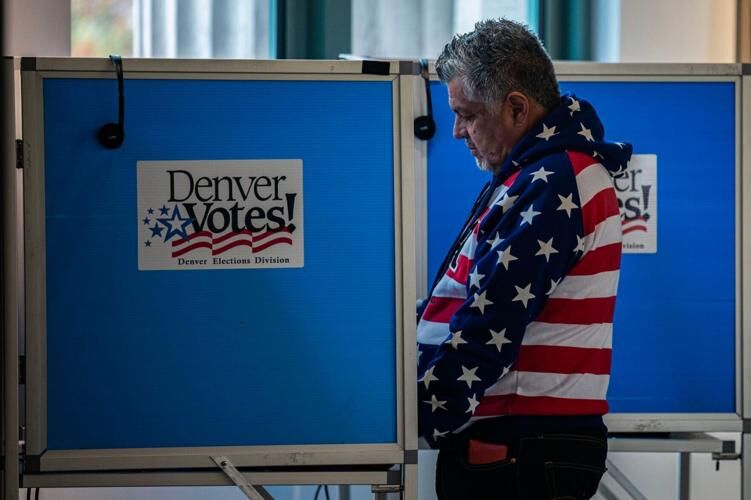
Denver sues Trump to block armed ICE agents from polling sites
Deborah Grigsby
deborah.smith@denvergazette.com
Updated 3 days ago
The city of Denver, along with several groups, sued the Trump administration Thursday, seeking to block U.S. Immigration and Customs Enforcement officers who are armed from polling sites during the upcoming midterm elections. In fact, there are no official orders...
Federal judge takes no action against ICE in Colorado after hearing about mistakes, not ‘blatant violations’
Michael Karlik
michael.karlik@coloradopolitics.com
Updated 18 hours ago
A federal judge declined to take action against U.S. Immigration and Customs Enforcement on Thursday after hearing that a pattern of alleged lawbreaking amounted to mistakes and a misunderstanding of the government’s position in court. For nearly a year, Colorado’s...
Colorado doctors, dentists challenge state law on gender‑transition services in new federal lawsuit
Marissa Ventrelli
marissa.ventrelli@coloradopolitics.com
Updated 15 hours ago
A group of Christian doctors and dentists has filed a federal lawsuit challenging a Colorado law they say requires them to provide gender‑transition services that conflict with their religious and ethical beliefs. The lawsuit, filed by the Christian Medical and...
Federal judge directs plaintiff to revise complaint alleging Denver officers’ constitutional violations
Michael Karlik
michael.karlik@coloradopolitics.com
Updated 18 hours ago
A federal judge directed a plaintiff to revise his allegations on Wednesday to more precisely state what two Denver officers and the city itself allegedly did to violate his constitutional rights by facilitating his prosecution for murder until prosecutors dropped...
Lawsuit challenges Douglas County commissioners’ ballot actions
Nicholas Fogleman
nicholas.fogleman@denvergazette.com
Updated 3 days ago
A new lawsuit against Douglas County commissioners seeks to invalidate the board’s intervention in efforts to expand the commission from three members to five and restore the original ballot language approved by more than 20,000 petition signers. The suit marks...
Federal judge explores new sanctions against ex-Colorado judicial discipline director
Michael Karlik
michael.karlik@coloradopolitics.com
Updated 20 hours ago
A federal judge on Wednesday directed Colorado’s former judicial discipline director, for the third time this year, to explain why she should not sanction him for his latest conduct in his litigation against the state’s judiciary. Christopher S.P. Gregory, who served...
PREV
PREVIOUS

Manitou Springs plans $3 million investment in water treatment system
Manitou Springs needs to make a $3 million upgrade to its aging water treatment system – a cost it hopes to cut in half with a large grant. While the investment is large for the community of 4,800, Manitou Springs will not need to raise its water rates to cover the cost, said Jason Meyer, a […]

Colorado's latest revenue forecast projects slight drop in general fund revenues
The quarterly revenue forecast released by state economists Wednesday shows Colorado lawmakers may have more breathing room than expected for the 2024-25 budget year, despite a projected decline in tax collections. Additional general fund revenues available to spend in 2024-25 are estimated at $1.195 billion, about $23 million more than anticipated expenses, the report said. […]