

Colorado Supreme Court puts racial bias rule on ice, judicial diversity leader departs | COURT CRAWL

Welcome to Court Crawl, Colorado Politics’ roundup of news from the third branch of government.
The state Supreme Court is waiting to take action on a proposed racial bias rule until next year, most likely, while the judiciary’s coordinator for diversity efforts has departed for the executive branch.
Racial bias rule awaits action
? In February, the Colorado Supreme Court held a public hearing about a proposed change to the rules of criminal jury selection. In short, the rule would make it harder for prosecutors to remove people of color from jury pools for reasons that, while not explicitly racial, have historically correlated with race. Prosecutors opposed the draft rule, while defense attorneys and some trial judges spoke in favor of it.
? Since then, 200 days have passed – the longest period of inaction after a public hearing in recent history. Colorado Politics reported that prosecutors and defense attorneys were intrigued, but they hoped the delay was indicative of careful consideration of a difficult subject.
? Quickly, the court disclosed an email that Justice Carlos A. Samour Jr., the liaison to the criminal rules committee, wrote in June explaining that the Supreme Court has decided to wait to act on the rule change until it resolves three pending appeals dealing with racial bias in jury selection. That means we likely won’t see any new rule until 2024.
? Public defender Joyce Akhahenda, who is in favor of the rule, did not see a need to put the cases before the proposal. “I hope that the delay to wait on these decisions is not indicative of a negative response because there is still a need for the proposed rule change,” she said.

Judicial diversity
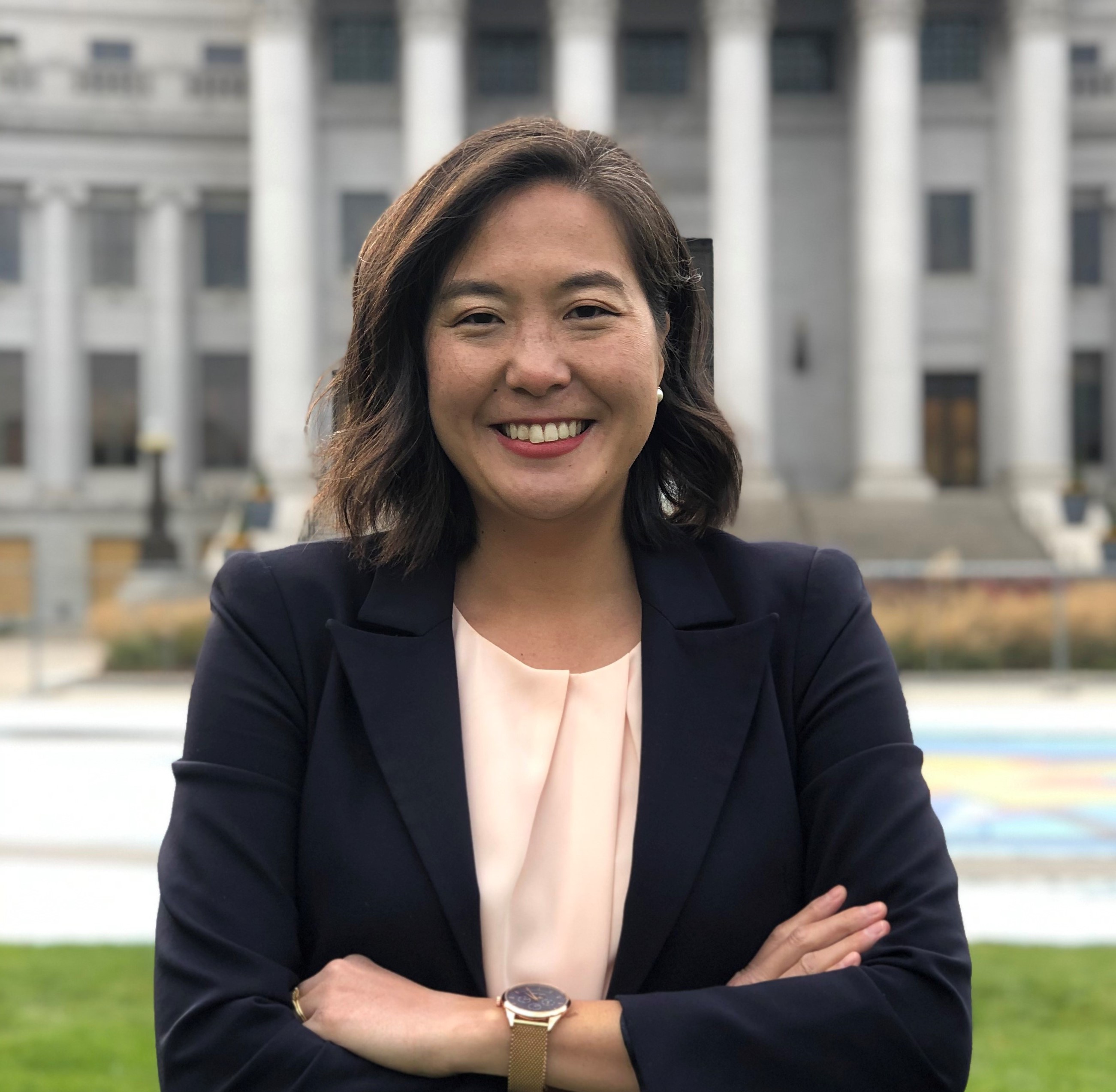
? Sumi Lee, the head of judicial diversity outreach for Colorado, stepped down last month to join the administration of Gov. Jared Polis. Lee’s position was established by the legislature in 2019 and she has coordinated various efforts to increase the diversity of candidates applying for state judgeships.
? “Sumi did a monumental job in launching this program at Judicial. … Her outreach and educational efforts have highlighted judgeship opportunities for a broader range of applicants across the state, and her work has inspired a whole generation of law students to consider a career on the bench. We are grateful to Sumi for her extraordinary contributions, and we look forward to building on the solid foundation she has created for us in this position.” -Justice Monica M. Márquez
? “We’ve witnessed remarkable progress, and her legacy will continue to inspire us as we work towards a more representative and equitable judiciary.” -Deborah Yim, president of the Asian Pacific American Bar Association of Colorado
? The Judicial Department has not yet posted a job announcement for Lee’s position.
Heard on appeal
? The Supreme Court will hear an appeal out of Weld County in which the jury instructions deviated from the offense prosecutors charged originally, and also an El Paso County case that may require dismissal of the criminal charges due to the prosecution’s delay.
? The state’s Court of Appeals decided a former judge’s admitted racial bias did not affect her ruling in a Hispanic man’s case, but that allegations of racism in a government office that represents children were “disturbing.”
? A man challenged the dismissal of his defamation suit against a reporter, as well as the constitutionality of a law designed to protect the freedom of the press. The Court of Appeals found no “lucid reasoning” to his arguments.
? A Montrose County judge declined to appoint counsel for a woman before terminating her legal rights over her child. But that was a mistake because she never gave up her right to representation, the Court of Appeals concluded.
? Yet again, an Adams County judge’s attempt to explain reasonable doubt in plain English prompted the Court of Appeals to reverse a defendant’s convictions. The court also chastised a Jefferson County judge for suggesting that jurors be considerate of courthouse staff who needed to stick around for their after-hours deliberations.
In federal news
? The U.S. Court of Appeals for the 10th Circuit declined to let a new Colorado law increasing the firearm purchasing age take effect while the state appeals a trial judge’s injunction.
? A man incarcerated in the El Paso County jail can’t sue over lax COVID-19 protocols because he didn’t specifically follow the jail’s policy for reporting problems.
? A pair of trial judges seemed to misunderstand that evidence of potential innocence emerged after a man’s murder trial, not during it. The 10th Circuit returned the case to the trial court for evaluation of the man’s innocence claim.
? Two months after the U.S. Supreme Court sided with a Christian web designer in 303 Creative v. Elenis, the 10th Circuit sent the case back to the trial court to implement the justices’ decision.
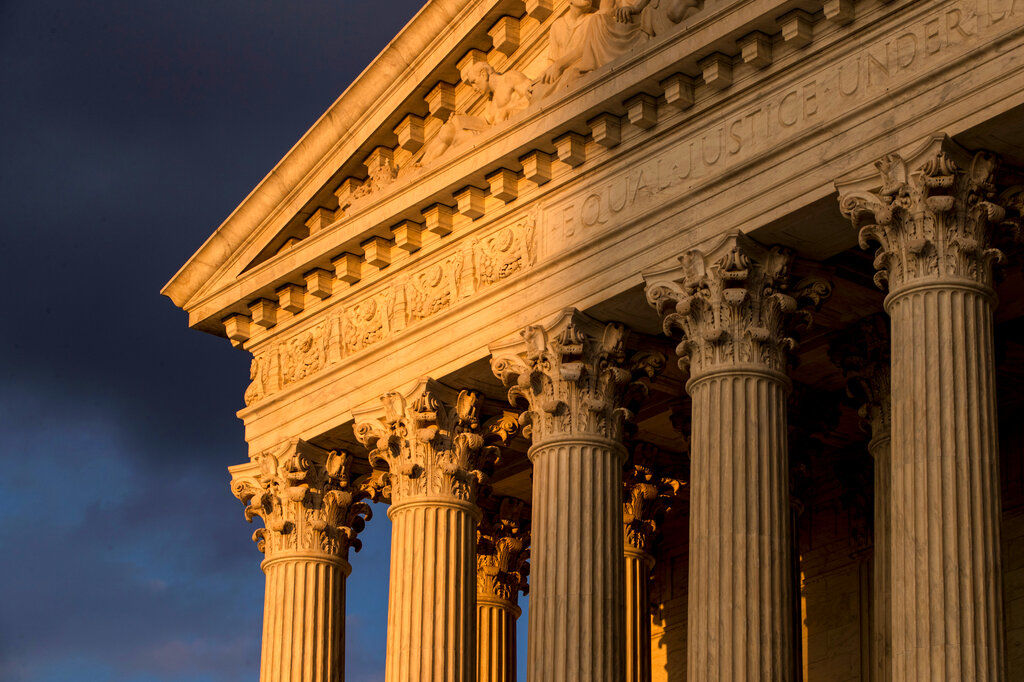
? Colorado’s federal trial court saw a record acquittal rate in criminal prosecutions last year, as well as an increase in the time it took for civil cases to reach a jury trial. Some judges cautioned, however, that parties are not taking advantage of opportunities to go to trial sooner.
? A federal judge partially dismissed a man’s lawsuit that seeks to hold Denver police and Denver Health liable for allegedly beating and forcibly X-raying him.
? Calling it the “epitome of the typical race discrimination case,” a federal judge allowed a Hispanic man to proceed with his lawsuit against two state troopers who allegedly profiled and arrested him without probable cause of a crime.
? An autistic student at the University of Northern Colorado asked a judge to reinstate him for the 2023-2024 school year, alleging the university failed to accommodate his disability before disciplining him. A judge declined to take immediate action.
? A judge dismissed the religious discrimination lawsuit brought by a former Douglas County schools administrator, who claimed he was terminated after he raised his religious beliefs on a staff-wide email list.
? A Denver firefighter trainee did not show how her race, sex or disability were the cause of her termination, a judge concluded.
? A judge told a trio of Gunnison landlords to their faces that they need to start complying with the anti-discrimination measures they agreed to three years ago, or else “punishments are going to start.”
Jury Appreciation Day
? This year, the General Assembly enacted a bill establishing Jury Appreciation Day, a commemorative holiday intended to recognize jury service. Attorney Brad Ross-Shannon spoke to Colorado Politics about the holiday and the critiques raised by some lawmakers. Here is an excerpt:
Colorado Politics: So the bill did not have unanimous support. Some lawmakers pointed out that juries are an imperfect mechanism of deciding cases, one that both contains and reflects society’s biases. In particular, at a committee hearing, Rep. Elisabeth Epps, D-Denver, described the “racial justice implications” of jury service and the “black box of unelected, unaccountable, uncorrectable secrecy” that happens in jury deliberations. Should people be thinking about that aspect of jury service as well on Jury Appreciation Day?
Brad Ross-Shannon: The whole idea of Jury Appreciation Day was to recognize the difficult job that jurors do. In terms of those comments, it was something we had not addressed, not really contemplated. While our jury system is not perfect, jurors generally get it right and they treat people – whatever race, gender, standing they have in the community – they treat people fairly. And that’s what we wanted to recognize, and really have state officials recognize that we appreciate the job that they do.

CP: Do you have any suggestions for how to improve jury service for the people who get called to do it? And also improving jury outcomes, meaning the delivery of justice?
BRS: It’s the best system in the world and we’ve had discussion amongst (American Board of Trial Advocates) members that jurors are really, to use one person’s term, the best “BS barometers” around. We’re all human beings, so there’s always going to be potentially an anomaly of a jury verdict, but it is the best system because with six people on a civil jury or 12 people on a criminal jury, you really get rid of agendas that any single individual may have, whether consciously or subconsciously.
Vacancies and appointments
? Applications are due by Sept. 29 for those wishing to succeed Judges John Daniel Dailey and David Furman on the 22-member Court of Appeals. Dailey has served for 23 years and Furman has been on the court for 18. Both are retiring.
? Also, applications are due by Oct. 4 for a vacancy in the First Judicial District (Jefferson and Gilpin counties) caused by the retirement of District Court Judge Randall C. Arp.
? Finally, applications are due by Sept. 29 to succeed District Court Judge Thomas K. Kane in the Fourth Judicial District (El Paso and Teller counties). Kane is retiring after nearly 30 years on the bench.

Miscellaneous proceedings
? Six Colorado voters have sued the secretary of state, seeking to block Donald Trump from appearing on future ballots due to his alleged role in stoking the Jan. 6 attack on the U.S. Capitol.
? A Colorado Springs man and two groups are suing the city to block new housing for homeless adults from being built.
? Denver’s city council approved a nearly $5 million settlement in response to a lawsuit alleging police selectively enforced the city’s temporary curfew against racial justice protesters in 2020.
? Weeks after The Denver Gazette reported that dozens of judges had not filed financial disclosures for one or more years as state law requires, seven trial judges have still not corrected their mistake.



Colorado Supreme Court signals intervention in dispute over treatment for trans children
Michael Karlik
michael.karlik@coloradopolitics.com
Updated 18 hours ago
The Colorado Supreme Court ordered Children’s Hospital Colorado on Tuesday to explain why it should not direct the organization to resume providing certain types of services to transgender children in compliance with the state’s non-discrimination law. Last month, a Denver...

Judge nixes latest policy requiring 7 days’ notice for Congress members to visit ICE facilities
Michael Kunzelman
michael.kunzelman@associatedpress.com
Updated 20 hours ago
WASHINGTON (AP) — A federal judge agreed on Monday to temporarily suspend the latest version of a Trump administration policy that requires members of Congress to provide a week’s notice before they can visit immigration detention facilities. U.S. District Judge...
Judge nixes latest policy requiring 7 days’ notice for Congress members to visit ICE facilities
Michael Kunzelman
michael.kunzelman@associatedpress.com
Updated 17 hours ago
WASHINGTON • A federal judge agreed on Monday to temporarily suspend the latest version of a Trump administration policy that requires members of Congress to provide a week’s notice before they can visit immigration detention facilities. U.S. District Judge Jia...
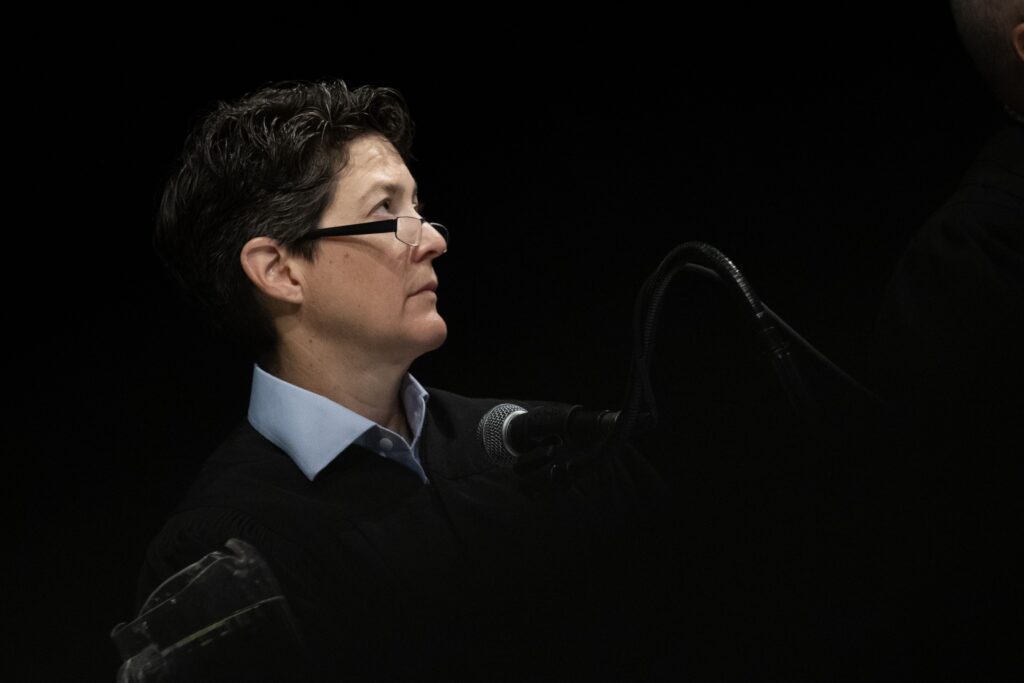
Colorado Supreme Court clarifies restraining order violations can always support burglary charge
Michael Karlik
michael.karlik@coloradopolitics.com
Updated 2 days ago
The Colorado Supreme Court’s majority ruled on Monday that a violation of a restraining order can also serve as a basis for finding a defendant guilty of burglary. Under state law, a person commits second-degree burglary by unlawfully entering or...

10th Circuit judge creates vacancy, district court gets new chief judge | COURT CRAWL
Michael Karlik
michael.karlik@coloradopolitics.com
Updated 1 day ago
Welcome to Court Crawl, Colorado Politics’ roundup of news from the third branch of government. A longtime member of the Denver-based federal appeals court will give the president a vacancy to fill, plus Colorado’s federal trial court will see a...

Morgan County man accused of killing wife, staging her suicide charged with first-degree murder
Kyla Pearce
kyla.pearce@gazette.com
Updated 16 hours ago
A grand jury announced the indictment of 52-year-old Ronald Lowry, who is accused of killing his wife in October 2023 and staging the crime scene to look like a suicide. Lowry, who was arrested Friday in Morgan County, was charged...
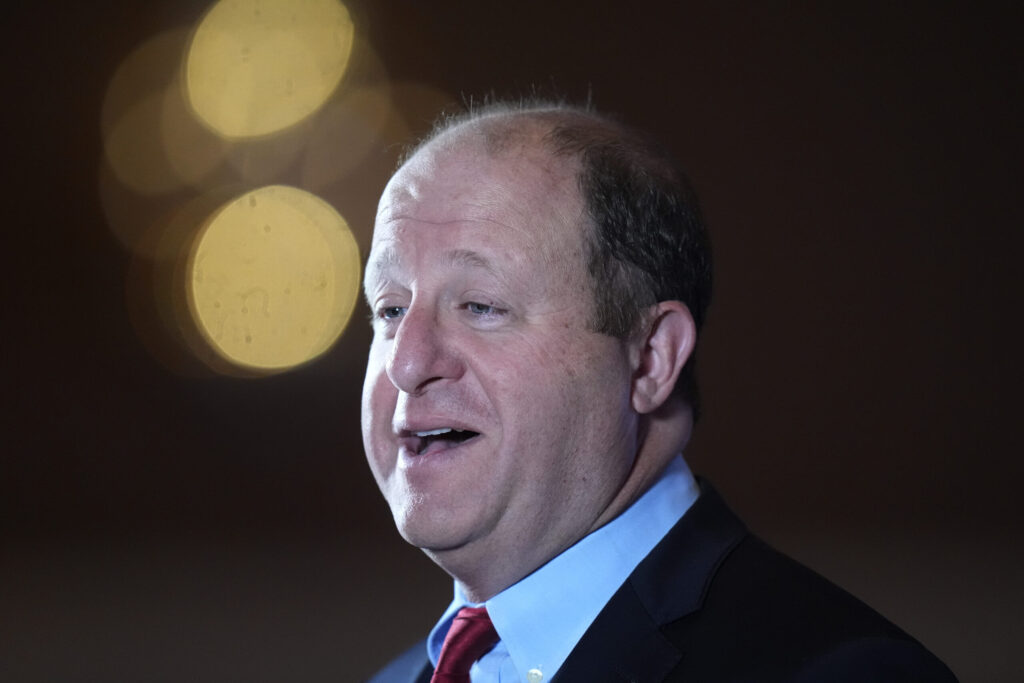
Gov. Jared Polis moves to end ICE subpoena fight over Colorado workers’ personal data
Marianne Goodland
marianne.goodland@coloradopolitics.com
Updated 5 days ago
The effort by Gov. Jared Polis to comply with an administrative subpoena from U.S. Immigration and Customs Enforcement for information held by several state agencies is over. Polis, in a motion filed Feb. 20, asked for a permanent injunction and...

Ex-Colorado Sen. Sonya Jaquez Lewis avoids prison, gets probation for forged ethics letters
Marianne Goodland
marianne.goodland@coloradopolitics.com
Updated 5 days ago
Former state Sen. Sonya Jaquez Lewis, D-Longmont, was sentenced Friday to two years of supervised probation and 150 hours of community service, and a $3,000 fine, to be waived if she completes an additional 100 hours of community service. The...

Toll to sexual assault survivors rises if they feel blamed and disbelieved
Jenny Deam
jenny-deam@coloradopolitics.com
Updated 5 days ago
Natalie, a single mother, dropped off her son at daycare, went to therapy and then returned home. She swallowed a fistful of pills, washing them down with a six-pack of beer. She was ready to end her life. “I just...

Colorado rape cases rarely result in an arrest and prosecution
Evan Wyloge
evan-wyloge@coloradopolitics.com
Updated 2 days ago
Authorities say they are especially difficult cases. In Colorado, most go nowhere. Over the past decade, for every 10 reports of rape, there is only one arrest. Warning: This story contains descriptions of sexual violence. Kiersten May remembered a fuzziness...
PREV
PREVIOUS

Justice Monica Márquez, attorneys honored for efforts to promote lawyers' wellbeing
Justice Monica M. Márquez and five other attorneys received awards on Thursday night for their efforts to foster wellbeing in the legal profession, at a ceremony hosted by the Colorado Women’s Bar Association Foundation. In her acceptance speech, Márquez observed the COVID-19 pandemic had changed the world, “and, frankly, not necessarily for the better.” “I feel like […]

Colorado Supreme Court reverses ruling that would chill lawyers' speech
The Colorado Supreme Court on Monday rejected a lower court decision that would have potentially deterred lawyers from disseminating information to the public about class action lawsuits. Although lawyers generally enjoy immunity from defamation claims if they are speaking about their own litigation, the state’s Court of Appeals previously identified an exception to that shield. […]