

Suicide deaths in El Paso County hit all-time high, follow U.S. trend

About 49,500 people took their own lives last year in the United States, the highest number ever, according to government data released in August.
The Centers for Disease Control and Prevention, which posted the numbers, has not yet calculated a suicide rate for the year, but available data suggests suicides are more common in the U.S. than at any time since the dawn of World War II.
Deaths by suicide in El Paso County also saw a record high last year, up by about 10% in 2022 over 2021, for a total of 194, according to Coroner Dr. Leon Kelly, chief medical examiner.
“After three years of relatively flat total suicides during the pandemic, we’re trending up,” Kelly told The Gazette last month in releasing his final 2022 annual report.
The increase may indicate the pendulum is swinging toward a new pattern.
“This year we’re tracking ahead of last year,” Kelly said of local suicide data from January through April.
While suicide is a complicated issue that involves many factors, a rise in drug overdoses, particularly involving the synthetic opioid fentanyl, more murders and the region’s population growth contributed to last year’s numbers, he noted.
El Paso County’s previous record was 180 deaths by suicide in 2019, the year before the pandemic hit.
In 2020, the number of local people taking their lives fell to 178, then dropped to 176 in 2021.
El Paso County again led the state last year, among 64 counties, for the most people killing themselves, according to the State Demography Office.
Deaths by suicide declined statewide last year, with 1,287 people taking their lives, down from 1,370 in 2021, according to the Colorado Center for Environmental Health and Data.
Also, teen suicides in El Paso County had dropped dramatically to four in both 2021 and 2022, but this year are rising, with deaths by suicide of children under age 18 already surpassing four by April, according to Kelly.
“There’s something wrong. The number should not be going up,” said Christina Wilbur, a 45-year-old Florida woman whose son shot and killed himself last year.
“My son should not have died,” she said. “I know it’s complicated, I really do. But we have to be able to do something. Something that we’re not doing. Because whatever we’re doing right now is not helping.”
Experts speculate that the recent increases nationwide might be driven by higher rates of depression and limited availability of mental health services.
But a main driver is the growing availability of guns, said Jill Harkavy-Friedman, senior vice president of research at the American Foundation for Suicide Prevention.
Suicide attempts involving guns end in death far more often than those with other means, and gun sales have boomed – placing firearms in more and more homes.
A recent Johns Hopkins University analysis used preliminary 2022 data to calculate that the nation’s overall gun suicide rate rose last year to an all-time high. For the first time, the gun suicide rate among Black teens surpassed the rate among White teens, the researchers found.
“I don’t know if you can talk about suicide without talking about firearms,” Harkavy-Friedman said.
U.S. suicides steadily rose from the early 2000s until 2018, when the national rate hit its highest level since 1941. That year saw about 48,300 suicide deaths – or 14.2 for every 100,000 Americans.
The rate fell slightly in 2019 and 2020, which some experts linked to a phenomenon seen in the early stages of wars and natural disasters, when people pull together and support each other.
But in 2021, suicides rose 4%. Last year, according to the new data, the number increased by 3% for a total of 49,449, which represents more than 1,000 more people than in 2021, according to provisional data from U.S. death certificates.
Nationally, the largest increases were seen in older adults. Deaths rose nearly 7% in people ages 45 to 64, and more than 8% in people 65 and older. White men, in particular, have very high rates, the CDC said.
Many middle-aged and elderly people experience problems like losing a job or losing a spouse, and it’s important to reduce stigma and other obstacles to them getting assistance, said Dr. Debra Houry, the CDC’s chief medical officer.
Despite the grim statistics, some say there is reason for optimism. A national crisis line launched a year ago in which anyone in the U.S. can dial 988 to reach mental health specialists.
Colorado also has a crisis hotline, 844-493-8255, or text “TALK” to 38255.
The CDC is expanding a suicide program to fund more prevention work in communities. And there’s growing awareness of the issue and that it’s OK to ask for help, health officials say.
Gazette reporter Debbie Kelley contributed to this report.



Judge grants partial injunction to GEO in fight against state health inspection law
Kyla Pearce
kyla.pearce@gazette.com
Updated 4 hours ago
A judge ruled Thursday that The GEO Group does not have to follow parts of a new state law requiring more frequent health and safety inspections at the U.S. Immigration and Customs Enforcement processing center in Aurora. Under the order...

Parker man faces 20 years to life for serial sexual assaults
Nicholas Fogleman
nicholas.fogleman@denvergazette.com
Updated 6 hours ago
A 25-year-old Parker man who sexually assaulted three women in 2025 pleaded guilty Wednesday and will serve 20 years to life in prison. Javier Rodriguez-Andrade pleaded guilty to charges stemming from three sexual assaults involving women ages 19 to 24. ...

Buttigieg performs best among Democrats against Rubio or Vance in possible 2028 contest: Poll
David Zimmermann
david-zimmermann@coloradopolitics.com
Updated 8 hours ago
Former Transportation Secretary Pete Buttigieg appears to be the Democratic Party’s best chance at winning the presidency against Secretary of State Marco Rubio or Vice President JD Vance in 2028, according to a poll released on Thursday. In hypothetical matchups...

Douglas County moves to Stage 1 fire restrictions following recent rain
Nicholas Fogleman
nicholas.fogleman@denvergazette.com
Updated 6 hours ago
Douglas County has downgraded its fire restrictions from Stage 2 to Stage 1 on Thursday following recent rainfall and moderate fire conditions, according to the Douglas County Sheriff’s Office. The change applies to unincorporated Douglas County, as well as the...

Divided appeals court upholds warrantless DNA collection in Colorado cold case, cautions of government overreach
Michael Karlik
michael.karlik@coloradopolitics.com
Updated 5 hours ago
Colorado’s second-highest court upheld the warrantless collection of a suspect’s DNA from a discarded soda can as constitutional on Thursday, while warning about potential abuse of DNA privacy in the absence of further guardrails. By 2-1, a three-judge Court of...

Democratic gubernatorial candidate Phil Weiser promises to appoint rural outreach director, water adviser
Marianne Goodland
marianne.goodland@coloradopolitics.com
Updated 5 hours ago
Democratic gubernatorial candidate and current Attorney General Phil Weiser told the Colorado Water Congress Thursday he intends to appoint a rural outreach director and a water policy adviser should he win the election in November. Weiser’s speech at the Steamboat...

Man charged in Northglenn homicide of wife
Matt Kyle
matt.kyle@denvergazette.com
Updated 6 hours ago
A man has been formally charged with murder and burglary relating to a homicide last week in Northglenn. Alexei Munive-Rodriguez, 48, was arrested Sunday after he was at large following the homicide, which occurred Friday. Police were dispatched around 10:30...
Attorney General candidates present priorities at Colorado Water Congress
Marianne Goodland
marianne.goodland@coloradopolitics.com
Updated 5 hours ago
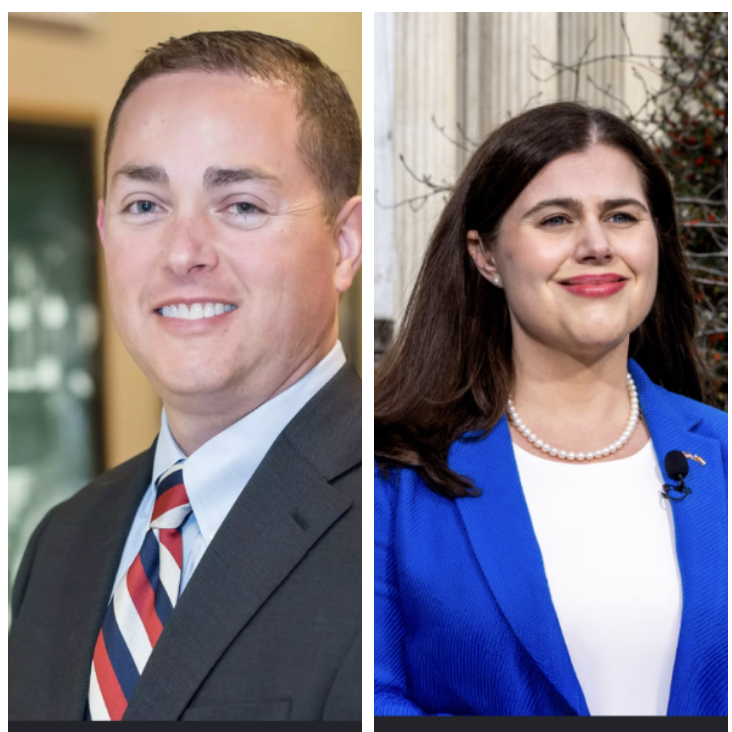
The two major-party candidates for attorney general — Republican Michael Allen, the district attorney for Teller and El Paso counties, and Democratic Secretary of State Jena Griswold — on Thursday outlined their priorities at the Colorado Water Congress. Griswold attended...

US aircraft carrier arrives in Middle East, relieving long-deployed USS Lincoln
The Associated Press
the-associated-press@coloradopolitics.com
Updated 10 hours ago
WASHINGTON (AP) — The Asia-based USS George Washington aircraft carrier is now operating in the Middle East, the U.S. military said Thursday, relieving a long-deployed carrier following reports of mental health challenges and supply shortages aboard while it was supporting...

Denver named finalist for 2028 Democratic Convention site
Thelma Grimes
thelma.grimes@coloradopolitics.com
Updated 4 hours ago
The Mile High City competes with Boston and Philadelphia The list of cities being considered to host the 2028 Democratic National Convention has narrowed even further, with Denver making the cut as one of the final three, along with Boston...