

10th Circuit declines to consider prison food-tampering claim

The federal appeals court based in Denver has declined to consider an incarcerated man’s allegations that a prison official tampered with his food by placing “light brown matter,” “red matter” and saliva on his meals, causing illness.
On Aug. 16, a three-judge panel of the U.S. Court of Appeals for the 10th Circuit issued an order explaining that, due to Eric Adams’ status as a federal prisoner, he could not sue for monetary damages over the alleged food contamination.
Lawsuits seeking money against federal officials are known as a “Bivens remedy,” named after the 1971 Supreme Court decision Bivens v. Six Unknown Named Agents. The Supreme Court initially authorized Bivens remedies in three specific circumstances: unreasonable searches and seizures, sex discrimination and deliberate indifference to an inmate’s serious medical needs.
However, the Supreme Court has since broadcast that it is largely unwilling to allow Bivens remedies in other types of cases. In contrast, a federal law known as Section 1983 facilitates lawsuits against state officials for constitutional violations. While state employees may still be subject to immunity depending on the nature of their conduct, there is no blanket prohibition on bringing such claims in the first place.
That disparity in treatment recently prompted a federal judge in Colorado to take the extraordinary step of calling on Congress to roll back the Supreme Court’s limitations on Bivens lawsuits. He labeled the situation a “fundamentally unjust legal state of affairs.”
In Adams’ case, the 10th Circuit nonetheless found itself obligated to dismiss his lawsuit.
Case: Adams v. Martinez
Decided: August 16, 2023
Jurisdiction: U.S. District Court for Colorado
Ruling: 3-0
Judges: Jerome A. Holmes (author)
Harris L Hartz
Gregory A. Phillips
Background: Federal judge to Congress: Roll back Supreme Court’s limitations on suing federal officials
Adams alleged the defendant, identified as “Officer Martinez,” would touch his food with bare hands that were “contaminated with body waste.” On three separate occasions in November 2015, Adams accused Martinez of putting “light brown matter,” “unknown red matter,” and “green and white saliva” on his tray or meals.
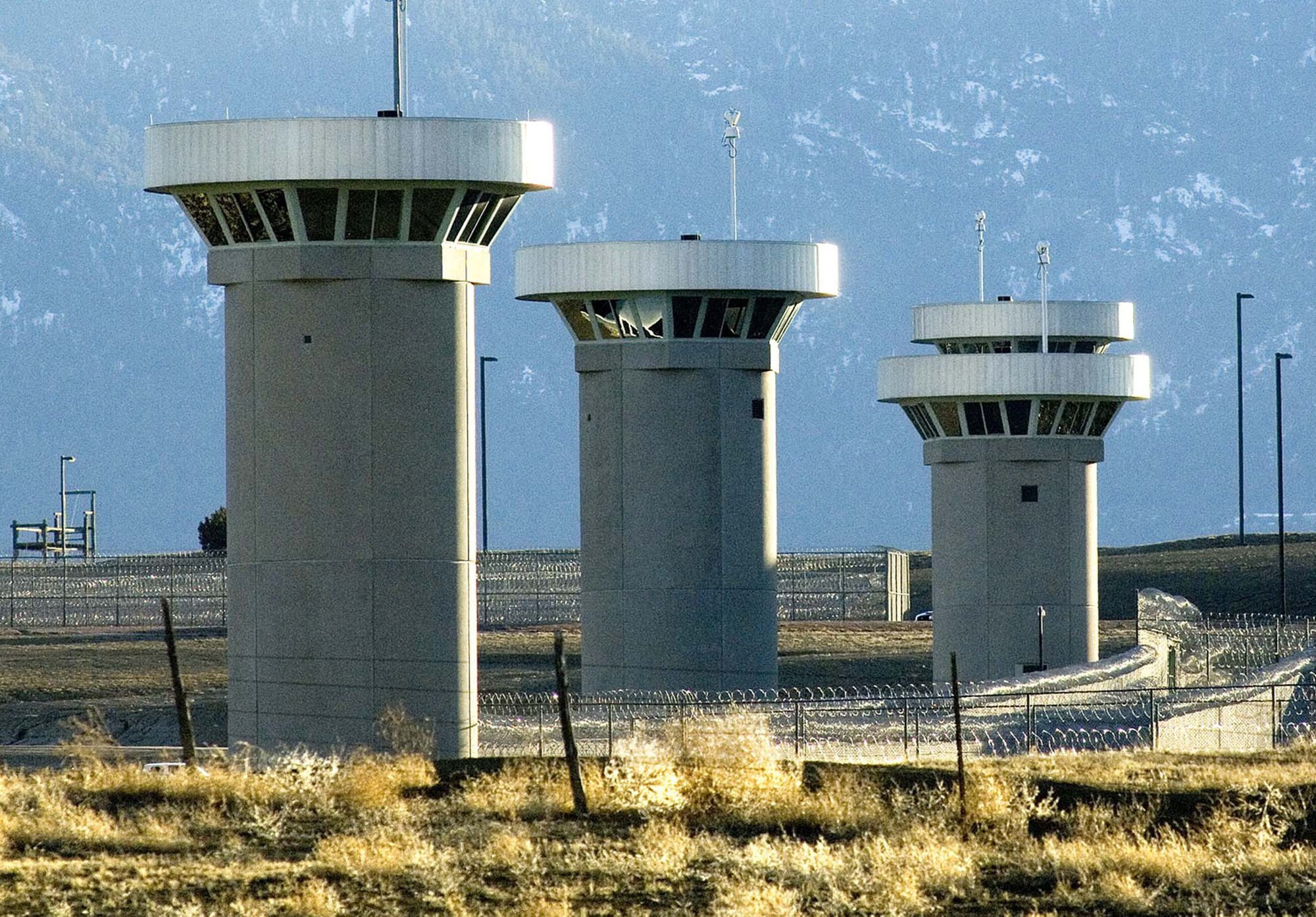
Adams, who was housed at the U.S. Penitentiary in Florence, said that as a result of the “poisonous matter” placed in his food, he sustained internal injuries. Adams filed grievances with the Federal Bureau of Prisons, which informed him the allegations would be “thoroughly reviewed” but that prisoners “are not entitled to receive information regarding the outcome of the investigation.”
Claiming a violation of his Eight Amendment right to be free from cruel and unusual punishment, Adams filed a federal lawsuit. He sought $160,000 in damages.
The government moved to dismiss his lawsuit, pointing out Adams experienced various medical ailments prior to the alleged food tampering, that he already had “three strikes” for filing frivolous complaints and that there was no Bivens remedy.
After several years of procedural disputes and revelations that the government provided inaccurate information about Adams’ litigation history, U.S. Magistrate Judge N. Reid Neureiter acknowledged last year that the Supreme Court’s precedent definitively barred Adams’ lawsuit against Martinez.
The 10th Circuit panel agreed Adams’ lawsuit did not fall into the limited categories of claims permitted against federal officials.
“Mr. Adams’s claim seeks to expand Bivens to a new context,” wrote Chief Judge Jerome A. Holmes. Instead, Adams needed to seek relief through the prison grievance system – which had already informed Adams he was not entitled to know the outcome of any investigation into food tampering.
The case is Adams v. Martinez.

Federal judge green-lights excessive force, retaliation claims for trial against Fort Collins officers
Michael Karlik
michael.karlik@coloradopolitics.com
Updated 1 day ago
A federal judge green-lit a jury trial last week against multiple Fort Collins police officers on claims that they used excessive force on one man who was standing unarmed in his underwear, and retaliated against another man for exercising his...
10th Circuit revives wage violation lawsuit against Papa John’s operator
Michael Karlik
michael.karlik@coloradopolitics.com
Updated 2 days ago
The Denver-based federal appeals court on Tuesday reinstated a former Papa John’s delivery driver’s lawsuit alleging violations of federal and state wage law. Steve Mighell worked for one month at a Denver Papa John’s location in summer 2023. He alleged...
Colorado appeals judge’s delays in releasing opinions noted by performance commission
Michael Karlik
michael.karlik@coloradopolitics.com
Updated 2 days ago
The citizen-led performance commission that provides guidance to voters about whether to retain members of Colorado’s second-highest court raised concerns by judges and attorneys that Judge Elizabeth L. Harris sometimes struggles with releasing opinions promptly. Harris, who joined the Court...

Colorado judge explores sanctions against DOJ, ICE for rearresting man 4 days after release on bond
Michael Karlik
michael.karlik@coloradopolitics.com
Updated 3 days ago
A federal judge in Colorado is considering sanctions against the government after immigration agents rearrested a man four days after an immigration judge found him suitable for release on bond. On July 28, U.S. Magistrate Judge N. Reid Neureiter ordered...

Divided disciplinary panel censures Montezuma County judge after agreement reached
Michael Karlik
michael.karlik@coloradopolitics.com
Updated 3 days ago
A disciplinary panel formally imposed a public censure, suspension, and further training on Montezuma County Court Judge Ian J. MacLaren on Tuesday by a 2-1 vote. Under constitutional Amendment H, which voters adopted in November 2024, MacLaren was set to...
Colorado’s Western Slope magistrate judges describe unique role in federal judiciary
Michael Karlik
michael.karlik@coloradopolitics.com
Updated 5 days ago
Two of Colorado’s federal judges stationed on the Western Slope spoke to lawyers on Wednesday about their unique roles, the ways their workloads differ, and the need for more criminal defense lawyers to take cases outside the Front Range. “Here...

Denver sues Philip Morris, other tobacco companies over cigarette butt litter
Deborah Grigsby
deborah.smith@denvergazette.com
Updated 3 days ago
Denver is demanding that some of the biggest tobacco companies in the world pay for the cleanup of discarded cigarette butts on its streets, following a similar campaign that cities in other states have pursued. Denver’s lawsuit, filed this week...

Federal judge rules that request for bond hearing not necessary to challenge immigration detention
Michael Karlik
michael.karlik@coloradopolitics.com
Updated 3 days ago
A federal judge in Colorado ruled last week that it is not mandatory for a person to seek a bond hearing with an immigration judge before they challenge the lawfulness of their detention in federal court. For the past year,...

Boulder Valley School District introduces new policies following antisemitism lawsuit
Marissa Ventrelli
marissa.ventrelli@coloradopolitics.com
Updated 3 days ago
The chief of Boulder Valley School unveiled new policies for the 2026-2027 school year following a lawsuit filed on behalf of a student alleging antisemitic harassment. In June, the Anti-Defamation League filed a federal civil rights complaint against the school...

Colorado NRA chapter seeks injunction against new gun‑training requirement
Marissa Ventrelli
marissa.ventrelli@coloradopolitics.com
Updated 4 days ago
The Colorado chapter of the National Rifle Association is seeking an injunction to stop the state from enforcing a new law that took effect earlier this month. The new law requires anyone buying or selling certain firearms to first complete...
PREV
PREVIOUS

Colorado Supreme Court's transition plan, fallout from judicial disclosure lapses | COURT CRAWL
Welcome to Court Crawl, Colorado Politics’ roundup of news from the third branch of government. The state Supreme Court has set itself apart from its peers around the country by developing a written transition plan for its chief justices, and a recent report about judges’ financial disclosures has drawn the interest of Colorado’s judicial discipline […]

DPS welcomes students back to school as CSOs, SROs strive for safety
Ten-year-old Felix Jones rode to school Monday on a bike, winding through downtown with his parents and younger brother. The 2.1-mile trek to Downtown Denver Expeditionary School – his alma mater – felt more like 10 miles to Jones, who still had to ride another 2 miles to his school, McAuliffe Manuel Middle School. On […]