

Colorado Republicans clash over proposal to boot unaffiliated voters from GOP primaries | TRAIL MIX

Colorado Republicans are preparing to again decide whether to cancel the upcoming primary election in order to prevent unaffiliated voters from helping pick the party’s nominees to the general election ballot.
The state GOP has considered – and overwhelmingly rejected – the move every election cycle since voters approved a 2016 statewide ballot initiative that opened Democratic and Republican primaries to voters who aren’t affiliated with any party.
But this year it’s different, say GOP leaders who support amending party bylaws to make it easier for its governing body to call off the primary and let Republicans nominate Republican candidates.
That could happen on Aug. 5 at a special meeting of the Republicans’ state central committee in Castle Rock, which was initially called to elect a new state vice chair after Priscila Rahn, who won a second two-year term in the position in April, resigned last month to campaign for a seat on the Douglas County Board of Commissioners.
In addition to replacing Rahn, the central committee will also vote on a series of proposed bylaws amendments, including one that would effectively reduce the number of votes it will take to cancel the primary.
Known as Amendment 7, the measure would count any central committee member who doesn’t vote on a question under certain circumstances as “a vote in the affirmative.”
Drafted by Chuck Bonniwell, an attorney and newspaper publisher who sits on the state Republican Party’s executive committee, the amendment is precisely worded so it would only apply to a potential vote to cancel the primary.
If it’s approved by the central committee, state Republicans plan to consider whether to close the party’s nominating process at a subsequent meeting in late September.
The proposed amendment has drawn a backlash from some Republicans, including two of the largest county GOP organizations in the state, which are both calling for its defeat.
“The Arapahoe County Republican Party is overwhelmingly opposed to this unfair amendment which negates the voice of duly elected members of the Central Committee and their constituents – the workhorses of our party who are also entitled to a voice through their elected representatives,” said Arapahoe County GOP Chair Anne Rowland in a statement issued after the county’s executive committee voted on July 25 to oppose the amendment.
“To avoid the disenfranchisement of grassroots Republicans, no vote should ever be cast or counted, either in the affirmative or the negative, unless the CRC member who is guaranteed that right to vote casts that vote themselves or grants another individual the right to cast that vote in their absence by proxy, where allowed,” she added.
The statement follows a formal resolution approved a week earlier by the Weld County Republican Party, who said the proposal was “not only morally and ethically wrong, but it may also be a violation of both state and federal constitutions as well as Colorado state statutes,”
Added the county party’s acting chairman, Hunter Rivera, in an email: “Automatically making a non-vote a yes vote flies in the face of the principles this country was built on.”
Its backers, however, say the amendment is necessary to get around an unreasonably high requirement contained in the ballot measure that established the state’s semi-open primary system. (A fully open primary, as exists in some states, would allow Democrats to vote in a Republican primary, and vice versa.)
Under Proposition 108, which was adopted with the support of 53% of voters, it takes an affirmative vote by 75% of either major party’s central committee membership to “opt out” of holding a primary and instead nominate candidates through party assemblies.
Republicans complain that’s an impossible threshold to meet, since it’s rare that even 75% of the GOP’s central committee members show up for meetings, meaning nearly everyone in those circumstances would have to vote “yes.”
State Republican Party Chairman Dave Williams said in a July 27 email to central committee members that the way the primary law is written, the party is already forced to factor no-shows into the equation – under current rules, they count as “no” votes against reaching the threshold – so the party can decide to treat them the other way.
“Please know from the start, the Party does NOT get to count non-votes as ‘abstentions’ for the opt-out threshold,” Williams wrote. “We must assume them one way or the other because the government forces a vote of the total membership instead of members present.”
Added Williams: “If you support closing the open primary with the opt-out vote, then it only makes sense to support the Bonniwell Amendment and vote yes. Again, it’s important to stress that the Party is forced to assume the position of non-participants one way or the other.”
While his position on semi-open primaries hasn’t been a secret – he led an unsuccessful proposal in 2021 to cancel the primary and featured the position in his campaign for party chair this spring – Williams stated for the first time in the email that he intends to vote for Bonniwell’s amendment.
“Colorado Democrats and leftwing unaffiliateds have violated our First Amendment right to the Freedom of Association. And the Bonniwell Amendment is a way to reclaim our right to self-governance as a private political organization,” Williams wrote.
“We should get to create our own rules and decide our own fate, not anyone else, especially radical liberals who will stop at nothing to pass the extreme agenda of Joe Biden and Jared Polis.”
Two years ago, just 33% of the Republicans’ state central committee members voted in favor of opting out for the 2022 primary – slightly better than in two previous attempts but still far short of the requirement.
The GOP’s roughly 415-member central committee is made up of party officers from each of Colorado’s 64 counties, elected state-level and federal officials, and bonus members awarded to larger counties based on the number of votes received by the party’s top-ticket nominee in the previous general election.
While both the state Democratic and Republican parties opposed the ballot measure before it was adopted – and leaders from both parties groused about the effects it would have on their primaries – the Democrats haven’t ever seriously considered canceling their primary, but Republicans have formally considered the move three times previously, in 2017, 2019 and 2021.
It’s a chance to reach out to the state’s vast trove of unaffiliated voters before the general election, Democrats say these days, noting that voters who cast ballots for a candidate in a primary are exceedingly likely to do the same in November.
Unaffiliated voters make up 47% of the state’s electorate, with Democrats accounting for 27% and Republicans coming in just under 24% – a sharp reversal for both major parties since a decade ago, when each group comprised roughly one-third of registered voters.
It’s impossible to win elections statewide or in competitive districts without winning over a good share of the unaffiliated, strategists say.
That was one of the arguments in favor of Proposition 108 – that it would boost voter participation and engagement. Proponents also maintained that unaffiliated voters are paying for primary elections so should be able to participate.
The measure’s chief sponsor, however, stressed that involving voters who weren’t affiliated with either major party could result in better nominees.
Kent Thiry, the wealthy former CEO of kidney dialysis giant DaVita Inc., founded the organization behind Proposition 108 and a companion initiative, Proposition 107, which established presidential primaries in Colorado and also passed in 2016. Thiry also sponsored a pair of amendments that won voter approval in 2018 to create independent congressional and legislative redistricting commissions.
“Opening primaries to unaffiliated voters will introduce voters into our primary elections less interested in scoring political points and more interested in lawmakers finding common-sense, bipartisan solutions to the problems facing average Coloradans,” Thiry said.
Ernest Luning has covered politics for Colorado Politics and its predecessor publication, The Colorado Statesman, since 2009. He’s analyzed the exploits, foibles and history of state campaigns and politicians since 2018 in the weekly Trail Mix column.

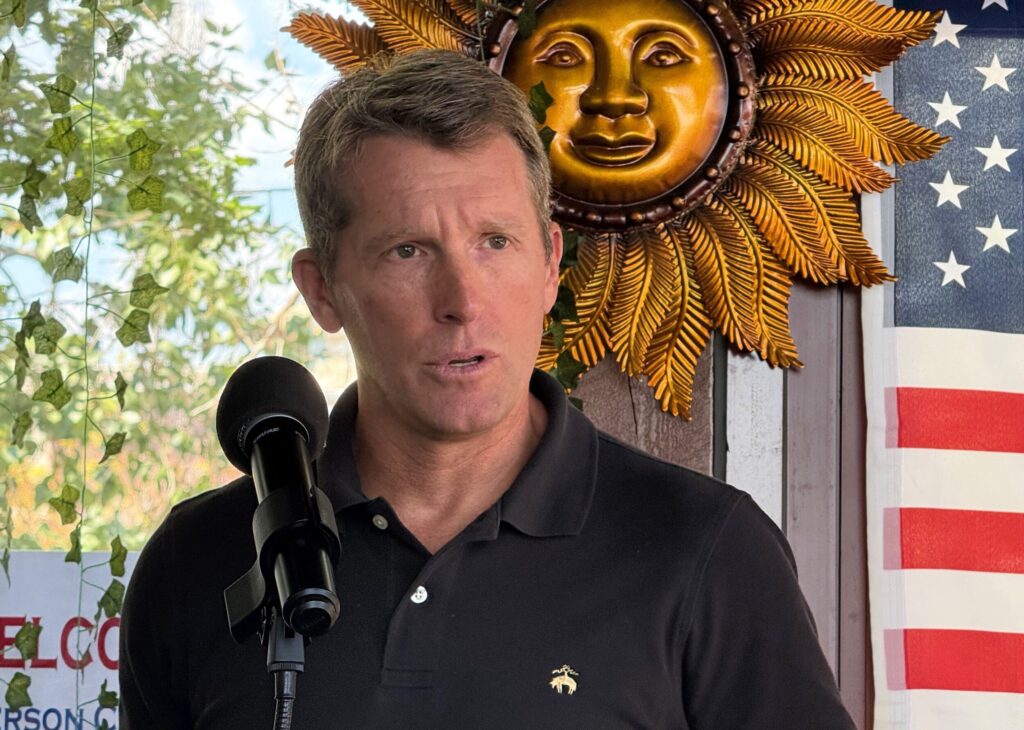
Republican Victor Marx taps George Markert as his lieutenant governor pick in Colorado’s gubernatorial race
Ernest Luning
ernest.luning@coloradopolitics.com
Updated 21 hours ago
Colorado Republican gubernatorial nominee Victor Marx named George Markert, a retired Marine colonel, as his running mate for lieutenant governor Friday morning, saying the former U.S. Senate candidate will bring “exceptional character, proven leadership and a lifetime of serving others”...
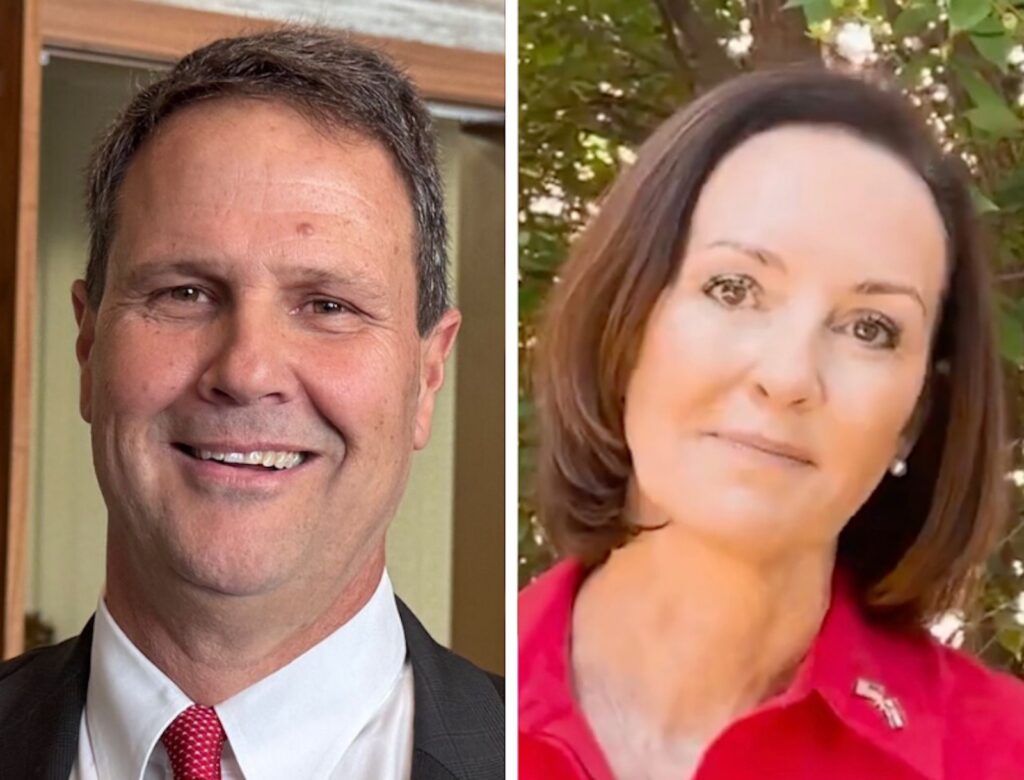
Democrat Jessica Killin’s internal poll shows dead heat with U.S. Rep. Jeff Crank in Colorado’s 5th CD
Ernest Luning
ernest.luning@coloradopolitics.com
Updated 2 days ago
Jessica Killin, the Democratic nominee in Colorado’s 5th Congressional District, is in a statistical tie with Republican U.S. Rep. Jeff Crank, according to an internal poll released this week by Killin’s campaign. The poll of likely general election voters, conducted...
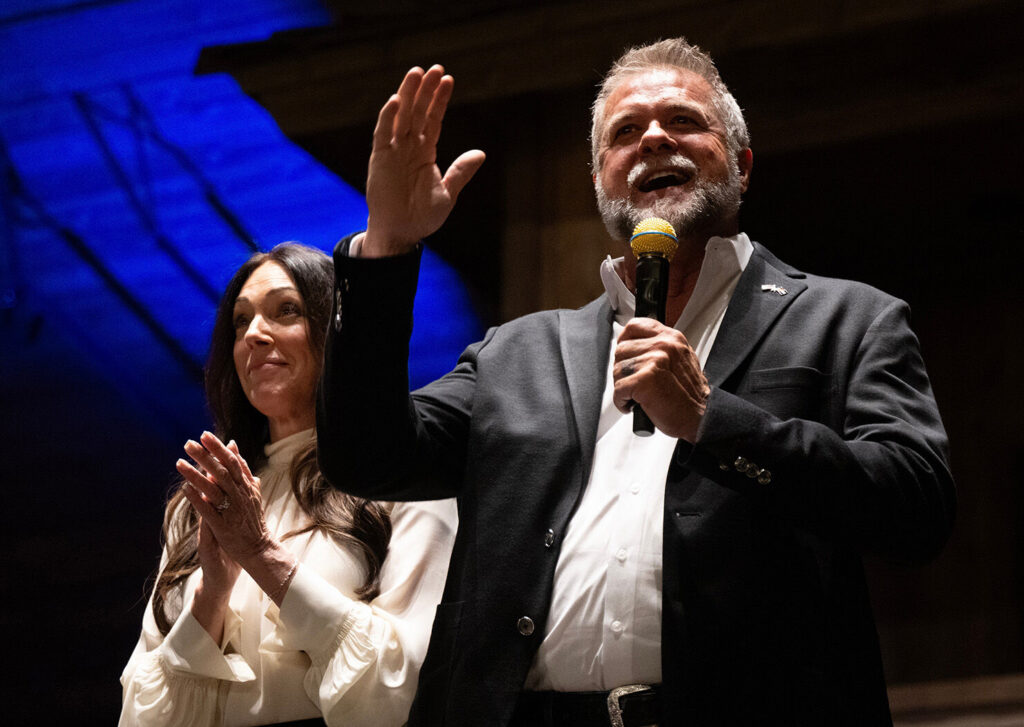
Victor Marx says he’ll only debate Phil Weiser once in Colorado governor’s race — without a moderator
Ernest Luning
ernest.luning@coloradopolitics.com
Updated 2 days ago
Colorado Republican gubernatorial nominee Victor Marx said on Tuesday that he will participate in only one debate with Attorney General Phil Weiser before the November election — and he challenged the Democratic nominee to hold the event without a moderator....
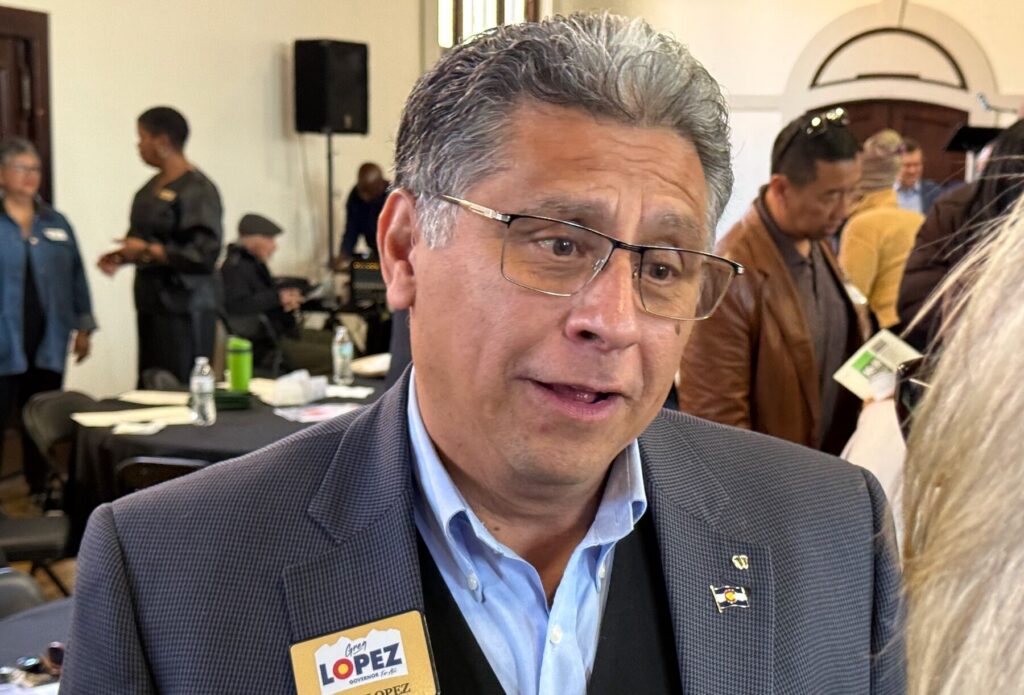
Independent gubernatorial candidate Greg Lopez, a former GOP congressman, qualifies for Colorado ballot
Ernest Luning
ernest.luning@coloradopolitics.com
Updated 4 days ago
Unaffiliated gubernatorial candidate Greg Lopez, a former Republican congressman from Elizabeth who left the GOP to run as an independent, has qualified for the ballot by submitting enough petition signatures, the Colorado Secretary of State’s Office said Tuesday. He’ll face...
Surprise candidate Shimon Blau cleared to face off against Melat Kiros in November
Ernest Luning
ernest.luning@coloradopolitics.com
Updated 1 week ago
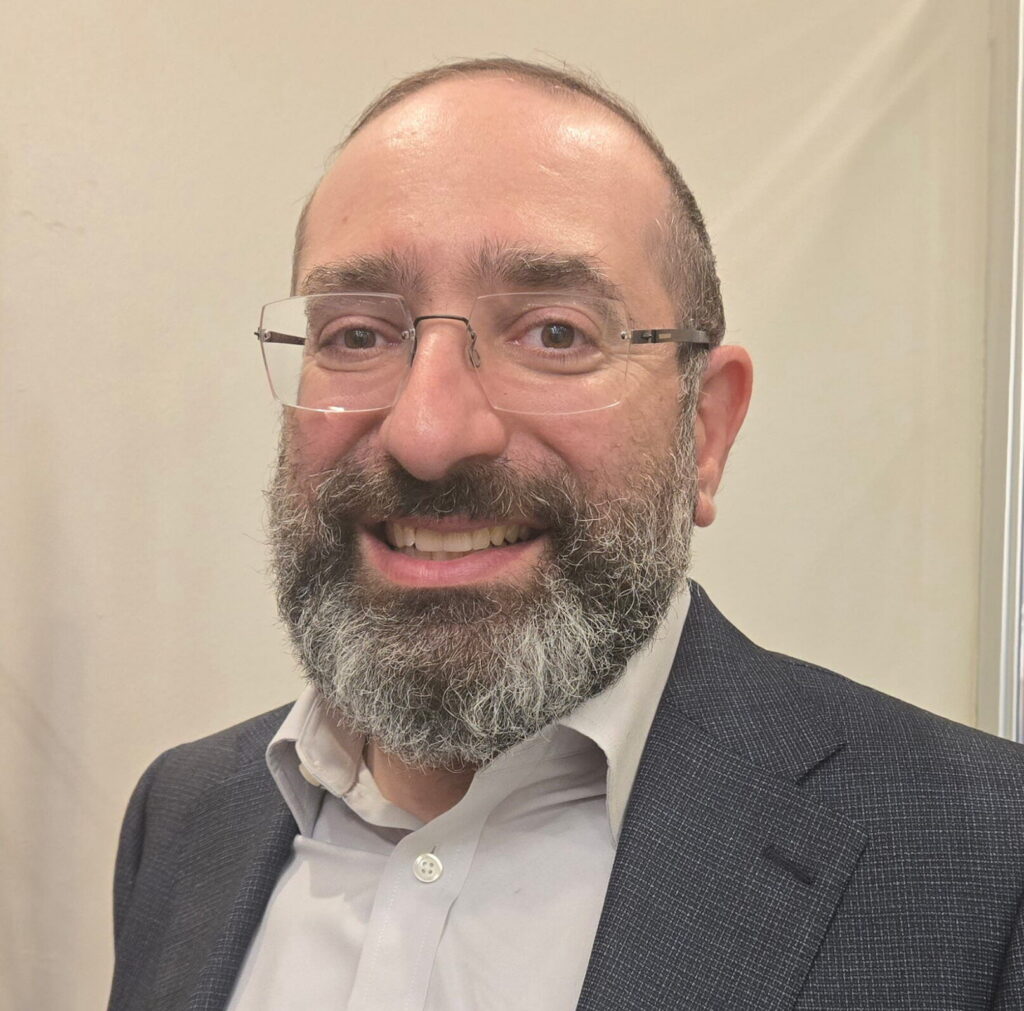
Unaffiliated congressional candidate Shimon Blau, a Denver doctor, has qualified by petition for the general election in Colorado’s 1st District, where Democrat Melat Kiros defeated 15-term U.S. Rep. Diana DeGette in last month’s primary, the Colorado Secretary of State’s Office...
Victor Marx, GOP candidate for governor, faces 100-plus campaign finance complaints
Marianne Goodland
marianne.goodland@coloradopolitics.com
Updated 5 days ago
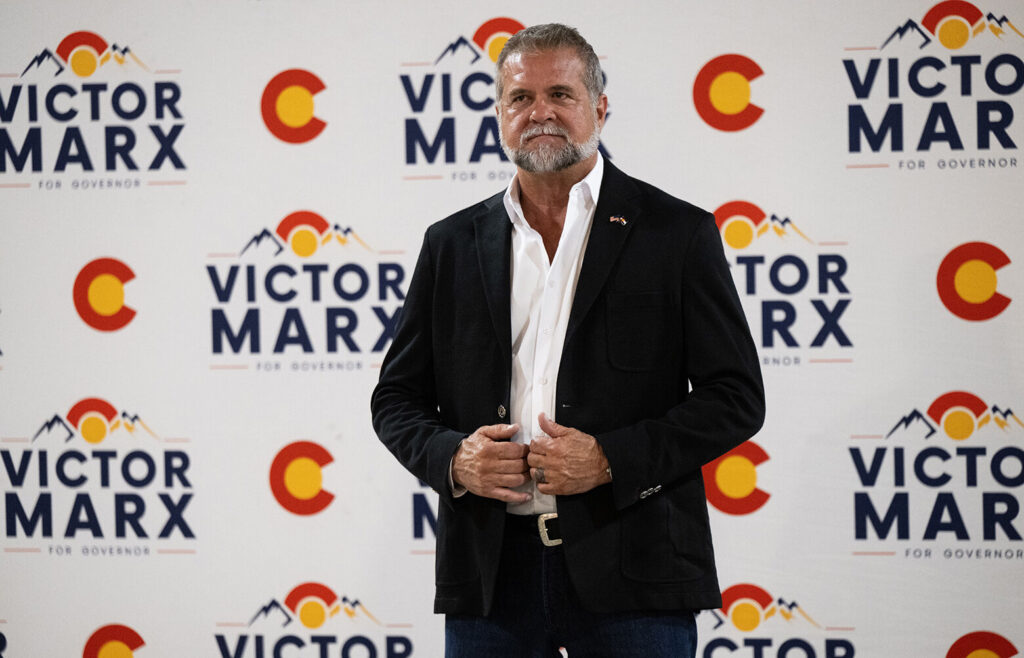
Victor Marx’s gubernatorial campaign has been hit with more than 140 campaign finance complaints, although most have been consolidated by the state’s election office because they follow similar alleged violations. Marx faces Attorney General Phil Weiser, who won the Democratic...
Jefferson County to fill commissioner vacancy after Dahlkemper tapped for lieutenant governor
Matt Kyle
matt.kyle@denvergazette.com
Updated 1 week ago
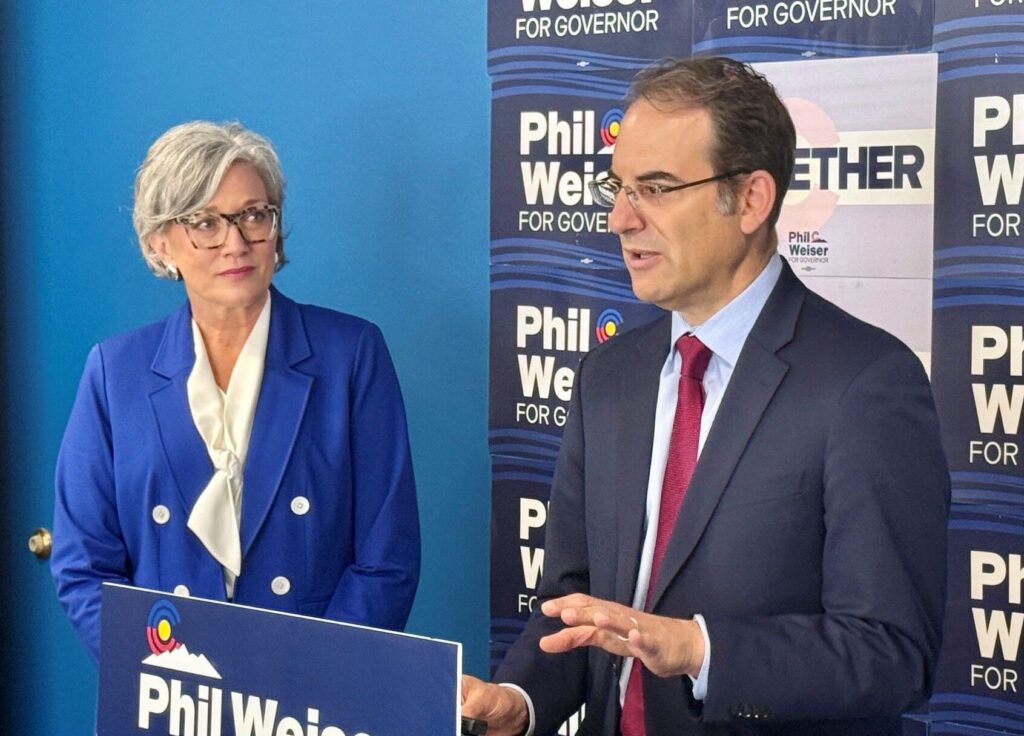
Democratic gubernatorial nominee Phil Weiser on Wednesday announced that Jefferson County Commissioner Lesley Dahlkemper would be his lieutenant governor, meaning she would be leaving her commissioner seat open should he win the race in November. However, Dahlkemper’s term was already...
Democrat Phil Weiser names Jeffco Commissioner Lesley Dahlkemper as his gubernatorial running mate
Ernest Luning
ernest.luning@coloradopolitics.com
Updated 1 week ago
Colorado Attorney General Phil Weiser, the Democratic nominee for governor, on Wednesday named Jefferson County Commissioner Lesley Dahlkemper to be his lieutenant governor running mate in the general election. Calling her “someone who can be a governing partner,” Weiser said...
Democrat John Hickenlooper hauls in $1.3 million in 2nd quarter in Colorado’s U.S. Senate race
Ernest Luning
ernest.luning@coloradopolitics.com
Updated 2 weeks ago
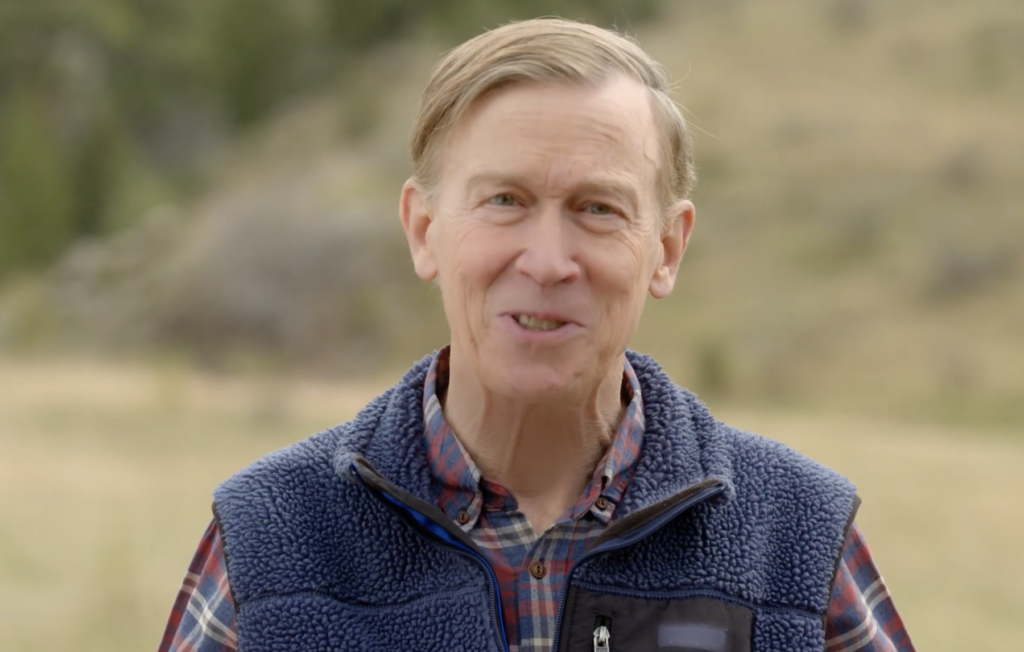
U.S. Sen. John Hickenlooper’s reelection campaign raised just over $1.3 million in the year’s second quarter and finished the period with $2 million in the bank, leaving the first-term Democrat with nearly 80 times as much cash on hand as...

Campaign launched to redirect $1 billion in TABOR refunds to education
Marissa Ventrelli
marissa.ventrelli@coloradopolitics.com
Updated 2 weeks ago
A coalition that includes the state teachers’ union on Tuesday launched a campaign for a ballot proposal that would reduce more than $1 billion in taxpayer refunds and spend the money on education. The measure is among several campaigns taking...
PREV
PREVIOUS

Solving homelessness, housing crisis in Colorado: Local mayors talk possible solutions
Multiple issues at a crisis point. Four mayors from the Front Range. Cities in search of collaborative solutions. The Denver Metro Chamber of Commerce hosted its 2023 State of the City event on Thursday, convening a panel that consisted of Boulder Mayor Aaron Brockett, Aurora Mayor Mike Coffman, Denver Mayor Mike Johnston and Colorado Springs […]

Colorado appeals court finds no error in handling of Planned Parenthood mass shooting lawsuit
Colorado’s second-highest court on Thursday determined a trial judge did not unfairly limit the types of evidence jurors could hear when they rendered a verdict that Planned Parenthood of the Rocky Mountains was not liable for a 2015 mass shooting at its Colorado Springs clinic. In 2021, a Denver jury decided Planned Parenthood did not […]