

Colorado Republicans split over proposal to make it easier for state GOP to dump open primary
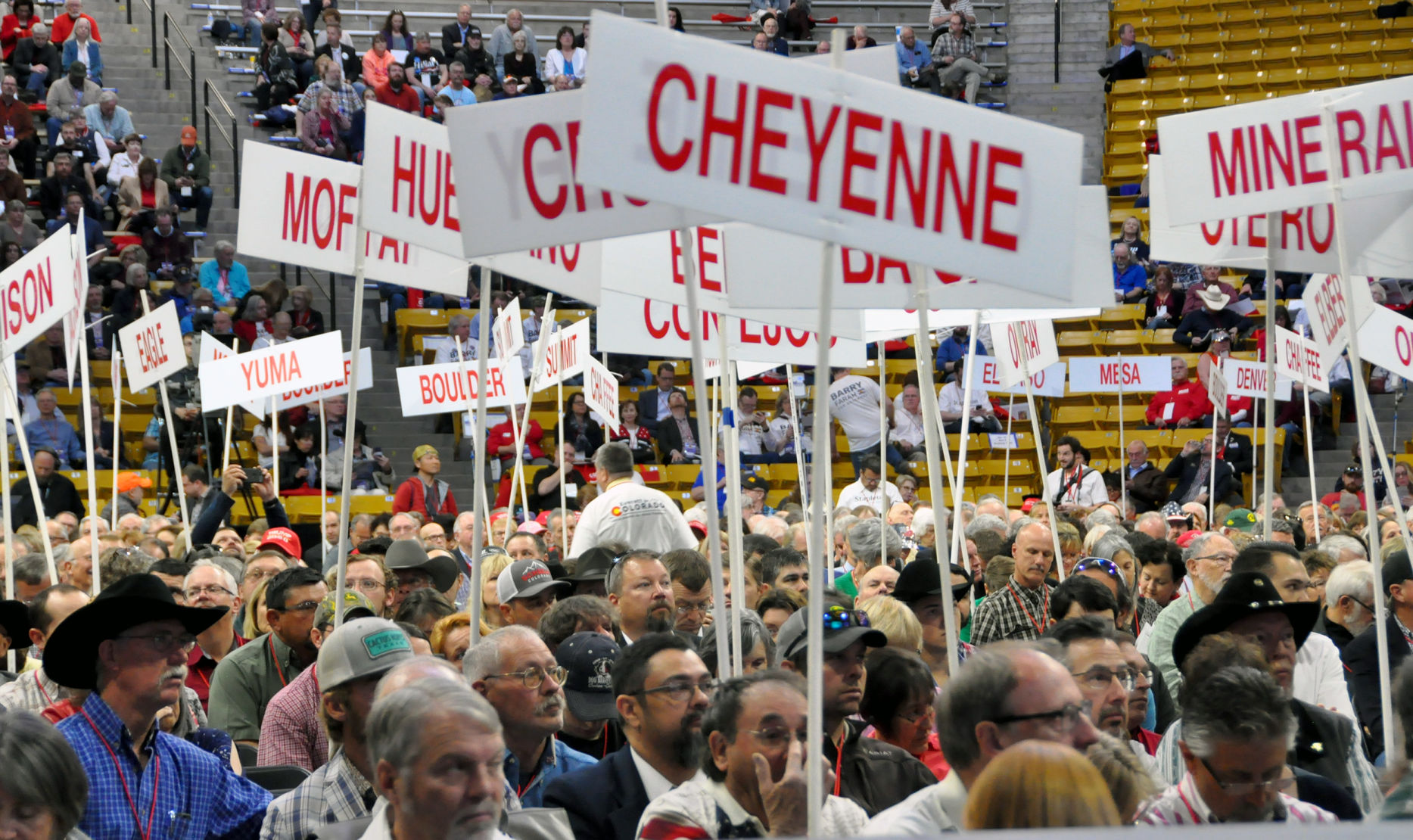
Colorado Republicans are at odds over the latest proposals to close the party’s primaries to unaffiliated voters, with advocates on both sides of the debate charging that their fellow partisans are threatening the GOP’s viability in an increasingly Democratic-leaning state.
The long-simmering dispute erupted this week when one of the state’s largest county Republican parties adopted a resolution opposing a proposed amendment to state GOP bylaws that would make it easier for the party to withdraw from Colorado’s semi-open primary system.
Set to be decided at an Aug. 5 meeting of the state GOP’s central committee, the amendment would lower the threshold to pass certain questions by counting absent and non-voting members as “yes” votes.
The proposal “is not only morally and ethically wrong, but it may also be a violation of both state and federal constitutions as well as Colorado state statutes,” the Weld County Republican Party said in a resolution approved by its executive committee on Tuesday.
“Automatically making a non-vote a yes vote flies in the face of the principles this country was built on,” Hunter Rivera, the Weld County GOP’s acting chairman, said in a statement.
“We have to collectively start focusing our efforts on electing Republicans to office rather than continuing to create purity tests or ideas like this amendment that only further divide the party,” he added.
A former state GOP chair told Colorado Politics that the proposed bylaws amendment smacks of Stalinism, while its sponsor said the reactions to his proposal demonstrate why the party has to loosen the grip establishment Republicans have over the party if it wants to start winning elections again.
Some Republicans blame the state’s semi-open primary system for the GOP’s string of losses in the last three general elections, leaving the party with less power statewide than it’s enjoyed at any time since the 1930s. Others, however, warn that closing Colorado’s Republican primaries risks pushing the state’s unaffiliated voters – who make up nearly half of the electorate – even more firmly into the arms of the Democrats.
In effect, the proposed bylaws change would boost chances that state Republicans can meet the requirements established by voters in Proposition 108, the 2016 ballot measure that allows unaffiliated voters to participate in Republican and Democratic primaries. Under the law, it takes an affirmative vote by 75% of the parties’ state central committee members to “opt out” of the primary and instead nominate candidate to the general election ballot using their own procedures.
Republican critics of the law say that’s an unreasonably high bar, noting that only rarely have 75% of the party’s central committee even attended its meetings – making it effectively an impossible hurdle.
It’s just one step in a multi-pronged effort by state GOP leaders to revamp the way the party nominates candidates to the general election ballot.
Other elements of the drive to prevent unaffiliated voters from casting ballots in Republican primaries include a revived lawsuit to challenge the state’s primary system on constitutional grounds and a proposal that the party conduct its own statewide primaries open only to Republicans, using volunteers and paper ballots cast at assembly locations in every county.
The party plans to vote on whether to opt out of the primary at a later meeting, tentatively scheduled for Sept. 30, state GOP Chairman Dave Williams told Colorado Politics.
At the same meeting, he added, the central committee will be able to decide between various alternative nominating procedures, including sticking with the caucus and assembly process or trying something new, like a statewide “assembly” process resembling the one Republicans have used in Virginia.
“We want to give options to the central committee and let them decide,” Williams said. “They could very well just opt out, and we would default to what we have currently with the caucus and assembly system, or they could choose an alternative plan that still involves the caucuses and assemblies but adds in other steps.”
The state GOP has considered proposals to opt out of the primary system three times since the ballot measure was adopted, but each time supporters have fallen far short of the required supermajority. In the most recent attempt two years ago, led by Williams, just 33% of the central committee voted in favor of scrapping the existing primary system.
Since the measure’s adoption ahead of the 2018 election, Democrats haven’t seriously considered scrapping their primary.
A former state lawmaker from Colorado Springs, Williams made his support for withdrawing from the primary system a key plank in his run for party leadership earlier this year.
“I think we need to do something different generally because everything we’ve been doing for the past several cycles has not been working,” he said. “Ultimately, if we’re going to succeed, I think we need to get back to a place where we’re able to nominate Republicans with only Republican voters.”
Williams added that he isn’t daunted by suggestions the proposed bylaws amendment could face a legal challenge if it passes.
“We figure any sort of attempt by the party to opt out will result in litigation from those who want to preserve the petition process, and those who make money off the petition process,” he said. “There are a lot of consultants and grifters whose paychecks would be threatened, so I would expect a legal challenge from those types.”
Republican consultant Dick Wadhams, a former state party chairman, said the party he once led could be headed off a cliff if it excludes unaffiliated voters from its primaries.
“I never cease to be amazed by the profound ignorance of the people who want to do this in terms of the reality of today’s Colorado electorate,” he said. “These people have no conception of the only way Colorado Republicans have ever won statewide races in this state.”
Wadhams, who managed winning statewide GOP campaigns in the 1990s and early 2000s – including for Bill Owens, the only Republican elected governor in Colorado in the last 50 years – said that efforts by Williams and his supporters to “purify” the party will only make things worse for state Republicans.
“They ran campaigns that did not cater to the hard-core base of the party,” Wadhams said. “They ran a campaign that could unify the Republican vote while at the same time attracting votes of unaffiliated voters.”
Wadhams denounced the proposed bylaws amendment as a “Stalinist” ploy to circumvent the law.
“When you try to manipulate people to vote a certain way, that’s right out of the Stalinist playbook,” he said, attempting to suppress incredulous laughter. “They say if you’re a member of the committee and you don’t show up, we’re going to cast your vote for you. They see a conspiracy behind every corner in terms of election fraud, and yet this is a conspiracy to steal the vote of people – there’s no other way to look at it.”
Colorado Springs Republican Eli Bremer, a former El Paso County GOP chairman and a 2022 candidate for the U.S. Senate said the proposed amendment was emblematic of the state GOP’s approach under Williams, who was county party vice chairman under Bremer.
“I think it’s completely ironic that a party that supposedly espouses adherence to the intent of the lawmakers at the time the law was created to be taking actions so blatantly against the intention of the voters who passed this law,” he said, adding, “If they don’t change the bylaws, I think everybody would admit this is DOA. I don’t think you’re going get 75% to opt out.”
Attorney and newspaper publisher Chuck Bonniwell, a member of the state GOP’s executive committee and chairman of a special committee to explore opt-out options, said he was amused by reactions to what he called “my little, obscure amendment.”
“Man have I gotten blasted. It’s hilarious when you finally try to do something positive and the RINO wing of the party just goes bonkers,” he said in an interview, using a derisive acronym for Republican in name only.
“All it does is give at least a possibility that we could opt out. It’s a last-gasp attempt to save what’s left of the Republican Party in Colorado,” he said.
“What’s the whine? What’s the endless whine?” Bonniwell said. “Why would we want our primaries dominated by people who don’t necessarily hold our ideas and our concepts – they don’t believe enough to register as Republicans. Why should they decide?”
Noting that it takes just minutes to change affiliation online in Colorado, Bonniwell added he’s anxious to debate the question at the upcoming GOP central committee meeting.
“It’s a high threshold, but I think people are wiling to have a change now,” he said. “They’ve done it the Dick Wadhams way for the last seven years and it’s just a disaster.”
He rejected arguments that unaffiliated voters “will get mad at you” if Republicans don’t let them participate in the primary.
“They didn’t in Virginia,” he said. “They elected Glenn Youngkin as governor in Virginia.”
Youngkin led what amounted to a comeback for Republicans in that state in 2021 after winning the nomination under a procedure similar to the statewide assembly system Bonniwell plans to propose as an alternative to the open primary for Republicans in Colorado.
Wadhams said he found the alternative nominating procedure floated by Bonniwell – who stressed that the details were still being worked out – unintentionally hilarious because it would involve organization and expenses far beyond the current state party’s capabilities.
“There’s a side to me that almost wishes they win this battle and try to implement that plan because they would look like fools,” he said. “it would be so comical. It would be tragic for the state, but it would be so comical to watch these clowns try to implement something like this.”


Michael Dougherty is literally running for attorney general in Colorado Democrat’s 1st TV ad
Ernest Luning
ernest.luning@coloradopolitics.com
Updated 6 hours ago
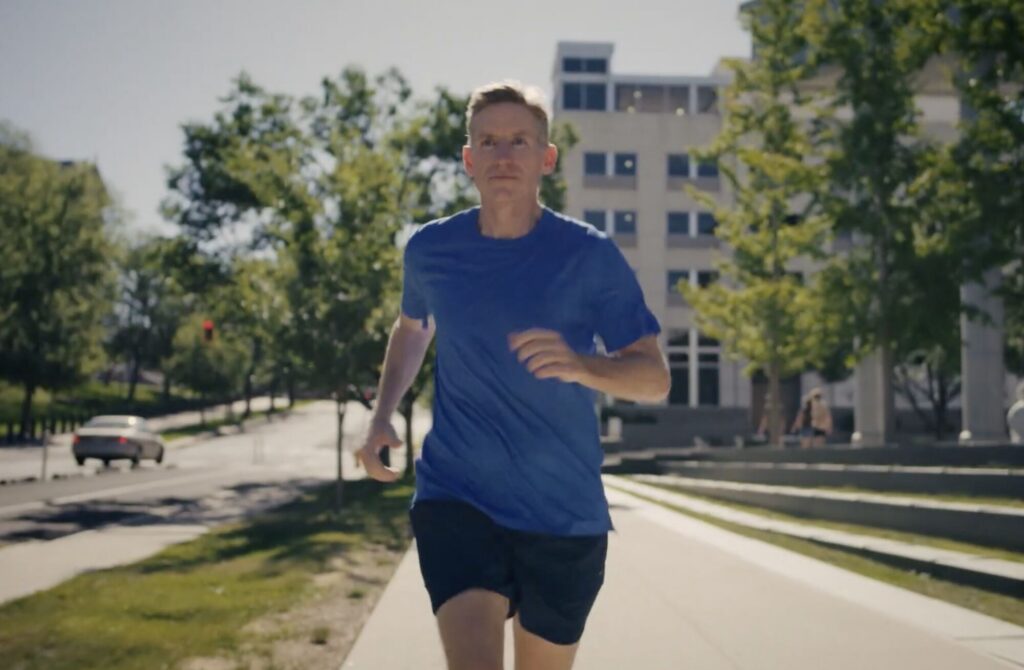
Democratic attorney general candidate Michael Dougherty, the Boulder County district attorney, runs laps around the judicial complex in Denver that houses the office he’s seeking in a TV ad released Friday that includes a subtle dig at one of his...

Group aims to add right to hunt and fish to Colorado Constitution
Marissa Ventrelli
marissa.ventrelli@coloradopolitics.com
Updated 4 hours ago
A group is seeking to make Colorado the 25th state in the nation with an established constitutional right to hunting and fishing through a proposed ballot initiative. Backed by the International Order of T. Roosevelt, a group dedicated to preserving...
Hickenlooper lands endorsements from Elizabeth Warren, Ministerial Alliance in US Senate primary
Ernest Luning
ernest.luning@coloradopolitics.com
Updated 1 day ago
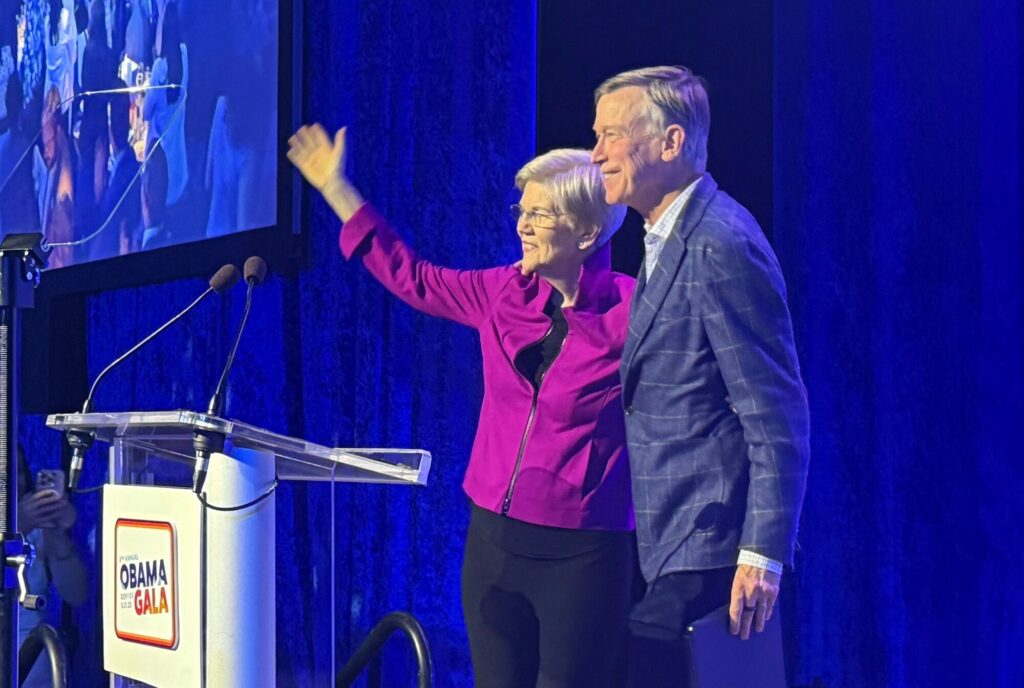
U.S. Sen. John Hickenlooper won endorsements this week from a progressive Democratic colleague and a coalition of metro-area African American faith leaders as voting began in Colorado’s primary election. U.S. Sen. Elizabeth Warren of Massachusetts and the Greater Metro Denver...
As number of unaffiliated voters grow in Colorado, experts note patterns, behavior
Marissa Ventrelli
marissa.ventrelli@coloradopolitics.com
Updated 1 day ago
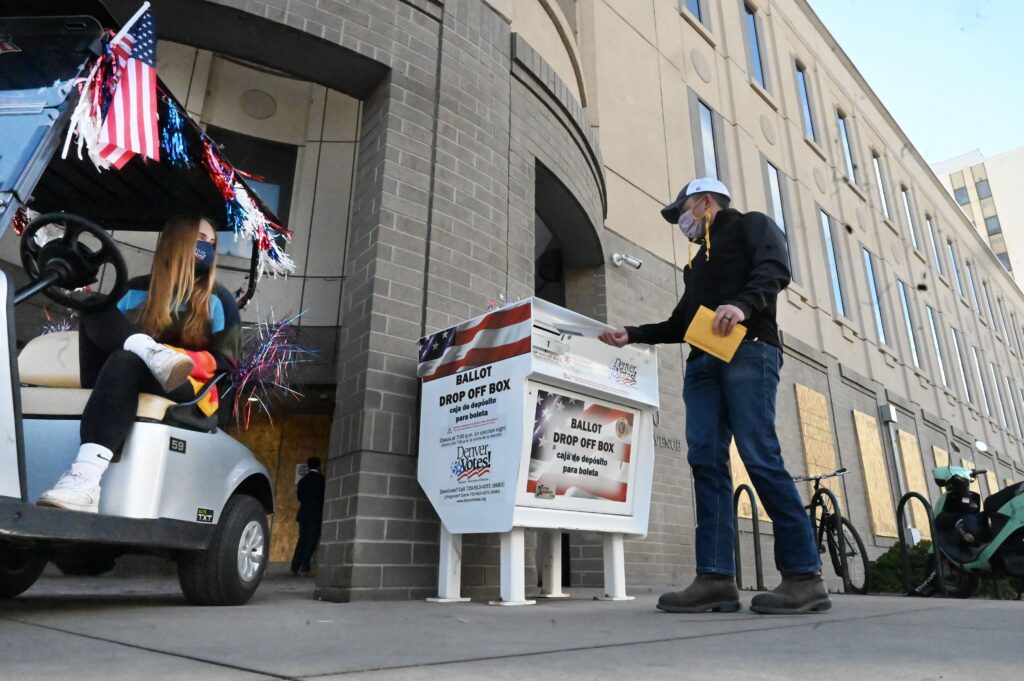
For the first time in Colorado’s history, more primary ballots are going to voters without a party affiliation than to registered Democrats or Republicans. As such, political experts said, candidates today need to appeal to a new block of people...

Bennet campaign finance case delayed again as Colorado Elections Division amends complaint
Marianne Goodland
marianne.goodland@coloradopolitics.com
Updated 2 days ago
A campaign‑finance complaint alleging that U.S. Sen. Michael Bennet’s Senate committee improperly paid for travel tied to his gubernatorial bid won’t get a public hearing until after the June 30 primary. The latest development followed months of delays and a...
Flat or graduated income tax? Colorado groups push dueling measures for November election
Marissa Ventrelli
marissa.ventrelli@coloradopolitics.com
Updated 23 hours ago
Colorado voters could face two opposing income-tax measures on the November ballot, with the dueling campaigns seeking to advance proposals that would take the state in sharply different fiscal directions. One initiative seeks to replace Colorado’s flat income tax with...

Backers of Colorado road-funding initiative reject withdrawal deadline
Marissa Ventrelli
marissa.ventrelli@coloradopolitics.com
Updated 2 days ago
The standoff over a road‑funding initiative in Colorado persisted after supporters declined state lawmakers’ request to withdraw the measure, while both sides signaled they are willing to pursue a broader agreement ahead of the fall deadline. Initiative No. 175, backed...
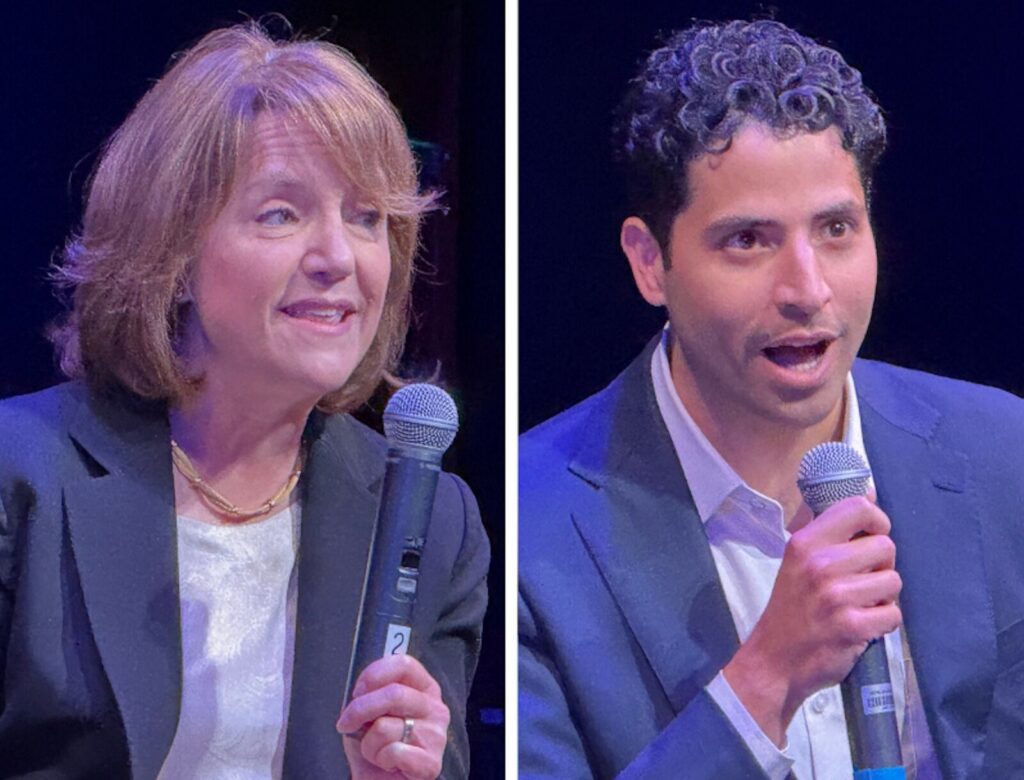
Sparks fly in debate between Democrats in Colorado’s 8th CD primary
Ernest Luning
ernest.luning@coloradopolitics.com
Updated 4 days ago
The two Democrats running for the chance to take on the Republican incumbent in Colorado’s most competitive congressional district traded blows during a feisty televised debate Monday night, sparring over their approaches to reining in the Trump administration’s immigration policies...
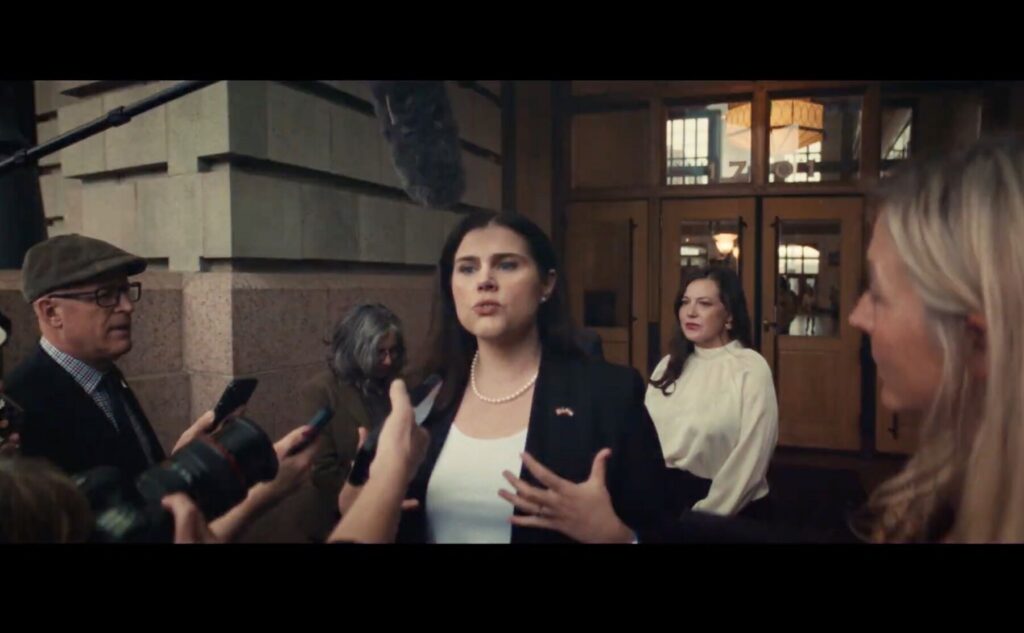
Jena Griswold hits airwaves with 1st major ad buy in Colorado’s Democratic attorney general primary
Ernest Luning
ernest.luning@coloradopolitics.com
Updated 5 days ago
Democratic attorney general candidate Jena Griswold plays the greatest hits from her two terms as Colorado secretary of state in her campaign’s first TV ad, which began airing Monday, the same day county clerks began sending out primary ballots. Set...
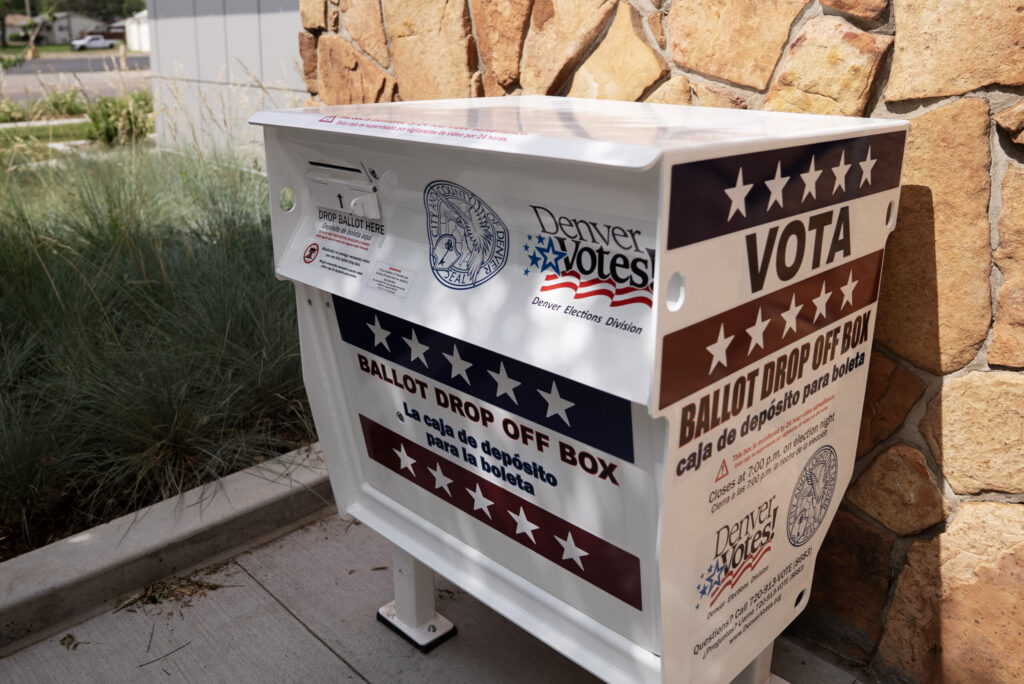
Primary ballots hit mailboxes in high-stakes election year in Colorado
Thelma Grimes
thelma.grimes@coloradopolitics.com
Updated 5 days ago
County clerks began mailing primary ballots to voters on Monday, as Colorado wades deeper into a crowded election year. Voters will face a long list of choices in both the June 30 primary and the November general election. Every major...
PREV
PREVIOUS

State Sen. Janet Buckner touts Colorado preschool program at White House panel
Colorado’s own state Sen. Janet Buckner traveled to Washington D.C. on Wednesday to promote state policies on preschool. Buckner joined more than 90 legislators from 41 states at the White House to discuss how politicians are working to improve the supply and accessibility of child care throughout the country, and improve job quality for child […]
Denver school board to vote on whether to release recording of closed-door meeting about police
The Denver school board will hold a special meeting Friday to vote on whether to release the recording of a closed-door meeting it held in March. Several news outlets, including Chalkbeat and The Denver Gazette, are suing Denver Public Schools for the recording of the meeting. DPS spokesperson Bill Good said Thursday that he didn’t […]