

American Birthright, the First Amendment and Colorado’s kids | NOONAN
Education skirmishes continue this summer. A school district in Garfield County is considering the adoption of American Birthright social studies standards as revised by the Woodland Park school district. This action would go against the vote on standards by the State Board of Education.
The social studies standards argument centers on the concept of “American Birthright,” meaning reverence for “human liberty, individualism, religious freedom and republican self-government,” according to David Randall, leader of the Civics Alliance that produced the standards.
Randall also states Birthright standards have a “strong, patriotic emphasis.” They counter “critical race theory” and other “divisive, radical ideologies without accountability in our education system.” Crandall’s view assumes”critical race theory” and other “divisive, radical ideologies” are taught every day from kindergarten through twelfth grade in our public schools.
These arguments beg for clarity and evaluation. These are the two sets of standards (Woodland Park version and Colorado state version). The Woodland Park/American Birthright version refers to state standards but diverges in its prescriptions and emphasis.
Stay up to speed: Sign-up for daily opinion in your inbox Monday-Friday
The Woodland Park standards, for example, include suggestions as to primary foundational sources in western culture for students to read. John Milton’s polemic to the English parliament in 1644 is offered as an example of early enlightened thought. His letter titled “Areopagitica” was written during the English Civil War between royalists and parliamentarians.
The English king Henry VIII started a system in 1538 by which authors’ texts had to receive a license from his Privy Council before publication. Milton argues in “Areopagitica” that books shouldn’t be censored, or refused a license by the state, before they’re published. He advocates for transparency, meaning the printer and authors’ names should be emblazoned on the texts. Ultimately, he says, readers should make their own decisions as to a publication’s merits. Milton does note if a book is “bad,” that is blasphemous or libelous, it should be banished after it’s published. These arguments are familiar today.
Moms for Liberty agree in general with Milton. This conservative group has an extensive list of printed works Moms would like removed from libraries after their publication, focusing particularly on LGBTQ literature.
Milton’s letter to parliament illustrates how the principles and facts of history, civics, economics and geography can come alive for today’s students. His essay is a half-step toward freedom of speech and press. Colorado’s approved standards ask teachers to identify the next steps toward First Amendment rights embedded in the U.S. Constitution. It’s unclear how American Birthright would address contemporary First Amendment controversies and move these important discussions forward.
Though American Birthright focuses on the glories of the individuals who put together the Declaration of Independence, the Constitution and the Federalist Papers, state standards include consideration of those left out of this gloriousness.
As an example, the Colorado standards are introduced thus: “Thomas Jefferson and other founders of the republic emphasized that the vitality of a democracy depends upon the education and participation of its citizens.” Teachers engaged in critical thinking exercises would have to add something about who was a “citizen” in 1790, especially a voting citizen.
Ironies abound on that score, as women and men who were not property owners couldn’t vote. “Any person who was not free,” meaning slaves, was counted as three-fifths of an American for census purposes in the unamended constitution.
Of course Thomas Jefferson was a man of property. At Jefferson’s 1,660-acre plantation, Monticello, the founding father and his many guests could look east from the front porch to the massive expanse of Virginian land and his perfected gardens, vineyards and orchards. But if Jefferson or a visitor gazed south, just 75 feet from the mansion, there was Mulberry Row, the quarters for the people who were not free and were bought and sold as property that enabled the wealth of the plantation.
Then there were Jefferson’s Indian treaties. The president’s “enlightened” idea was to “civilize” Indians by transforming them into farmers while also moving them off their lands in the east to territories in the west. His related idea was to keep Indians away from European alliances. His manifest destiny policies, though helpful to European settlers, were tragic for Cherokee, Creek and other tribes pushed out of their native lands in the early years of the nation, and then became worse as the nineteenth century progressed.
These themes with many angles inevitably permeate American history, economics, geography and civics. The Colorado state standards insist on examining ideas and events from multiple points of view to enlarge perspective and deepen understanding of the mash-up of national and international forces. Birthright standards focus on the primary idea of “liberty” as created by the nation’s framers, especially by those four brilliant early presidents from Virginia who, among them, owned almost 900 persons who were not free.
What will happen when children educated under Birthright standards engage with children educated with the facts that the four Virginian presidents who started up our nation also owned almost 900 people? Is conveying that information based on state standards considered critical race theory to some? Or, can we agree, that it’s history?
Paula Noonan owns Colorado Capitol Watch, the state’s premier legislature tracking platform.

Not-so-public comment in Douglas County | Paula Noonan
Paula Noonan
paula-noonan@coloradopolitics.com
Updated 11 hours ago
Let’s do some high and low history. First, the high history. England’s King George III didn’t like the complaining he heard from the American colonies, so he went to war to shut the people up. President Donald Trump doesn’t like...
Why Colorado should stop charging swipe fees on sales taxes | OPINION
Colorado Politics
colorado-politics@coloradopolitics.com
Updated 24 hours ago
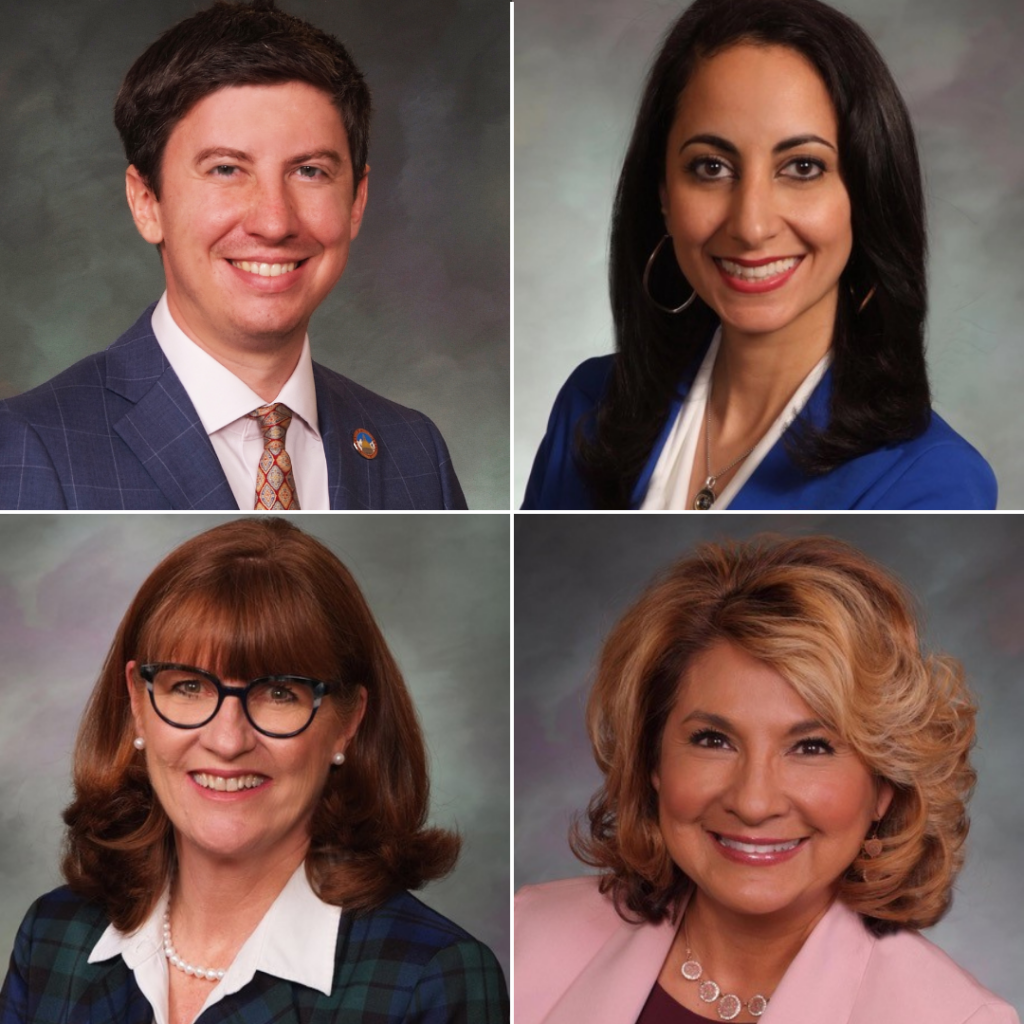
By William Lindstedt, Iman Jodeh, Julie McCluskie and Monica Duran Small businesses across Colorado are working harder than ever right now to keep their doors open, hire local workers and serve their communities. But every day, they are forced to...
Colorado can be a gamechanger in regulating GLP-1 weight loss drugs | OPINION
Colorado Politics
colorado-politics@coloradopolitics.com
Updated 24 hours ago
By Nancy Glick “As goes California, so goes the nation” is a phrase reflecting California’s reputation as a bellwether in setting regulations that often become a precedent for national policy. Now, Colorado can play this role, setting new safety standards...
Colorado can be a gamechanger in regulating GLP-1 weight loss drugs | OPINION
Colorado Politics
colorado-politics@coloradopolitics.com
Updated 24 hours ago
By Nancy Glick “As goes California, so goes the nation” is a phrase reflecting California’s reputation as a bellwether in setting regulations that often become a precedent for national policy. Now, Colorado can play this role, setting new safety standards...
The public health hazards in sports betting | PODIUM
Colorado Politics
colorado-politics@coloradopolitics.com
Updated 11 hours ago
By Brandon Zelasko As Colorado lawmakers revisit sports betting policy this session, the state has an opportunity to widen the lens. Beyond revenue projections and regulatory frameworks lies a critical question: Are we fully reckoning with the human effect of...
Colorado’s public lands are not for sale | OPINION
Colorado Politics
colorado-politics@coloradopolitics.com
Updated 2 days ago
By Jonathan Houck Our state is defined by its public land. It shapes our communities, our economy and our Colorado way of life. Just driving through Gunnison County, where I have lived for more than 30 years, sometimes I can’t...
The real impact of regulations on businesses, employees and Colorado’s way of life | OPINION
Colorado Politics
colorado-politics@coloradopolitics.com
Updated 3 days ago
By Loren Furman and Steve Swinney Every day in Colorado, business owners are faced with decisions most people never see, shaped by rising costs and a regulatory environment that has grown more complex over time. Those choices eventually reveal themselves...
Should we have recall votes for all Colorado elected officials? | Hal Bidlack
Hal Bidlack
hal-bidlack@coloradopolitics.com
Updated 3 days ago
As I write this on the Sunday before you read it, we’ve just learned of the first American casualties of our, what — war? conflict? attack? — on Iran. The Supreme Leader of Iran, for the past 36 years or...
Colorado legislature should not reverse lottery modernization | OPINION
Colorado Politics
colorado-politics@coloradopolitics.com
Updated 3 days ago
By Bill Clayton Four years ago, the Colorado General Assembly passed bipartisan legislation to modernize the state’s lottery system and strengthen funding for Colorado’s outdoor projects and open spaces. Lawmakers recognized a simple reality: consumer behavior has evolved. Most Coloradans...
Could Weiser or Bennet as governor each be an improvement over Polis? | Miller Hudson
Miller Hudson
miller-hudson@coloradopolitics.com
Updated 11 hours ago
The weekend before last was a forerunner to numerous forums and debates where U.S. Sen. Michael Bennet and Attorney General Phil Weiser will jostle for position in the Democratic primary for governor. The victor seems certain to be headed to...
PREV
PREVIOUS
Kyle Mullica is ‘the man in the arena’ | OPINION
Greg Fulton One of the most famous political speeches is one by Theodore “Teddy” Roosevelt’s known as The Man in the Arena. In that speech is an oft-quoted section: “It is not the critic who counts; not the man who points out how the strong man stumbles, or where the doer of deeds could have […]
A contrasting option to bolster election integrity | SENGENBERGER
Jimmy Sengenberger Since Colorado adopted statewide vote-by-mail in 2013, lawmakers and election officials have invested significant time and effort in tinkering with and improving the election system. This has earned our state great praise throughout the country and across the aisle. This status is something Democrats like Secretary of State Jena Griswold and U.S. Reps. […]