

Time to pay it forward on student debt | HUDSON
For the better part of the past two decades, perhaps three, voter support for higher education funding has declined in surveys of public budget priorities in Colorado. In many respects, this gradual yet steady erosion of enthusiasm can be traced back nearly 60 years. Following the second World War and the subsequent economic bonanza generated by the “G. I. Bill,” enabling millions of returning veterans to secure college degrees without cost bolstered with the provision of direct financial subsidies for family expenses, the 1950s witnessed rapidly expanding prosperity. Widespread popular and legislative commitment ensued for generously funding access to quality collegiate programs well into the 1960s. Students were only expected to pay a third of actual costs in tuition, while legislative appropriations covered the remainder.
My parents lived in “veterans housing,” which had previously served as ROTC barracks during the war, with other young families. My twin brother and I had plenty of kids to play with and our father wore a new uniform on weekends, playing his French horn in the marching band at New Mexico A&M football games in Las Cruces. As a minesweep officer, he was late returning home from the Pacific as he stayed an additional risky year to clear shipping channels in the Philippines. These mines were American hazards placed prior to the Japanese invasion of the islands when charts were lost during the turmoil of evacuation. He finally received his chemical engineering degree in 1949 and was immediately hired at Phillips Petroleum’s main offices in Bartlesville, Oklahoma.
Stay up to speed: Sign-up for daily opinion in your inbox Monday-Friday
As I entered the University of Maryland in August of 1963, I was fortunate to have won a National Merit Scholarship that paid 100% of my costs. The Thomas J. Watson (IBM) award was only valid at Maryland and could not be transferred elsewhere. With a twin brother also entering school at the University of North Carolina in Chapel Hill, I could hardly turn down the free ride. I still have my receipt for that fall semester, which totaled $963 – including tuition, room and board, health care, books and student fees. If translated into today’s purchasing power against inflation, this would be a little less than $9,000. But tuition has increased more than nearly any other economic sector, exceeding even health insurance. Most state universities now charge in the vicinity of $12,000 per semester simply for tuition, plus other expenses. Obamacare now allows students to remain on their parents’ health insurance until 26, but textbooks alone can run a thousand dollars, or more.
Although the minimum wage was just $1.25 per hour in 1963, Howie’s Sub Shop, half a block off campus, paid $2. I worked 20-to-24 hours a week to earn spending money and eat all the sandwiches I could digest. With a few thousand dollars from savings each summer it was entirely possible to actually work your way through college. That’s all but impossible today. My ticket to see the Beatles at the Washington, D. C. Coliseum was $5. Paul McCartney tickets at Fenway Park kicked in recently at $215. Loans available in the 1960s were Perkins grants authorized by the National Defense Act and targeted mostly at what we now call STEM majors – a response to the Soviet Sputnik scare. Few students pursued them and there were no financial aid staff to assist applicants. Today, the ratio of higher education costs borne by students has flipped, with the public contribution reduced to only a third, while student loans pay the rest.
So, what happened? Why this change? Civil rights and anti-war protests soured many voters and legislators on college students while runaway inflation during the 1970s required government to look for places where it could reduce the cost of government. Higher education provided the fattest target for discretionary spending cuts. Initially, student loans sounded like a pretty good deal, but by the late 1980s they had grown to what was viewed then as an intolerable total of $10 billion dollars. The George H. W. Bush White House worked with Congress to create Pell grants in 1988 to assist students from lower-income families and later the process of federalizing the entire outstanding portfolio commenced while total debt climbed toward its first trillion.
It became increasingly apparent the entire system has been spinning out of control. College administrators did little to reduce their spending and opted, instead, to install debt-driven cash machines at their financial aid offices, unfairly burdening several generations of graduates – wounding the American economy in the bargain. The Supreme Court had plausible reasons to rule against Biden’s debt relief scheme which proposed to distribute $400 billion in debt relief. This was an expenditure that brazenly ignored the exclusive appropriation authority granted to Congress – stretching executive authority to its outer limits by invoking the COVID emergency as a fig leaf for providing debt relief. This battle is not lost, however. Substantial relief from debts that crush hope and burden opportunity is necessary. The White House will return in 2024 with a stronger Plan B, arm-in-arm with millions of motivated debtors. It’s time for lucky Boomers, like myself, to graciously pay it forward.
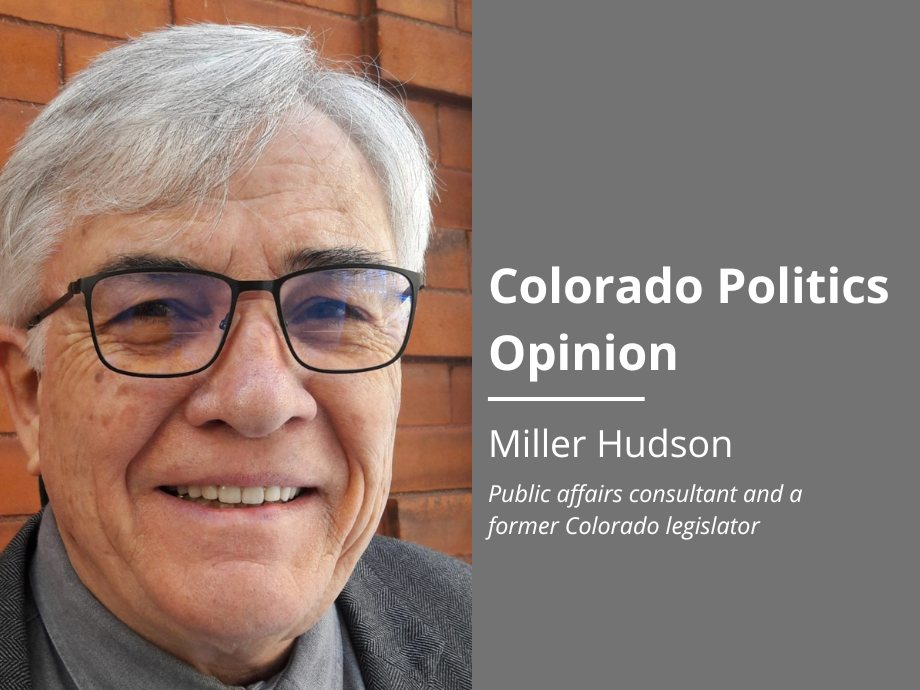
Miller Hudson is a public affairs consultant and a former Colorado legislator.

Threats inside and out loom for Colorado’s Republicans | Dick Wadhams
Dick Wadhams
dick-wadhams@coloradopolitics.com
Updated 1 day ago
Colorado Republicans made strides in 2024 despite an insidious state chairman who tried to defeat successful Republican candidates. Newly elected U.S. Reps. Gabe Evans, Jeff Hurd and Jeff Crank fought off unethical opposition from their own state party chairman, making...
Is it time for both parties to bail on Colorado’s political nominating system? | Miller Hudson
Miller Hudson
miller-hudson@coloradopolitics.com
Updated 1 day ago
Cracks are beginning to appear in Colorado’s political nominating system. Recently, Mario Nicolais, a formerly Republican-leaning pundit, and Doug Friednash, former Democratic legislator, have opined regarding the imminent demise of the caucus/assembly framework which controls partisan candidate selection. There has...

Recognizing the value of generational work | Rachel Gabel
Rachel Gabel
rachel-gabel@coloradopolitics.com
Updated 1 day ago
The Lesser Prairie Chicken habitat in southeastern Colorado is a swath of prairie that begins in Cheyenne and far-southeastern Lincoln counties and moves south and east into Kiowa, Prowers and Baca counties. This is cattle country where the short grass...

Why the controversy with mail-in ballots? | Cronin & Loevy
Tom Cronin Bob Loevy
tom-cronin-bob-loevy@coloradopolitics.com
Updated 1 day ago
Most Coloradans enjoy the right to vote “by mail” at election time. Most Americans favor this process. But U.S. President Donald Trump is trying to federalize (nationalize) this practice and shift the supervision of voting from county clerks to the...

Who are the kings being crowned here in Colorado? | Jon Caldara
Jon Caldara
jon-caldara@coloradopolitics.com
Updated 4 days ago
Though most of us celebrate “No Kings Day” on July 4, the Trump-deranged got a head start last weekend with rallies around the state. Attendees bravely fought oppression by blocking traffic for people with jobs. Rally-goers demanded freedom from tyranny,...
An April Fool’s Day to remember | Capitol M | Week of April 4, 2026
Marianne Goodland
marianne.goodland@coloradopolitics.com
Updated 6 hours ago
The lighter side of the Capitol, and if light were weight, the Capitol would have lifted off better than the Artemis II rocket on April Fool’s Day. There was a plethora of Fools at the Capitol for April Fool’s Day...
Democrats rebounding without learning necessary lessons | SONDERMANN
Eric Sondermann
eric-sondermann@coloradopolitics.com
Updated 2 days ago
“When we fight, we win!” That, reportedly, was the chant heard over and over again at the Colorado Democratic Assembly a week ago. It suggests that pugilism has been the piece missing from the Democratic toolkit. Perhaps it was just...
The Centennial State’s nuclear energy opportunity | OPINION
Michael Hancock
michael-hancock@coloradopolitics.com
Updated 4 days ago
Colorado was given a clear opportunity earlier this year. On Jan. 28, the U.S. Department of Energy issued a Request for Information (RFI) seeking potential hosts for Nuclear Energy Innovation Campuses — an early-stage process designed to identify states serious...
More pain than gain in upending Colorado’s water-access laws | OPINION
Colorado Politics
colorado-politics@coloradopolitics.com
Updated 4 days ago
By Greg Walcher and Mike King Colorado’s long-standing balance between public recreation and private property along rivers is now under renewed pressure. But changing stream access law would impose significant fiscal and legal costs for relatively limited new recreational benefit....
Guardianship is not a homelessness policy | OPINION
Colorado Politics
colorado-politics@coloradopolitics.com
Updated 4 days ago
By Amelia McKeon The federal government’s proposal to expand guardianship for homeless veterans is being framed as compassionate. It is anything but. It is a dangerous shift toward using one of the most restrictive legal tools we have as a...
PREV
PREVIOUS
There doesn't need to be a rural-urban divide | GABEL
Rachel Gabel This is a tale of two trailer loads. We headquarter in northeastern Colorado, but we haul cow calf pairs to spend their summers just over the state line near a small town in Wyoming. We also haul a handful of fall calving cows to Douglas County, near where I grew up. They spend […]
Reality beats ideology in battling addiction | SALAZAR
Alan Salazar Six years ago, about the same time I started as the new chief of staff for Denver’s mayor, Michael Hancock, I had no idea there was another man, a bit younger than me, starting a different and more challenging time hundreds of miles away in California. I was walking to a new job […]