

Colorado Supreme Court considers if lawyers’ speech can lead to liability
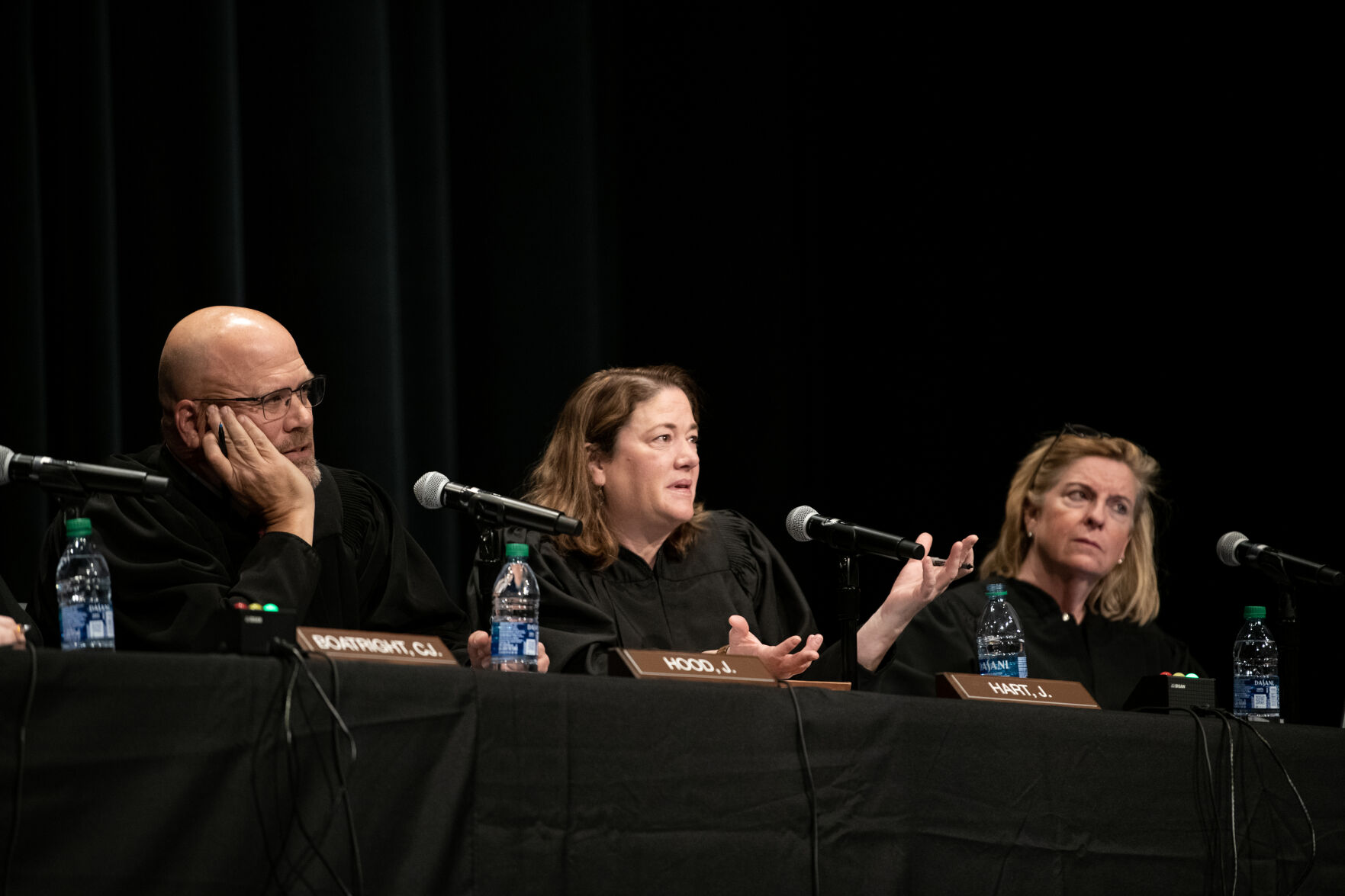
After Colorado’s second-highest court decided that lawyers and law firms can be held liable for making inflammatory statements when publicizing certain class action lawsuits, the state Supreme Court agreed to look at whether the new rule went too far.
On Wednesday, the justices heard about the implications of attorneys being subject to defamation lawsuits themselves for their statements to the media. On the one hand, it could discourage lawyers from making false accusations in the first place. But on the other hand, it might cause them to think twice before speaking publicly about class actions – thereby decreasing the opportunity for injured plaintiffs to learn that someone is advocating for them.
“In all class actions, outreach through the press is going to serve the useful function,” argued lawyer Brian M. Feldman, “of bringing some of them forward. That it is a legitimate tool.”
The case before the Supreme Court involves the “litigation privilege,” which prevents attorneys from being sued for defamation when they speak about a lawsuit. With class action lawsuits, which allow large groups of people to seek compensation for similar injuries, attorneys may hold press conferences or issue press releases to reach potential class members at the outset.
But in 2021, the Court of Appeals held that the litigation privilege does not immunize attorneys for damaging assertions they make when announcing some class action lawsuits. Multiple members of the Supreme Court wondered whether such an exception was appropriate when the alleged defamation is just a lawyer’s public description of the claims being made.
“There is something odd about the idea that simply by reiterating what is said in the complaint,” said Justice Melissa Hart, “you could be subject to a defamation lawsuit.”
“Especially when the complaint is a public document,” added Justice Carlos A. Samour Jr.
“And especially when back in the day,” continued Justice Maria E. Berkenkotter, “reporters used to go to the courthouses and look for newly filed complaints … and then turn around and publish what was in those publicly filed complaints.”
In the appeal before the Supreme Court, the law firms of Towards Justice and Killmer, Lane & Newman filed a class action lawsuit in 2018, claiming Ella Bliss Beauty Bar failed to pay its nail technicians for required custodial work. During a press conference, one of the attorneys, Mari Newman, said that nail technicians had to clean the businesses “for no pay whatsoever” and that Ella Bliss would “pick and choose and only pay for the hours they feel like paying.”
A press release also stated Ella Bliss “forced” technicians to work for no pay.
While the law firms were litigating the class action in federal court, Ella Bliss filed a defamation lawsuit against them in state court. The law firms defended their initial statements to the media as an attempt to reach potential nail technicians in the class and to educate the public about its legal rights.
But Ella Bliss countered the critical comments were not only false, but a “massive overreach” that injured its reputation without any relation to the lawsuit or need to reach the class of nail technicians.
A three-judge panel for the Court of Appeals subsequently ruled that Newman’s statements and part of the press release were not shielded from a defamation claim. Because the lawsuit alleged the number of nail technicians in the class was “easily ascertainable” by looking at Ella Bliss’ records, the appellate panel agreed it was unnecessary to try and alert potential plaintiffs through reputation-damaging comments to the media.
“Said differently, according to the attorneys, their purpose in speaking with the press and issuing the press release was to reach nail technicians who had worked for the employer,” wrote then-Chief Judge Steve Bernard. “Yet the complaint in the federal lawsuit undermines the need to engage in that form of communication.”
On appeal to the Supreme Court, the law firms received the support of legal aid organizations, the ACLU of Colorado and multiple media entities. The Colorado Press Association (of which Colorado Politics is a member), argued with other groups that the First Amendment not only protects those who speak, but the media’s interest “in receiving newsworthy information about matters of public concern.”
The law firms being sued warned the Supreme Court that even if an attorney is not ultimately found liable for defamation, the threat of litigation can divert their attention from the class action and give the corporate defendant leverage over the attorney.
“What’s different about class actions is that press releases advance litigation,” said Feldman.
Ella Bliss countered that lawyers should simply not say defamatory things in their attempts to reach out to plaintiffs, as false representations from attorneys are already grounds for professional discipline. They pointed to the recent censure of Jenna Ellis, a lawyer for former President Donald Trump, who made numerous misrepresentations to the media about the integrity of the 2020 election.
But some justices suggested Newman’s commentary and the press release were actually protected, given that litigation privilege shields even false statements when they are connected to a lawsuit.
“There’s no question that this is in relation to the suit,” Hart said. “So what made this defamation then?”
According to court documents, the parties in the original class action reached a settlement in federal court last week.
The case is Killmer Lane & Newman, LLP et al. v. BKP, Inc. et al.


Colorado court upholds murder conviction despite jury disobeying instructions
Michael Karlik
michael.karlik@coloradopolitics.com
Updated 4 hours ago
Colorado’s second-highest court upheld an Arapahoe County defendant’s murder conviction last month, even though jurors found he was not the one who shot the victim and the evidence suggested he was not present for the shooting. A three-judge Court of...
Divided appeals court reverses conviction after judge declined to define ‘bludgeon’
Michael Karlik
michael.karlik@coloradopolitics.com
Updated 9 hours ago
Colorado’s second-highest court reversed a Jefferson County defendant’s felony menacing conviction on Thursday, concluding that the trial judge’s failure to define “bludgeon” for jurors may have affected the outcome. A three-judge Court of Appeals panel divided in unusual ways in...
10th Circuit dismisses Tina Peters’ challenge to confinement as moot
Michael Karlik
michael.karlik@coloradopolitics.com
Updated 2 hours ago
The Denver-based federal appeals court granted the state’s unopposed request on Wednesday to dismiss former Mesa County clerk Tina Peters’ challenge to her confinement as moot. Although Peters received a commutation of her prison sentence last month from Gov. Jared...
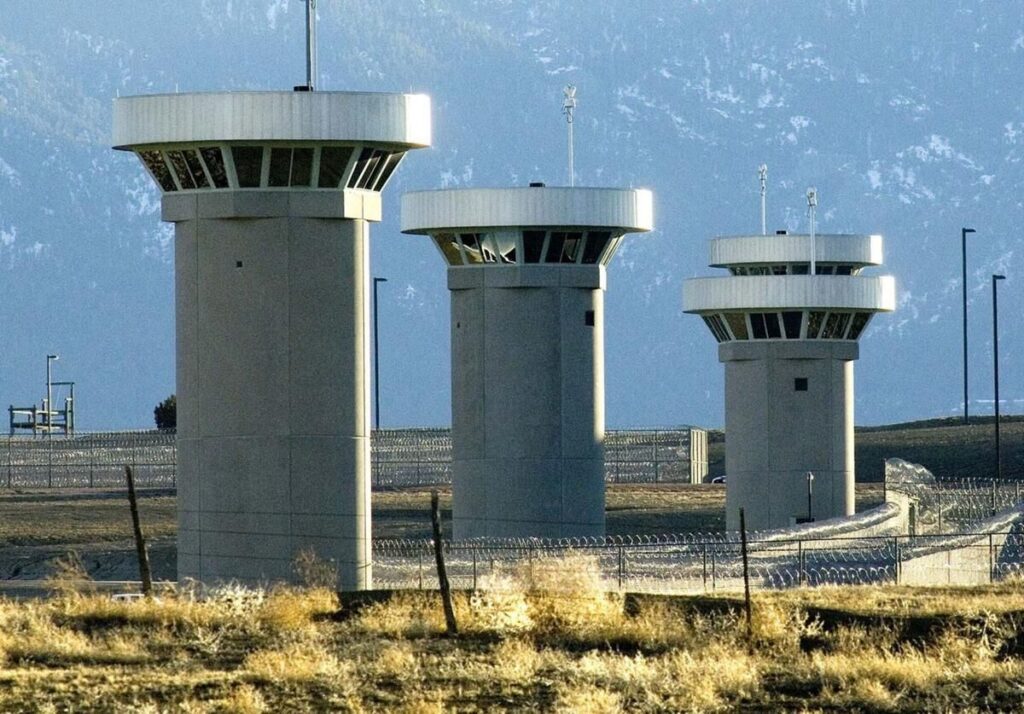
Federal judge declines to recuse from death penalty case after Supermax visit
Michael Karlik
michael.karlik@coloradopolitics.com
Updated 2 hours ago
A federal judge declined to recuse herself last month from a death penalty case arising out of Colorado’s “Supermax” prison, finding that her tour of the facility earlier this year did not bias her decision-making. U.S. District Court Judge Charlotte...
Appeals court clarifies offense of impersonating a peace officer
Michael Karlik
michael.karlik@coloradopolitics.com
Updated 1 day ago
Colorado’s second-highest court clarified this month that a person commits the offense of impersonating a peace officer if they engage in “any conduct” while pretending to be law enforcement. In a case out of El Paso County, Richard James Coulier...
Colorado Supreme Court reverses 2 Chaffee County judges for imposing fee on habeas petitioner
Michael Karlik
michael.karlik@coloradopolitics.com
Updated 2 days ago
The Colorado Supreme Court rejected two separate appeals earlier this month from an incarcerated defendant seeking immediate release from prison, but concluded that two Chaffee County judges incorrectly required him to prepay filing fees for his cases. David J. Gottorff...
Weld County judge wrongly denied bail to murder defendant in gap between law change
Michael Karlik
michael.karlik@coloradopolitics.com
Updated 2 days ago
Colorado’s second-highest court ruled this month that a Weld County judge was wrong to deny bail to a murder defendant in the window between the state Supreme Court’s recognition of the right to bail and the voters’ subsequent overruling of...
Defendants acquitted by insanity are eligible for records-sealing, appeals court says
Michael Karlik
michael.karlik@coloradopolitics.com
Updated 1 day ago
Colorado’s second-highest court clarified last month that defendants who are found not guilty by reason of insanity are eligible to have their criminal records sealed from public view. Judges must seal criminal records if, among other things, a defendant is...
Colorado Supreme Court shuts down ‘new form of representation’ in postconviction cases
Michael Karlik
michael.karlik@coloradopolitics.com
Updated 3 days ago
While unrepresented defendants in postconviction proceedings are permitted to have a court-appointed attorney investigate and augment their claims, that is not the case when a private lawyer authors the original petition, the Colorado Supreme Court decided on Monday. In contrast...

Colorado State Shooting Association files constitutional challenge to firearms dealer law
Marissa Ventrelli
marissa.ventrelli@coloradopolitics.com
Updated 3 days ago
A firearms group has filed a lawsuit challenging a recently signed law expanding regulations for firearms dealers in Colorado. House Bill 26-1126 clarifies that firearms dealers must hold both a federal and state license to operate. The bill also allows the...
PREV
PREVIOUS

DPS superintendent Alex Marrero appointed to Homeland Security Academic Partnership Council
U.S. Department of Homeland Security Secretary Alejandro N. Mayorkas announced the appointment of Denver Public Schools (DPS) Superintendent Alex Marrero, along with 19 new members, to the Homeland Security Academic Partnership Council. The council is comprised of 30 members who serve two-year terms. Mayorkas made the announcement Wednesday. Denver Public Schools superintendent releases version 2.0 […]

Contours of Colorado's 2024 election seem clear, but some surprises could be in store | TRAIL MIX
It’s almost exactly a year until Colorado’s 2024 general election ballot will be set, and already the contours are beginning to emerge. Next year’s election will be one of those rare occurrences when Colorado voters are faced with deciding only a couple of statewide races: the presidential contest and the race for the at-large seat […]