

Colorado fails to enforce safety requirements for gas pipelines, audit finds
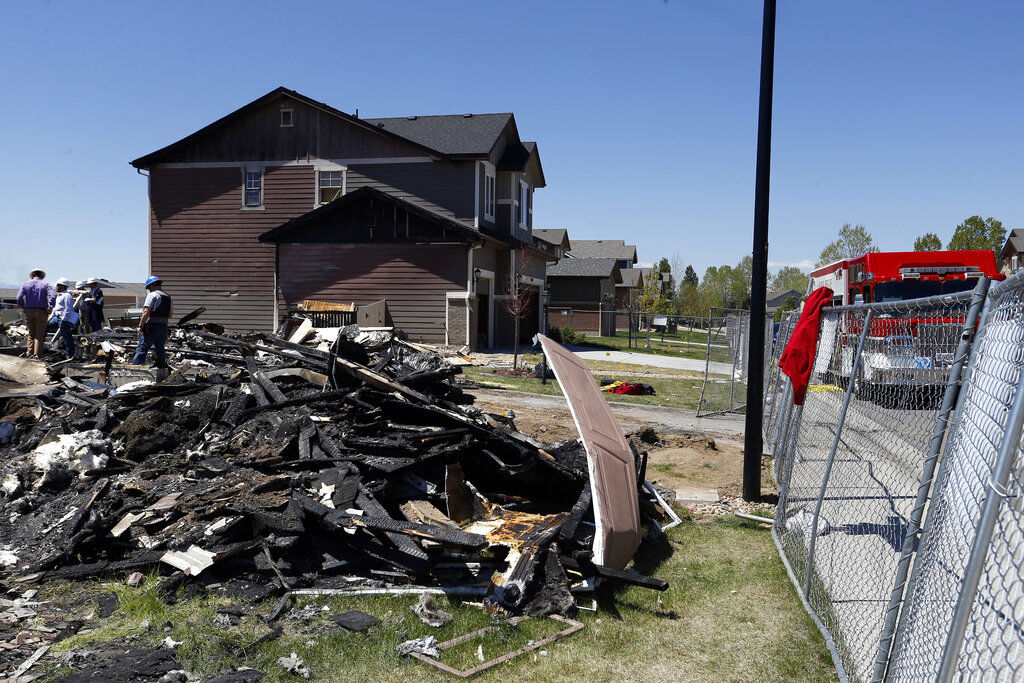
In September 2020, Patricia Ruiz Roe was killed when her home in Gypsum exploded due to a gas leak. Roe, a 49-year-old mother and wife, left behind two young children.
The leak was caused by Black Hills Energy incorrectly marking a gas pipeline, resulting in the pipeline being ruptured during a drilling operation, according to the Colorado Gas Pipeline Safety Program. Black Hills Energy then failed to advise residents to evacuate, the program found.
In response to Black Hills Energy’s deadly actions, the program issued the company a verbal warning.
Though the Gas Pipeline Safety Program is supposed to inspect operators and enforce compliance of safety requirements, this kind of non-action towards safety violations is commonplace, according to an audit released Monday.
From 2017 to 2022, 94% of the 5,643 safety noncompliances identified by the program received no enforcement actions, the audit found. This included accidents that caused at least two deaths, over a dozen injuries and millions of dollars in property damage. When verbal warnings were given, the program did not always follow up to ensure the safety issues were fixed.
Nearly 2,500 safety noncompliances during the five-year period were repeat instances from only 14 operators, but the program didn’t issue the operators any compliance actions. The top offenders were Xcel Energy (1,078 instances), Colorado Natural Gas (566) and Black Hills Energy (197).
“When operators are noncompliant and the program doesn’t enforce safety requirements, the noncompliance can continue,” said Legislative Audit Manager Jenny Page during a presentation Monday. “When enforcement is lacking, there’s also a risk of these safety accidents.”
Penalties for safety violations are even more rare than written enforcement actions.
The program assessed only 23 penalties for the 5,643 safety noncompliances from 2017 to 2022. The 23 penalties should have totaled over $10.9 million based on the assessments, but the program collected only four, totaling $208,530, the audit found.
The program also did not bring penalties against the most prolific offenders. Of the top five operators with the most repeat noncompliances, the program only penalized one in the last three years: Xcel Energy for $100,000. This violates federal and state laws that establish minimum penalty amounts and require the severity and history of an operator’s noncompliance to be taken into consideration when determining penalties.
If the program followed federal and state laws regarding penalties, it would have collected between $2.4 million and $689 million from 2020 to 2022, depending on the duration of continued noncompliance. Instead, the program collected only $5,000 in penalties during these years, the audit found.
“The program’s failure to penalize the worst offenders demonstrates it isn’t enforcing safety requirements effectively,” said Audit Supervisor Cariann Ryan. “They assess penalties to small, private operators for paperwork issues, while assessing only a written warning to Xcel in 2017 for not monitoring pipelines for leaks and not taking prompt action to correct deficiencies.”
In addition, the audit found that the program did not inspect operators or have records of inspections within the required one- to five-year timeframes, did not meet federal inspection metrics, and had missing or incomplete inspection records.
From 2017 to 2022, the program failed to complete on time 100% of emergency plan procedure inspections, 88% of implementation of transmission integrity management program inspections, 88% of field observation of emergency response inspections, 86% of implementation of distribution integrity management program inspections and 77% of field inspections.
Of the program’s 15 inspectors, 13 lacked required training and supervision, the audit found. Three inspectors also had conflicts of interest, inspecting companies they recently worked for immediately after being hired to the Gas Pipeline Safety Program.
Other findings from the audit include that the program has not tracked complaints received about gas pipeline safety and operators, it misreported Colorado’s number of gas pipeline accidents to the federal government, and it lacked evidence that it investigated gas pipeline accidents as required.
The audit made 39 recommendations for the Gas Pipeline Safety Program to address the findings. The Colorado Public Utilities Commission, which administers the program, agreed to 38 of the recommendations and partially agreed to one.
“We have a phenomenal team of inspectors, I have a lot of faith in them. They take their job really seriously,” said Rebecca White, director of the Public Utilities Commission. “I do believe we have improvements to make on the administration and our processes. … We’re committed to do that.”
Some of the major recommendations ask the Public Utilities Commission to establish documentation practices for the program, track compliance actions and penalties, request more inspectors as needed, develop an objective process to assess and collect penalties, develop procedures for compliance follow ups, and incorporate a risk assessment into inspection scheduling.
Each of those recommendations must be implemented between January and June of 2024.
The recommendation the Public Utilities Commission only partially agreed to asked them to develop processes to monitor and track gas pipeline safety accident information from the National Response Center, and to review potential gas pipeline accidents reported by the Colorado news media to identify accidents that have not been reported to the program. The commission agreed to track such incidents, but declined to investigate them, saying they are out of the commission’s jurisdiction.
The audit was requested by the state legislature, with the findings reported to the Legislative Audit Committee on Monday. During the committee meeting, lawmakers asked questions about the report but rarely commented on the findings.
Sen. Rod Pelton, R-Cheyenne Wells, was the only lawmaker to raise concerns about the recommended changes the program, questioning whether it would increase penalties charged to gas companies.
“At the end of the day, we need safety, but we also need these operators to stay in business,” Pelton said, adding that costs of penalties are “dollars coming out of these companies’ pockets, which, in turn, is coming out of our taxpayers’ pockets. They don’t just absorb that cost, it’s passed on.”
However, lawmakers largely seemed to agree with the audit’s recommendations, emphasizing the need to follow state and federal laws, and keep Colorado’s gas pipelines safe.
“We’re watching what you all are doing and I need to impress on you all how important it is that we maintain the highest standard of safety,” said Sen. Rhonda Fields, D-Aurora. “These are things that we can do. … The guidelines are there, it just has to be followed and it has to be implemented and there has to be some accountability.”


The relevance of Watergate more than a half-century later | SONDERMANN
By Eric Sondermann
by-eric-sondermann@coloradopolitics.com
Updated 3 days ago
It was the scandal for which all other scandals are now named. In June 1972, a small group of Cuban burglars with high-level connections broke into the headquarters of the Democratic National Committee. Those headquarters were located in the Watergate...

Wirth downplays Social Security disaster talk | A LOOK BACK
Rachael Wright, Special to Colorado Politics
rachael.wright@coloradopolitics.com
Updated 2 days ago
Forty-five years ago this week: “As time goes on,” said Democratic U.S. Rep. Tim Wirth, of the 2nd Congressional District, “we are finding that the safety net, which was proposed earlier this year, has some very large holes in it,”...
Colorado Politics Calendar Aug. 10-16
Rachael Wright, Special to Colorado Politics
rachael.wright@coloradopolitics.com
Updated 2 days ago
CoPo’s weekly political calendar will help you find political and public-policy events throughout Colorado. It includes candidate and issue campaign events, public policy meetings, court hearings, state and local party conventions, assemblies, debates, rallies, parades, speaking engagements, traveling dignitary appearances,...

Democratic group aims Spanish-language TV ad at Gabe Evans in Colorado’s battleground 8th CD
Ernest Luning
ernest.luning@coloradopolitics.com
Updated 12 hours ago
A national group tied to House Democratic leadership launched a six-figure Spanish-language TV ad in Colorado this week targeting Republican U.S. Rep. Gabe Evans and the GOP’s signature budget legislation. The 30-second spot is part of $15 million in new...
Colorado School of Mines lands major share in Trump’s $100M mining-education plan
Thelma Grimes
thelma.grimes@coloradopolitics.com
Updated 13 hours ago
President Donald Trump on Friday named the Colorado School of Mines among roughly a dozen institutions that will share in a $100 million commitment “to train the next generation of American miners.” Paul Johnson, the university’s president, said he is...
Local party leaders, incoming judge among members of judicial performance commission that violated law
Michael Karlik
michael.karlik@coloradopolitics.com
Updated 14 hours ago
A local Democratic leader and 2024 presidential elector. A legislative aide and leader in the Young Republicans. An incoming county court judge freshly appointed by the governor. They are among the eight members of the northeastern Colorado judicial performance commission...

Judge dismisses lawsuit seeking records from Colorado Democratic group
Marianne Goodland
marianne.goodland@coloradopolitics.com
Updated 14 hours ago
A lawsuit seeking to obtain records from Democratic lawmakers affiliated with a caucus has been thrown out by a Denver District Court judge. On July 17, Judge Ericka Englert dismissed the April lawsuit filed by progressive activist Derrick Blanton, who...
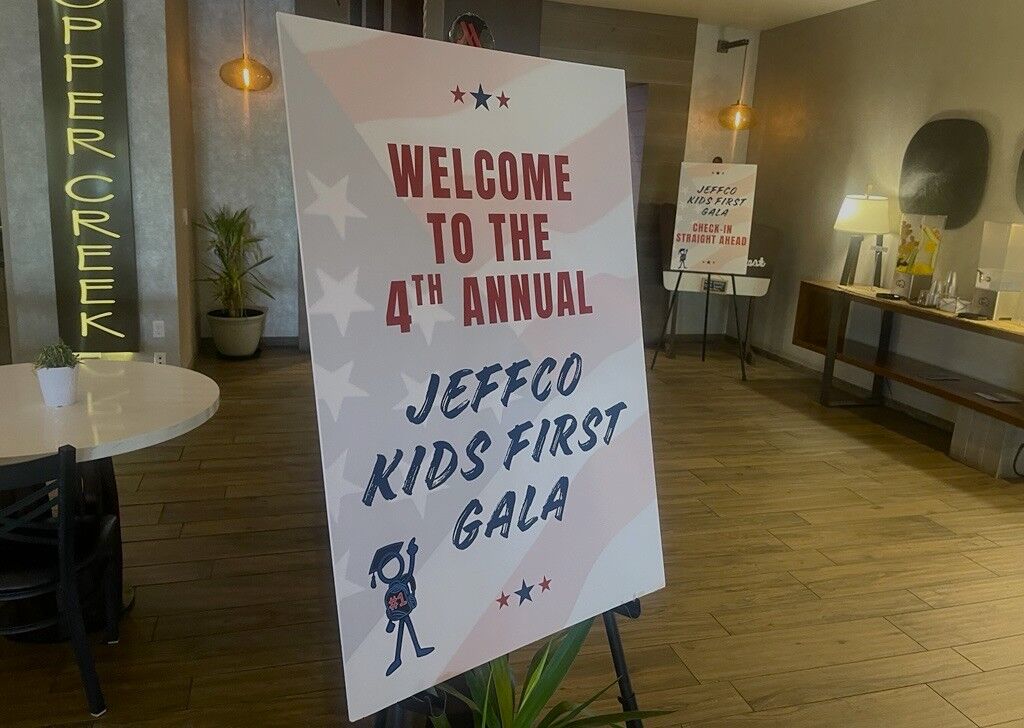
DOJ official decries ‘nonsense’ in Jeffco schools at fundraising gala
Matt Kyle
matt.kyle@denvergazette.com
Updated 19 hours ago
Amid a legal battle between Jeffco Public Schools and the federal government, a Department of Justice official spoke at a fundraising gala and decried “crazy stuff” and “nonsense” in the school district. The gala was for Jeffco Kids First, an...

Colorado Springs mother Deborah Nicholls’ murder conviction overturned
Nick Smith
nick-smith@coloradopolitics.com
Updated 1 day ago
A Colorado Springs mother convicted in 2008 of murdering her three children in a house fire might get a new trial after a judge ruled that prosecutors withheld key evidence that could have impacted the jury’s verdict. Deborah Nicholls, whose...

Aurora Community College student journalist accuses college of ‘unconstitutional gag order’
Kyla Pearce
kyla.pearce@gazette.com
Updated 21 hours ago
An Aurora Community College student is accusing the college of putting an “unconstitutional gag order” on his student-run publication, saying the college banned it from publishing until students jumped through “countless bureaucratic hoops.” A college spokesperson said the college is...
PREV
PREVIOUS

City of Colorado Springs to defend police officers in federal civil lawsuit
The city of Colorado Springs will represent two police officers and a former police officer in a federal civil lawsuit filed by a man who claims law enforcement officials arrested him and acted “like they were going to murder” him after he called them for help in early 2019. The City Council agreed informally on […]

Denver City Council approves liability claim settlements amounting to more than $750,000
The Denver City Council passed two resolutions Monday that approve paying more than $750,000 to settle liability claims brought against city agencies, including the Denver Police Department. The first resolution authorized paying $450,000 to the estate of JaLonte ‘Jojo’ Jones, who died in 2020. The 18-year-old bled to death as a Denver police officer stood […]