

Lawsuit challenges Colorado law for ‘buffer distance’ outside abortion clinics

A Denver woman filed a federal lawsuit challenging a 1993 Colorado law that bars anti-abortion activists from approaching people within eight feet outside abortion clinics, which takes effect within 100 feet of the facilities.
The woman, Wendy Faustin, argues both the state law and a Denver ordinance against “harassment near health care facilit(ies)” only seek to restrict anti-abortion speech.
The lawsuit says she has demonstrated outside abortion clinics in Englewood and Denver since the early 1990s, and engaged in “sidewalk counseling” – approaching people outside abortion clinics to try to dissuade them from having the procedure – before the Colorado and Denver laws went into effect.
Federal judge narrowly blocks new Colorado abortion law
The U.S. Supreme Court upheld Colorado’s law in a 6-to-3 ruling in 2000, finding the law passed constitutional muster because it regulated the location of speech rather than the content. But Faustin cites a line in Dobbs v. Jackson Women’s Health Organization that overturned the constitutional right to abortion last year, which said the Colorado case “distorted First Amendment doctrines.”
If a law is determined to infringe on a fundamental constitutional right, courts apply a standard called “strict scrutiny.” The government that passed the law has to show it is narrowly tailored to achieve a compelling state interest, and it is the least restrictive means to meet that interest.
Violations of the state law, known as the “bubble law,” can carry a penalty of up to $300, a jail sentence of up to 10 days or both.
The lawsuit names as defendants Gov. Jared Polis, Attorney General Phil Weiser, 18th Judicial District Attorney John Kellner, Englewood Police Chief Sam Watson, the City and County of Denver, Denver District Attorney Beth McCann, Denver City Attorney Kerry Tipper and Denver Police Chief Ron Thomas.
Spokespeople for Polis and Weiser declined to comment.
Colorado bolsters abortion rights with signing of 3 new laws
Faustin previously filed a lawsuit in 1998 against the City and County of Denver and police officials challenging a city policy against signs and banners on highway overpasses, based on several encounters she had with police in which they told her not to display a sign reading “Abortion kills children.” The federal 10th Circuit Court of Appeals upheld that policy in 2005, which the city characterized as “unwritten but constitutional.”
The city had at times during the case described the policy as prohibiting any kind of expression on overpasses, and Faustin challenged it as overly broad and vague.
However, the appeals court found no evidence the policy had ever been applied to anything except signs and banners, and found it was a reasonable restriction on the time, place or manner of speech because the city had legitimate interests in traffic safety and prohibiting interference with traffic control devices.
House Democrats target crisis pregnancy centers, set to introduce abortion-rights package

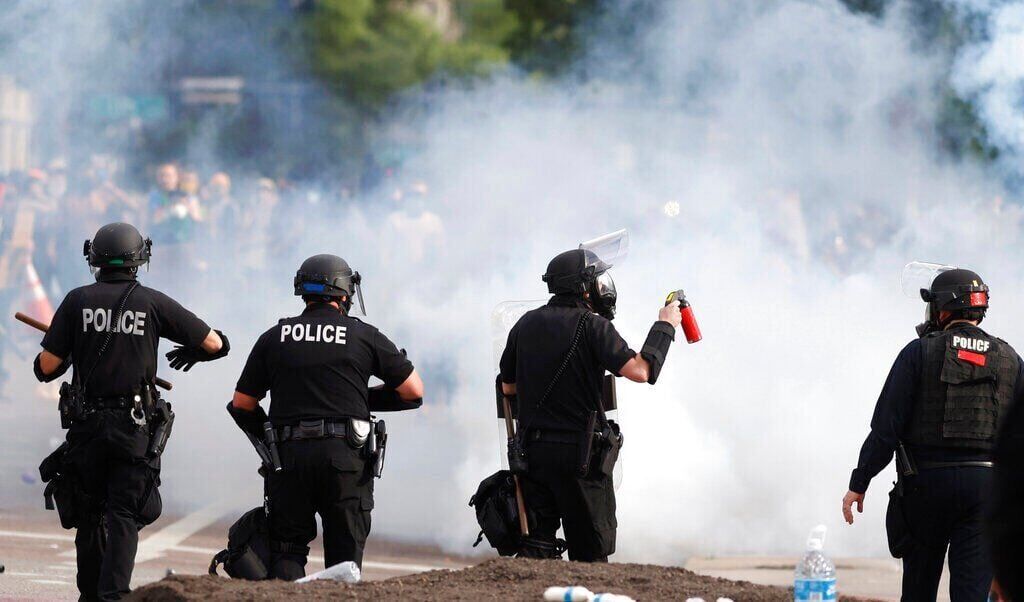
10th Circuit partially revives lawsuit over 2020 Denver protest injuries
Michael Karlik
michael.karlik@coloradopolitics.com
Updated 6 hours ago
The Colorado-based federal appeals court revived a man’s claims against Denver on Friday after concluding a trial judge resolved the case in the city’s favor without analyzing two of the three instances of alleged excessive force and other constitutional violations....

Federal judges find Colorado immigration judge violated several orders
Michael Karlik
michael.karlik@coloradopolitics.com
Updated 1 day ago
Multiple federal judges in Colorado have freed people from immigration custody after determining that one immigration judge violated their directives for properly conducting bond hearings. For nearly a year, Colorado’s U.S. District Court has faced a flood of habeas corpus petitions...
Misconduct complaints from ex-Colorado judicial discipline director dismissed against federal judges
Michael Karlik
michael.karlik@coloradopolitics.com
Updated 3 days ago
The administrative body for the Denver-based federal appeals court upheld a finding last week that misconduct complaints against Colorado’s chief federal trial judge and the chief appeals judge warranted dismissal and appeared to be a “litigation tactic” by the complaining...
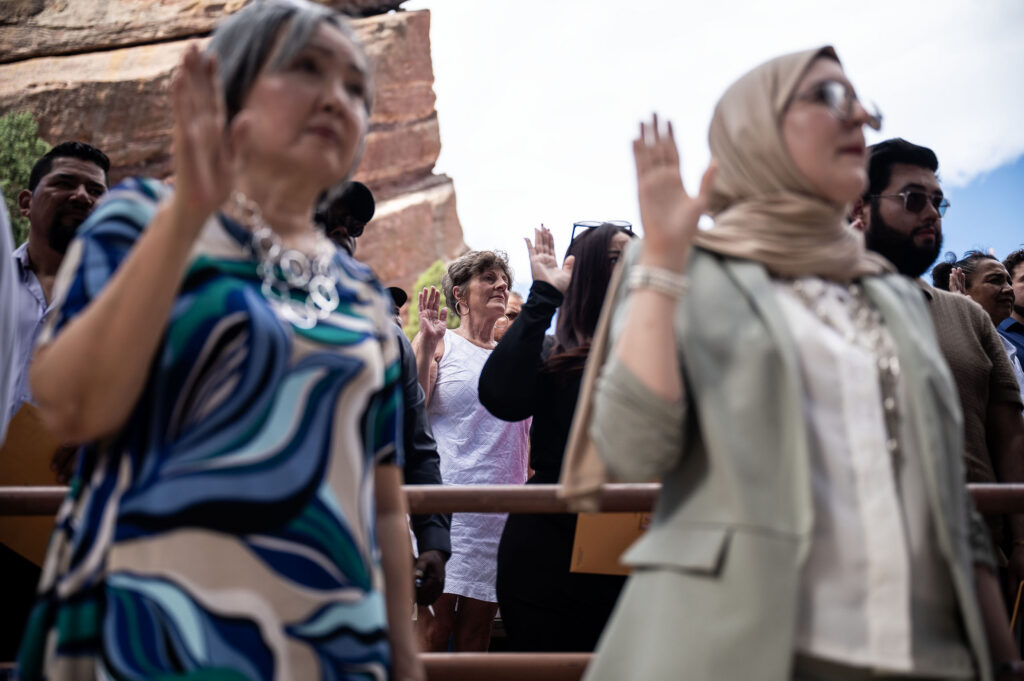
First-ever Red Rocks naturalization ceremony draws most diverse group of new citizens
Michael Karlik
michael.karlik@coloradopolitics.com
Updated 1 day ago
Colorado’s federal trial court held its first-ever naturalization ceremony for nearly 300 new citizens on Thursday at Red Rocks Park and Amphitheatre. “We’re doing it to commemorate the 250th anniversary of the Declaration of Independence and the United States. Red...
Jeffco taxpayers could be on the hook for a possible child sex assault settlement
Matt Kyle
matt.kyle@denvergazette.com
Updated 2 days ago
Taxpayers may end up on the hook for a child sexual assault settlement, possibly worth up to $15 million, after Jeffco Public Schools failed to notify its insurance company in a timely manner about the case. The incident stems from...
10th Circuit finds no fair housing violation by Littleton landlord for worker’s alleged rape of tenant
Michael Karlik
michael.karlik@coloradopolitics.com
Updated 1 day ago
The Denver-based federal appeals court concluded on Monday that Littleton’s housing authority could not be held liable for a maintenance worker’s alleged rape of a tenant, as the worker’s employment did not provide any special access to the victim. A...

Jeffco Public Schools sues Trump administration to protect funding after alleged transgender policies violation
Matt Kyle
matt.kyle@denvergazette.com
Updated 3 days ago
In the wake of several threats by the Trump administration to revoke federal funding, Jeffco Public Schools filed a lawsuit against the Department of Education seeking to protect that badly needed money. Jeffco has been under investigation by the DOE’s...
Denver detox center did not violate man’s rights with 10-hour hold, 10th Circuit says
Michael Karlik
michael.karlik@coloradopolitics.com
Updated 5 days ago
The Colorado-based federal appeals court concluded on Tuesday that Denver’s detoxification facility did not violate a man’s rights by holding him against his will for 10 hours until his blood alcohol content was projected to reach zero. Unusually, Brian Garrett’s...
Federal judge clarifies ex-GOP treasurer candidate’s burden to prove defamation claims
Michael Karlik
michael.karlik@coloradopolitics.com
Updated 5 days ago
A federal judge clarified last week that businessman and former Republican statewide candidate Brian Watson will need to surmount a higher hurdle in proving his claim that a party guest’s alleged description of him as a “criminal” amounted to defamation....
Colorado board permits state to appeal injunction against arthritis drug price cap
Marissa Ventrelli
marissa.ventrelli@coloradopolitics.com
Updated 5 days ago
A Colorado board voted Friday to allow the Attorney General’s Office to fight an injunction against a price cap on a drug that treats arthritis. A U.S. district court judge had granted the company Amgen a preliminary injunction, temporarily blocking...
PREV
PREVIOUS

On Day Two of sit-in, some realize unconstitutional gun policy won't happen anytime soon
About a hundred people sat in stone silence on the Capitol grounds steps leading to Lincoln Street just after noon on Tuesday. They didn’t talk. Some waved at motorists, who honked their horns in support of their cause – to pressure Gov. Jared Polis into signing off on an executive order banning all firearms in Colorado and instituting […]
