

Combating anti-ag narratives with common sense | GABEL
Stop me if you’ve heard this one before: we have the safest, most affordable, and most abundant food supply in the world.
As this is the case, consumers may vote with their wallets. If you want to pay a premium for eggs from pasture chickens, you may. If you wish to pay a premium for organic vegetables and fruit, you may. If you wish to pay a premium for meat from cattle finished on grass or American lambs or hogs raised in a pastoral setting, you most certainly may. If you wish to pay a premium for plant-based proteins made with chemicals to resemble meat, you may. It’s the beauty of American agriculture.
What you ought not do is take that affordable, abundant and safe food supply away from Americans living in the margins, so they are no longer given the option to pay less for a conventionally raised product that you just don’t happen to agree with.
I stand by my criticism of the SCOTUS decision to uphold California’s Prop 12. It is driven by virtue signaling in an effort to leverage control of livestock production by people who know nothing of livestock production outside of some extremist narrative. Nonsense.
Stay up to speed: Sign-up for daily opinion in your inbox Monday-Friday
The term “factory farming” continues to be thrown around and as someone with both feet in livestock production, I don’t understand what exactly the anti-livestock sorts are referring to. How many head of cattle need to be on feed before a small, family-owned feed yard is a concentrated animal feeding operation (CAFO)? How many hogs need to be housed in temperature-controlled buildings away from potential disease carriers, extreme weather and predators before it offends?
The opportunity for consumers to purchase premium products based on their preference for management or production methods exists because conventional agriculture is able to feed the remainder of the world. There is absolutely room for organic produce because there is a market for it and because the efficiency of conventional produce allows a less expensive, often more abundant alternative.
I received a well-written email from a woman who said she was appalled by my critique of Gov. Jared Polis’s comments in support of the SCOTUS decision. It was not an unkind letter, and she is as passionate about her opinions as I am of mine. I’ll admit I haven’t responded to her email primarily because neither of us is going to change our minds. She encouraged me to “research the many negative health impacts of factory farming” and it’s frankly been on my mind all week.
I’ve thought about it while we’ve been breeding cows and heifers via artificial insemination in preparation for them to be hauled to summer pasture. We also have a segment of our herd that will be bull-bred and another few that will be recipients of embryos from our donor females. Had the PAUSE initiative moved forward, nearly all those tasks would have made me a sexual abuser. Had it moved forward, we would still be feeding cattle to slaughter once they’ve reached five years of age. With the wicked winter demanding an incredible amount of hay and the price of feed, we would likely no longer be in business. That would all translate to empty meat cases, which I realize is the entire point. Preventing people from feeding their children so someone can feel better about tasks so far removed from their experience, though, is asinine.
The portion of the letter that really made my stomach hurt was not her claims of greenhouse gas emissions or replacing meat with beans or the environmental costs of livestock production. She said, “it is alarming to me that you may be sharing such opinions with children.” With children, dear readers.
I allow my children to be children by not exposing them to video games and the ongoing narrative around gender transitions and pornography and disbelief in faith and gang violence. My children have been raised in agriculture because it’s not a day job. My recent preschool graduate owns a heifer and helps me feed the fat cattle that will be sold directly to a consumer as beef. My 10-year-old daughter raises livestock to show and spends a tremendous amount of time doing it well. I would be remiss if I didn’t explain why we do what we do. As an industry, we would be remiss if we didn’t explain why we do what we do. It’s not because we’re horrific people, I assure you.
I can’t imagine a world in which the story of agriculture wouldn’t be shared with children. It is a story rich in history and innovation. It is a story that fewer people can relate to, and it is a story that ought to be top of mind when legislation is brought forward by people who think children should be shielded from the story of their own food. It’s impossible to fight such a narrative when there’s so much work to be done to produce that pesky aforementioned food supply. Agriculture will have to defer to voters with common sense, a basic understanding of economics, and an ability to think for themselves I suppose.
Rachel Gabel writes about agriculture and rural issues. She is assistant editor of The Fence Post Magazine, the region’s preeminent agriculture publication. Gabel is a daughter of the state’s oil and gas industry and a member of one of the state’s 12,000 cattle-raising families, and she has authored children’s books used in hundreds of classrooms to teach students about agriculture.

We have the chance to change Colorado’s cancer outcomes | PODIUM
Colorado Politics
colorado-politics@coloradopolitics.com
Updated 6 hours ago
By Erika Hanson Brown Colorado ranks among the healthiest states in the nation by nearly every measure. Yet even here — amid the Rocky Mountains and our deeply rooted culture of health and activity — cancer casts a long and...

Colorado has a playbook for youth mental health — our next governor must use it | GUEST COLUMN
Colorado Politics
colorado-politics@coloradopolitics.com
Updated 2 days ago
By Karen Ron-Li Liaw From the rural communities on the western slope to the eastern plains, to the major urban regions on the Front Range, Colorado families are navigating an all-too-familiar crisis: kids are struggling, and Colorado’s mental health system...

Pigs engineered to fight alpha-gal syndrome | Rachel Gabel
Rachel Gabel
rachel-gabel@coloradopolitics.com
Updated 2 days ago
If I were an evil genius trying to hamstring animal agriculture, I would create a fly that eats livestock alive and a tick whose bite and spit causes some people to have an allergic reaction to meat. (Insert evil laugh...

Registered voters on the eve of the 2026 primaries | Cronin & Loevy
Tom Cronin Bob Loevy
tom-cronin-bob-loevy@coloradopolitics.com
Updated 4 days ago
The Colorado Secretary of State’s Office has published the latest voter registration figures for the state and its counties as of June. Colorado ranks among the highest states for independent, or unaffiliated, voters. Only Alaska and Massachusetts have more. New Hampshire, New Jersey, Maine and Oregon also rank highly. So here...

A room for Sundance, a reality check for big-government Boulder | Jon Caldara
Jon Caldara
jon-caldara@coloradopolitics.com
Updated 6 days ago
There are few things more satisfying to watch than socialists getting mugged by reality. The Sundance Film Festival is invading my hometown of Boulder early next year. Sundance drew 85,000 attendees last year in Park City, Utah. Boulder’s hotel room...
Rep. Jeff Crank thinks Democrats are too focused on Trump, not enough on Colorado Springs | Vince Bzdek
Vince Bzdek
vince.bzdek@gazette.com
Updated 3 days ago
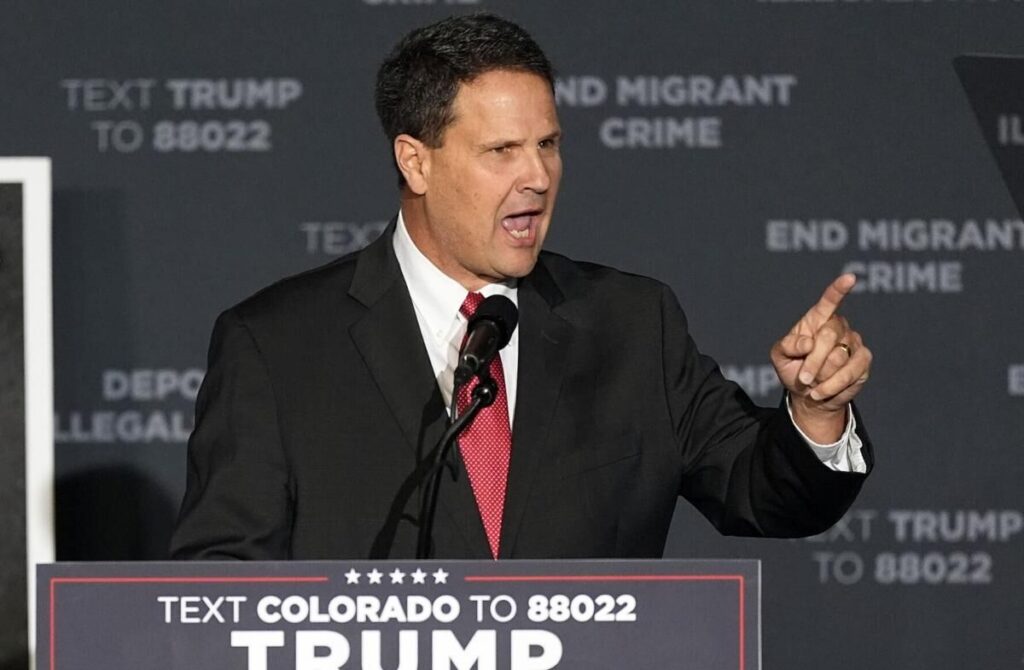
For U.S. Rep. Jeff Crank, who’s unopposed in the Republican primary for the 5th Congressional District but the main target of both candidates in the lively Democratic primary, the big question in the midterms is not who will stand up...
Does character matter anymore? | SONDERMANN
By Eric Sondermann
by-eric-sondermann@coloradopolitics.com
Updated 1 week ago
The last few weeks have been illuminating in the manner of a headlamp pointing the way to some deep, dark, murky netherworld. Graham Platner, a hero to the populist set on the Democratic side, became his party’s Senate nominee in...

Private equity has no place in health care | GUEST COLUMN
Colorado Politics
colorado-politics@coloradopolitics.com
Updated 6 days ago
By Miah Ntepp Of all the financial pressures placed on working people in this country, the skyrocketing costs of health care rank near the top. As families struggle under the cuts to Medicaid made by the Trump administration, they are...
Some pointed questions for the gubernatorial hopefuls | George Brauchler
George Brauchler
george-brauchler@gazette.com
Updated 1 week ago
Earlier this month, the Republican and Democratic candidates for governor participated in a televised interview moderated by well-known, left-leaning legacy media folks. Predictably, the questions asked of the GOP candidates were more aggressive, pointed, biographical and almost entirely disconnected from...
Chaotic funding throws monkey wrench into governor’s-race money madness | Paula Noonan
Paula Noonan
paula-noonan@coloradopolitics.com
Updated 1 week ago
Chaos Monkey, Inc., gave a trifle $20,000 donation to Rocky Mountain Way (RMW), the independent expenditure committee (IEC) supporting U.S. Sen. Michael Bennet for Colorado governor. But why, Coloradans should ask, would a guy who has assigned his contributor name...
PREV
PREVIOUS

Colorado-style progressivism on stage in Prague | CALDARA
Jon Caldara I traveled all the way to the Czech Republic to find Colorado-style progressivism on stage. There’s something so entertaining about the progressive socialists in charge of our state, cities and schools. They have privileged lives, thanks to a relatively pro-market system. They use that privilege to destroy the system that created it for […]
Artificial stupidity | HUDSON
Miller Hudson Technology was precipitating social and cultural change in prehistoric times. We don’t possess a written record of the cultural impacts of farming, the wheel, irrigation or a host of other innovations that shaped the earliest civilizations. Whether theories of catastrophism accompanied these intellectual leaps is anyone’s guess. Human nature being what it is, […]