

El Paso County prosecutor committed misconduct, prompting appeals court to reverse convictions
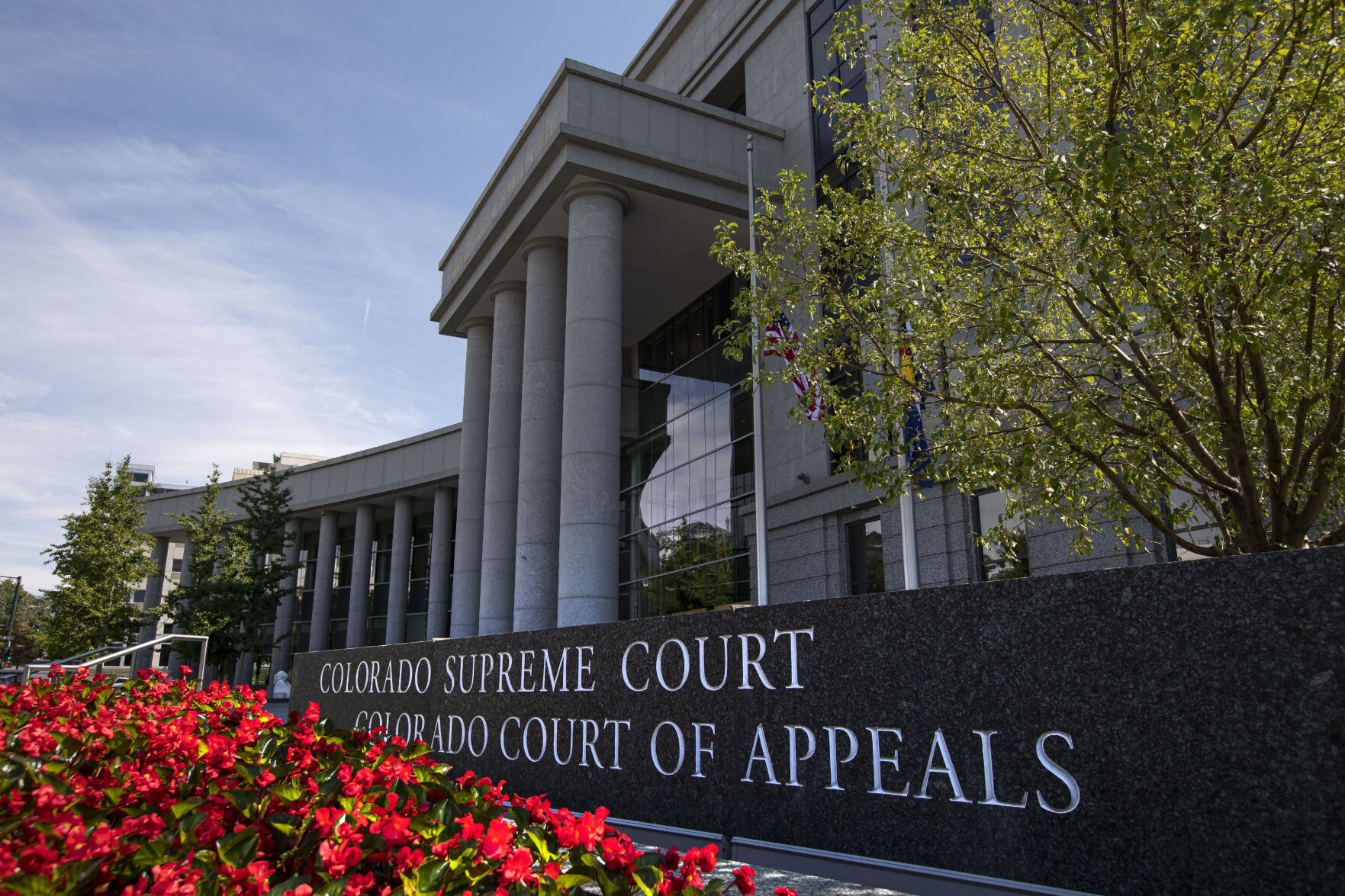
In a rare finding of prosecutorial misconduct, Colorado’s second-highest court reversed a man’s convictions for attempted murder and assault on Thursday because an El Paso County prosecutor misled jurors into thinking defendant Charles Eugene Jefferson was responsible for the victim’s failure to testify at trial.
Andrew Lower, a deputy district attorney, told jurors the reason the alleged victim had not testified was because Jefferson “succeeded” in deterring him from taking the witness stand. In reality, the victim did not speak because he was also implicated in a potential crime and wanted to avoid incriminating himself – a fact Lower knew but did not tell jurors.
“The prosecution’s characterization of (the victim’s) choice not to testify was grossly misleading and inaccurate and warrants reversal on its own,” wrote Judge Craig R. Welling for a three-member panel of the Court of Appeals.
The appellate judges also found District Court Judge Gregory R. Werner improperly allowed a police officer to effectively give the victim’s alleged account of the crime – an account Lower referenced repeatedly to the jury.
Jefferson stood trial in 2019 on charges that he caused a car accident with the victim, then fired multiple shots. Once in jail, Jefferson asked his girlfriend for help in getting the victim to not testify or to recant his accusation that Jefferson was the shooter.
Jurors convicted Jefferson of attempted murder, attempted assault, witness tampering and obstructing a peace officer. He received a 120-year prison sentence.
The victim did not testify at trial. At the time of the shooting, the victim had a prior felony conviction, making him ineligible to possess a firearm, but there was evidence he fired a gun during the encounter. His lawyer advised him to invoke his Fifth Amendment right against self-incrimination, given that prosecutors did not offer the victim immunity in exchange for his testimony.
Nevertheless, Officer Jared Butcher, who responded to the accident site, testified about what the victim told him. Butcher recounted the victim’s version of events in detail, said the victim identified Jefferson “with 100% certainty,” and agreed that Jefferson, sitting in the courtroom, was the shooter – according to the victim.
The defense objected to Butcher’s testimony for introducing hearsay, meaning out-of-court statements that are intended to prove the truth. Werner overruled the objection. He later clarified that jurors could only use the victim’s alleged statements when considering whether Jefferson tried to tamper with a witness who would have identified him as the shooter.
During closing arguments, Lower repeatedly referenced the officer’s testimony as proof of the victim’s “story.” In doing so, he misled jurors about why the victim was absent, and also suggested – falsely – there was more than one witness who was prepared to testify.
“You didn’t hear from those people because of him,” Lower said, referring to Jefferson. The defendant “basically made sure you didn’t get to hear any of that testimony.” Lower added that the victim’s absence was proof Jefferson “succeeded” in his witness tampering.
The threshold is high for reversing a conviction based on a prosecutor’s misconduct at trial. The actions must be “flagrantly, glaringly or tremendously improper,” given the leeway prosecutors have to make their arguments.
The Colorado Attorney General’s Office maintained on appeal that because Jefferson tried to deter the victim from testifying, and the victim did not end up testifying, Lower’s characterization of events was acceptable.
“Any misstatements were minor,” wrote Assistant Attorney General Patrick A. Withers.
The Court of Appeals panel, however, found two critical problems. First, Butcher’s testimony about the shooting itself was unnecessary to show Jefferson was guilty of witness tampering. By allowing the officer to narrate what the victim allegedly said about the shooting, Jefferson could not cross-examine his accuser. To compound the problem, Lower repeatedly cited the victim’s secondhand story to the jury as factual.
“By admitting the hearsay statements, the trial court permitted the prosecution to do indirectly what it could not do directly – admit (the victim’s) statements and build an attempted murder and attempted assault case around them,” Welling wrote in the May 25 opinion.
Second, Lower’s suggestion that the victim would have testified if not for Jefferson’s tampering efforts was untrue.
“The errors here weren’t fleeting – they fed into one another,” explained Welling. “It’s impossible to disentangle the effect of these errors from the entirety of Jefferson’s trial.”
Disregarding the victim’s alleged account of the shooting, the panel concluded the evidence, albeit circumstantial, could still support a charge of attempted murder and attempted assault. It ordered a new trial for Jefferson. His convictions for witness tampering and obstruction were not challenged on appeal.
A spokesperson for District Attorney Michael Allen said the Court of Appeals’ decision is “under review by our office.” Lower died in 2021.
The case is People v. Jefferson.


Judge grants partial injunction to GEO in fight against state health inspection law
Kyla Pearce
kyla.pearce@gazette.com
Updated 10 hours ago
A judge ruled Thursday that The GEO Group does not have to follow parts of a new state law requiring more frequent health and safety inspections at the U.S. Immigration and Customs Enforcement processing center in Aurora. Under the order...
Parker man faces 20 years to life for serial sexual assaults
Nicholas Fogleman
nicholas.fogleman@denvergazette.com
Updated 12 hours ago
A 25-year-old Parker man who sexually assaulted three women in 2025 pleaded guilty Wednesday and will serve 20 years to life in prison. Javier Rodriguez-Andrade pleaded guilty to charges stemming from three sexual assaults involving women ages 19 to 24. ...
Divided appeals court upholds warrantless DNA collection in Colorado cold case, cautions of government overreach
Michael Karlik
michael.karlik@coloradopolitics.com
Updated 11 hours ago
Colorado’s second-highest court upheld the warrantless collection of a suspect’s DNA from a discarded soda can as constitutional on Thursday, while warning about potential abuse of DNA privacy in the absence of further guardrails. By 2-1, a three-judge Court of...
Man charged in Northglenn homicide of wife
Matt Kyle
matt.kyle@denvergazette.com
Updated 12 hours ago
A man has been formally charged with murder and burglary relating to a homicide last week in Northglenn. Alexei Munive-Rodriguez, 48, was arrested Sunday after he was at large following the homicide, which occurred Friday. Police were dispatched around 10:30...
10th Circuit grants immunity to officers for fatal Manitou Springs shooting
Michael Karlik
michael.karlik@coloradopolitics.com
Updated 14 hours ago
The Denver-based federal appeals court ruled on Wednesday that responding officers from Manitou Springs and El Paso County cannot be held constitutionally liable for shooting and killing a man after a 20-minute standoff. Wilford Deweese allegedly pulled out a gun...

10th Circuit rejects invitation for full-court review of tax-avoidance case
Michael Karlik
michael.karlik@coloradopolitics.com
Updated 1 day ago
The Denver-based federal appeals court declined to reconsider the standards for holding entities liable for their tax-avoidance schemes, with a majority of judges voting against full-court review on Monday. In April, a three-judge panel of the U.S. Court of Appeals...
Colorado judge blasts state forensics lab in dismissing child sex case
Jenny Deam
jenny.deam@gazette.com
Updated 1 day ago
In a potentially widely consequential action, a Weld County district judge dismissed a child sexual assault case, citing the ongoing scandal at the Colorado Bureau of Investigation’s forensic lab that “has left a dark mark on the history of Colorado...
10th Circuit sympathetic to Colorado consumer protection law governing interest rates
Michael Karlik
michael.karlik@coloradopolitics.com
Updated 3 days ago
Members of the Denver-based federal appeals court appeared sympathetic on Tuesday to Colorado’s assertion that it can lawfully require certain out-of-state banks to abide by the state’s own ceilings on interest rates when they lend to consumers in Colorado. The...
Colorado justices to decide insurance companies’ obligation to disclose relevant policies
Michael Karlik
michael.karlik@coloradopolitics.com
Updated 2 days ago
The Colorado Supreme Court announced on Monday that it will decide whether an insurance company violated state law by withholding an at-fault driver’s policy for nearly a year when there was no dispute that the policy was not in effect...

Judicial performance evaluations released, Montezuma County judge disciplined | COURT CRAWL
Michael Karlik
michael.karlik@coloradopolitics.com
Updated 3 days ago
Welcome to Court Crawl, Colorado Politics’ roundup of news from the third branch of government. Colorado’s citizen-led judicial performance commissions released their voter narratives for the judges standing for retention in November, plus a disciplinary panel imposed consequences on a...
PREV
PREVIOUS

'This is not enough': East High students to continue fight for gun violence prevention
For students at Denver’s East High School, the issue of gun violence became personal this year. A 17-year-old student shot and wounded two deans inside of the school in March, and later fatally shot himself. Weeks earlier, 16-year-old East student Luis Garcia died after being shot while sitting in his car on the school campus. A freshman was similarly shot near the campus […]

Mike Johnston, Kelly Brough pledge to pursue 'best value contracting' if elected Denver mayor
The two mayoral candidates facing off in Denver’s upcoming municipal election have agreed to pursue changing the way the city awards contracts by considering factors that strengthen the local economy, not just on the lowest qualified bid, a group backing the change said this week. Mike Johnston and Kelly Brough each signed a pledge to […]