

Progressives see many victories, big losses | 2023 LEGISLATIVE SESSION

Colorado’s 2023 legislature is perhaps the most progressive the state has seen.
Democrats this year achieved the largest majority the state has seen in 85 years and many first-year lawmakers pushed the Capitol to the left ideologically.
Despite this, the progressive agenda often faced an uphill battle throughout the session, with key pieces of legislation failing to reach the finish line.
It wasn’t all bad for progressives. The legislature easily passed nation-leading policy packages expanding abortion protections and increasing gun control that would have been impossibly heavy lifts for the Colorado legislature just five years ago. But some of the year’s most ambitious bills – such as the assault weapons ban led by freshman progressive Rep. Elisabeth Epps – ended up dead at the hands of Democrats themselves.
With dozens of small victories but more big losses than expected, the success of the progressive agenda ended up being a bit of a mixed bag. But the legislature undoubtably moved the needle to the left on several major issues.
Housing
Improving housing affordability was one of the core goals of the progressive wing, as well as the Democratic Party at large. Gov. Jared Polis, Senate President Steve Fenberg and House Speaker Julie McCluskie all named housing as a key issue to address during the session. But the party was seemingly split on how to achieve this.
Progressives emphasized providing relief to renters, mostly by cracking down on the actions of landlords. Many of these efforts were successful, including bills to require mediation before eviction for tenants on government aid, limit tenant income requirements and security deposits, cap fees for owning pets, restrict leases from waiving tenant rights and allow the reuse of rental applications without extra fees.
But the centerpiece of the progressive housing agenda failed to come to fruition. House Bill 1115, to let local governments enact rent control, passed the House but died in a Senate committee in a 4-3 vote, with moderate Democrat Sen. Dylan Roberts voting with Republicans to kill the bill.
Another major bill similarly passed the more left-leaning House only to die on in the Senate: House Bill 1171 to ban evictions and lease terminations without “just cause.” The bill essentially would have only let landlords evict or refuse to renew a lease if the tenant does something wrong, such as failing to pay rent or violating lease agreements.
The loss of these two bills left some progressives calling the session a failure for renters.
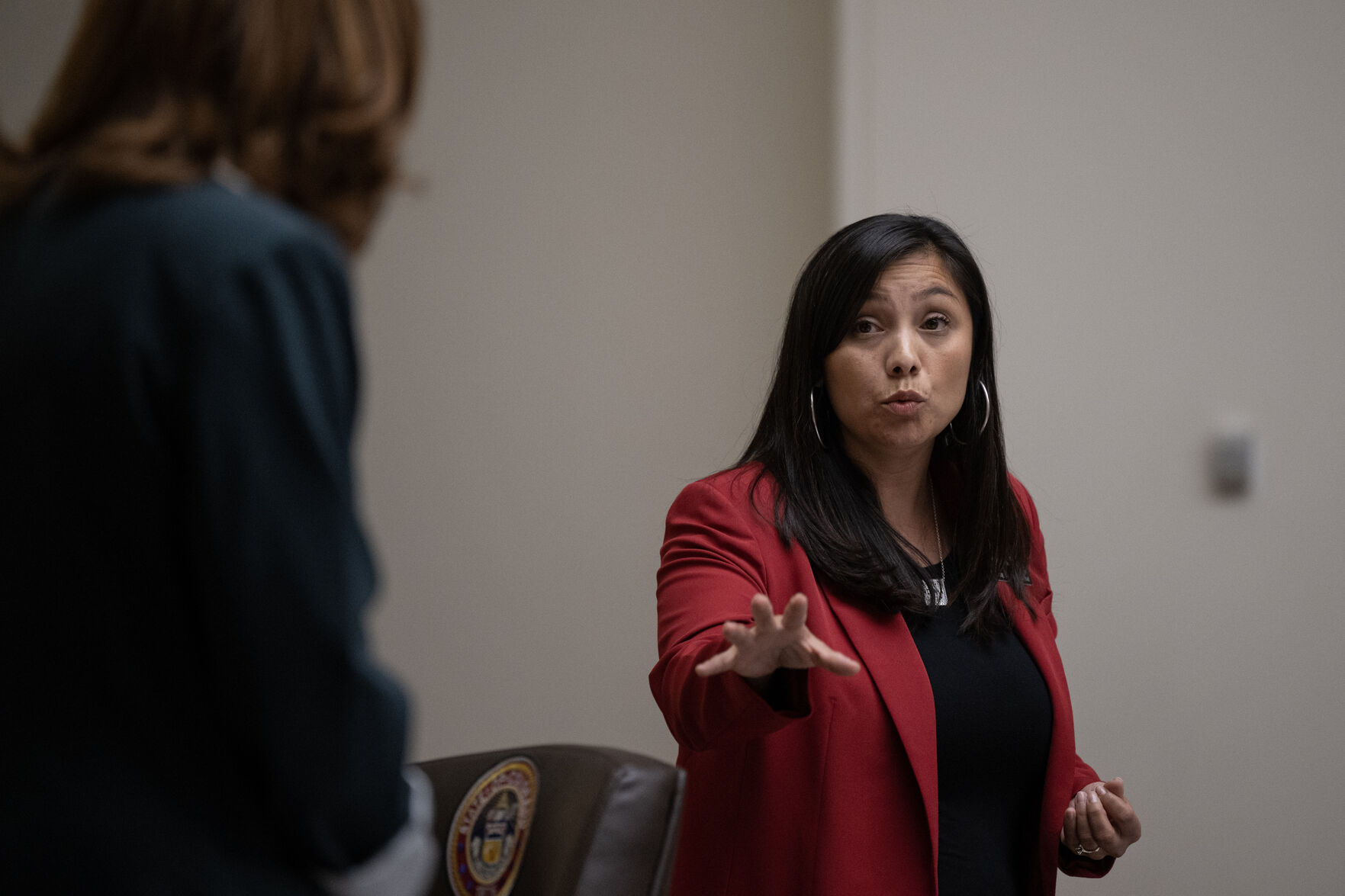
During a tense caucus meeting on the last day of session, Rep. Serena Gonzales-Gutierrez, sponsor of HB 1171, shot down claims of victory from other Democrats, saying they didn’t do anything to substantially help renters or to keep people in their homes. Rep. Javier Mabrey, sponsor of HB 1171 and HB 1115, echoed this sentiment on Twitter, saying: “We failed to adequately address the housing crisis, and we needed to do so much more for renters and housing affordability.”
Even the governor’s own housing bills were not safe this session. Polis introduced a pair of bills to ban local housing growth caps and alter the state’s land use policies to require local governments approve more residential density. While the former passed, the latter failed in the final hours of the session after all-day negotiations failed to find a compromise between the Senate and House versions of the bill.
Criminal justice
The progressives’ legislative success regarding criminal justice was even more varied. Not only did progressive bills both pass and fail, but other bills advanced that contradict the progressive ideology.
Some noteworthy achievements include bills to restrict the use of no-knock search warrants, prevent police from lying to minors during interrogations, limit the use of four-point restraints in prisons, make phone calls free for prisoners, expand access to DNA testing after criminal convictions and remove the identities of child victims and witnesses from public criminal records.
At the same time, bills passed to increase criminal penalties for several crimes, despite strong pushback from progressive lawmakers who argued that increasing penalties doesn’t deter or prevent the root causes of crime. These bills include making it a felony to falsely report a mass shooting, to steal any vehicle regardless of its value, and for an adult to expose their genitals to a child.
One of the biggest losses for progressives in this realm was the failure of House Bill 1202. The bill, killed by a Senate committee, would have let local governments allow sites where people can use illegal drugs under supervision of medical professionals, which proponents said would prevent overdoses.
And, for the second year in a row, a progressive-backed effort to stop criminally charging kids under 13 was completely gutted. The bill cleared the House but hit a wall in the Senate, where it was rewritten to remove the change in minimum prosecution age. Though the bill managed to get bipartisan sponsorship this year, it faced opposition from law enforcement and from moderate Democratic senators.
In a last-minute defeat, Polis on May 16 vetoed the progressives’ House Bill 1214 after it passed the legislature. The bill would have changed the clemency application process.
However, the progressives did manage to kill some of the moderate Democrats’ bills, too. House committees rejected Senate-approved bills to increase penalties for distributing drugs that lead to death, prohibit people convicted of aggravated vehicle theft from owning a gun, and reauthorize the Colorado Commission on Criminal and Juvenile Justice.
Workers
Progressives made numerous efforts to increase workplace protections for employees this session, with many bills finding success but some of the most substantial legislation falling flat.
The victorious bills include strengthening and enforcing the state’s Equal Pay for Equal Work Act, lowering the threshold for workplace harassment, banning employers from asking for age in job applications, banning employers from prohibiting tipping, expanding allowable uses of paid sick leave and protecting public employees from retaliation, discrimination and intimidation from employers.
Once again, the highest-profile progressive bills in this arena were rejected. House Bill 1118, known as the “fair workweek” bill, would have required retailers and companies in the hospitality industry to provide more predictable scheduling and compensation for “show up time.” The bill, a huge component of the progressive agenda, was killed in its very first committee vote.
Other significant defeats sought to let rideshare drivers and customers see how much the drivers earn for each trip, and to require employers pay an allowance for dependents of people on unemployment.
But progressives also led several other influential successful policies this session, ranging from capping the costs of EpiPens, to banning local immigration detention agreements, to enforcing price transparency for hospitals.
And for the bills that didn’t make it through this year, progressives have made it clear that they’ll be bringing most of them back next year for another go.
“We will not give up on this fight,” Mabrey said.


Iranians in Colorado weigh in on Khamenei’s death
Mark Samuelson Special to The Denver Gazette
mark.samuelson@denvergazette.com
Updated 9 hours ago
As the joint U.S.-Israeli attack on Iranian targets continued into a second day following the death of leader Ayatollah Khomeini, Iranians living in Denver weighed in, saying they welcome the opportunity for a regime change in the Islamic Republic. “The...

Male wolf dies after capture attempt in Colorado
Marianne Goodland
marianne.goodland@coloradopolitics.com
Updated 7 hours ago
One of the original wolves brought to Colorado from Colorado has died after an attempt to capture it, the’s state wildlife agency said. The Colorado Parks and Wildlife identified the wolf as No. 2305 — meaning it was one of...

Indian Health Service to phase out dental fillings containing mercury by 2027 | OUT WEST ROUNDUP
The Associated Press
the-associated-press@coloradopolitics.com
Updated 2 weeks ago
NEW MEXICO Indian Health Service phases out mercury fillings ALBUQUERQUE — The federal agency that provides health care to Native Americans and Alaska Natives has announced it will phase out the use of dental fillings containing mercury. The Indian Health...

Democrat Michael Bennet turns in petitions for Colorado’s gubernatorial primary, plans to skip caucuses
Ernest Luning
ernest.luning@coloradopolitics.com
Updated 11 hours ago
U.S. Sen. Michael Bennet, a Democratic candidate for governor, submitted nominating petitions for Colorado’s June primary ballot on Friday, his campaign and the Colorado Secretary of State’s Office said. Bennet plans to rely on his petitions to get on the...

Israeli officials say Iran’s Supreme Leader Khamenei is dead. No word from US or Iran
Aamer Madhani
aamer.madhani@associatedpress.com
Updated 1 day ago
DUBAI, United Arab Emirates (AP) — Supreme Leader Ayatollah Ali Khamenei has died in a major attack on Iran launched by Israel and the United States, Israeli officials told The Associated Press on Saturday. There was no immediate comment from...

Colorado Republicans, Democrats clash over Iran military operation
Thelma Grimes
thelma.grimes@coloradopolitics.com
Updated 1 day ago
Colorado’s congressional delegation split sharply along party lines Saturday after the U.S. and Israel attacked Iran, triggering a fresh debate in America over presidential war powers. Trump announced early Saturday morning that U.S and Israeli forces had begun “Operation Epic...

What to know about U.S.-Israel attacks on Iran
The Associated Press
the-associated-press@coloradopolitics.com
Updated 1 day ago
The attack The U.S. and Israel attacked Iran on Saturday in what President Donald Trump said was a massive operation to destroy the country’s military capabilities and eliminate the threat of it creating a nuclear weapon. Iran’s Foreign Ministry said it would...

World leaders react cautiously to US and Israeli strikes on Iran
The Associated Press
the-associated-press@coloradopolitics.com
Updated 1 day ago
BRUSSELS • World leaders reacted warily to U.S. and Israeli strikes on Iran on Saturday that triggered worries of a broader conflict. European leaders held emergency meetings and took measures to protect their citizens in the Middle East, with key leaders calling...

US and Israel launch a major attack on Iran and Trump urges Iranians to ‘take over your government’
The Associated
the-associated@gazette.com
Updated 2 days ago
The U.S. and Israel launched a major attack on Iran on Saturday, and President Donald Trump called on the Iranian public to “seize control of your destiny” by rising up against the Islamic leadership that has ruled the nation since 1979. Some of the first...

Additional thoughts on State of the Union address/rally | Cronin and Loevy
Tom Cronin Bob Loevy
tom-cronin-bob-loevy@coloradopolitics.com
Updated 2 days ago
The U.S. Constitution’s Article II states that “He (the president) shall from time to time give to the Congress Information of the State of the Union, and recommend to their Consideration such Measures as he shall judge necessary and expedient...
PREV
PREVIOUS

'The moral high ground': General Assembly Republicans see wins in the losses | 2023 LEGISLATIVE SESSION
Endless hours of filibustering, numerous instances when bills were read at length, and a walkout. That characterized much of what the public saw and heard of House Republicans during the 2023 session. The 2023 session started with historically low Republican representation, just 19 members out of 65 in the House, a decline of five seats. […]

Colorado Supreme Court drops 'catch-all' question about prospective judges' backgrounds from application
Weeks before an Arapahoe County judge admitted he failed to disclose his affair with an employee when he was applying to be a judge, the Colorado Supreme Court dropped a question from the state’s judicial application form that asked candidates to disclose problematic information from their pasts – and provided grounds for discipline if they were […]