

Colorado Supreme Court drops ‘catch-all’ question about prospective judges’ backgrounds from application
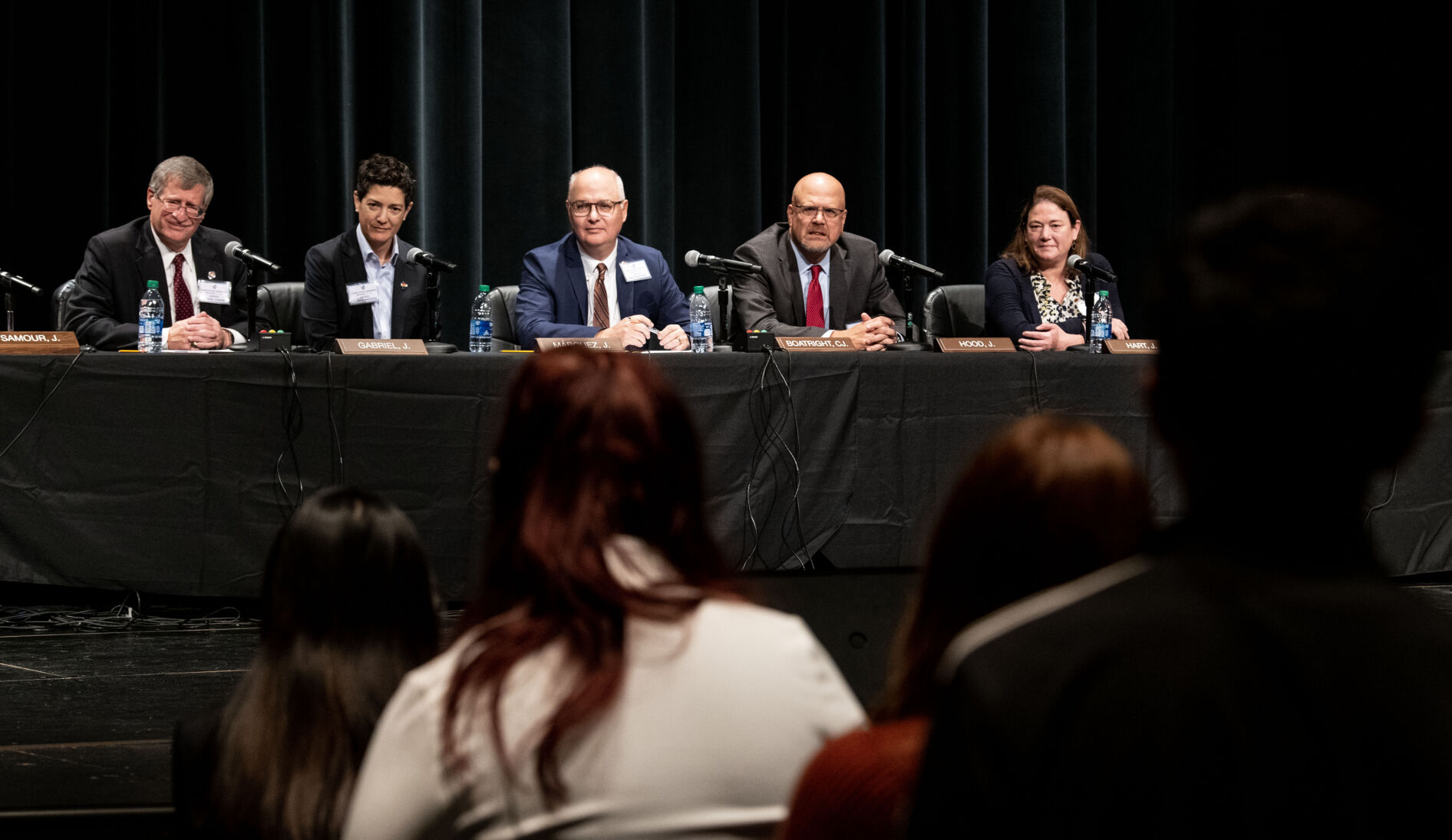
Weeks before an Arapahoe County judge admitted he failed to disclose his affair with an employee when he was applying to be a judge, the Colorado Supreme Court dropped a question from the state’s judicial application form that asked candidates to disclose problematic information from their pasts – and provided grounds for discipline if they were untruthful.
Applicants for judgeships must answer a range of questions about their sources of income, their employment and any criminal history. The questionnaire is meant to assist the citizen-led nominating commissions, which screen candidates, and the governor, who appoints nearly all trial and appellate judges across the state.
Until December, the application included Question #47, which asked: “Is there any circumstance or event in your personal or professional life which, if brought to the attention of the Commission, might tend to affect adversely your qualifications to serve on the court for which you have applied?”
That month, the Judicial Department released a new version of the application with some modifications. Among the changes, Question #47 was no longer included.
Seven weeks after the update, the Supreme Court received a judicial misconduct case from the Colorado Commission on Judicial Discipline. Arapahoe County District Court Judge John E. Scipione was under investigation for having an intimidate, undisclosed relationship with a subordinate, among other workplace misbehavior. His extramarital relationship happened when Scipione was a magistrate, prior to his appointments as a county court, then a district court judge.
On each application, under Question #47, Scipione indicated “no,” there was nothing that would adversely affect his qualifications to serve.
The commission informed the Supreme Court that Scipione, who has since resigned, admitted he engaged in misconduct “by failing to disclose, on his judicial applications, an unreported intimate personal relationship with (an employee) while serving as a 18th Judicial District Court Magistrate.”
In an email to Colorado Politics, Justice Melissa Hart explained the Supreme Court voted to adopt the revised application before Scipione’s paperwork arrived. Asked if the court’s members knew at the time they dropped Question #47 that Scipione was facing discipline for his failure to answer the question candidly, Hart said “absolutely not.”
“The revisions to the form were designed to streamline the questionnaire, including by consolidating repetitive questions and omitting questions that did not provide the Nominating Commissions with pertinent information,” she said. “The catch-all question in the prior application did not generate any information, as applicants consistently replied to it with some version of ‘no’ or an ‘N/A’.”
However, the consequence of removing Question #47 is that, unlike Scipione, a failure by future judges to disclose potentially disqualifying information might not be grounds for discipline.
Former Sen. Pete Lee, D-Colorado Springs, helped lead recent efforts to provide independent funding to the judicial discipline commission and increase the disclosure of information about judicial misconduct. The Supreme Court’s elimination of Question #47, he said, is an impediment to the goals of greater transparency and accountability.
“I feel pretty strongly about it that we really need to know what sort of conduct these guys engaged in in the past,” Lee said. He noted the governor’s office asks applicants who are seeking a seat on boards and commissions if there is anything in their past “that might be an embarrassment to the Governor or you if it were to become public.”
One person familiar with the judicial discipline process, speaking on condition of anonymity in order to be candid, saw the elimination of Question #47 as indicative of a larger problem with the lack of information-sharing about judges. For example, The Gazette reported last year that judicial performance commissions, which evaluate judges in advance of retention elections, do not automatically consider a judge’s disciplinary history when offering recommendations to voters.
“What’s interesting about this question thing is it’s kind of a ‘don’t ask, don’t tell’,” the person said.
Hart emphasized the revised judicial application still asks candidates about their involvement in disciplinary proceedings, criminal conduct or being held in contempt of court – none of which affected Scipione’s discipline.
The application “does not include a catch-all question about circumstances that might adversely affect a judge’s qualifications,” she acknowledged.


Federal judge green-lights civil trial against ex-Fort Collins DUI officer
Michael Karlik
michael.karlik@coloradopolitics.com
Updated 2 days ago
A federal judge ruled on Thursday that Fort Collins’ former “DUI officer” will face a civil trial for allegedly investigating a motorist for impaired driving without any reasonable suspicion to do so. In recent years, several people arrested by Officer...

Colorado Supreme Court suspends Mesa County judge pending misconduct investigation
Michael Karlik
michael.karlik@coloradopolitics.com
Updated 20 hours ago
The Colorado Supreme Court suspended Mesa County Court Judge Michael J. Grattan on Thursday amid a misconduct investigation. The court’s Sept. 10 order gave Grattan 21 days to explain why his paid suspension should not continue through the end of...
Colorado Supreme Court changes course, dismisses case about special district bonds
Michael Karlik
michael.karlik@coloradopolitics.com
Updated 20 hours ago
The Colorado Supreme Court declined on Friday to decide a dispute between a large-scale Commerce City development and the various districts financing it, after initially showing interest in the ongoing case. Colorado has roughly 2,800 special districts, which are local...
10th Circuit tosses GEO Group’s pretrial appeal in human trafficking lawsuit
Michael Karlik
michael.karlik@coloradopolitics.com
Updated 3 days ago
The Denver-based federal appeals court dismissed an attempt by The GEO Group on Wednesday to appeal a trial judge’s non-existent decision two months before the company is scheduled to face a civil trial over alleged trafficking violations at the Aurora...
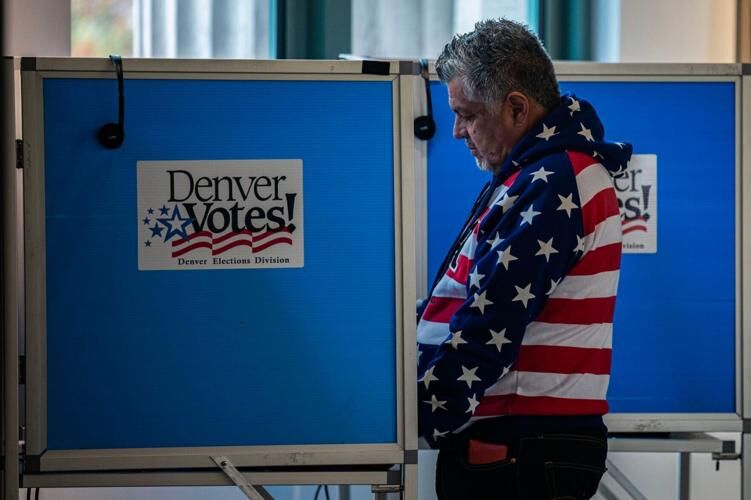
Denver sues Trump to block armed ICE agents from polling sites
Deborah Grigsby
deborah.smith@denvergazette.com
Updated 3 days ago
The city of Denver, along with several groups, sued the Trump administration Thursday, seeking to block U.S. Immigration and Customs Enforcement officers who are armed from polling sites during the upcoming midterm elections. In fact, there are no official orders...

Federal judge takes no action against ICE in Colorado after hearing about mistakes, not ‘blatant violations’
Michael Karlik
michael.karlik@coloradopolitics.com
Updated 18 hours ago
A federal judge declined to take action against U.S. Immigration and Customs Enforcement on Thursday after hearing that a pattern of alleged lawbreaking amounted to mistakes and a misunderstanding of the government’s position in court. For nearly a year, Colorado’s...
Colorado doctors, dentists challenge state law on gender‑transition services in new federal lawsuit
Marissa Ventrelli
marissa.ventrelli@coloradopolitics.com
Updated 15 hours ago
A group of Christian doctors and dentists has filed a federal lawsuit challenging a Colorado law they say requires them to provide gender‑transition services that conflict with their religious and ethical beliefs. The lawsuit, filed by the Christian Medical and...
Federal judge directs plaintiff to revise complaint alleging Denver officers’ constitutional violations
Michael Karlik
michael.karlik@coloradopolitics.com
Updated 18 hours ago
A federal judge directed a plaintiff to revise his allegations on Wednesday to more precisely state what two Denver officers and the city itself allegedly did to violate his constitutional rights by facilitating his prosecution for murder until prosecutors dropped...

Lawsuit challenges Douglas County commissioners’ ballot actions
Nicholas Fogleman
nicholas.fogleman@denvergazette.com
Updated 3 days ago
A new lawsuit against Douglas County commissioners seeks to invalidate the board’s intervention in efforts to expand the commission from three members to five and restore the original ballot language approved by more than 20,000 petition signers. The suit marks...
Federal judge explores new sanctions against ex-Colorado judicial discipline director
Michael Karlik
michael.karlik@coloradopolitics.com
Updated 20 hours ago
A federal judge on Wednesday directed Colorado’s former judicial discipline director, for the third time this year, to explain why she should not sanction him for his latest conduct in his litigation against the state’s judiciary. Christopher S.P. Gregory, who served...
PREV
PREVIOUS

Progressives see many victories, big losses | 2023 LEGISLATIVE SESSION
Colorado’s 2023 legislature is perhaps the most progressive the state has seen. Democrats this year achieved the largest majority the state has seen in 85 years and many first-year lawmakers pushed the Capitol to the left ideologically. Despite this, the progressive agenda often faced an uphill battle throughout the session, with key pieces of legislation […]

Denver gets tough on unlicensed landlords, but signups lag behind
Denver’s Department of Excise and Licenses, the city’s arm that licenses everything from pedal cabs and tattoo artists to liquor stores and pot dispensaries, is five months into its largest-yet regulatory expansion: Seeking to license the city’s 123,000 multifamily homes and apartments. As of Monday, the city had issued $150 administrative citations to 46 apartment […]