

Largest powwow draws thousands of Indigenous dancers to New Mexico | OUT WEST ROUNDUP

NEW MEXICO
Largest powwow draws Indigenous dancers
ALBUQUERQUE – Tens of thousands of people gathered in New Mexico on April 28 for what organizers bill as the largest powwow in North America.
The annual Gathering of Nations kicked off with a colorful procession of Native American and Indigenous dancers from around the world moving to the beat of traditional drums as they filled an arena at the New Mexico state fairgrounds.
“We’re ready to rock the house here,” the announcer proclaimed, after introducing drum groups, including from Pine Ridge Reservation in South Dakota.
During the event, dancers slowly spiral their way, one by one, toward the center of the venue, making for a spectacular display. This marks the 40th year for the gathering, which has grown from humble beginnings in 1983 into a massive celebration with Indigenous people showcasing their cultures through dancing and singing competitions.
Competitors wear feathered bustles, buckskin dresses, fancy shawls, and beaded head and hair pieces. Many of the dancers’ elaborate outfits are detailed with hand-stitched designs.
Several hundred Native American tribes in the United States and First Nations in Canada are represented at the gathering, which has become Albuquerque’s second-largest annual festival and brings in more than $20 million for the local economy each year.
Organizers held virtual gatherings in 2020 and 2021 because of COVID-19 restrictions. This is the second in-person gathering since public health regulations were relaxed.
Governor wants bill to address hazing allegations
SANTA FE – New Mexico’s governor wants legislators to help her enact a new anti-hazing law in the aftermath of allegations by New Mexico State University basketball players that they were sexually assaulted by teammates and that coaches and staff failed to respond.
Democratic Gov. Michelle Lujan Grisham said on April 28 in a statement that she is appalled by the allegations of hazing and abuse and that New Mexico needs specific new legislation as a deterrent.
Two former New Mexico State University basketball players recently filed a lawsuit alleging they were sexually assaulted by teammates and that the coaching staff and other administrators did nothing when they reported the abuse. The lawsuit says three teammates forced the plaintiffs to pull their pants down below their ankles, then assaulted them.
The governor said it should be “unequivocal in state law that hazing is a crime and those who do harm to others will be held accountable to the fullest extent of the law.” Lujan Grisham did not outline more specific provisions.
The Legislature’s next scheduled session starts in January 2024. The quick-fire 30-day session is limited to budget matters and specific subjects selected by the governor.
Kentucky in March enacted a bill to criminalize hazing amid advocacy by the family of a university student who died. That measure creates a felony crime for hazing that results in the death or serious injury of a student – punishable by up to five years in prison.
KANSAS
State wants to make it easier to hire out-of-state teachers
TOPEKA – Kansas is joining a fledgling effort that could one day make it easier to hire teachers from other states.
A bill that Gov. Laura Kelly signed April 22 makes Kansas the latest member of the Interstate Teacher Mobility Compact, The Topeka Capital-Journal reports.
The compact is a creation of the Council of State Governments, with heavy backing from the U.S. Department of Defense, which wanted to create an easier pathway to teacher licensure for military personnel and their spouses as they move around the country.
It would effectively allow teaching licenses to be viable across members of the compact, cutting through the current 50-state patchwork of disparate requirements.
It’s not off the ground yet. Ten states are required to fully enact the compact, and Kansas is only the fourth to join. The three others are Utah, Colorado and Kentucky.
Legislation, however, is pending in about a dozen other states. Depending on what happens, the compact could be operational in a year or two.
The Kansas chapter of the National Education Association has raised concerns about the potential for underqualified educators.
Schools have championed the compact as a way to help fill vacant teaching jobs.
ARIZONA
20 California condors die from avian flu
PHOENIX – Twenty California condors in northern Arizona and southern Utah have died since March and half of the endangered birds tested positive for a strain of avian flu, according to authorities.
Four condors are still receiving supportive care and have shown improvement, but wildlife officials told The Arizona Republic that they’re worried the recent outbreak could potentially spread to other condor populations.
So far, authorities say, the virus hasn’t been detected in the other condor populations in California or Baja California, Mexico.
The Peregrine Fund, a group that manages wild populations of the bird, estimates there are 116 wild condors flying over Arizona and Utah and occupying the landscape within Grand Canyon National Park, Zion National Park, Vermillion Cliffs National Monument, on the Kaibab Plateau and in surrounding areas.
The California condor has been protected as an endangered species since 1967.
Fewer than 25 condors remained in the wild by 1982 until an effort was launched to capture the remaining birds and start a captive breeding program.
The first condor was released into the wild in 1995 and the first wild-born condor arrived in 2003.
Before the recent string of deaths, the National Park Service said only 334 condors remained in the wild.
According to avian disease experts, it’s likely that migration patterns are aiding the spread of avian flu during this current outbreak.
They said avian flu historically dies out after a season, but this strain has been spreading for a longer period and has affected birds since last spring.
Virologists aren’t sure why the strain is persisting longer than normal, and studies are still underway to understand the cause.
IDAHO
2,500 hopeful sheep cross highway
BOISE – Why did 2,500 sheep cross the road? Because the grass was greener on the other side.
In Idaho, it’s not unusual to see ranchers moving a bleating herd of sheep up to higher elevation at this time of year. But the sight of 2,500 wooly beasts trotting across a highway on April 24 brought a crowd about 300 people.
It was the largest turnout that Steve Stuebner, spokesperson for the Idaho Rangeland Resources Commission, has seen in 15 years.
Curious onlookers lined the road as the animals sheepishly entered the highway, guided by ranchers and steered by sheepdogs. They traveled up the road a little ways, the fluffy white herd obscuring the yellow-painted centerline amid a chorus of “baas” and the lead ewe’s jangling bell.
Leaving the open road behind, they will journey through the sagebrush-dotted foothills for a few weeks to their summer home in the Boise National Forest.
This trip up to higher elevations is a tradition dating back around 100 years, the Boise-area TV station reported, and having the sheep graze in the forest helps prevent fires and invigorates plant growth.
The ovine spectacle will return when the sheep are brought back down again in the fall.



Judge grants partial injunction to GEO in fight against state health inspection law
Kyla Pearce
kyla.pearce@gazette.com
Updated 5 hours ago
A judge ruled Thursday that The GEO Group does not have to follow parts of a new state law requiring more frequent health and safety inspections at the U.S. Immigration and Customs Enforcement processing center in Aurora. Under the order...

Parker man faces 20 years to life for serial sexual assaults
Nicholas Fogleman
nicholas.fogleman@denvergazette.com
Updated 7 hours ago
A 25-year-old Parker man who sexually assaulted three women in 2025 pleaded guilty Wednesday and will serve 20 years to life in prison. Javier Rodriguez-Andrade pleaded guilty to charges stemming from three sexual assaults involving women ages 19 to 24. ...

Buttigieg performs best among Democrats against Rubio or Vance in possible 2028 contest: Poll
David Zimmermann
david-zimmermann@coloradopolitics.com
Updated 9 hours ago
Former Transportation Secretary Pete Buttigieg appears to be the Democratic Party’s best chance at winning the presidency against Secretary of State Marco Rubio or Vice President JD Vance in 2028, according to a poll released on Thursday. In hypothetical matchups...
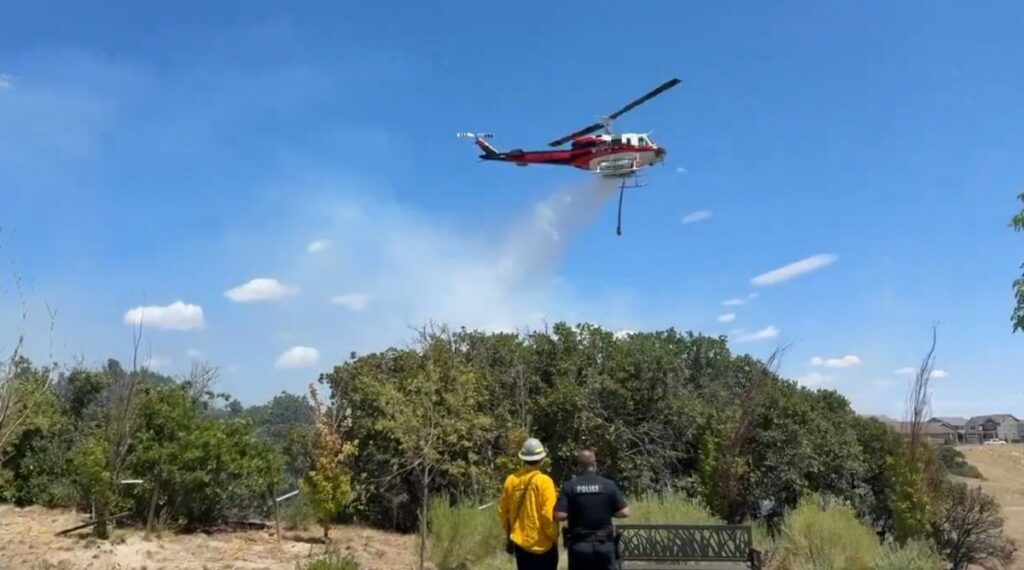
Douglas County moves to Stage 1 fire restrictions following recent rain
Nicholas Fogleman
nicholas.fogleman@denvergazette.com
Updated 7 hours ago
Douglas County has downgraded its fire restrictions from Stage 2 to Stage 1 on Thursday following recent rainfall and moderate fire conditions, according to the Douglas County Sheriff’s Office. The change applies to unincorporated Douglas County, as well as the...
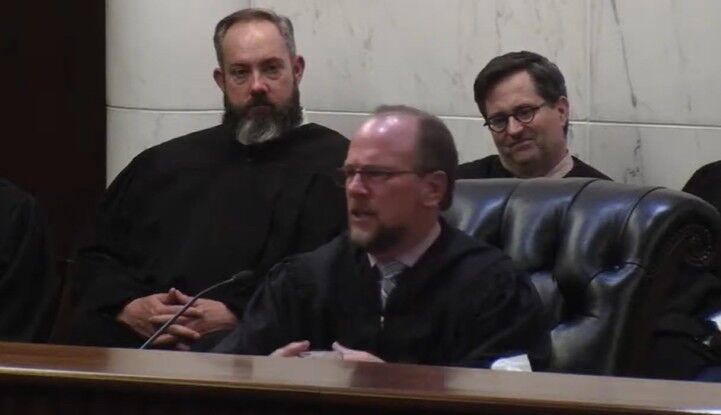
Divided appeals court upholds warrantless DNA collection in Colorado cold case, cautions of government overreach
Michael Karlik
michael.karlik@coloradopolitics.com
Updated 5 hours ago
Colorado’s second-highest court upheld the warrantless collection of a suspect’s DNA from a discarded soda can as constitutional on Thursday, while warning about potential abuse of DNA privacy in the absence of further guardrails. By 2-1, a three-judge Court of...

Democratic gubernatorial candidate Phil Weiser promises to appoint rural outreach director, water adviser
Marianne Goodland
marianne.goodland@coloradopolitics.com
Updated 5 hours ago
Democratic gubernatorial candidate and current Attorney General Phil Weiser told the Colorado Water Congress Thursday he intends to appoint a rural outreach director and a water policy adviser should he win the election in November. Weiser’s speech at the Steamboat...
Man charged in Northglenn homicide of wife
Matt Kyle
matt.kyle@denvergazette.com
Updated 7 hours ago
A man has been formally charged with murder and burglary relating to a homicide last week in Northglenn. Alexei Munive-Rodriguez, 48, was arrested Sunday after he was at large following the homicide, which occurred Friday. Police were dispatched around 10:30...

Attorney General candidates present priorities at Colorado Water Congress
Marianne Goodland
marianne.goodland@coloradopolitics.com
Updated 6 hours ago
The two major-party candidates for attorney general — Republican Michael Allen, the district attorney for Teller and El Paso counties, and Democratic Secretary of State Jena Griswold — on Thursday outlined their priorities at the Colorado Water Congress. Griswold attended...

US aircraft carrier arrives in Middle East, relieving long-deployed USS Lincoln
The Associated Press
the-associated-press@coloradopolitics.com
Updated 11 hours ago
WASHINGTON (AP) — The Asia-based USS George Washington aircraft carrier is now operating in the Middle East, the U.S. military said Thursday, relieving a long-deployed carrier following reports of mental health challenges and supply shortages aboard while it was supporting...

Denver named finalist for 2028 Democratic Convention site
Thelma Grimes
thelma.grimes@coloradopolitics.com
Updated 5 hours ago
The Mile High City competes with Boston and Philadelphia The list of cities being considered to host the 2028 Democratic National Convention has narrowed even further, with Denver making the cut as one of the final three, along with Boston...
PREV
PREVIOUS

Creation of a free adult high school, first of its kind, passes Colorado legislature
Coloradans age 21 and up could soon earn a high school diploma in person for free, if a bill passed by the Colorado legislature becomes law. Senate Bill 3 seeks to create the Colorado Adult High School Pilot Program, providing a free high school education and free industry certificates or college credits to hundreds of residents. […]

'Root causes' are real — but no excuse | SONDERMANN
What the absolute (fill in your favorite four-letter curse word)? Eric Sondermann We are away, but the headlines travel and tell a gruesome, sickening story. A troubled teen is patted down as part of an accommodation allowing him to attend a public high school. Only on this day, a gun is found on him and […]