

State Supreme Court returns for oral arguments, abortion litigation put on pause | COURT CRAWL

Welcome to Court Crawl, Colorado Politics’ roundup of news from the third branch of government.
The Colorado Supreme Court is back this week for oral arguments in downtown Denver – and on the road – while, at the federal level, litigation challenging a newly enacted law on abortion is now on ice.
Let the arguments begin
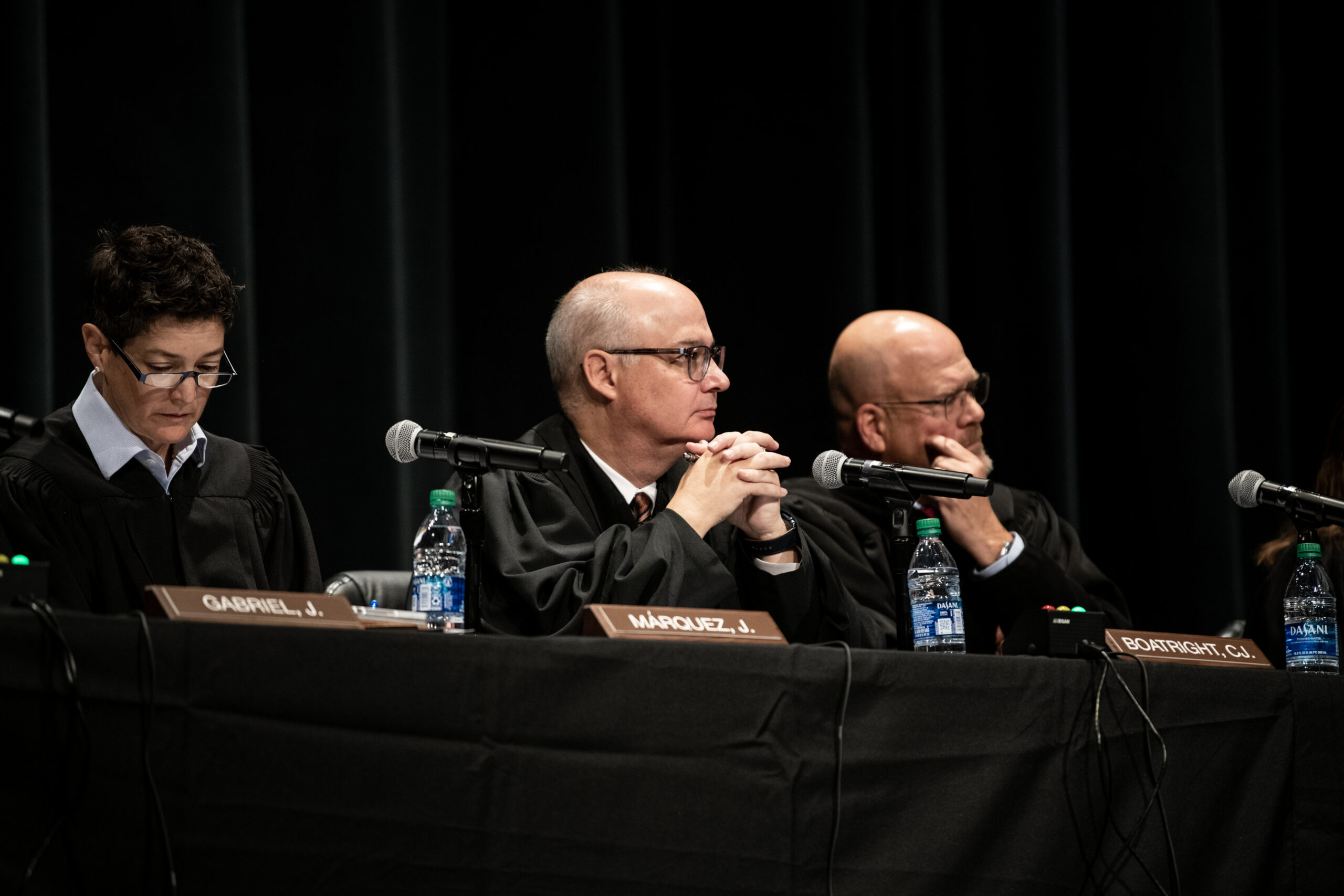
? The Colorado Supreme Court will hear oral arguments in six cases this week, beginning on Tuesday. Most of those will occur in Denver, but, as part of the “Courts in the Community” program, the justices will travel to Colorado Mesa University on Thursday for two criminal appeals. There will be limited seating for the public. The cases are:
State of Colorado v. Hill: The question is whether a man who likes to fish at a particular spot can seek a court order that Colorado, and not a private property owner, owns the riverbed.
Medina v. People: For a defendant who pleads guilty while maintaining his innocence, known as an Alford plea, does there need to be strong evidence of his guilt for the plea to be valid?
Caswell v. People: The justices will look at the effect of a prior conviction on the offense of felony animal abuse.
Dorsey v. People: Can judges alone increase the level of a conviction if the enhancement is based only on the defendant’s recidivism?
People v. Smith (Courts in the Community): The court will address whether defendants have a right to bail for offenses designated as capital crimes, even though capital punishment no longer exists in Colorado.
People v. Seymour (Courts in the Community): Does a reverse-key word search warrant used to identify a group of arson suspects violate the Fourth Amendment?
“Abortion reversal” case paused for now
? For nearly two weeks, a federal judge blocked the government of Colorado from enforcing a new law against “abortion reversal” treatment, but only for one faith-based clinic that provides medication to pregnant patients who wish to keep their pregnancies. On Friday, the judge allowed the temporary restraining order to expire, noting the state had pledged not to enforce the law until a trio of regulatory boards further examines the disputed practice of abortion reversal.
? The decision came days after a hearing in which Bella Health and Wellness argued the state was only being “strategic,” and it needed a court’s protection to avoid being held liable for unprofessional conduct in the future.
? “I find that the harm that may result from the defendants’ failure to keep their promises is too speculative at this time to grant preliminary injunctive relief,” responded U.S. District Court Judge Daniel D. Domenico in his order.
Heard on appeal
? For the first time ever, a special tribunal comprised of Court of Appeals judges stood in for the state Supreme Court in handing down a censure to former Mesa County District Court Judge Lance P. Timbreza, who stipulated to his sexual misconduct during a legal conference. There are multiple reasons the justices may have recused themselves from the disciplinary case, including if they or their staff members were witnesses. The court didn’t disclose which reason applied here.
? If a homeowner exits bankruptcy, they have no obligation to make any more installments on their mortgage. But a bank can foreclose on them anytime after that for nonpayment, the Supreme Court ruled, rejecting the idea that banks only have six years to decide whether to pursue foreclosure. The court called that timeline a “perverse” incentive for more foreclosures.
? Juvenile defendants can immediately appeal a magistrate’s competency finding to a judge, the Supreme Court clarified in a ruling favorable to the rights of young defendants.
? Although crime victims can willingly decide to testify or do it as the result of a subpoena, the Supreme Court ruled defendants can’t force a victim to testify at a probable cause hearing simply because the victim is in the room and her testimony might clear things up.
? The justices have elected to hear a case that questions whether an El Paso County judge, who was the victim of a roadside shooting, should have recused herself from a road rage case that had circumstances similar to her own.

? A verdict of not guilty by reason of insanity functions as an acquittal, meaning mandatory protection orders for victims and witnesses must terminate, the Court of Appeals decided.
? The Colorado Attorney General’s Office acted reasonably when it barred two media organizations from receiving information about law enforcement officers who are certified and, for misconduct-related reasons, decertified, the Court of Appeals ruled.
In federal news
? A federal judge may decide this week whether to block King Soopers and City Market from using contractor labor on seasonal garden displays instead of union workers.
? A federal judge didn’t understand Colorado law on “mutual combat” when he sentenced a defendant to seven years for a gang shooting. The U.S. Court of Appeals for the 10th Circuit overturned the sentence.
? Denver will still have to pay $2.4 million to a man police shot multiple times, even though the man was unarmed and actively surrendering at the time, the 10th Circuit ruled.
? A Colorado Springs police officer didn’t commit a constitutional violation by walking up to the porch of a church, knocking on the door and asking to come in, said the 10th Circuit.

Vacancies and appointments
? Applications are now due by May 5 to succeed retiring Pueblo County District Court Judge Larry Schwartz.
Miscellaneous proceedings
? Colorado Politics and other media organizations have sued Denver Public Schools over a closed-door session of the school board in March that allegedly violated the state’s open meetings law.
? On Saturday from 9 a.m. to 1 p.m., the First Judicial District is allowing people with warrants for non-violent, low level misdemeanors and traffic offenses to resolve their cases without an arrest at the Jefferson County Administration and Courts Facility. Public defenders will be on hand to consult with people.



A new day? Colorado’s troubled guardianship office pursues ‘cultural reset’
Marianne Goodland
marianne.goodland@coloradopolitics.com
Updated 3 days ago
Colorado’s guardianship program, long criticized for mismanagement and high staff attrition, is undergoing a “cultural reset,” as its new director works to repair partnerships and prepare for a major expansion under recent legislation. Created by lawmakers in 2017, the Office...
Local party leaders, incoming judge among members of judicial performance commission that violated law
Michael Karlik
michael.karlik@coloradopolitics.com
Updated 1 day ago
A local Democratic leader and 2024 presidential elector. A legislative aide and leader in the Young Republicans. An incoming county court judge freshly appointed by the governor. They are among the eight members of the northeastern Colorado judicial performance commission...
Judge dismisses lawsuit seeking records from Colorado Democratic group
Marianne Goodland
marianne.goodland@coloradopolitics.com
Updated 2 days ago
A lawsuit seeking to obtain records from Democratic lawmakers affiliated with a caucus has been thrown out by a Denver District Court judge. On July 17, Judge Ericka Englert dismissed the April lawsuit filed by progressive activist Derrick Blanton, who...
Colorado Springs mother Deborah Nicholls’ murder conviction overturned
Nick Smith
nick-smith@coloradopolitics.com
Updated 3 days ago
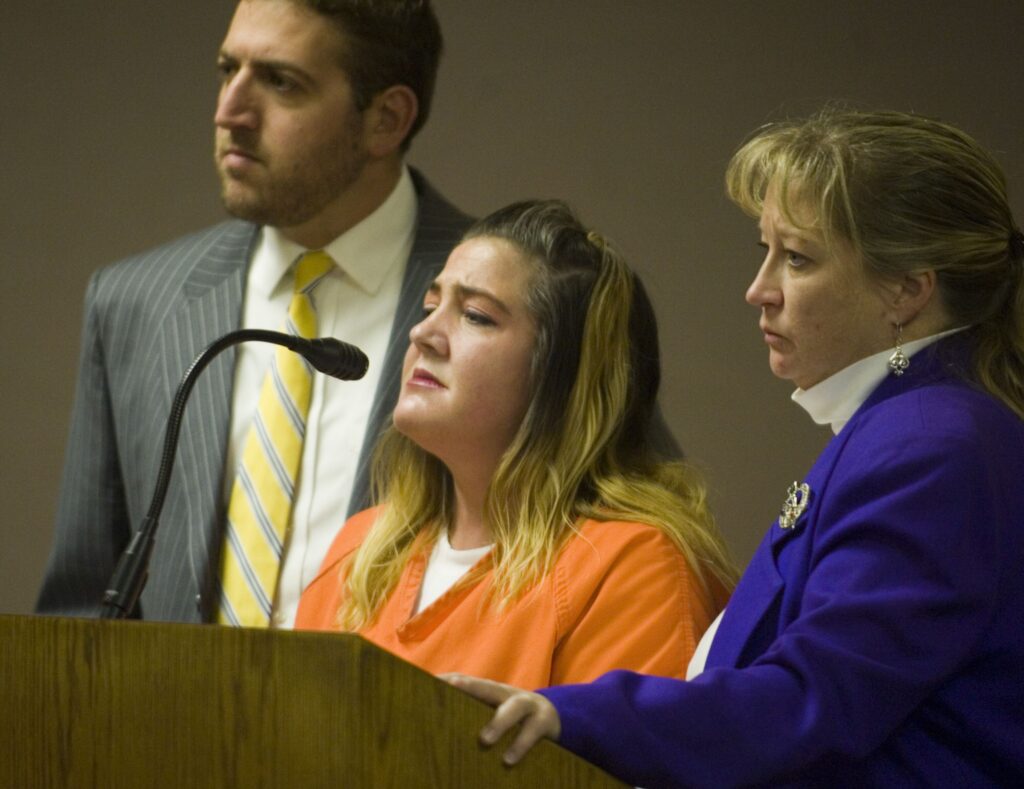
A Colorado Springs mother convicted in 2008 of murdering her three children in a house fire might get a new trial after a judge ruled that prosecutors withheld key evidence that could have impacted the jury’s verdict. Deborah Nicholls, whose...
Colorado court overturns illegal $7,000 restitution order
Michael Karlik
michael.karlik@coloradopolitics.com
Updated 2 days ago
Colorado’s second-highest court overturned a Weld County defendant’s obligation to pay more than $7,000 in crime victim restitution on Thursday because a trial judge failed to issue a legally compliant restitution order at the time of sentencing. In Colorado, as...

Appeals court rejects former DougCo commissioner’s legal fee claim
Nicholas Fogleman
nicholas.fogleman@denvergazette.com
Updated 3 days ago
The Colorado Court of Appeals rejected a former Douglas County commissioner’s bid for reimbursement of attorney fees she incurred while responding to multiple investigations into her conduct. The dispute stemmed from a 2019 anonymous letter sent to county officials alleging...
Appeals court orders second look at Denver Water’s immunity for cyclist’s injury
Michael Karlik
michael.karlik@coloradopolitics.com
Updated 3 days ago
Colorado’s second-highest court ordered another look at a bicyclist’s negligence lawsuit against Denver Water on Thursday, concluding that a trial judge needed to evaluate the utility’s potential immunity using the state Supreme Court’s new guidance. Joseph A. “Joey” Scott alleged...
Labels, duration not definitive proof of ‘intimate relationship,’ Colorado court rules in domestic violence case
Michael Karlik
michael.karlik@coloradopolitics.com
Updated 2 days ago
Colorado’s second-highest court clarified on Thursday that the length of a couple’s relationship and the labels they attach to it are not conclusive evidence of whether it is an “intimate relationship” that can give rise to a domestic violence prosecution....

Colorado AG urges Supreme Court to let Boulder climate lawsuit proceed
Marissa Ventrelli
marissa.ventrelli@coloradopolitics.com
Updated 3 days ago
Colorado Attorney General Phil Weiser has filed a court brief with the U.S. Supreme Court in a lawsuit brought by Boulder city officials seeking to hold oil companies liable for their environmental impact. The case began in 2018, when the...
10th Circuit says landowner cannot sue ex-Routt County judge for statements in decision
Michael Karlik
michael.karlik@coloradopolitics.com
Updated 4 days ago
A Routt County landowner cannot sue a former judge for his allegedly inaccurate statements in a case where the landowner was not a party, the Denver-based federal appeals court decided on Wednesday. Anne Fitzsimmons, who lives in Germany, owns a...
PREV
PREVIOUS

Caps on rental income requirements, security deposits sent to Polis for approval
A bill seeking to qualify low-income Coloradans for much more rental housing passed its final legislative vote on Saturday and now only needs the governor’s approval to become law. Most landlords require tenants to earn at least three times the amount they charge for rent. In 2022, the average monthly cost of a one-bedroom apartment […]

Q&A with Thomas Dybdahl | Author and ex-public defender talks about the Brady rule, wrongful convictions
In late March, a 60-year-old decision of the U.S. Supreme Court, Brady v. Maryland, surfaced in the news. A federal judicial nominee from Colorado, U.S. Magistrate Judge S. Kato Crews, blanked at his confirmation hearing when U.S. Sen. John Kennedy, R-La., quizzed him about the significance of the case. While those familiar with Crews were sympathetic to […]