

10th Circuit agrees ‘clear and convincing’ proof exists that ex-state employee fabricated evidence

The federal appeals court based in Denver agreed on Monday that a trial judge properly dismissed the discrimination lawsuit of an ex-state employee after discovering the worker likely falsified evidence to support his allegations.
Yoseph Yadessa Kenno worked as a database administrator for the Governor’s Office of Information Technology between 2017 and 2018. The office terminated him following concerns about his performance, but Kenno alleged race-based discrimination and retaliation were the real cause.
During the proceedings, however, the state raised concerns that Kenno manipulated or faked certain electronic files that, if genuine, would have bolstered his case. A trial judge agreed Kenno had doctored the evidence, calling the level of fraud “significant.” The judge dismissed the case and awarded the government nearly $300,000 for the costs of defending against Kenno’s lawsuit.
Now, a three-judge panel for the U.S. Court of Appeals for the 10th Circuit has largely agreed with the handling of Kenno’s case, despite his protestations about evidence and his insistence that the state actually committed the fraud.
“(O)ur review shows that clear and convincing evidence supports the district court’s finding,” wrote Judge Gregory A. Phillips in the panel’s April 17 order.
In Kenno’s version of events, his supervisor gave him a mixed performance review in April 2018, then subsequently put him on a performance improvement plan and placed certain requirements on him that he believed were “unjust.” Kenno spoke to the Colorado Civil Rights Division, explaining he sent an email in May 2018 to his supervisor complaining about discrimination.
A representative with the division told Kenno that his allegations of retaliation did not have merit because the adverse consequences he complained about occurred before he raised the issue of discrimination in May.
But suddenly Kenno produced an email exchange between himself and his supervisor from months earlier, when Kenno was trying to resolve a minor issue involving his health savings account. The email from Kenno, dated March 2018, alleged that the benefits department laughed at him and mentioned they would not pay him “welfare,” which Kenno believed they would not have done “if I wasn’t a black guy.”
His supervisor reportedly wrote back that Kenno should “refrain from making similar accusations going forward.”
If true, the exchange would support the notion that Kenno’s performance improvement plan and work restrictions came after he complained about discrimination. However, Kenno produced four versions of the email during his state and federal proceedings, each one altered slightly. The state contended Kenno had manufactured the email himself.
There was other evidence Kenno had manipulated the materials submitted in support of his claim:
? In a conversation with a coworker that Kenno audio recorded, he appeared to alter a 17-second segment to make it seem as if the coworker, who was white, was actually responsible for a problem Kenno was blamed for
? Kenno reportedly created a repository of emails that, when searched, would retrieve the questionable email exchange about his health savings account, even though the exchange did not surface anywhere else
In June 2021, U.S. Magistrate Judge Michael E. Hegarty agreed to dismiss Kenno’s employment discrimination suit after finding Kenno very likely faked the evidence.
“The true scale of Plaintiff’s fabrication in this case may never be known. But what is known is the significant degree of fraud on the Court and interference with the judicial process,” Hegarty wrote.
Subsequently, he awarded more than $295,000 to the state for its costs in litigating Kenno’s legal claims and in unearthing the deception. Hegarty added that, in his time as a judge, he had “never seen the level of fabrication and fraud on the court as is present in this case.”
Representing himself, Kenno appealed to the 10th Circuit, where he argued it was really the state that had falsified materials, destroyed tens of thousands of emails and “shredded” devices.
The 10th Circuit panel agreed the evidence supported Hegarty’s findings that Kenno altered the audio file, created the health savings account emails himself and registered the repository to hide the emails. The panel largely upheld Hegarty’s handing of evidentiary disputes, with the exception of a video featuring the government’s forensic expert that the defense disclosed relatively late. Kenno should have received the video sooner, the appellate judges acknowledged.
At the time of the lawsuit’s original dismissal, Kenno would not comment to Colorado Politics when asked repeatedly if he denied fabricating the emails.
The case is Kenno v. Colorado Governor’s Office of Information Technology et al.


Federal judge releases man after 2 immigration judges disobey order
Michael Karlik
michael.karlik@coloradopolitics.com
Updated 4 hours ago
A federal judge released a man from immigration detention on Thursday after two different immigration judges disobeyed his order in the same case. “At this point, the Court has granted Respondents two bites at the apple to prove detention of...
New rules for private judges in Colorado include discipline oversight, campaign contributions
David Migoya
david.migoya@gazette.com
Updated 22 hours ago
The Colorado Supreme Court recently determined the state’s private judges — retired jurists appointed to oversee civil cases that rarely get public scrutiny — can now make political contributions freely and without reserve, overruling a prohibition that had been in...
Appeals court finds Prowers County judge incorrectly analyzed firetruck collision lawsuit
Michael Karlik
michael.karlik@coloradopolitics.com
Updated 1 day ago
Colorado’s second-highest court directed a Prowers County judge last month to take a second look at whether a firetruck operator and the county itself can be held liable for a collision with a motorist. Donald Williamson was driving through a...
Appeals court reverses assault convictions after jury received no definition of ‘harm’
Michael Karlik
michael.karlik@coloradopolitics.com
Updated 1 day ago
Colorado’s second-highest court reversed an Arapahoe County defendant’s assault convictions last week, concluding the trial judge neglected to define a key, ambiguous term for jurors. Police officers arrested David Cristobal Aragon at a house party for allegedly violating a restraining...
Colorado counties cannot challenge state law restricting immigration contracts, appeals court says
Michael Karlik
michael.karlik@coloradopolitics.com
Updated 23 hours ago
Colorado’s second-highest court ruled on Thursday that counties lack standing to challenge a 2023 state law that restricts their ability to contract with the federal government or private entities for immigration detention. A three-judge Court of Appeals panel agreed with...
Colorado lawmakers propose changes to family court procedures | Bills in Brief
Marissa Ventrelli
marissa.ventrelli@coloradopolitics.com
Updated 2 days ago
Colorado lawmakers introduce hundreds of bills each year. Bills in brief cuts through the noise by explaining which proposals matter, what’s at stake, and how decisions at the Capitol could affect everyday life across the state. Colorado lawmakers from both parties are...
Federal judge partially allows second World Cup trafficking lawsuit to move forward
Michael Karlik
michael.karlik@coloradopolitics.com
Updated 2 days ago
A federal judge allowed some claims to move forward last month against companies operating out of Colorado that allegedly participated in a human trafficking venture involving Filipino laborers who constructed facilities for the 2022 World Cup in Qatar. There are...
Federal judge dismisses lawsuit seeking to force Colorado secretary of state to screen out scam filings
Michael Karlik
michael.karlik@coloradopolitics.com
Updated 2 days ago
A federal judge dismissed a lawsuit last week that sought to require Colorado’s secretary of state to verify corporate filings in the state’s database to reduce the risk of future fraud. Bernard Butts of Florida, who was 83 when he...

Federal judge finds no constitutional violation by Huerfano County well inspectors
Michael Karlik
michael.karlik@coloradopolitics.com
Updated 2 days ago
A federal judge concluded last month that two Huerfano County employees did not engage in an unconstitutional search when they approached the plaintiffs’ camper within 40 feet to investigate a potential code violation. In July 2021, the county’s building inspector,...
Federal judge warns of increasingly inadequate immigration bond hearings
Michael Karlik
michael.karlik@coloradopolitics.com
Updated 21 hours ago
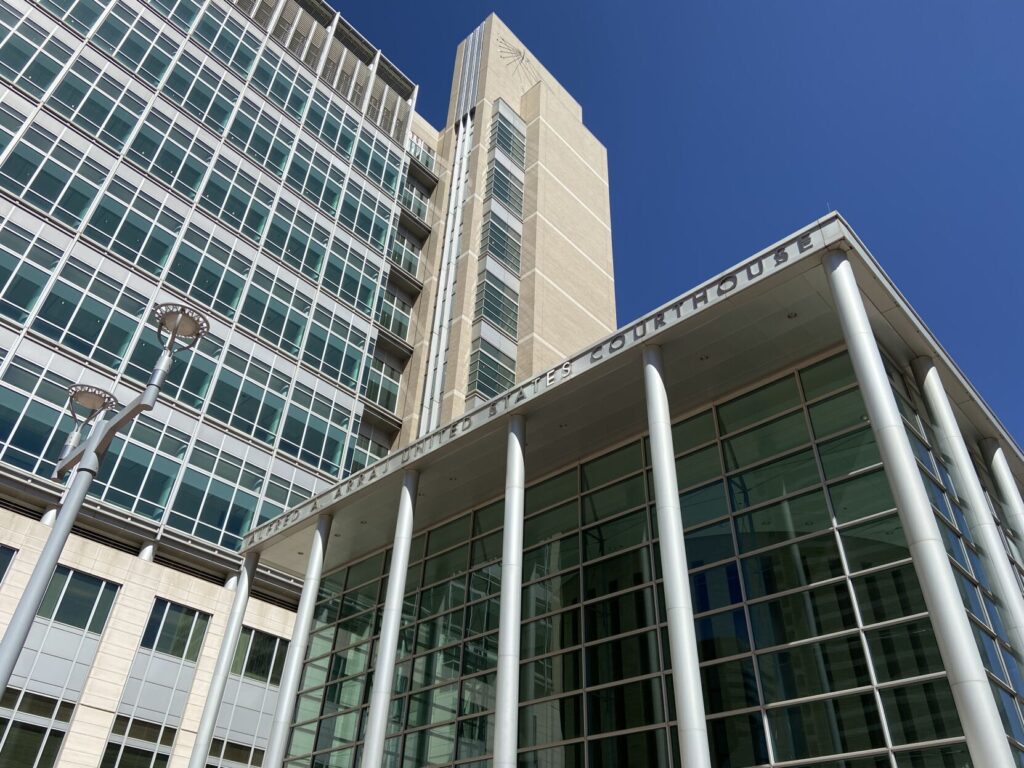
A federal judge ordered the immediate release of a man in immigration custody last week and, seemingly for the first time in Colorado, warned that the government is increasingly conducting inadequate bond hearings for detainees. Colorado’s federal trial court is facing...
PREV
PREVIOUS

Colorado lawmakers unanimously OK reducing license requirements for school therapists
Suicide is the leading cause of death for Coloradans aged 10 to 19, with Children’s Hospital Colorado declaring a state of emergency for youth mental health in 2021. In the midst of this crisis, Colorado schools largely lack mental health resources. The National Association of School Psychologists recommends schools have one psychologist for every 500 students. But […]
Outgoing Colorado Springs Mayor John Suthers to join lobbying, law firm
After serving for the last eight years as Colorado Springs mayor, John Suthers isn’t quite hanging up his hat. Suthers will join Denver-based lobbying and law firm Brownstein Hyatt Farber Schreck as a shareholder, focusing on government relations and state attorneys general matters, the firm announced in a news release this week. Sallie Clark concedes […]