

Justices abandon ‘Indian child’ case, but with more potentially on horizon
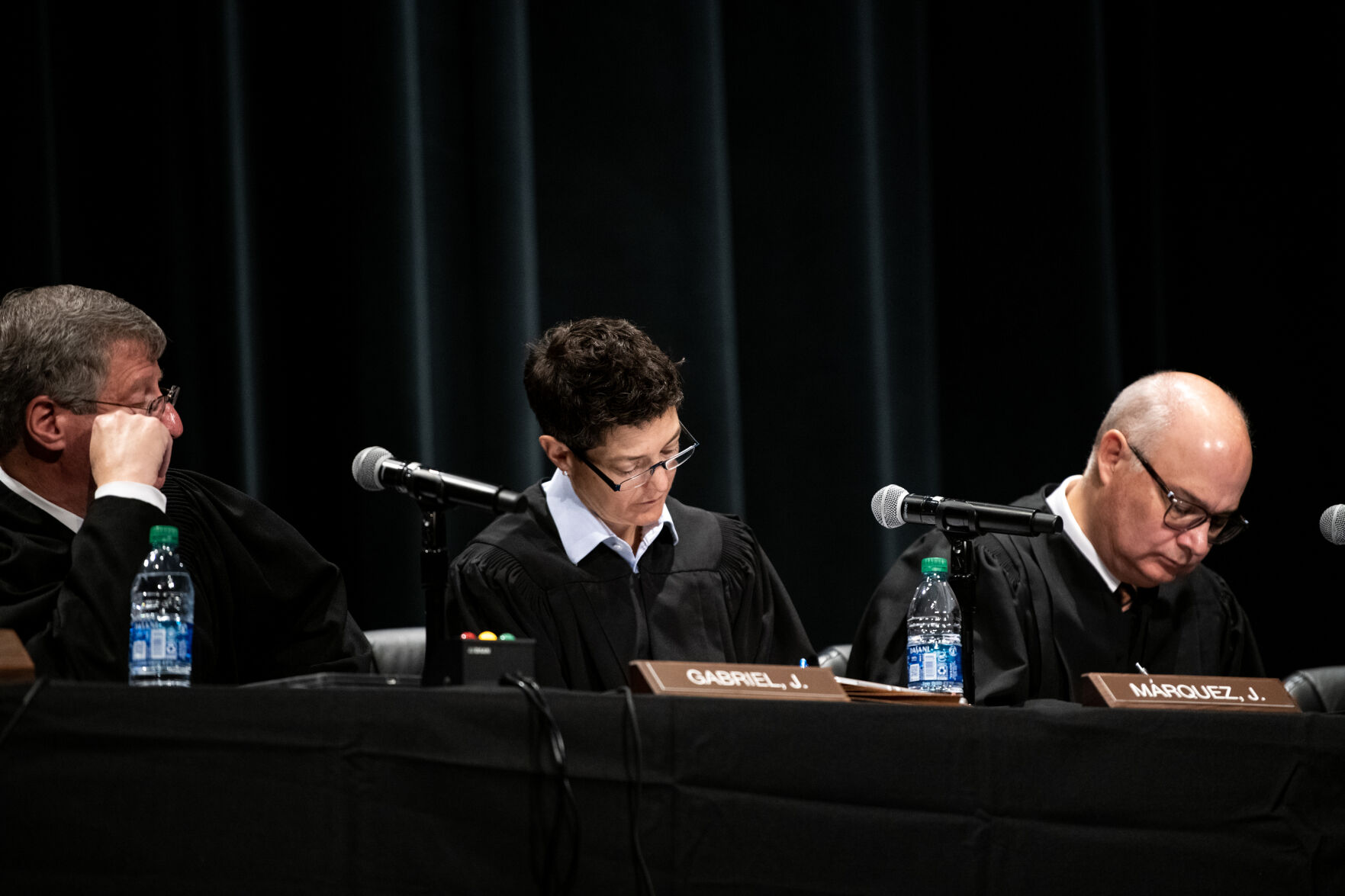
Less than two weeks before the justices were scheduled to hear oral arguments, the Colorado Supreme Court dismissed as moot a case that questioned what, specifically, government agencies have to do when there is information suggesting a child in a custody matter is American Indian.
Under the Indian Child Welfare Act of 1978 (ICWA), tribal nations and families have certain protections when a custody case involves a child who is a tribal member or is eligible for membership as the offspring of a tribal citizen. But recently, Colorado’s intermediate appellate court has issued conflicting decisions about what happens when a child’s status is unclear.
The Supreme Court was set to take up one such case this week, People in the Interest of Jay.J.L., in which the mother of two children believed she might be Cherokee or Navajo, but a juvenile court judge in Denver determined such information did not provide “reason to know” that the children fell under the protections of ICWA.
On Feb. 24, after the parties had submitted their written arguments, the Supreme Court dismissed the appeal. It had learned that Denver, while the case was pending, had actually done what the mother believed it should do: contact the relevant tribal nations to ask if the children were eligible for membership.
The answer was no, and Juvenile Court Judge Pax Moultrie resolved the case in December. The Supreme Court subsequently deemed the appeal moot.
The court’s action leaves unaddressed, for now, the split that has developed in the Court of Appeals about what counties must do to verify that a child with possible tribal heritage is American Indian or not.
Congress enacted ICWA after revelations that states were removing large numbers of American Indian children from their households into non-tribal families and institutions – accounting for up to 35% of tribal children. Now, ICWA applies to state custody proceedings involving an “Indian child.”
ICWA and its accompanying regulations require states to notify the relevant tribal nations once a judge knows or has reason to know an American Indian child is involved in custody proceedings. ICWA’s goal is to keep the tribal family intact, and several protections flow from the law for the benefit of the family and the nation, including the ability to transfer the case to tribal court.
In September, the Colorado Supreme Court addressed part of the issue: when do juvenile judges have reason to know? The court determined that assertions of tribal heritage, without more, do not amount to a reason to know.
However, the justices did not render an opinion on what comes next. Under Colorado law, if a judge does not have reason to know, but there is some information suggesting a child is American Indian, the judge must direct the county to “exercise due diligence” in obtaining further information.
The law does not define “due diligence,” and the Court of Appeals has acted to fill in the blanks.
While various panels of appellate judges have acknowledged that sending notice to the tribes for a definitive answer is an acceptable form of due diligence, the panel that decided the Jay.J.L. case indicated Denver should have followed up with the mother to discern her basis for claiming tribal heritage.
In August, the Supreme Court agreed to hear the Jay.J.L. case. While some parties – including the Office of Respondent Parents’ Counsel, which represents indigent parents – advocated for the court to modify its reason-to-know decision, the bulk of the argument centered on whether tribal contact is inherently part of counties’ due diligence.
“Because tribes are the decision-makers about enrollment and membership and thus whether a child is an Indian child, they will always be – by definition – 100% accurate when deciding the predicate questions about ICWA’s applicability,” wrote Joel M. Pratt, an attorney for the mother.
Denver and the legal representative for the children, in contrast, worried that requiring counties to contact tribes as part of their due diligence would amount to “wasting” tribal resources to investigate children who clearly were not eligible for ICWA’s protections.
The two federally-recognized tribes in Colorado, the Southern Ute Indian Tribe and Ute Mountain Ute Tribe, both weighed in to the Supreme Court to ask for a “structured” process for counties as they investigate potential tribal membership.
Although the Supreme Court will not hear the Jay.J.L. case, there are two pending appeals implicating the same due diligence issue that the court may now elect to hear. Melanie Jordan, case strategy director for the ORPC, said she expects the justices will review one of the cases.
“While we wait for answer, there is significant confusion in the trial courts and delays for families,” she said.

Gov. Jared Polis moves to end ICE subpoena fight over Colorado workers’ personal data
Marianne Goodland
marianne.goodland@coloradopolitics.com
Updated 3 days ago
The effort by Gov. Jared Polis to comply with an administrative subpoena from U.S. Immigration and Customs Enforcement for information held by several state agencies is over. Polis, in a motion filed Feb. 20, asked for a permanent injunction and...

Ex-Colorado Sen. Sonya Jaquez Lewis avoids prison, gets probation for forged ethics letters
Marianne Goodland
marianne.goodland@coloradopolitics.com
Updated 3 days ago
Former state Sen. Sonya Jaquez Lewis, D-Longmont, was sentenced Friday to two years of supervised probation and 150 hours of community service, and a $3,000 fine, to be waived if she completes an additional 100 hours of community service. The...

Toll to sexual assault survivors rises if they feel blamed and disbelieved
Jenny Deam
jenny-deam@coloradopolitics.com
Updated 3 days ago
Natalie, a single mother, dropped off her son at daycare, went to therapy and then returned home. She swallowed a fistful of pills, washing them down with a six-pack of beer. She was ready to end her life. “I just...

Colorado rape cases rarely result in an arrest and prosecution
Jenny Deam
jenny-deam@coloradopolitics.com
Updated 3 days ago
Authorities say they are especially difficult cases. In Colorado, most go nowhere. Over the past decade, for every 10 reports of rape, there is only one arrest. Warning: This story contains descriptions of sexual violence. Kiersten May remembered a fuzziness...

10th Circuit upholds finding of no misconduct against Colorado federal judge
Michael Karlik
michael.karlik@coloradopolitics.com
Updated 4 days ago
A judicial committee for the Denver-based federal appeals court upheld the chief judge’s finding last week that a federal judge in Colorado did not engage in misconduct by handling a civil case involving other attorneys and judges in the state....
SCOTUS whisperer? Justice Carlos Samour may get second opportunity to turn state dissent into national precedent
Michael Karlik
michael.karlik@coloradopolitics.com
Updated 3 days ago
For the second time in two years, Justice Carlos A. Samour Jr. occupies an unusual position: Having his dissent in a Colorado Supreme Court case potentially forming the basis of U.S. Supreme Court precedent. Earlier this week, the nation’s highest...

10th Circuit appoints ex-Colorado solicitor general to argue issue after federal government declines
Michael Karlik
michael.karlik@coloradopolitics.com
Updated 3 days ago
The Denver-based federal appeals court took the unusual step earlier this month of appointing an attorney to independently argue a key issue in a criminal sentencing appeal after the government indicated it would not contest the defendant’s view of the...
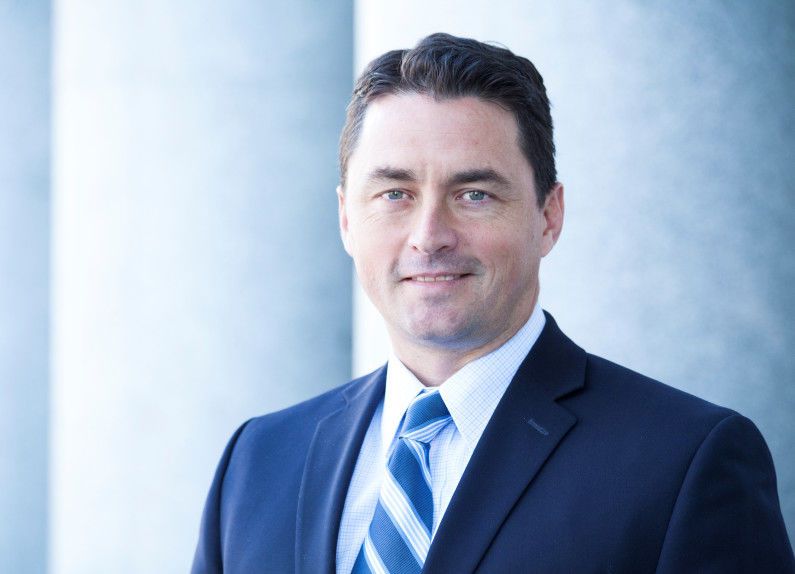
Daniel Domenico to take over as Colorado’s chief federal judge
Michael Karlik
michael.karlik@coloradopolitics.com
Updated 16 hours ago
Daniel D. Domenico will become the new chief judge of Colorado’s federal trial court next week, a role that encompasses the administration of the court as well as a judicial caseload. Under federal law, the chief judge of a U.S....
10th Circuit upholds violations, sanctions against Colorado Springs mental health hospital
Michael Karlik
michael.karlik@coloradopolitics.com
Updated 17 hours ago
The Denver-based federal appeals court agreed earlier this month that the government properly cited and penalized a Colorado Springs psychiatric hospital for failing to protect its staff from known risks posed by patients. The Occupational Safety and Health Administration inspected...
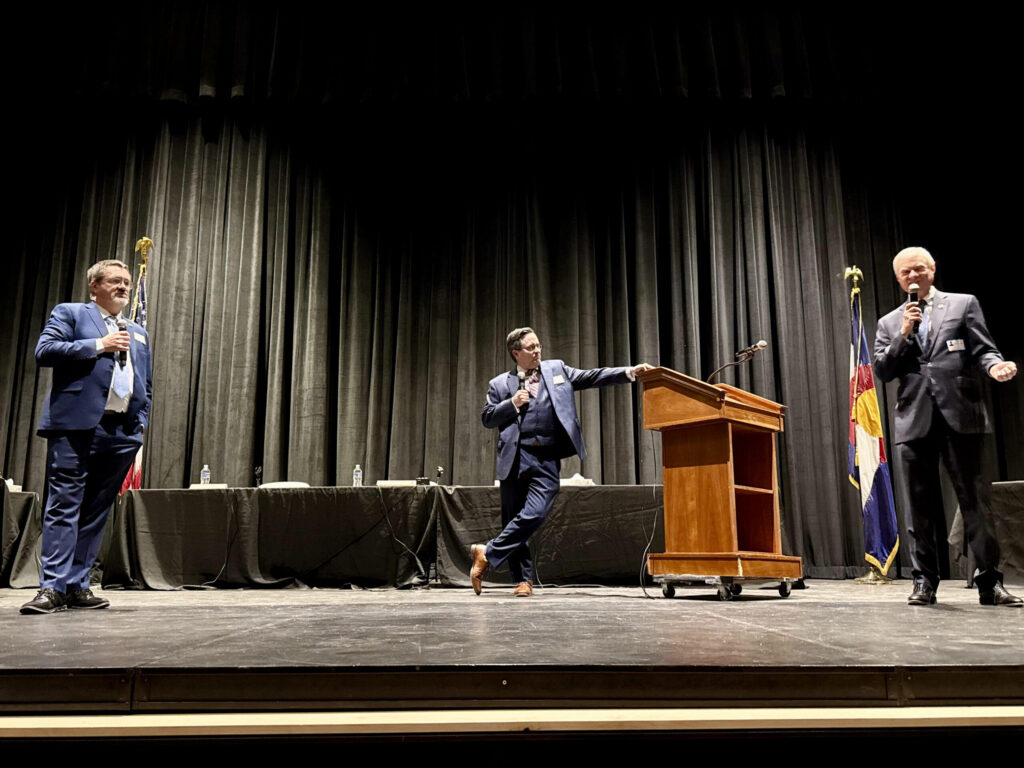
Appeals judges tell Boulder students about workload, ‘attack mode’ during school visit
Michael Karlik
michael.karlik@coloradopolitics.com
Updated 5 days ago
Three judges on Colorado’s second-highest court traveled to Boulder on Tuesday to hear oral arguments in real cases and field questions from students about their professional paths, their workload on the Court of Appeals, and their approach to interacting with...
PREV
PREVIOUS

Denver voters drowning in choices | SONDERMANN
Eric Sondermann Those of us with a gray hair here and there may find this Denver mayoral race somewhat akin to the court-ordered breakup of the AT&T phone system four decades back. With the flick of that switch, consumers went from having one choice (meaning no choice) for local phone service to soon having what […]

THIS WEEK AT THE COLORADO CAPITOL | Week of March 6, 2023
Here are legislative committee hearings and other events of note for the week ahead at the Colorado state Capitol. Committee schedules are subject to change. The daily schedule is available on the legislature’s website. Options for public testimony during committee hearings can be found here. House regulations regarding remote testimony can be found here. Senate regulations are here. Bills […]