

Top Republican strategists throw red flag on Colorado GOP’s state chair race | TRAIL MIX
It’s no secret that many of the Colorado Republicans with the most experience in the political realm are sounding the alarm about the state GOP’s upcoming leadership elections, with some openly speculating that installing any of the announced candidates for the top party post threatens Republicans’ viability in the state for years to come.
Most of those in the running for state GOP chair return the favor, blaming the party’s seasoned politicians and political operatives for landing the party in the mess it’s in.
The party’s state central committee meets in Loveland on March 11 to pick a chair, vice chair and secretary for the next two years, finishing the reorganization process that began last month when county parties did the same.
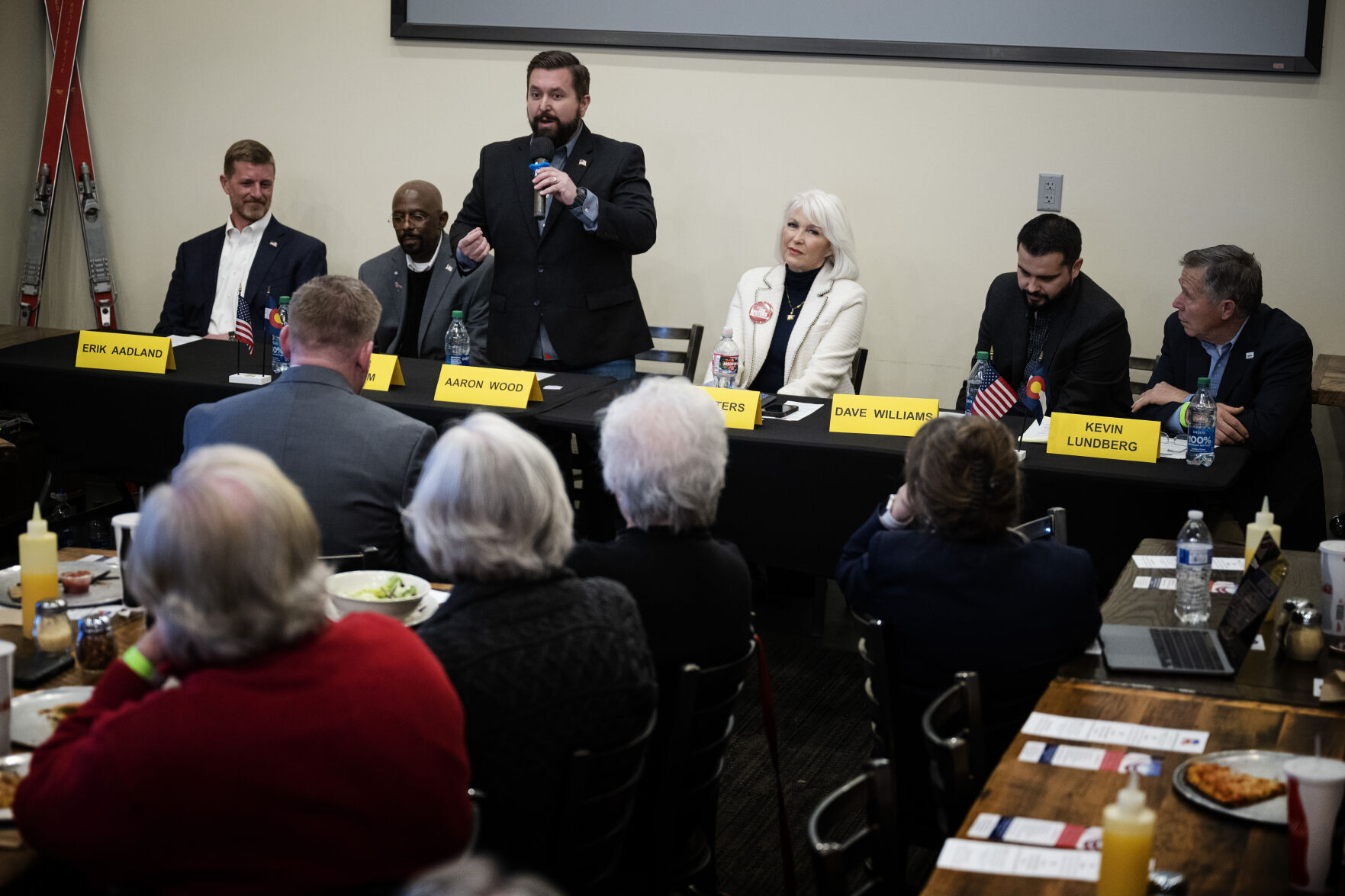
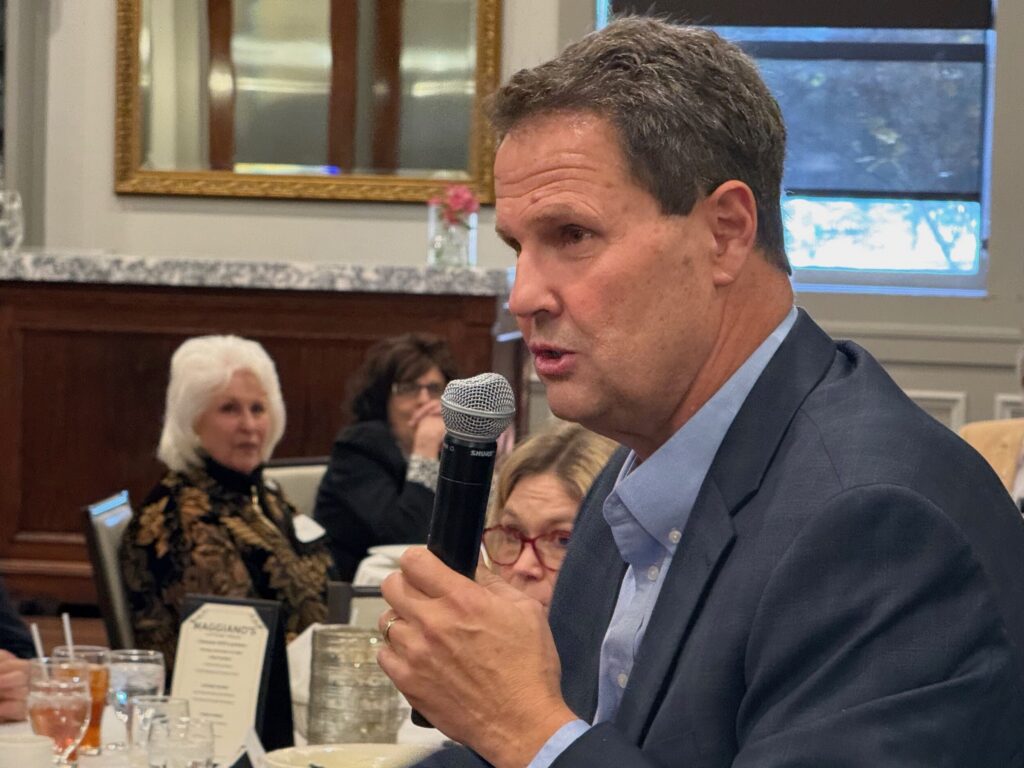
At a recent GOP state chair debate in Weld County, several of the six Republicans on stage sounded at times like they’re running against the party’s consultants almost as much as they stand opposed to the Democrats.
“It’s really quite simple,” said former state Rep. Dave Williams. “For the longest time, consultants have lied to us. They’ve said that we have to water down our values in order to appeal to swing voters. But here’s the truth: swing voters are not driven by ideology, otherwise they would affiliate.”
In addition to ignoring the consultants, he said, the solution is to “provide that bold contrast” with the Democrats.
Williams and others at the debate maintained that nominating Republicans whose positions overlap on some topics with the other party was what led to the GOP’s sweeping defeat. The example he cited – U.S. Senate nominee Joe O’Dea, who took a milder position on abortion restrictions than some of his fellow Republicans – wound up losing by a smaller margin than the other top-ticket GOP nominee, however. Gubernatorial hopeful Heidi Ganahl, who declared herself the “MAGA candidate” and hewed the party line on abortion and other issues, went down by a nearly 20-point margin, compared to O’Dea’s 15-point loss.
Another state chair candidate, Aaron Wood, founder of Freedom Fathers, a conservative Christian organization and a relative newcomer to politics, made a similar point from a different angle.
“I’m bringing an outside perspective to this,” he said. “The majority of our party is not built up of politicians and consultants. The majority of our party is built up of business leaders, moms, dads, grandparents, church-goers and everyday people that are sick and tired of losing.”
But it isn’t so much the consultant-bashing that bothers some Colorado GOP stalwarts – they’ve been hearing that for years.
After watching the Feb. 25 debate, a veteran strategist and former two-term state Republican chair told Colorado Politics that this year’s crop of chair candidates is steering the state’s once-dominant party into irrelevance.
Another veteran campaign manager – yes, he’s a consultant – echoed the assessment and sounded some warnings but added that it might not matter much, since the party apparatus is becoming increasingly less relevant.
Dick Wadhams, who managed a string of successful statewide campaigns in the Republican Party’s heyday – and also happens to be the last GOP state chair to leave office willingly after two terms – said that none of the chair hopefuls understand how to win elections in Colorado or even what a state party does.
“These six candidates are so out of touch with reality,” he said in an interview. “This party is going to be terribly misled for the next two years.”
Before going further, a word about Wadhams’ expertise on the subject, because whenever he weighs in on the state’s political climate, he’s greeted with a chorus of whippersnappers who shrug that he’s out of touch.
While it’s true his decades-long heyday peaked more than a decade ago, Wadhams knows a thing or two about Colorado politics – and, most importantly, how to win.
Wadhams managed a statewide campaign for Bill Owens, the only Republican to win election as governor in the last 50 years – and for the only Republicans to win both election and reelection as U.S. senators over the same period, Bill Armstrong and Wayne Allard. Ben Campbell won reelection in the late 1990s as a Republican but was elected as a Democrat and switched parties midway through his first term.
Back to Wadhams’ current observations.
“There is such a fundamental lack of understanding just what the Colorado electorate is today,” he said, referring to the chair candidates and their pitches at the recent debate. “These people, have they not noticed how this state has changed? None of them seem to understand the biggest problem Republicans have in Colorado is Donald Trump. They can ignore it, but it’s true.”
Several of the chair candidates said they support Trump’s reelection bid, though they also stressed they would remain neutral if elected chair. Most critically, however, Wadhams noted, not one would say President Joe Biden was the legitimate winner of the 2020 presidential election.
That, Wadhams has maintained for years, only spells disaster in a state where voters have roundly rejected Trump every time the former president has been near a ballot.
He waved off the chair candidates’ proposed solutions to the GOP’s struggles as hopelessly off base.
“They all keep saying we need to conduct better outreach and to define the Republican brand,” Wadhams said. “Candidates and elected officials define a party – not outreach efforts, not branding commissions. In this case, the single most dominant elected official and candidate that hangs over the Republican Party is Donald Trump. These guys are whistling past the graveyard if they think it’s just going to be outreach and branding and going to parades and festivals. That isn’t going to change where this party stands.”
Wadhams recalled attending a recent gathering in Jefferson County when three different sets of parents approached him after he spoke and told him that their son or daughter will never vote Republican again so long as Trump defines the party.
“There is a part of the electorate that really wants to vote for Republicans, but they will not entrust their vote to this party until Trump is gone and does not define the party anymore,” he said.
Ryan Lynch, who owns Polstar Strategies and has managed successful campaigns in hostile territory, said Republicans are facing a difficult next couple of years in Colorado but suggested that the outcome of the chair race might not be as devastating as some fear.
“It matters in the context that the state party chairman is the outward face of the party, and if we have somebody in that position who is just going to cause us embarrassment after embarrassment, that could be a problem for our overall brand,” he said. “But, in the end, the RNC or other national organizations can circumvent a state party if they deem the party apparatus as not being viable, so in that context, no, it doesn’t really matter.”
It’s happened before in other states, he noted.
“At the county level it’s a little different because they could install purity tests on their district captains and (precinct officers) to the point where only people who are closely aligned with the chair are able to enter into those positions,” Lynch said.
“They, in turn, make it so toxic that no level-headed individual would ever want to participate in the process. That can be damaging, and that’s what we’ve seen in El Paso County, and the election returns reflect that.”
It helps, Lynch added, that Colorado likely won’t be targeted in next year’s presidential race and that there aren’t any statewide races or more than one or two competitive congressional races on the 2024 ballot.
“This cycle in particular, I would say it matters less,” he said.


Boebert challenger Eileen Laubacher says she’ll ‘break through the noise’ in Democrat’s 1st TV ad
Ernest Luning
ernest.luning@coloradopolitics.com
Updated 3 hours ago
Democratic congressional candidate Eileen Laubacher says she’ll take a different approach than her opponent in a campaign ad released Wednesday that opens with a cacophonous series of videos featuring Republican U.S. Rep. Lauren Boebert. “Eileen’s had enough of the noise...
Jason Crow endorses Democrats up and down Colorado’s ballot, chips in $100K for campaign efforts
Ernest Luning
ernest.luning@coloradopolitics.com
Updated 1 day ago
Democratic U.S. Rep. Jason Crow on Tuesday formally endorsed more than 60 Democrats running up and down Colorado’s ballot and said he’s putting $100,000 into statewide and county campaigns and organizing programs to drive turnout in the fall election. Crow,...
Colorado House ethics committee issues ‘stern letter’ to Democrat over caucus funds mismanagement
Marianne Goodland
marianne.goodland@coloradopolitics.com
Updated 1 day ago
The Colorado House ethics committee on Friday voted unanimously to issue a “stern letter” to Rep. Mandy Lindsay, D-Aurora, regarding her mismanagement of House Democratic caucus funds. The committee further voted to request that Lindsay resign as Democratic Caucus co-chair...
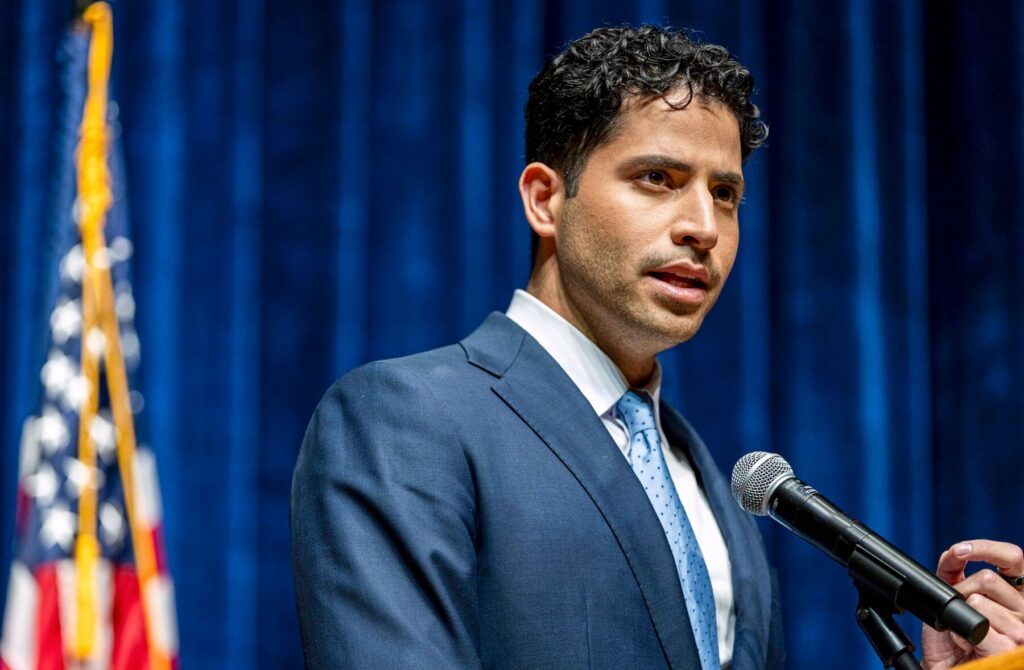
Manny Rutinel resigns from Colorado legislature to focus on congressional race
Marissa Ventrelli
marissa.ventrelli@coloradopolitics.com
Updated 2 days ago
The Democrat running for a key congressional race — whose outcome could decide the balance of power in the U.S. House — on Friday resigned from the Colorado legislature. State Rep. Manny Rutinel is turning his attention to his campaign...
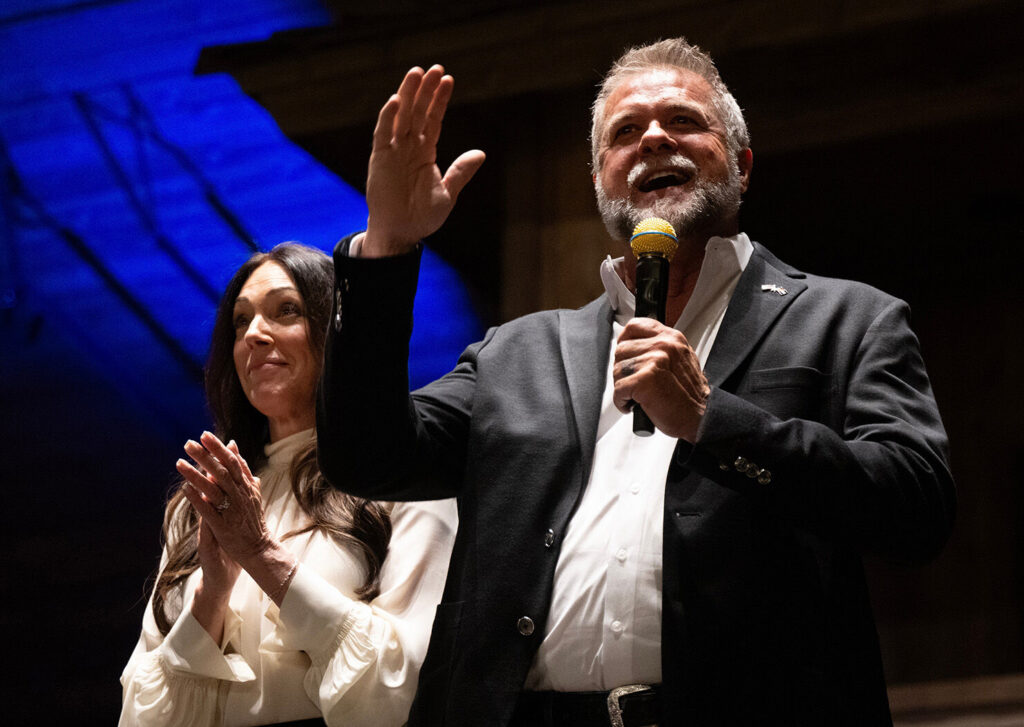
State seeks $50K penalty against GOP candidate Victor Marx over alleged campaign finance violations
Deborah Grigsby
deborah.smith@denvergazette.com
Updated 1 day ago
Republican gubernatorial candidate Victor Marx is looking at more than $50,000 in fines in what the Elections Division of the Office of the Secretary of State calls “unprecedented” campaign finance violations. The state has not imposed that fine yet, and...
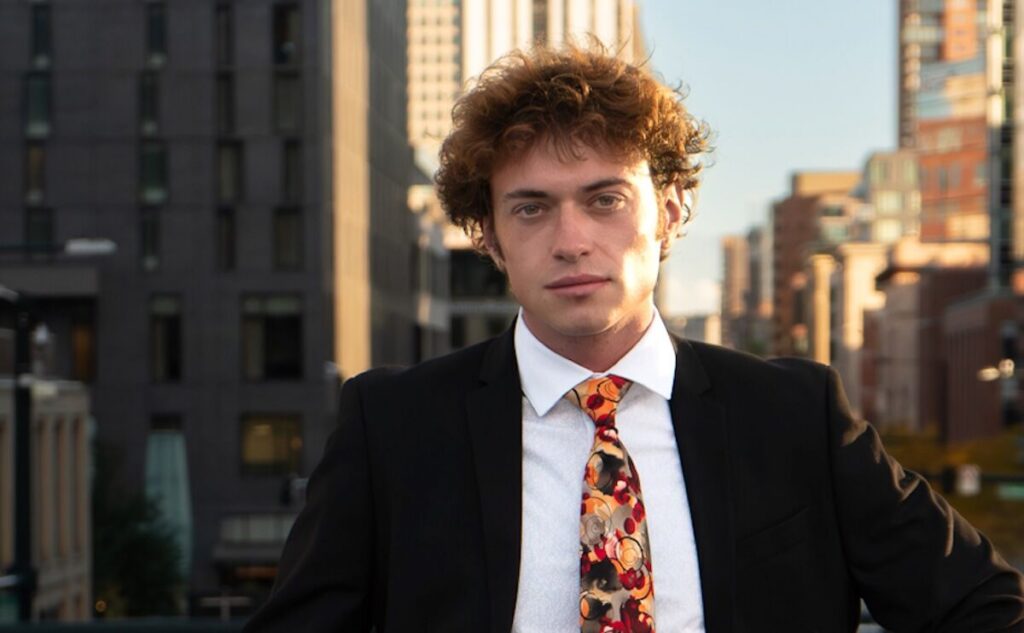
Judge puts Colorado Libertarians’ secretary of state candidate on ballot after party’s 1st nominee drops out
Ernest Luning
ernest.luning@coloradopolitics.com
Updated 5 days ago
A Denver judge ruled Friday that the Colorado Libertarian Party’s pick for secretary of state will appear on the November ballot after the party’s original nominee withdrew one day after the deadline to replace minor party candidates. Following a hearing...
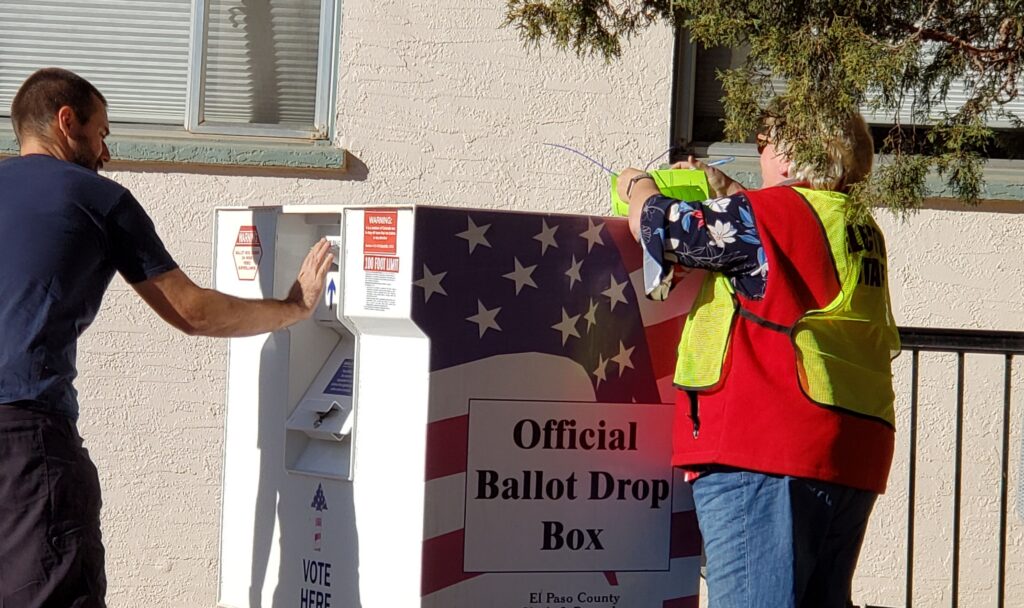
Fentanyl sentencing, tax overhauls, transgender issues anchor Colorado’s 14 ballot measures
Marissa Ventrelli
marissa.ventrelli@coloradopolitics.com
Updated 3 days ago
Fourteen statewide ballot measures await Colorado voters this November, offering a mix of criminal justice matters, tax overhauls and constitutional tweaks. Colorado’s 14 statewide ballot measures match the 2024 election for the most number in recent state history. The all-time...
House adopts Republican U.S. Rep. Jeff Crank’s resolution condemning socialism, mostly along party lines
Ernest Luning
ernest.luning@coloradopolitics.com
Updated 1 week ago
The U.S. House on Tuesday approved a resolution sponsored by U.S. Rep. Jeff Crank to condemn socialism in a largely party-line vote that the Colorado Republican characterized as a chance for lawmakers to “stand firm” against an ideology making inroads...

Capped or graduated income tax rate? Colorado voters to decide
Marianne Goodland
marianne.goodland@coloradopolitics.com
Updated 1 week ago
The proposal to create income tax tiers — which would replace Colorado’s flat rate — has been certified for the November general election ballot, setting the stage for a major showdown between two competing forces seeking to define the parameters of...

Colorado redistricting limits measure heads to November ballot
Marissa Ventrelli
marissa.ventrelli@coloradopolitics.com
Updated 1 week ago
A proposed constitutional amendment that would prohibit Colorado’s congressional maps from being redrawn outside of election cycles has qualified for the November ballot, according to the Secretary of State’s Office. Under Initiative No. 256, redistricting changes for the 2028 election...
PREV
PREVIOUS
Exclusive poll: Three-way tie in Denver mayor's race, but Denverites undecided as voting nears
The Denver Gazette, in partnership with 9 News and Metropolitan State University conducted a poll including 820 Denver adults regarding the municipal election. Amongst those polled, favorites in the crowded mayoral field emerged, as well as key issues voters voted were, “one of the very most important for Denver to address in the next few […]
Locals concerned about possibility of Colorado's 43rd state park
Ahead of a Monday evening meeting said to “get additional feedback” from the larger public on the potential for Colorado’s 43rd state park, some locals near the site say they have felt unheard. They are part of the small community of Sweetwater, situated along the dirt road that dead-ends at Sweetwater Lake. In the fall […]