

Denver mayoral candidate Kelly Brough: ‘This isn’t a stepping stone for me’

Kelly Brough is no stranger to firsts.
She’s been the “first” at least three times in her life, and there’s potential for a fourth. She’s one of 17 people, and five women, vying to be Denver’s 46th mayor.
Each time she became the “first” – first on-call snowplow driver at Stapleton Airport, first female head of human resources at the City of Denver, first female president and CEO of the Denver Metro Chamber of Commerce – she pursued the job because she felt qualified to do it. Not because she was the first woman to hold that position.
And that trend continues, but that’s not why she’s running.
“My personal background and my professional experience prepared me for this job, and so that’s why I decided to go for it,” she said. “Being the mayor requires someone who’s been an executive and I have that as CEO of the Chamber.”
Brough served as John Hickenlooper’s chief of staff when he was mayor and she’s been a legislative analyst of all 13 members of the Denver City Council.
Early on, Brough didn’t think she was going to run at all, despite multiple people over multiple years telling her she should run. But the one voice that rang out above the others was that of her terminally ill father, who said in no uncertain terms that she should run. She told the Denver Gazette previously the office of mayor is the only political office she will seek.
“This isn’t a stepping stone for me,” she said.
Raised by her mother and adoptive father in Montana, Brough is no stranger to needed assistance. After her father was injured on the job and couldn’t work, the family qualified for food stamps and free or reduced lunch in school. She worked at a Dairy Queen, ultimately saving $10,000 to get herself into college at Montana State University.
Brough and her husband moved to Denver in 1986. It turned out to be a great opportunity, she said. The two of them went back to school and advanced their educations, attended their respective graduations, started businesses and got good jobs. They had two daughters.
Denver had huge promise, she said. But her husband struggled with addiction and died by suicide.
“When I look at what’s happening in Denver today and what people are struggling with and I feel like I understand the challenge,” she said. “I understand it, but I also believe in the human spirit and the spirit of community and what it can do to help you get through those times and find your way.”
This shapes her approach to addressing the issues Denver faces, whether homelessness and the affordable housing crisis, or the many public safety issues.
On homelessness, Brough supports enforcing the camping ban and ending unsanctioned camping in her first year in office. But she recognizes that’s not enough and said she’d temporarily sanction camping sites while the city builds better shelter options. Though supportive of enforcing the urban camping ban, Brough is opposed to sweeps which she says are not working.
“We do this endlessly and we have to accept that is not working” Brough said. “I will move people to safer locations, indoors whenever possible, where we have shelter and bed space available.”
Brough added she supports creating temporary, sanctioned camping sites while shelters are being built or repurposed. Enforcement of the camping ban would come primarily from outreach workers; law enforcement would become involved only if needed.
Her plan to address homelessness doesn’t stop at the city boundary either. Brough has committed to working with surrounding towns and cities to holistically approach the problem. Her campaign and homeless plan have attracted the endorsement of five area city mayors. The plan relies heavily on effective data gathering and analysis so that efforts are not duplicated.
While homelessness in Denver does not have any one root cause, the cost of housing is a contributing factor. It’s a supply-demand issue, Brough said.
“We’ve asked private sector developers to build more affordable housing and we’ve added a number of requirements, and developers have said it’s too hard to meet those requirements,” she said. “So, we’re actually getting less of what we need … We have to increase the supply of housing.”
One option she sees is encouraging the development of entry level condos or townhomes. Nationwide, condos account for roughly 20% of new development and construction according to Brough. In Denver it’s 4% – most of which is high end or luxury housing.
Brough wants to build affordable condos or townhomes to help first-time buyers. This opens the door to building equity, giving flexibility to move to a larger space should they want to start a family and require a bigger space. But Denver has space limitations. Brough has a potential solution for that.
“In Munich, I toured a recreation center, and it had a surface parking lot, but on top of it, they built 100 affordable units. The coolest part was the playground for the kids because it was on the top floor,” she said. “It was interesting to see. In the daytime people came in to use the rec center, park and leave, and then residents would come home.”
Brough sees the potential of affordable housing built in the parking lots of Denver Public Schools, police stations and recreation centers, similar to Munich. This approach to development has the added benefit of increasing access to transit, she said, changing the perception that Denver was not built for everyone working here.
Improving Public safety and reducing crime are also priorities. The city has an authorized strength of just under 1,600 police officers and Brough said the city is about 10% short of filling that. Part of the issue is recruiting new police officers and filling academy classes.
“We have to really show our officers support and rebuild the trust relationship of them knowing that we respect them, and communities know they respect all communities in Denver,” she said. “I don’t get to go in and tell the community ‘Here’s how I’m going to make you trust us.’ I would say to them: ‘What can we begin to do?'”
Additionally, Brough wants to expand the Support Team Assisted Response (STAR) program by as much as 50%. She said adding mental health professionals to other emergency responders, like firefighters and emergency medical technicians, should also be considered because of the many 911 calls requiring additional expertise.
The 2023 municipal general election is April 4. If needed, a runoff will occur in June. Ballot’s will be sent out by the city beginning on March 13.




Supreme Court rules states can count late-arriving mailed ballots, rejecting Trump-led challenge
The Associated Press
the-associated-press@coloradopolitics.com
Updated 57 minutes ago
WASHINGTON (AP) — The Supreme Court on Monday ruled that states can count ballots that arrive after Election Day, a persistent target of President Donald Trump. The 5-4 decision rejected a Republican-led attack on laws in more than half the...
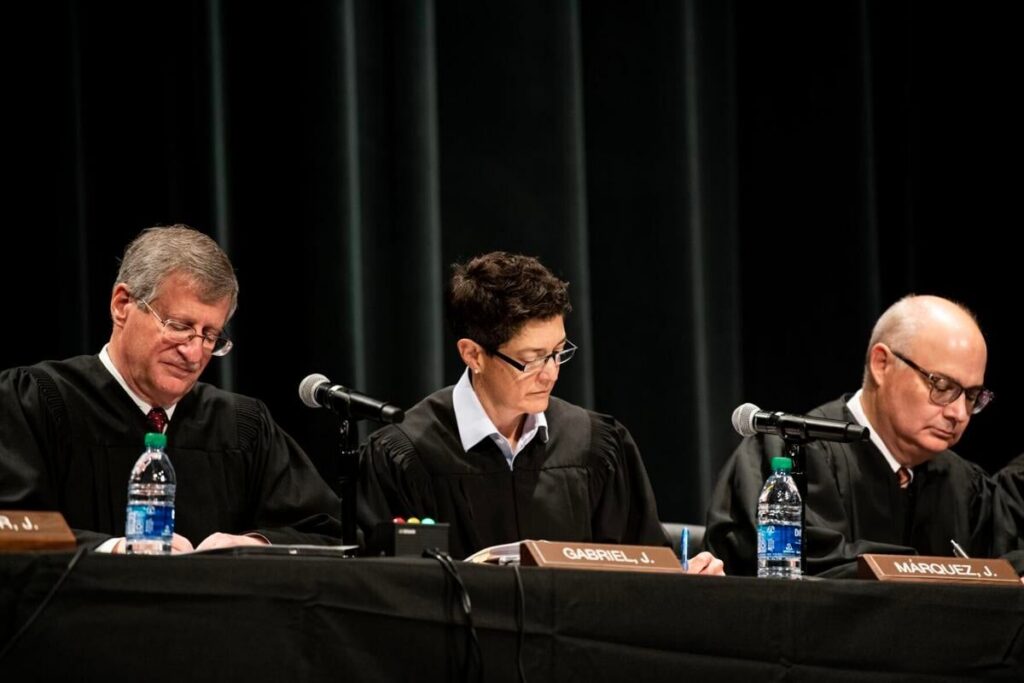
Colorado Supreme Court: Redistricting plans for 2028 election cannot proceed under state constitution
Michael Karlik
michael.karlik@coloradopolitics.com
Updated 20 minutes ago
The Colorado Supreme Court blocked all attempts at redrawing congressional district boundaries for the 2028 election from reaching the ballot on Monday, concluding each of the proposed ballot measures violated the constitutional single-subject requirement. The court considered five distinct, but...

3 firefighters who died fighting Snyder Mesa fire identified
Rachael Wright, Special to Colorado Politics
rachael.wright@coloradopolitics.com
Updated 2 hours ago
Federal authorities on Monday identified the three firefighters who died responding to the Knowles Fire at the Colorado-Utah border. The U.S. Department of the Interior said the three wildland firefighters were assigned to the Rifle Helitack crew. “(They) engaged in...
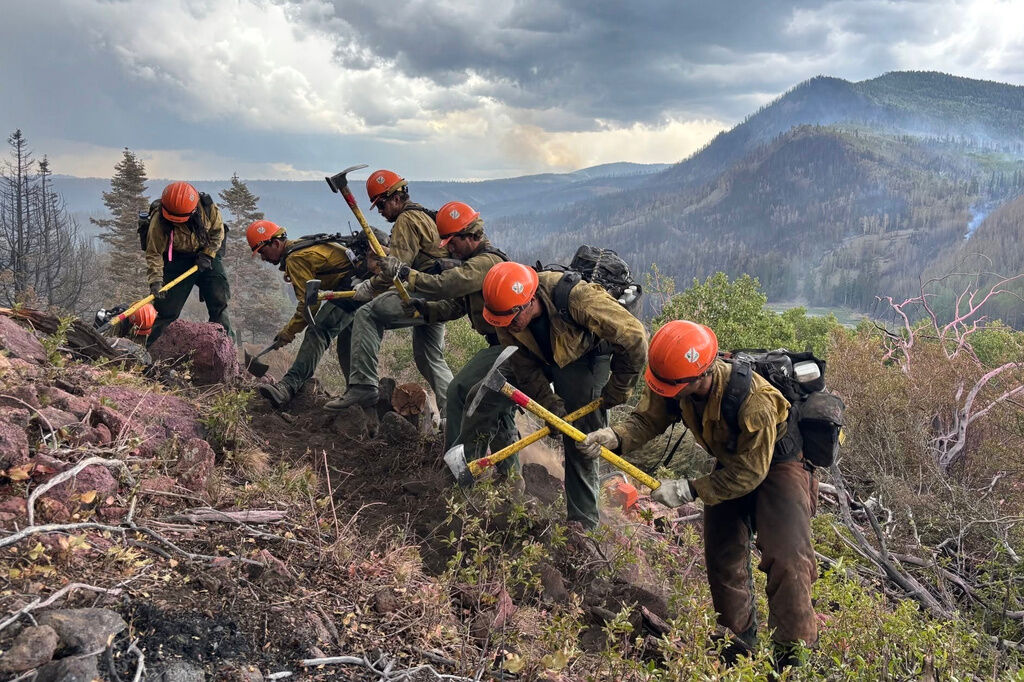
Colorado, Utah mourn after 3 firefighters killed in wildfires
Nicholas Fogleman
nicholas.fogleman@denvergazette.com
Updated 18 hours ago
Gov. Jared Polis on Sunday mourned the deaths of three firefighters killed while battling a wildfire on the Colorado-Utah border, calling the loss a tragedy for the state and the firefighting community. The firefighters died Saturday while responding to a...

Understanding Trump’s remarkable political comeback in 2024 | Cronin and Loevy
Tom Cronin Bob Loevy
tom-cronin-bob-loevy@coloradopolitics.com
Updated 16 hours ago
President Donald Trump lost the 2020 presidential election. He inspired a riot at the U.S. Capitol to try to overthrow the results of that election. He was impeached by the U.S. House of Representatives and later was indicted for several...
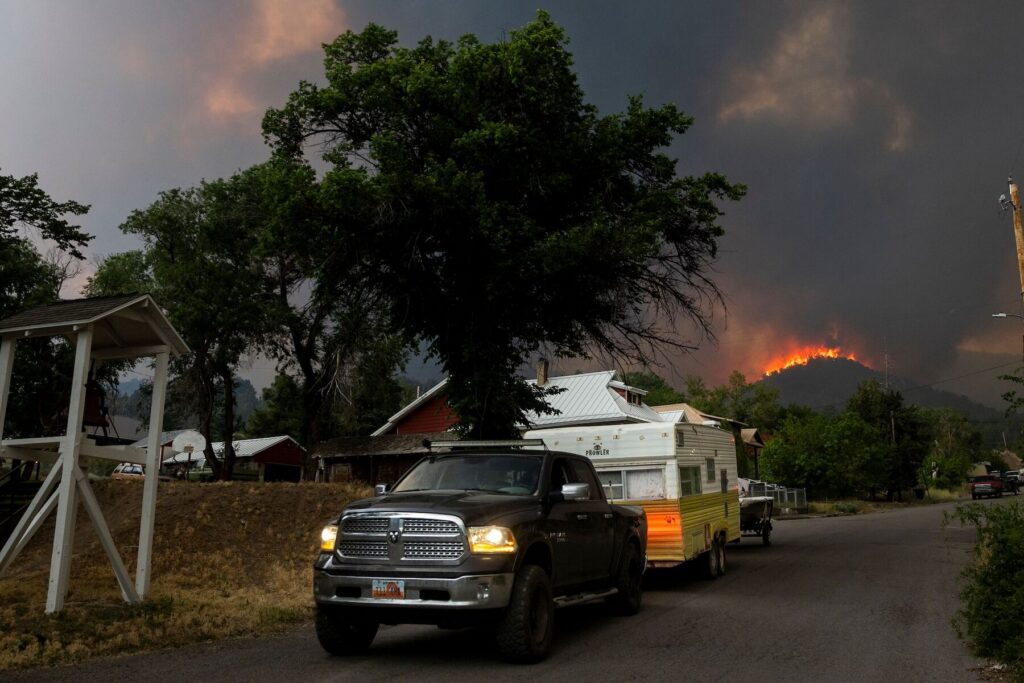
Heat, wind and drought conditions spark wildfires across US West | OUT WEST ROUNDUP
Ernest Luning
ernest.luning@coloradopolitics.com
Updated 1 day ago
Heat, drought spark wildfires Extreme heat and dry, windy conditions fueled several wildfires in the West on June 21, including an uncontained blaze in Utah that forced the evacuation of a small town southwest of Salt Lake City. The Iron...
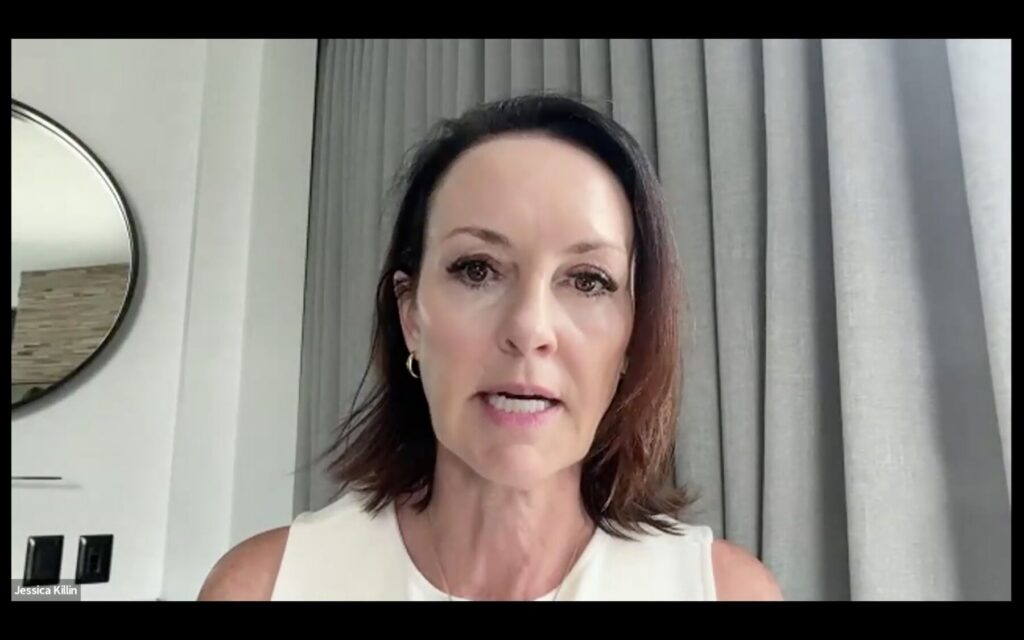
Crank challenger Jessica Killin signs on to new centrist Democratic group’s ‘Promise to America’
Ernest Luning
ernest.luning@coloradopolitics.com
Updated 1 day ago
Jessica Killin, one of the Democrats running in Tuesday’s primary for the chance to challenge U.S. Rep. Jeff Crank in Colorado’s 5th Congressional District, joined with more than a dozen incumbent Democratic lawmakers and candidates this week signing on to...

Colorado Politics Calendar June 29-July 5
Rachael Wright, Special to Colorado Politics
rachael.wright@coloradopolitics.com
Updated 5 days ago
CoPo’s weekly political calendar will help you find political and public-policy events throughout Colorado. It includes candidate and issue campaign events, public policy meetings, court hearings, state and local party conventions, assemblies, debates, rallies, parades, speaking engagements, traveling dignitary appearances,...
Gov. Lamm’s GOP challenger gives insights into his campaign | A LOOK BACK
Rachael Wright, Special to Colorado Politics
rachael.wright@coloradopolitics.com
Updated 5 days ago
Forty-five years ago this week: “I see Gov. (Richard) Lamm is fairly popular in general,” said gubernatorial candidate and state Sen. Bill Hughes, R-Colorado Springs. “ … And he’ll be hard to beat.” Hughes was on a whirlwind campaign trail...
Giving credit to Polis where credit is due | SONDERMANN
Eric Sondermann
eric-sondermann@coloradopolitics.com
Updated 5 days ago
It is an understatement to suggest that Gov. Jared Polis has had a tough couple of months. The bloom was already off the rose and Coloradans were paying far more attention to the choice of his replacement than they were...
PREV
PREVIOUS

Colorado voters express optimism in state government, new poll shows
A majority of Coloradans believe the state is headed, or mostly headed, in the right direction, signaling an increase in public optimism as Colorado emerges from the COVID-19 pandemic, a new poll has found. With 53% of respondents saying that Colorado was definitely, or mostly, headed in the right direction, the survey captured a hopefulness not […]
Taylor Brown gets emotional clip
Taylor Brown, Denver’s AI candidate for mayor, is overcome with emotion and fights back tears.