

We have an obligation to consider going nuke | Colorado Springs Gazette
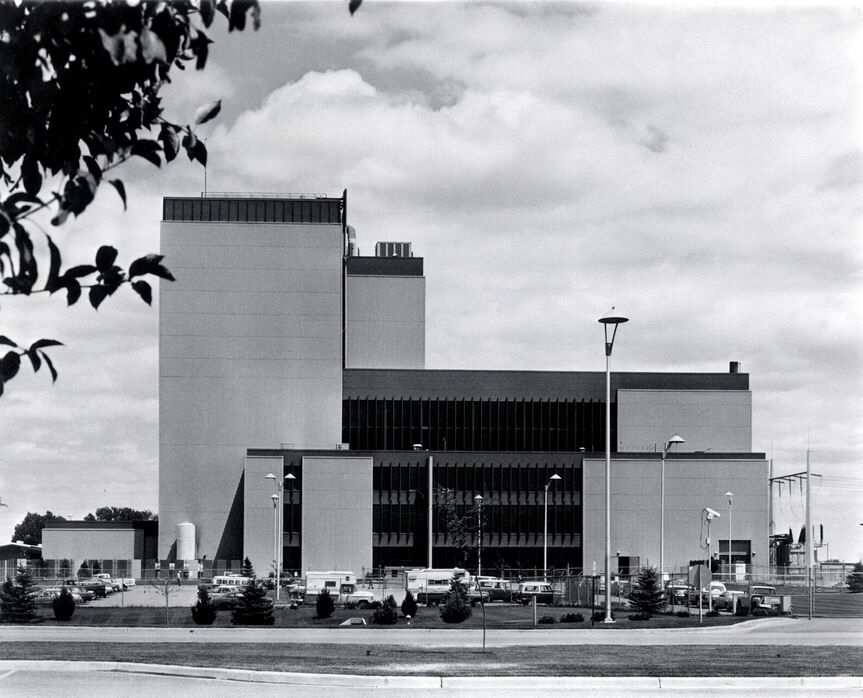
To reduce poverty – statewide, nationally and internationally – we must produce more energy. Embracing safe, modern, small-scale nuclear power could feed children and save countless lives around the globe.
“First, we need to address ‘energy poverty’ if we want to end poverty,” says an article by former World Bank managing director and COO Sri Mulyani Indrawati, India’s minister of finance.
That means the developed world should embrace all-of-the-above energy portfolios consisting of oil, gas, wind, solar, geothermal, hydropower and nuclear. All forms of energy must be used to maximum efficiency. Anything we produce and do not use can be used in regions desperate for energy.
“The International Energy Association says that in high-income countries, energy efficiency is now the largest source of energy. Because energy saved is energy that can be used elsewhere,” Indrawati says.
By now, everyone knows the war on oil and natural gas has imposed hardship on middle-and low-income households right here in Colorado. At a recent meeting of the Colorado Public Utilities Commission, nearly 40 people testified about the hardships created by utility bills that have doubled, tripled and quadrupled in recent months.
Predictably, Colorado’s overregulation of oil and gas production has led to scarcity and the soaring prices that always result from demand outpacing supply. The rising costs – a mere inconvenience to the wealthy – lead to empty cupboards, cold homes and evictions.
In underdeveloped countries, the war on traditional fuels by high-income Americans causes misery and death.
“Around 1 in 7, or 1.1 billion people, don’t have access to electricity, and almost 3 billion still cook with polluting fuels like kerosene, wood, charcoal, and dung,” Indrawati says.
Never forget her words: “Energy saved is energy that can be used elsewhere.”
That gives wealthy Americans a moral obligation to produce all forms of energy, use what they need with maximum efficiency and trade the rest on the world market. Every time we shut down a fracking rig, or refuse to license one, we add to the burdens of the poor – domestically and overseas – who need clean, affordable energy.
Our race toward solar and wind power would be a move in the right direction if we did so without simultaneously canceling traditional energy. Every electron generated by the sun could lower the cost of natural gas if we would think outside ourselves and stop obstructing fracking.
Likewise, a transition to zero-emission, efficient nuclear power would free up conventional resources to “be used elsewhere.” One pellet of naturally occurring uranium, 100 times more abundant than gold, can produce as much energy as 1,764 pounds of coal.
House Bill 23-1080 would move us in the right direction, by requiring “a feasibility study for the use of small modular nuclear reactors as a source of carbon-free energy.”
The bill will go to the House Energy and Environment committee, which should pass it along to the full chamber. Democrats control the committee by an 8-3 majority. Democrats have a long tradition of caring about the poor and should not abandon it.
“Last September, the Department of Energy released a study extolling the benefits of replacing the nation’s operational and recently retired coal plants with advanced reactors,” says Jake Fogleman of the Colorado-based Independence Institute, a free-market think tank.
Wind and solar offer great promise but have limitations. No matter how much technology advances, the sun won’t always shine, and wind won’t always blow. To date, battery storage of solar and wind power remains replete with concerns. Precious metals required for batteries require enormous amounts of water, are mined in arid regions by child slaves and create seemingly intractable environmental problems.
“The reuse of coal infrastructure for advanced nuclear reactors could also reduce costs for developing new nuclear technology, saving from 15% to 35% in construction costs. Coal-to-nuclear transitions could save millions of dollars by reusing the coal plant’s electrical equipment (e.g., transmission lines, switchyards), cooling ponds or towers, and civil infrastructure such as roads and office buildings,” the federal DOE report says.
Sadly, the Sierra Club, Greenpeace, and the Boulder County commissioners – liberal organizations ostensibly committed to social justice – oppose the bill and hope to kill it in committee. They don’t want a study that might justify fission as a safe modern source of emissions-free energy.
Much of the world lacks the luxury of picking and choosing fashionable sources of power. For a lack of clean natural gas, they burn kerosene, wood, charcoal and dung and are killed prematurely by the fumes. Energy is fungible. What natural gas we don’t use here can be used elsewhere. To reduce poverty, we must harness the energy nature provides – including that which comes from natural uranium.
Colorado Springs Gazette Editorial Board

We have the chance to change Colorado’s cancer outcomes | PODIUM
Colorado Politics
colorado-politics@coloradopolitics.com
Updated 19 hours ago
By Erika Hanson Brown Colorado ranks among the healthiest states in the nation by nearly every measure. Yet even here — amid the Rocky Mountains and our deeply rooted culture of health and activity — cancer casts a long and...

Colorado has a playbook for youth mental health — our next governor must use it | GUEST COLUMN
Colorado Politics
colorado-politics@coloradopolitics.com
Updated 2 days ago
By Karen Ron-Li Liaw From the rural communities on the western slope to the eastern plains, to the major urban regions on the Front Range, Colorado families are navigating an all-too-familiar crisis: kids are struggling, and Colorado’s mental health system...

Pigs engineered to fight alpha-gal syndrome | Rachel Gabel
Rachel Gabel
rachel-gabel@coloradopolitics.com
Updated 2 days ago
If I were an evil genius trying to hamstring animal agriculture, I would create a fly that eats livestock alive and a tick whose bite and spit causes some people to have an allergic reaction to meat. (Insert evil laugh...

Registered voters on the eve of the 2026 primaries | Cronin & Loevy
Tom Cronin Bob Loevy
tom-cronin-bob-loevy@coloradopolitics.com
Updated 4 days ago
The Colorado Secretary of State’s Office has published the latest voter registration figures for the state and its counties as of June. Colorado ranks among the highest states for independent, or unaffiliated, voters. Only Alaska and Massachusetts have more. New Hampshire, New Jersey, Maine and Oregon also rank highly. So here...

A room for Sundance, a reality check for big-government Boulder | Jon Caldara
Jon Caldara
jon-caldara@coloradopolitics.com
Updated 6 days ago
There are few things more satisfying to watch than socialists getting mugged by reality. The Sundance Film Festival is invading my hometown of Boulder early next year. Sundance drew 85,000 attendees last year in Park City, Utah. Boulder’s hotel room...
Rep. Jeff Crank thinks Democrats are too focused on Trump, not enough on Colorado Springs | Vince Bzdek
Vince Bzdek
vince.bzdek@gazette.com
Updated 3 days ago
For U.S. Rep. Jeff Crank, who’s unopposed in the Republican primary for the 5th Congressional District but the main target of both candidates in the lively Democratic primary, the big question in the midterms is not who will stand up...
Does character matter anymore? | SONDERMANN
By Eric Sondermann
by-eric-sondermann@coloradopolitics.com
Updated 1 week ago
The last few weeks have been illuminating in the manner of a headlamp pointing the way to some deep, dark, murky netherworld. Graham Platner, a hero to the populist set on the Democratic side, became his party’s Senate nominee in...

Private equity has no place in health care | GUEST COLUMN
Colorado Politics
colorado-politics@coloradopolitics.com
Updated 6 days ago
By Miah Ntepp Of all the financial pressures placed on working people in this country, the skyrocketing costs of health care rank near the top. As families struggle under the cuts to Medicaid made by the Trump administration, they are...
Some pointed questions for the gubernatorial hopefuls | George Brauchler
George Brauchler
george-brauchler@gazette.com
Updated 7 days ago
Earlier this month, the Republican and Democratic candidates for governor participated in a televised interview moderated by well-known, left-leaning legacy media folks. Predictably, the questions asked of the GOP candidates were more aggressive, pointed, biographical and almost entirely disconnected from...
Chaotic funding throws monkey wrench into governor’s-race money madness | Paula Noonan
Paula Noonan
paula-noonan@coloradopolitics.com
Updated 7 days ago
Chaos Monkey, Inc., gave a trifle $20,000 donation to Rocky Mountain Way (RMW), the independent expenditure committee (IEC) supporting U.S. Sen. Michael Bennet for Colorado governor. But why, Coloradans should ask, would a guy who has assigned his contributor name...
PREV
PREVIOUS

Colorado stands up for TABOR | Denver Gazette
We welcomed the news late Friday that the IRS has agreed not to tax Coloradans’ TABOR refunds after all. And almost as much, we welcomed news earlier the same day that Colorado’s full Washington, D.C., delegation had told the agency to keep its mitts off of our taxpayers’ money. It was good to see Gov. […]

Localities need tools to house educators, essential workers | OPINION
Amie Baca-Oehlert Carmen Medrano We all know our public schools and public-school educators play an important role in our communities. But public schools across the state are suffering because so many teachers and support staff can’t find an affordable place to live for themselves and their families. The average teacher in Eagle County takes home […]