

Colorado bill would reduce prison sentences for inmates pursuing higher education

Colorado has among the worst recidivism rates in the country, with over 50% of people released from prison ending up back behind bars within three years. Lawmakers want to change that with House Bill 1037.
If passed into law, the bill would deduct one year from an inmate’s prison sentence for every associate, bachelor’s or graduate degree they earn while incarcerated, and six months for every certificate or other credential earned. The program would only apply to non-violent offenders.
Prisoners who pursue higher education while incarcerated have been found to be less likely to return to crime after they’re released. Recidivism rates drop to 13.7% for prisoners who earned associates degrees, 5.6% for those who earned bachelor’s degrees and 0% for those who earned master’s degrees, according to a 2006 national analysis by Emory University.
“When you get them connected to education, they don’t reoffend, they become productive members of society,” said bill sponsor Rep. Matthew Martinez, D-Monte Vista, who worked at the Adams State University Prison Education Program before being elected. “It really gets their lives back on track.”
Bikram Mishra said he was incarcerated in Colorado for 12 years, during which time he participated in numerous college courses and earned certificates. Now, Mishra said he works with outgoing prisoners to help them prepare to reenter society.
Mishra said having access to education was “rehabilitative” for him, providing him with the hope and motivation needed to turn his life around.
“If I were to not have that, I definitely would have joined the ranks of the revolving door of prisoners,” Mishra said. “I understand there might be many in our community that feel that that’s what we get for breaking the law. But we are still in society, and we really want to be good members of society.”
Lauren Reed, interim director of the Adams State University Prison Education Program, described the initiative as “transformation through education,” pointing out that prison is often the first time in their lives that these offenders have access to higher education.
Under the bill, the money saved by shortening sentences of qualifying inmates would be split evenly between the Department of Corrections and the Department of Higher Education to continue facilitating higher education programs in prisons. The bill also allows prisoners released prior to completing their degree the option to finish in order to earn time off of parole.
This effort comes as, beginning in the 2023-24 school year, people in prison will be eligible to receive federal Pell Grants up to nearly $7,000 per year, thanks to recent changes from the U.S. Department of Education.
The House Judiciary Committee approved the bill in an 11-2 vote on Tuesday, advancing it to the full House for consideration. Only Republican Reps. Stephanie Luck of Penrose and Matt Soper of Delta voted against the bill.
“I strongly support this policy, the idea of enabling people to access the kind of information that opens all sorts of doors,” Luck said. “I do have issues with some of the technical pieces of it.”
Luck raised concerns about the portion of the bill that would earmark the funds saved by the bill to be reinvested in prison education programs. The Department of Corrections similarly criticized this element of the bill, saying it would be infeasible to calculate the funding saved.
Martinez said he is collaborating with the Department of Corrections to work this out, adding that he is confident they will be able to find a solution. Proponents of the bill were equally confident in the bill’s future, championing the bill’s support from education, criminal justice and religious institutions alike.
“This is laying out a more hopeful path,” said Rep. Mike Weissman, D-Aurora.



What courageous citizenship really looks like | Vince Bzdek
Vince Bzdek
vince.bzdek@gazette.com
Updated 8 hours ago
By Vince Bzdek What exactly is courage? Ernest Hemingway famously called it grace under pressure. Mark Twain wrote that “courage is resistance to fear, mastery of fear — not absence of fear.” C.S. Lewis refined that even more: “Courage is...
The coming election and mischief in the making | SONDERMANN
Eric Sondermann
eric-sondermann@coloradopolitics.com
Updated 3 days ago
America’s tribalism is such these days that we struggle to even agree on the basic rules. Elections have always been hotly contested. As the saying goes, “Politics ain’t beanbag.” The process has long involved elements of nastiness and underhanded conduct....

Colorado Politics Calendar Aug. 31-Sept. 6
Rachael Wright, Special to Colorado Politics
rachael.wright@coloradopolitics.com
Updated 3 days ago
CoPo’s weekly political calendar will help you find political and public-policy events throughout Colorado. It includes candidate and issue campaign events, public policy meetings, court hearings, state and local party conventions, assemblies, debates, rallies, parades, speaking engagements, traveling dignitary appearances,...
Tancredo in Running for Dept. of Ed. Position | A LOOK BACK
Rachael Wright, Special to Colorado Politics
rachael.wright@coloradopolitics.com
Updated 3 days ago
Forty-five years ago this week: “I know that my name has been placed before the Secretary of Education, and I know that I’m one of three or four being considered for the Department of Education’s Region 8,” said state Rep....
Colorado measure adding ID checks to mail-in voting qualifies for ballot
Marissa Ventrelli
marissa.ventrelli@coloradopolitics.com
Updated 1 day ago
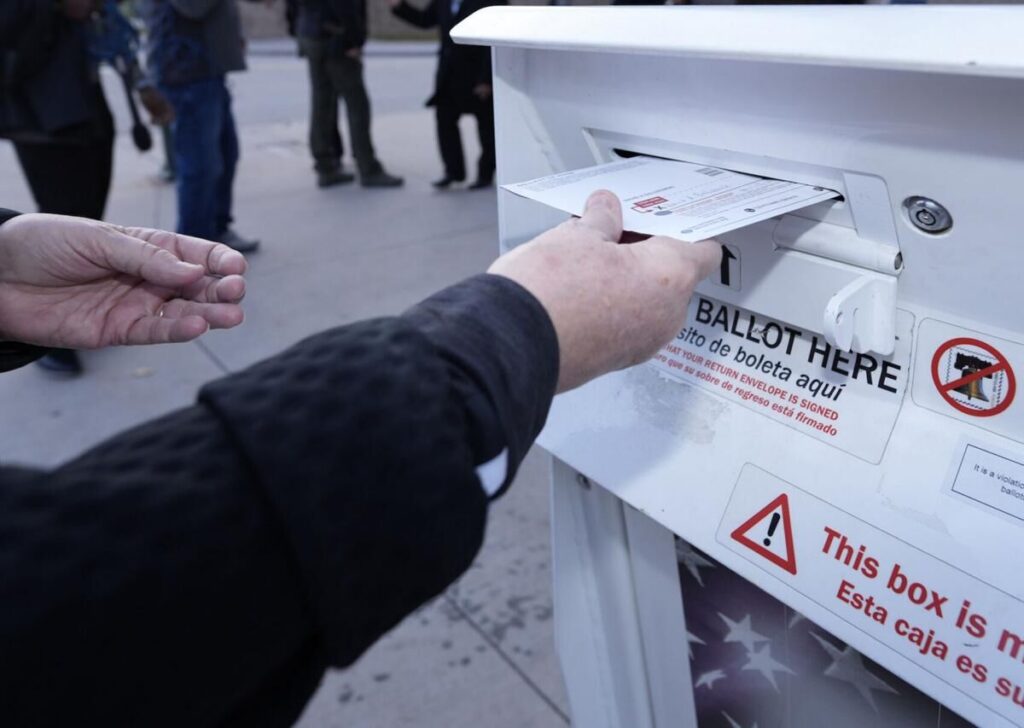
A ballot initiative that would require voters to include additional information on mail-in ballots has qualified for the November election, according to the Secretary of State’s Office. Backed by El Paso County Treasurer Chuck Broerman and former Deputy Secretary of...
Colorado election website error exposes personal data of confidential voters
Marissa Ventrelli
marissa.ventrelli@coloradopolitics.com
Updated 1 day ago
A system update accidentally lifted protections on confidential records in Colorado, exposing dozens of voters’ personal information, according to the Secretary of State’s Office. The limit that normally blocks access to confidential voter profiles was inadvertently disabled during an update...

PUC adds weekly comment after killing private talks
Scott Weiser
scott.weiser@gazette.com
Updated 1 day ago
The Colorado Public Utilities Commission will take public comment at the start of every commissioner’s weekly meeting beginning Sept. 9 as part of its new transparency mandate, the commission announced, expanding a slot previously limited to the second Wednesday of...
10th Circuit overturns framework for sentencing probation violators by 11-1
Michael Karlik
michael.karlik@coloradopolitics.com
Updated 7 hours ago
In a rare decision by all 12 of its full-time judges, the Denver-based federal appeals court ruled in a lopsided vote on Friday that one of its members created a sentencing process for probation violators that was out of step...
Federal judge dismisses excessive force lawsuit against Colorado Springs, officer
Michael Karlik
michael.karlik@coloradopolitics.com
Updated 11 hours ago
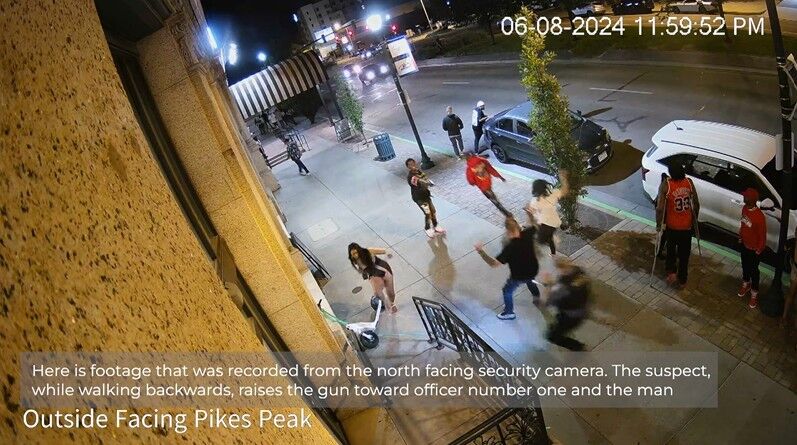
A federal judge concluded last week that a Colorado Springs police officer could not be held liable for shooting a suspect three times after the man menaced two victims with a gun and fled the scene. Al’morion Germany was involved...

DeFlock started from one man’s curiosity — now Flock cameras are a midterm issue
Claire Carter
claire.carter@washingtonexaminer.com
Updated 1 day ago
Will Freeman wasn’t looking to start a national movement when he launched DeFlock after noticing Flock Safety’s automatic license plate readers along the side of the road. The software engineer was driving across the country in 2024 when the cameras...
PREV
PREVIOUS

House committee approves bill to add school and special districts to ethics commission oversight
Over its 15-year history, Colorado’s Independent Ethics Commission has reviewed more than 400 complaints against state lawmakers, a governor, county commissioners and municipal elected officials. Just over 10% have gone through the full complaint process. Never in its history has the commission looked at a complaint against an elected official associated with a special district […]

Republican Andy Rougeot brings deep pockets, tough talk to Denver mayoral race
One of the candidates vying to be Denver’s next mayor stands out as much due to his political affiliation as he does due to his swollen campaign coffers. Not only is veteran and small business owner Andy Rougeot the only major self-funding candidate in the nonpartisan race, he’s also the only registered Republican. City election […]