

Appeals court orders another resentencing after Denver judge failed to let defendant speak

Colorado’s second-highest court last week ordered that a defendant be resentenced a second time because a Denver judge failed to allow John Doushay Wise to speak, and also based the sentence length on speculation about what the previous judge who sentenced Wise 15 years prior would have handed down if he “was here today.”
A jury originally convicted Wise in 2004 for his attempts to rob a convenience store and grocery store, which culminated in Wise shooting and paralyzing a security guard. His sentence amounted to 150 years in prison. For attempted murder, Wise received 32 years.
In 2017, Wise alleged his sentence for attempted murder was illegal because the original trial judge, Larry J. Naves, used a range of 10 to 32 years when, in fact, the range was eight to 24 years. The state’s Court of Appeals agreed and ordered a resentencing.
At the 2019 resentencing hearing, District Court Judge Jay S. Grant said the facts of Wise’s case were “incredibly serious.” Observing that Naves “knew his stuff,” Grant opted to again impose the maximum sentence possible for the attempted murder count, 24 years.
“It’s clear that Judge Naves wanted the maximum there, and he gave it to him,” Grant said. “I think that if Judge Naves was here today, he would impose that.”
Wise appealed his sentence again. He argued Grant had not afforded him the right of allocution, meaning to speak on his behalf and possibly introduce information that would mitigate a harsh sentence. Wise also challenged Grant’s rationale for imposing the 24-year sentence.
“While the court held a hearing and entertained arguments of counsel, it ultimately deferred entirely to what it believed Judge Naves would have wanted if the case were currently before him for resentencing,” wrote public defender Anne T. Amicarella.
In an unusual move, the prosecution agreed that Wise should be sentenced a third time because Grant did not invite him to speak.
A three-judge panel for the Court of Appeals decided Grant imposed the sentence illegally and ordered another resentencing hearing at which Wise could speak. The panel acknowledged Grant may impose the 24-year maximum again, but reinforced that a judge’s job is to use his own discretion when considering how the nature of the offense, the defendant’s potential for rehabilitation, and the need to protect the public affect the magnitude of the sentence.
“In saying that the court should exercise its ‘own discretion,’ we mean only that the court should not automatically impose the maximum twenty-four-year sentence simply because the original sentencing court had imposed the maximum term in an even greater (but erroneous) sentencing range,” wrote Judge John Daniel Dailey in the Feb. 2 opinion.
A defendant’s good conduct after his original sentencing, Dailey added, could be part of the decision. 9News reported in 2004 that the victim of Wise’s shooting said he forgave Wise and “did not want any more or any less of a sentence than what the law and the judge thought was just.”
The case is People v. Wise.


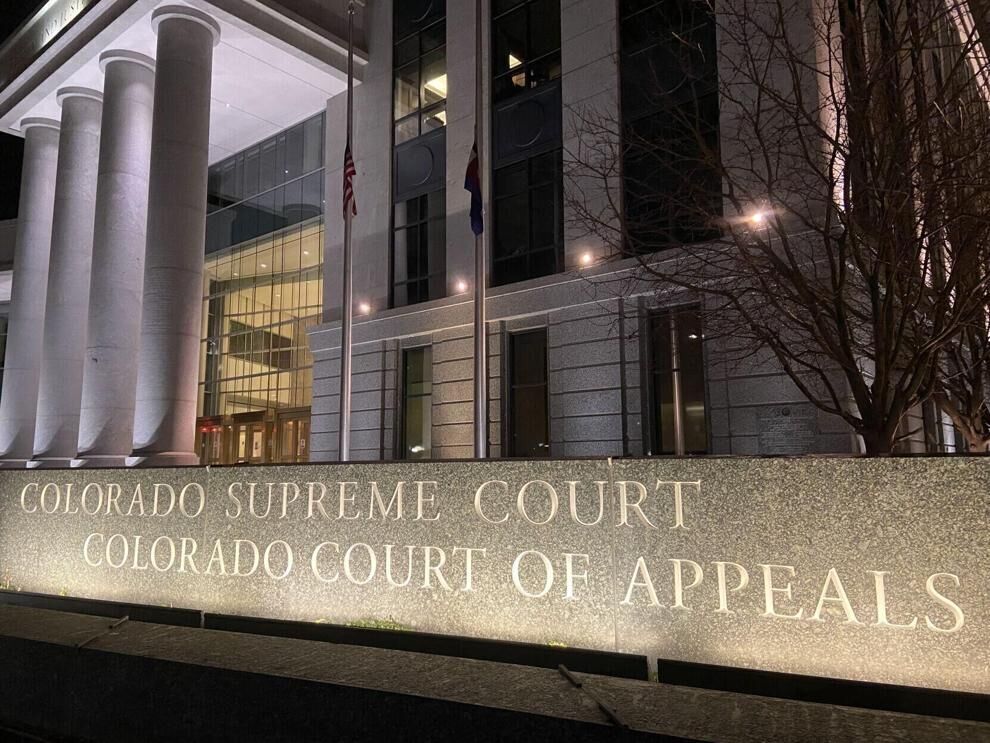
3 Colorado judges receive unfavorable retention recommendation as one performance commission violates rules
Michael Karlik
michael.karlik@coloradopolitics.com
Updated 2 hours ago
Of the 123 Colorado judges standing for retention on the November ballot, citizen-led performance commissions found that three did not meet the required performance standards. However, in an unprecedented move, the commission charged with evaluating Supreme Court and Court of...

10th Circuit weighs Gross Reservoir expansion, judge’s ‘punishment’ of Denver Water
Michael Karlik
michael.karlik@coloradopolitics.com
Updated 17 hours ago
Members of the Denver-based federal appeals court considered on Friday whether they could intervene in an ongoing infrastructure project to enlarge a Boulder County dam after a trial judge deemed the underlying permit unlawful nearly two years ago. Denver Water...
10th Circuit upholds federal prohibition on juvenile handgun possession
Michael Karlik
michael.karlik@coloradopolitics.com
Updated 22 hours ago
The Denver-based federal appeals court concluded on Monday that Congress acted within its constitutional powers to make it a crime for juveniles to possess handguns in most instances. The decision from the U.S. Court of Appeals for the 10th Circuit...

Senate advances judicial nominee, Montezuma County judge agrees to discipline | COURT CRAWL
Michael Karlik
michael.karlik@coloradopolitics.com
Updated 1 day ago
Welcome to Court Crawl, Colorado Politics’ roundup of news from the third branch of government. A U.S. Senate committee advanced a judicial nominee from Colorado, plus a Montezuma County judge agreed to receive discipline for his misconduct that stops short...
Judge denies Calderon injunction case against Denver, Johnston
Deborah Grigsby
deborah.smith@denvergazette.com
Updated 1 day ago
A U.S. District Court judge has denied a preliminary injunction in the case of Jessica Calderon, the Denver city employee who won a temporary restraining order preventing the City and County of Denver from terminating her amid the 2025 citywide...
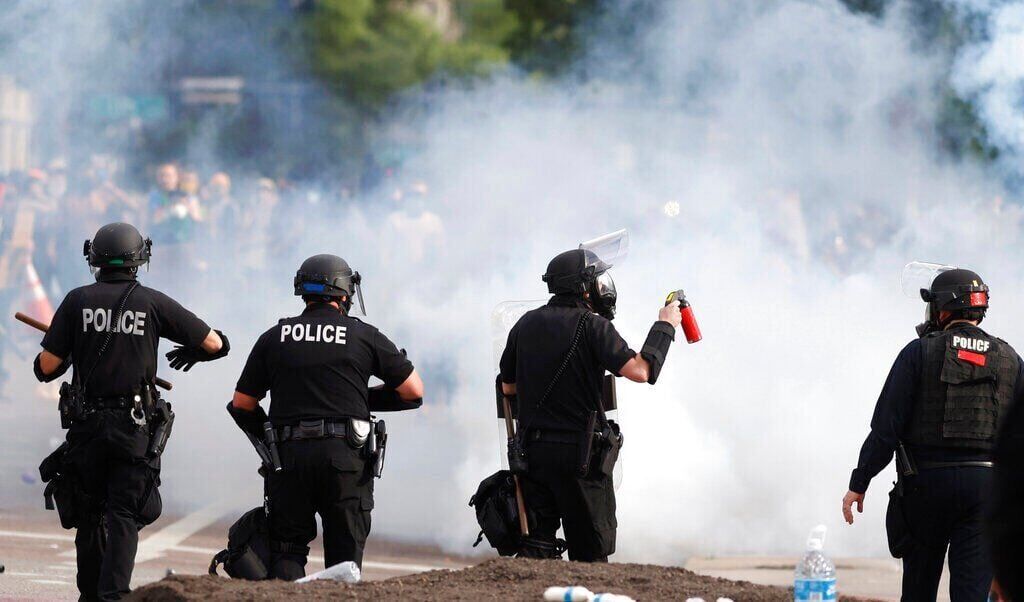
10th Circuit partially revives lawsuit over 2020 Denver protest injuries
Michael Karlik
michael.karlik@coloradopolitics.com
Updated 2 days ago
The Colorado-based federal appeals court revived a man’s claims against Denver on Friday after concluding a trial judge resolved the case in the city’s favor without analyzing two of the three instances of alleged excessive force and other constitutional violations....
Federal judges find Colorado immigration judge violated several orders
Michael Karlik
michael.karlik@coloradopolitics.com
Updated 3 days ago
Multiple federal judges in Colorado have freed people from immigration custody after determining that one immigration judge violated their directives for properly conducting bond hearings. For nearly a year, Colorado’s U.S. District Court has faced a flood of habeas corpus petitions...
Misconduct complaints from ex-Colorado judicial discipline director dismissed against federal judges
Michael Karlik
michael.karlik@coloradopolitics.com
Updated 5 days ago
The administrative body for the Denver-based federal appeals court upheld a finding last week that misconduct complaints against Colorado’s chief federal trial judge and the chief appeals judge warranted dismissal and appeared to be a “litigation tactic” by the complaining...

First-ever Red Rocks naturalization ceremony draws most diverse group of new citizens
Michael Karlik
michael.karlik@coloradopolitics.com
Updated 3 days ago
Colorado’s federal trial court held its first-ever naturalization ceremony for nearly 300 new citizens on Thursday at Red Rocks Park and Amphitheatre. “We’re doing it to commemorate the 250th anniversary of the Declaration of Independence and the United States. Red...

Jeffco taxpayers could be on the hook for a possible child sex assault settlement
Matt Kyle
matt.kyle@denvergazette.com
Updated 4 days ago
Taxpayers may end up on the hook for a child sexual assault settlement, possibly worth up to $15 million, after Jeffco Public Schools failed to notify its insurance company in a timely manner about the case. The incident stems from...
PREV
PREVIOUS

Q&A with Rose Pugliese | House GOP's assistant minority leader on starting conversations
Rep. Rose Pugliese is the most powerful freshman lawmaker in a near powerless party. Pugliese, R-Colorado Springs, is assistant minority leader for the GOP caucus in the state House of Representatives – making her the only first-year legislator to hold party leadership in both the state House and Senate. She was elected to represent House […]

State Supreme Court interprets 'straw purchase' law to encompass shared use of guns
The Colorado Supreme Court on Monday interpreted a gun safety law enacted after the Columbine High School massacre, ruling for the first time that the illegal transfer of a firearm to a prohibited person can encompass the shared use of a weapon in a household. The court declined to say whether someone can violate the […]