

Appeals court says Denver judge was wrong to revoke woman’s jury trial for being late
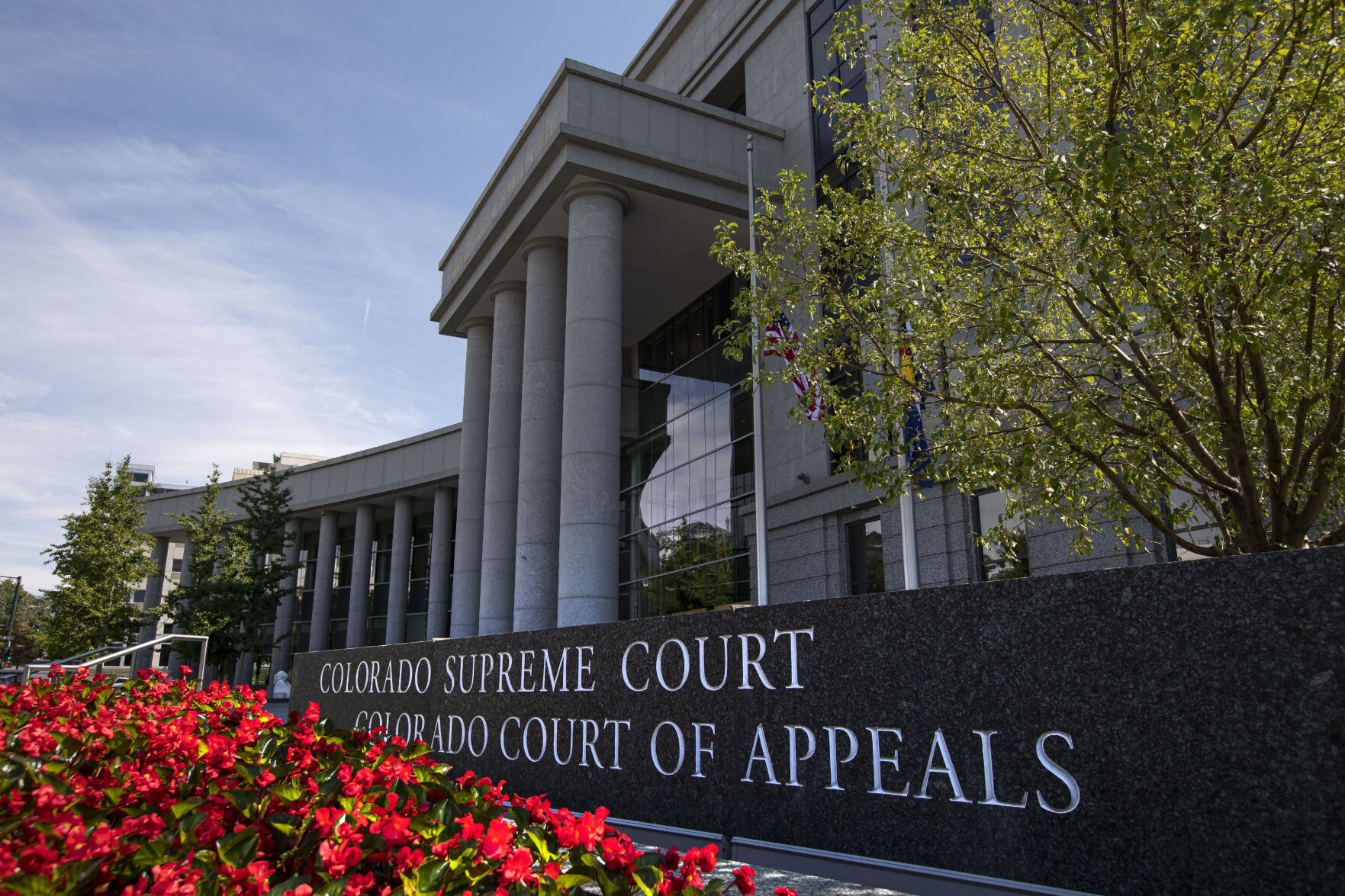
Colorado’s second-highest court on Thursday concluded a Denver judge wrongfully revoked a woman’s jury trial for child neglect because she arrived late the morning of the trial.
Child welfare cases, formally known as dependency and neglect, are not criminal, and so a parent has no constitutional right to a jury trial. But the Colorado legislature has enabled parents to choose a trial by jury for determining whether their child is dependent or neglected.
When Denver Human Services initiated child welfare proceedings in late 2021 against a mother identified as D.Y.C., she invoked her legal right to a jury trial. D.Y.C., however, ran late to the proeedings, showing up 70 minutes past the start time. By that point, Juvenile Court Judge Laurie A. Clark decided D.Y.C. had relinquished her right to a jury trial, dismissed the jurors and tried the case herself.
A three-judge panel of the Court of Appeals faulted Clark for effectively punishing D.Y.C.’s tardiness by revoking her right to a jury trial with minimal investigation into D.Y.C.’s whereabouts.
“Moreover, the record shows that the court’s decision rested, in large part, on whether mother would arrive before an arbitrary cutoff time, at which point the jury would need to be excused if mother had not yet appeared,” wrote Judge Lino S. Lipinsky de Orlov in the Dec. 19 opinion. “We are not aware of any such requirement.”
D.Y.C. denied Denver’s allegations that her four children were dependent and neglected based on non-attendance at school and potential drug ingestion. She requested a jury trial, which was scheduled to begin at 9 a.m. on April 11, 2022. When the time arrived, however, D.Y.C. was not present.
D.Y.C.’s lawyer explained to the judge that D.Y.C. was on her way, blaming the tardiness on D.Y.C.’s phone being “an hour off.”
“I don’t believe any transport time will take very long so I would ask for a little bit of leeway so she can appear,” the attorney added, suggesting the parties could handle pretrial issues in the meantime.
Clark responded that “we lose the jury” if D.Y.C. did not arrive by a certain time, although she was unsure what that time was. Instead of allowing D.Y.C.’s attorney to call her, Clark began with the other, pretrial matters.
Eventually, the children’s legal representative asked for an update on the jury trial, suggesting D.Y.C. had waived her right by being so late. Clark told D.Y.C.’s lawyer to “look in the hallway” for the mother. If D.Y.C. was not there, she would dismiss the jurors.
The attorney exited the courtroom, then returned to say she had called D.Y.C. The mother was on her way, and the lawyer reiterated her request for leeway. There were still other pretrial matters remaining, she pointed out.
If D.Y.C. did not show up in five minutes, Clark responded, she would dismiss the jury. At 10:10, D.Y.C. was still not present and Clark sent the jurors home. D.Y.C. arrived sometime afterward, but while the parties were continuing with pretrial issues.
“At some point, I’m required to release the jurors rather than have them sit and wait in hopes that you make it here,” Clark told D.Y.C. “So I just want you to know that we tried … to be as patient as possible.”
Clark tried the case herself and found D.Y.C.’s children to be dependent or neglected, a step that can lead to the termination of a parent’s legal relationship with their child.
While D.Y.C.’s appeal was pending, another panel of the Court of Appeals confronted a similar scenario, also from Denver. A different judge sent jurors home 10 minutes after the trial’s scheduled start time and tried the case himself. The mother there ended up being 30 minutes late.
That case, People in the Interest of C.C., was the first time the appellate court addressed whether a late-arriving parent forfeits their right to a jury trial. The panel ultimately concluded the juvenile judge should have inquired about the mother’s whereabouts and, if she was on her way or had a good reason for being late, afforded her extra time.
“The court failed to make such inquiries or accommodations, and while its concern about inconveniencing the jurors was understandable, it was an insufficient reason to overcome the mother’s statutory right to a jury trial,” Judge David H. Yun wrote in the C.C. appeal.
The panel of judges hearing D.Y.C.’s case acknowledged she arrived later than the mother in C.C. Procedural rules also deem a parent’s failure to appear as a relinquishment of their right to a jury trial.
However, the panel did not view D.Y.C.’s tardiness as disqualifying, given that Clark had set a seemingly-random deadline for D.Y.C. to show up without investigating where she was. If it turns out that a parent is on their way and will arrive soon, Lipinsky explained, that is strong evidence they are not waiving their right to a jury trial.
“What the court did not know, and what it should have inquired about further, was whether mother’s arrival was imminent. We know now that it was,” he wrote.
The panel also took note of Clark’s representation that she had to begin the trial by a certain time, otherwise she was “required” to release the jurors. While the appellate judges were sympathetic toward Clark’s desire to not inconvenience jurors, it was not clear to them what requirement Clark was talking about.
“Consequently, the court’s decision to convert mother’s jury trial to a bench trial effectively served as a sanction for her tardiness,” Lipinsky concluded.
The case is People in the Interest of J.D.C. et al.


Colorado Supreme Court weighs trans rights case involving Children’s Hospital and federal threats
Michael Karlik
michael.karlik@coloradopolitics.com
Updated 9 hours ago
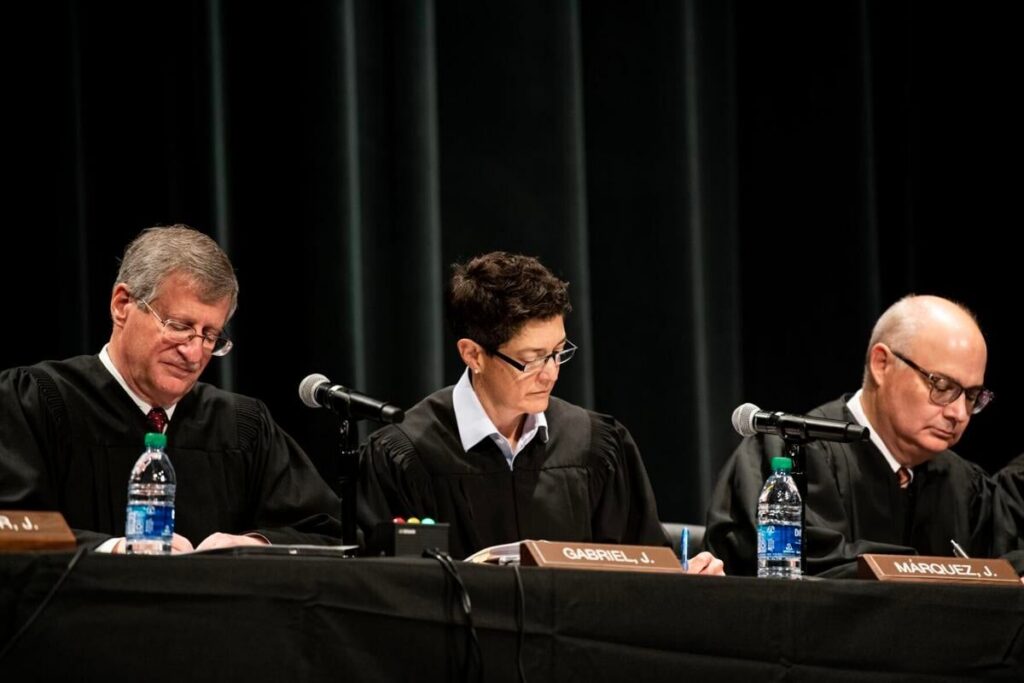
Some members of the Colorado Supreme Court expressed discomfort on Tuesday with having to decide whether to order Children’s Hospital Colorado to resume providing certain services to transgender children, which could trigger a “death sentence” if the federal government imposes...
Colorado justices weigh constitutionality of unique disclosure requirement for ballot measures
Michael Karlik
michael.karlik@coloradopolitics.com
Updated 18 hours ago
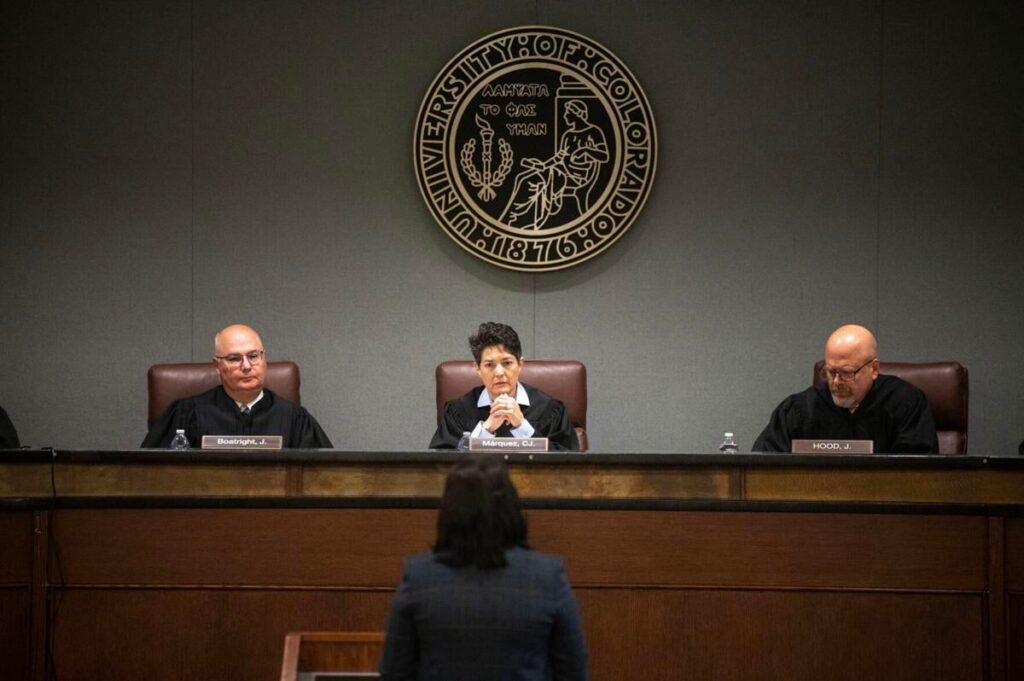
Members of the Colorado Supreme Court considered on Tuesday whether a unique feature of the state’s campaign finance system categorically violates the First Amendment by requiring the disclosure of a ballot measure committee’s legal representative on advertisements. No on EE...

Colorado justices block injured plaintiff from suing, despite alleged concealment by Manitou Springs
Michael Karlik
michael.karlik@coloradopolitics.com
Updated 1 day ago
The Colorado Supreme Court ruled on Monday that a woman injured on a Manitou Springs sidewalk could not sue the allegedly responsible entity, the city of Colorado Springs, even though she did not learn until too late of an agreement...
Divided Colorado Supreme Court opens door to experts’ views on children’s truthfulness
Michael Karlik
michael.karlik@coloradopolitics.com
Updated 12 hours ago
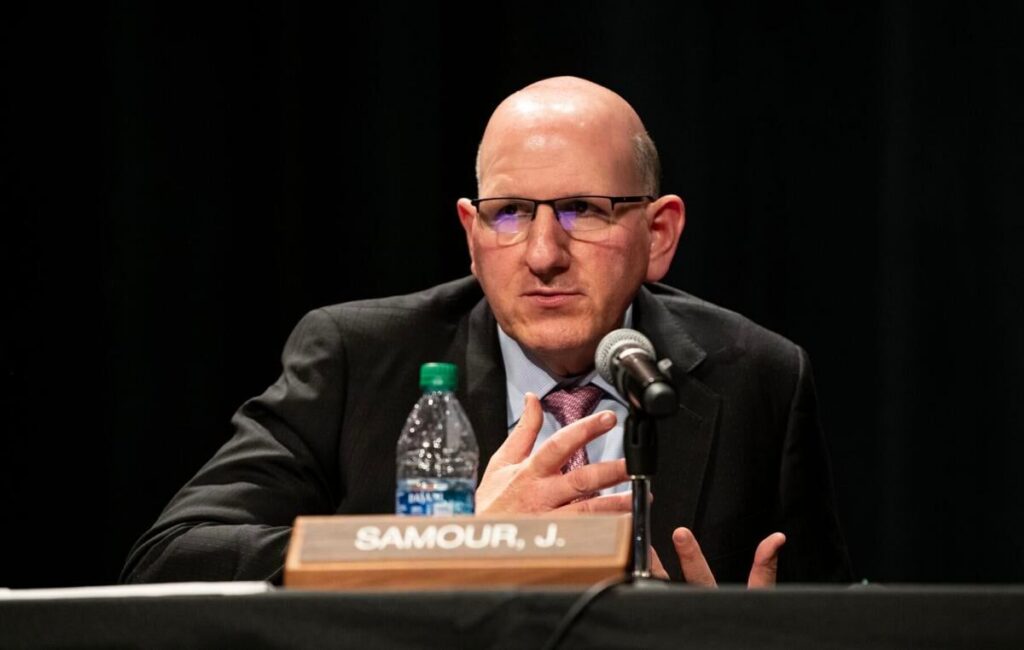
The Colorado Supreme Court ruled on Monday that experts may, in certain situations, tell jurors whether child witnesses exhibited signs of being coached by adults, without running afoul of the general prohibition on witnesses testifying about the truthfulness of other...

State Supreme Court to hold oral arguments, federal judges find fault with bond hearings | COURT CRAWL
Michael Karlik
michael.karlik@coloradopolitics.com
Updated 1 day ago
Welcome to Court Crawl, Colorado Politics’ roundup of news from the third branch of government. The state Supreme Court will resume hearing oral arguments tomorrow, plus some federal judges are raising the alarm about immigration judges’ handling of bond hearings....
Douglas County seeks state Supreme Court review in open meeting case
Nicholas Fogleman
nicholas.fogleman@denvergazette.com
Updated 2 days ago
The Douglas County Board of Commissioners intends to petition the Colorado Supreme Court to review a recent court decision that found the board had violated the Colorado Open Meeting Law. The case stems from 11 “closed, unnoticed” meetings held by...
10th Circuit provides guidance on police searches of cloud-based data
Michael Karlik
michael.karlik@coloradopolitics.com
Updated 5 days ago
The Denver-based federal appeals court provided guidance to law enforcement agencies on Monday for ensuring that searches of cloud-based accounts comply with the Fourth Amendment’s requirements. A three-judge panel of the U.S. Court of Appeals for the 10th Circuit noted...

Federal judge releases man after 2 immigration judges disobey order
Michael Karlik
michael.karlik@coloradopolitics.com
Updated 5 days ago
A federal judge released a man from immigration detention on Thursday after two different immigration judges disobeyed his order in the same case. “At this point, the Court has granted Respondents two bites at the apple to prove detention of...

New rules for private judges in Colorado include discipline oversight, campaign contributions
David Migoya
david.migoya@gazette.com
Updated 4 days ago
The Colorado Supreme Court recently determined the state’s private judges — retired jurists appointed to oversee civil cases that rarely get public scrutiny — can now make political contributions freely and without reserve, overruling a prohibition that had been in...
Appeals court finds Prowers County judge incorrectly analyzed firetruck collision lawsuit
Michael Karlik
michael.karlik@coloradopolitics.com
Updated 6 days ago
Colorado’s second-highest court directed a Prowers County judge last month to take a second look at whether a firetruck operator and the county itself can be held liable for a collision with a motorist. Donald Williamson was driving through a...
PREV
PREVIOUS

Air Force Academy receives record $51.7M in 2022 donations
Donors contributed a record $51.7 million to support Air Force Academy initiatives in 2022. Over 7,500 graduates, parents, families, foundations and corporations contributed funds through the Air Force Academy Foundation, bolstering the total investment in the Defining Our Future campaign to $248.26 million. Defining Our Future campaigns for private funding to support and develop academy […]

US Rep. Diana DeGette sounds alarm over threats of debt ceiling brinksmanship | TRAIL MIX
A looming battle in Congress over the federal government’s ability to borrow money to pay its bills threatens to destabilize the world economy and plunge the country into a recession that could make the 2008 Great Recession look like a mild hiccup. That’s the alarm economists and politicians are sounding as House Republicans threaten to […]