

How Polis may square State of the State circles | NOONAN
Democrats are singing as a chorus in the first week of the General Assembly. It’s a happy birthday tune for Colorado in its 150th year. No one is off the beat or on a flat note. Crime and safety, housing, land use, tax relief, reduced cost of health care, energy development and climate change, water policy, and education – these all make the list of the state’s 150th year’s priorities. Engaging with these issues will focus Colorado on the quality of life for residents over our next century and a half.
Republicans have found a small place in the back row of the choir. Of 107 bills introduced in the first week, 29 are bipartisan. The GOP’s most important priority is public safety which is where the GOP and Dems have overlapping concerns but different solutions. The GOP is sticking to its guns. Rep. Kenneth DeGraaf, HD-22 in Colorado Springs, has introduced HB23-1044 to preserve the second amendment. The bill would likely eviscerate the red flag law that is already under-enforced in the state. Rep. Ty Winter, HD-47 in Trinidad, has put up HB23-1050 that creates a right to use deadly physical force against intruders in certain circumstances. The bill covers owners, managers and employees. Public safety, Republican style.
Gov. Jared Polis wants to improve public safety also. He’s going to crack down on car theft. His Sentencing Task Force, a component of his Commission on Criminal and Juvenile Justice, has recommendations for the legislature that will take auto theft punishment to a more serious level. It will be a sociology experiment to see if getting tough on a crime reduces the crime.
The Governor’s perspective on housing, property taxes, income taxes, health insurance, hospital profits and quality education is perplexing. It appears there’s an unsolvable math problem embedded in these issues.
Housing is on everyone’s mind. Polis wants more rentals and other residential units built close to places of work. This vision may put land-use decisions of local governments in conflict with the state’s initiatives to build. For example, SB23-035 will allow the middle-income housing authority to enhance its public-private partnerships by exempting selected housing units from state and local taxes. That exemption may work great for the state but not so great for local governments.
The Governor also wants to trim property taxes and eliminate the state income tax. In his state-of-the-state, he said he “despises the income tax” and is proud to have supported “two successful income tax cuts at the ballot.” This belief represents the Governor’s solo tune as few Democrats agree with this position. What Polis hasn’t addressed is how losing state money from the income tax will affect a whole range of public services including health care and public education. Additional lost property taxes will also seriously affect public education funding.
These taxation questions present the paradoxical math problem Polis faces. He’s not allowed to use imaginary numbers, but he does have to figure out how to square the circle. With some creativity and imagination, this trick may be possible based on clues from his Tuesday address.
The Governor noted that some hospital systems are making record profits, sitting on large reserves, and paying no taxes. He also stated health insurance companies and hospitals are overcharging consumers with administrative and other costs unrelated to health care delivery.
Maybe Polis should put the same lens on hospitals and health care insurers as he has on the auto theft industry. He can give untaxed hospitals a choice: pay a fee to replace the reduced property and income taxes the Governor is seeking or pay a fine for taking profits from gouging. The fee can be applied to replace public education dollars, a good community benefit. Price gouging penalties, if increasing the cost of crime works, could deter the overcharging and thus reduce health care costs for consumers. Both consequences would support the Governor’s goals of tax reduction, adequate education funding, lower health care costs, and crime reduction.
Another health care math solution, probably easier to implement, would be to take health insurance companies out of the math problem entirely. That would reduce consumer cost and allow a more laser-like focus on hospital operations and over-charges. This approach to the health care cost problem would also last into decades, maybe even 150 years.
Another idea for solving the Governor’s math complexities involves energy and climate change. Since the Governor took office, and even with the “work” of the Colorado Oil and Gas Conservation Commission on SB19-181 to protect people and the environment from the deleterious effects of oil and gas drilling, over 7,500 new wells have been authorized. That’s a lot of pollution and carbon that interferes with the Governor’s goal of a carbon-free Colorado by 2040. Then there’s Suncor spewing its emissions into the air ruining the health of so many who live in Commerce City, north Denver, and other nearby communities.
If the Governor really wants to get rid of the income tax, Colorado’s energy players offer some potential for funding mitigation. Taxing or imposing fees on these industries could be akin to marijuana cigarette, and alcohol taxes – that is, another sin tax. Maybe we could just label the payments as carbon fees. Or pollution fees. Or getting-right-with-communities fees. It could be a start on squaring a circle.
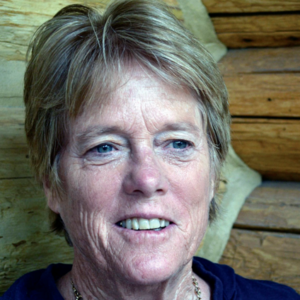
Paula Noonan owns Colorado Capitol Watch, the state’s premier legislature tracking platform.


DEA’s Miguel Chino describes Colorado’s place on the ‘fentanyl pill superhighway’ | The OpEdge Podcast
Tony Olivero
tony.olivero@gazette.com
Updated 2 seconds ago
Miguel Chino, Acting Special Agent in Charge of the Drug Enforcement Administration’s Rocky Mountain Field Division, joins The OpEdge to paint the picture of Colorado’s place on America’s “fentanyl pill superhighways.” Chino updates Gazette and Colorado Politics Deputy Opinion Editor...

A right to buy a product? | Hal Bidlack
Hal Bidlack
hal-bidlack@coloradopolitics.com
Updated 16 hours ago
A recent story in Colorado Politics caught my eye, as I learned of a “citizen initiative” that has qualified for the November ballot. It seems supporters of Initiative 177 have collected enough signatures, 146,165 legitimate ones out of a total...

Fourteen years after Aurora — we can’t afford to go backward | GUEST COLUMN
Colorado Politics
colorado-politics@coloradopolitics.com
Updated 16 hours ago
By John Hickenlooper and Gabby Giffords Two Saturdays ago, a gunman shot and killed three people and wounded several others in Twin Falls, Idaho. This latest deadly shooting comes only days after we remembered the lives we lost 14 years...

A daring and fearless rescuer — is afraid of a debate | Dick Wadhams
Dick Wadhams
dick-wadhams@coloradopolitics.com
Updated 3 days ago
Victor Marx, the Republican nominee for governor who says he can exorcize demons and who claimed he has fearlessly rescued 45,000 women and children during 150 “high-risk” missions around the world, appears to be intimidated by the notion of debating...

Colorado’s ballot-initiative process again a battleground for deep pockets, special interests — not the people | Miller Hudson
Miller Hudson
miller-hudson@coloradopolitics.com
Updated 1 day ago
The Oxford English Dictionary defines a constitution as, “The set of fundamental principles according to which a state is constituted and governed, a body of rules prescribing the major elements of the structure and activities of any organization.” Somewhere in...

Proposed EPA changes could save truckers billions | Rachel Gabel
Rachel Gabel
rachel-gabel@coloradopolitics.com
Updated 3 days ago
Agriculture is in distress across nearly every segment across much of the nation, and certainly to a more dire degree in the western United States. If it were not a historic drought, some pressures could be eased. Others can be...

Colorado Democrats, your time is coming | Jon Caldara
Jon Caldara
jon-caldara@coloradopolitics.com
Updated 3 days ago
Hey, Colorado Democrats! All the fun you’ve had watching Republican dysfunction in Colorado for the last 20 years was just a preview of what is about to happen to you. The Colorado Republican Party no longer exists as a competitive...
Perspective: Hunters and anglers are pushing back
Chris Dorsey
chrisd@gmail.com
Updated 1 day ago
For generations, Coloradans hunted elk, caught trout and managed wildlife without consulting a constitutional attorney. That was before wildlife management became a recurring statewide election issue, replete with consultants, national pressure groups and enough political mail to denude an aspen...
The relevance of Watergate more than a half-century later | SONDERMANN
By Eric Sondermann
by-eric-sondermann@coloradopolitics.com
Updated 6 days ago
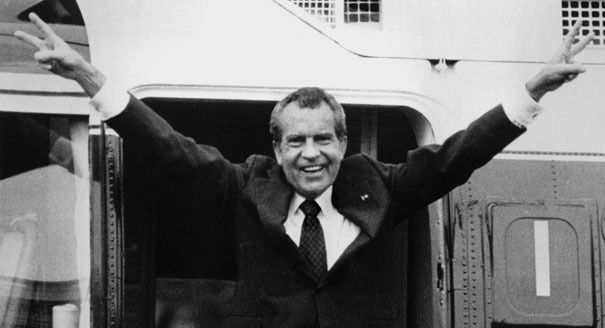
It was the scandal for which all other scandals are now named. In June 1972, a small group of Cuban burglars with high-level connections broke into the headquarters of the Democratic National Committee. Those headquarters were located in the Watergate...
Colorado must continue finding common ground on wildfire policy | GUEST COLUMN
Colorado Politics
colorado-politics@coloradopolitics.com
Updated 5 days ago
By John Herrick Colorado has never lacked for opinions about wildfire policy. We debate forest management, climate change, prescribed burns, land use, air quality and budgets. Those debates are familiar territory, but a new discussion is beginning to happen around...
PREV
PREVIOUS

Sports betting should benefit Utes | Durango Herald
Sports betting could be the way to water. Last Wednesday, Ute Mountain Ute Chairman Manuel Heart and Southern Ute Chairman Melvin Baker addressed a joint session of the state Legislature, asking lawmakers to change the 2019 sports betting law so tribes can also benefit from the multibillion dollar industry. And rightly so. Federal, state and […]

State of the State falls short of crime fixes | BRAUCHLER
George Brauchler “Every person deserves a safe home and a safe community, and in three years I want Colorado to be closing in on our goal of becoming one of the top-ten safest states.” Agreed. Gov. Jared Polis should be applauded for using some of his 8,100-word and 70-minute State of the State address to […]