

Colorado Dems catch ‘tough-on-crime fever’ as car thefts soar | Sentinel Colorado
We all know how Colorado, California, Oregon, Oklahoma and Texas differ.
Oklahoma and Texas have become infamous as far-right bastions of conservatism. Governors and Republican-held legislatures there live and breathe “tough on crime” rhetoric and lawmaking.
Political leaders in Colorado, California and Oregon, seen as largely progressive states, question whether “tough on crime” is actually just tough on taxpayers and minorities and not much else.
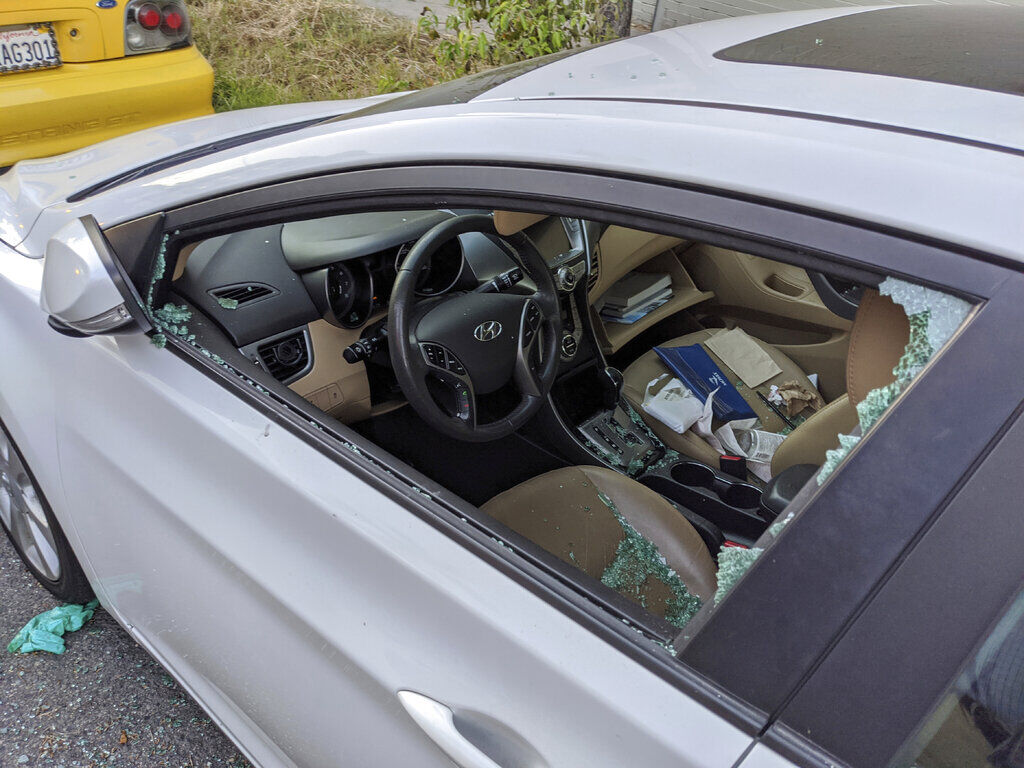
But the most curious link among these states is that they all suffer the highest car-theft rates in the nation.
Lots of experts are trying to figure out why car theft has suddenly become a national obsession, with the Aurora metroplex second from the top in cities across the country.
The Aurora-Denver area reports an astounding 965 car thefts per 100,000 residents, according to a National Insurance Crime Bureau report. Only Bakersfield, Calif., reports more car thefts per capita.
While sociologists and criminologists continue to study the phenomenon, it looks like the COVID-19 pandemic is largely to blame as inspiration for the national plague of larceny.
A plethora of parked cars, while everyone went nowhere for months, made for easy picking for car thieves. And police and insurance experts say many cars are easily stolen by thieves who know car owners often leave extra car fobs in easy-to-find places, such as under the front seat, in the glove boxes and side pockets.
It’s not just a problem of annoyance here and across the country.
Car and pick-up truck thieves are stealing about 1,000,000 cars a year, wreaking economic and practical havoc on the lives of millions of Americans.
While experts have come to understand more about why this is happening and what the effects are, police and political leaders can’t agree on what to do about it.
About a year ago, some Aurora city lawmakers thought they had the answer: Get tough on crime and car thieves.
While the effort generated a great deal of tough-talk rhetoric at city council meetings, on talk radio shows and among trolls on social media, that’s pretty much all it created.
In Aurora, lawmakers wanted to push for conflicting changes. They wanted city courts, rather than district courts, to handle car thefts. Why, was never clear. City legislators don’t run criminal trials. Judges do.
There was talk about ensuring that anyone convicted of any kind of car theft gets at least one month in jail.
City lawmakers like Dustin Zvonek and Danielle Jurinsky hailed the notion as a way to drive down car thefts because car thieves would be too smart to risk spending a month cooling their heels in the county clink just to steal the 4-Runner parked on the street with an extra key fob inside the glove box.
Actually, most car thieves, and others, are smart enough to know that Aurora’s city court can’t take felony cases, and any car valued at more than $2,000 is already a felony.
Whatever the scheme, car thefts continue to rage in Aurora and across the metro area.
Now, Democrats have caught get-tough-on-car-theft fever.
Both sides of the aisle and Democratic Gov. Jared Polis are insisting that all car thefts be considered felonies, regardless of what the car is worth. And some Democrats say they like the idea of mandatory jail time for all convicted car thieves.
OK.
You don’t have to look any further than Oklahoma to see how that mandatory felony measure doesn’t do anything to discourage car thieves.
None of this means that legislators, state and local, police and prosecutors shouldn’t do something to stop the plague of car thefts. Just do something that actually makes a difference.
Since the problem is national, Congress should step in to provide research for anti-theft technology or procedures, such as digital license plates that either quit working or actually say “STOLEN” when the car is reported that way.
Some conservative local and state legislators have increasingly moved away from solid science in governing. It’s being increasingly replaced with unproven and often inaccurate assumptions based on sound bites rather than deep data dives. Pseudo-science is not science, even if it sounds like it.
These “lock-em-up” pitches are great fodder for TV newscasts, but quickly wither under closer scrutiny. It would be tragic for more politicians to follow their lead.
The problem is so serious and so pervasive that legislators are right, they need to do something. But they need to do something that works.
Sentinel Colorado Editorial Board
Read the original article here.


A daring and fearless rescuer — is afraid of a debate | Dick Wadhams
Dick Wadhams
dick-wadhams@coloradopolitics.com
Updated 2 days ago
Victor Marx, the Republican nominee for governor who says he can exorcize demons and who claimed he has fearlessly rescued 45,000 women and children during 150 “high-risk” missions around the world, appears to be intimidated by the notion of debating...

Proposed EPA changes could save truckers billions | Rachel Gabel
Rachel Gabel
rachel-gabel@coloradopolitics.com
Updated 2 days ago
Agriculture is in distress across nearly every segment across much of the nation, and certainly to a more dire degree in the western United States. If it were not a historic drought, some pressures could be eased. Others can be...

Colorado Democrats, your time is coming | Jon Caldara
Jon Caldara
jon-caldara@coloradopolitics.com
Updated 2 days ago
Hey, Colorado Democrats! All the fun you’ve had watching Republican dysfunction in Colorado for the last 20 years was just a preview of what is about to happen to you. The Colorado Republican Party no longer exists as a competitive...
The relevance of Watergate more than a half-century later | SONDERMANN
By Eric Sondermann
by-eric-sondermann@coloradopolitics.com
Updated 5 days ago
It was the scandal for which all other scandals are now named. In June 1972, a small group of Cuban burglars with high-level connections broke into the headquarters of the Democratic National Committee. Those headquarters were located in the Watergate...
Colorado must continue finding common ground on wildfire policy | GUEST COLUMN
Colorado Politics
colorado-politics@coloradopolitics.com
Updated 4 days ago
By John Herrick Colorado has never lacked for opinions about wildfire policy. We debate forest management, climate change, prescribed burns, land use, air quality and budgets. Those debates are familiar territory, but a new discussion is beginning to happen around...
Proposition NN is the best investment for Colorado’s students and schools | GUEST COLUMN
Colorado Politics
colorado-politics@coloradopolitics.com
Updated 4 days ago
By Justin Ogden Colorado families know what it means to make difficult budget decisions. Inflation has driven up the cost of groceries, housing, utilities and just about everything else. Families like mine work hard to stretch every dollar while still...
Were the primaries a preview for consequential general election? | Paula Noonan
Paula Noonan
paula-noonan@coloradopolitics.com
Updated 5 days ago
Colorado’s political future will go the way of this election. Historically, the state has not had both chambers controlled by a supermajority. This election may change that. The primaries suggest how the general election may play out. Democrats had solid...
Disagreement doesn’t have to mean disrespect | GUEST COLUMN
Colorado Politics
colorado-politics@coloradopolitics.com
Updated 5 days ago
By Vincent Atchity These days, it doesn’t take long to feel overwhelmed by politics. Turn on the news, scroll through social media or read the comments on almost any political post and you’ll find anger, outrage and personal attacks. For...
Keeping Colorado’s kids’ trust online | PODIUM
Colorado Politics
colorado-politics@coloradopolitics.com
Updated 5 days ago
By Stuart Jenkins Almost every day, the kids and teens we serve across Colorado are introduced to new generative artificial intelligence and other emerging technology, including conversational AI systems designed to simulate human conversation. These tools are no longer a...
Marx’s ‘through line’ predates Trump, connects to Maes | FEEDBACK
Colorado Politics
colorado-politics@coloradopolitics.com
Updated 5 days ago
Eric Sondermann is of course correct Victor Marx is an unserious, unelectable, embarrassing Republican nominee for governor of Colorado. But I respectfully submit that the “through line,” as Mr. Sondermann describes it, is not from Trump to Marx, despite their...
PREV
PREVIOUS
Making room at the inn in Colorado | Denver Gazette
Gov. Jared Polis’ fifth State of the State speech Tuesday included some wise insights about Colorado’s affordable-housing challenges. It’s only too bad the speech didn’t go further. Housing was in fact the prevailing theme in his wide-ranging message to a joint session of the legislature. Polis realizes soaring real estate values have priced a lot […]

Polis's latest moderate idea | BIDLACK
Hal Bidlack If you are looking for evidence that our terrific governor is not, in fact, a far-left kind of guy, but rather a thoughtful moderate, you need look no further than a recent Colorado Politics story that discussed Jared Polis’s view on red flag laws versus a ban on the sale of assault rifles. […]