

Gordon Gallagher appears at judicial confirmation hearing with support from Western Slope
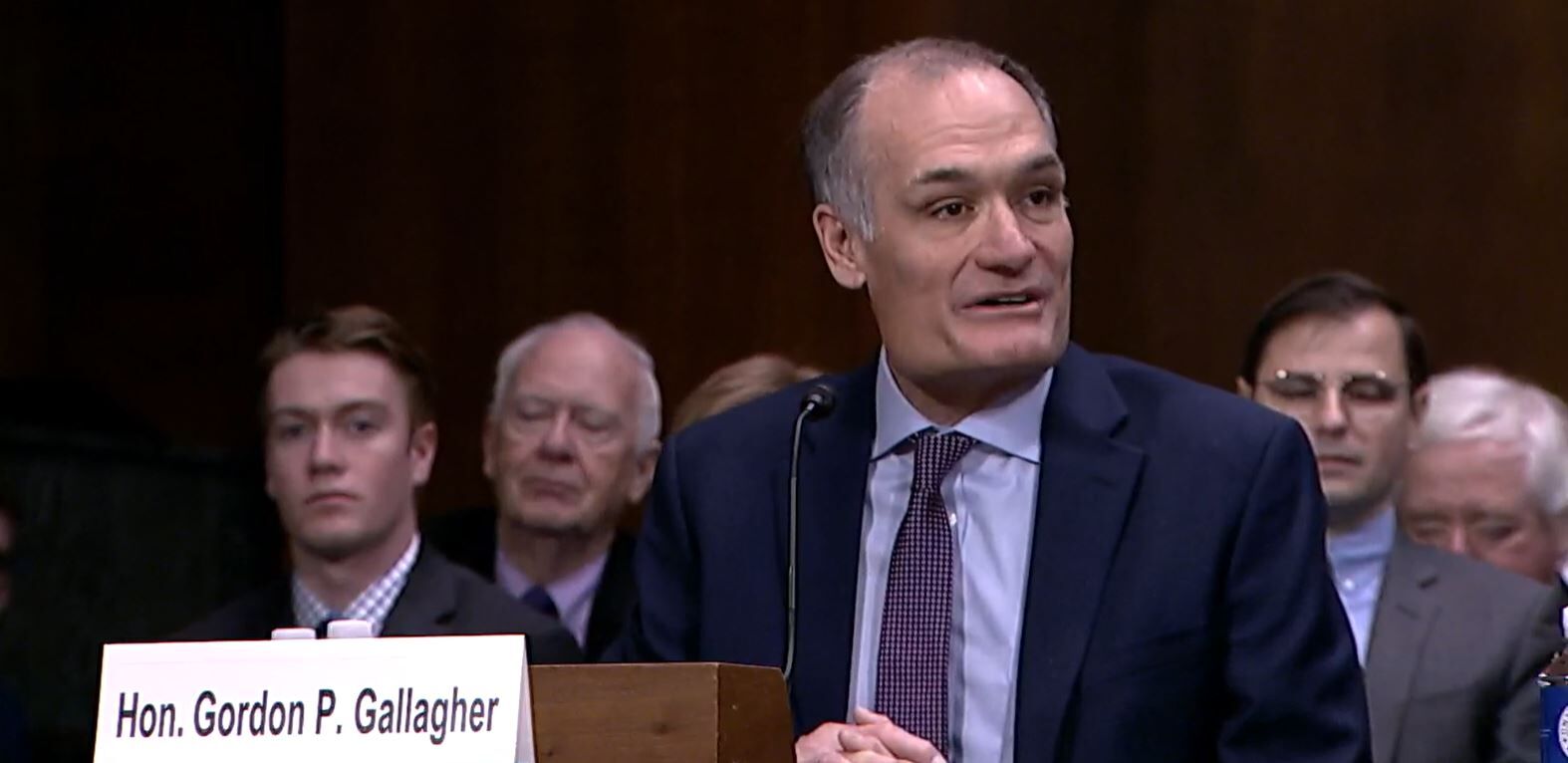
Gordon P. Gallagher arrived before the U.S. Senate Committee on the Judiciary on Tuesday armed with a roster of endorsements from the Western Slope, each repeating the message that they know Gallagher, they trust Gallagher and they would like him to represent their region on Colorado’s federal trial court.
It is important that those in western Colorado, Chairman Manuel Heart of the Ute Mountain Ute Tribe wrote to the Senate, “feel that their values and perspectives are understood and appreciated and appointing a local resident to the bench will result in greater confidence in the judicial system.”
Gallagher, 52 this year, is President Joe Biden’s nominee to be a judge on the seven-member U.S. District Court for Colorado. If confirmed, he would succeed William J. Martínez, a Barack Obama appointee who is scheduled to step down from active service in February.
During his confirmation hearing before the Senate’s judiciary panel, the focus was on the diversity Gallagher would bring to the federal bench: As a Mesa County resident, he would be the only district judge currently serving who calls the Western Slope home. As a criminal defense lawyer, he would stand out among the former prosecutors and corporate attorneys who fill the judiciary generally.
And as a part-time magistrate judge stationed in Grand Junction, he has already handled legal disputes that have a unique bearing on life in rural Colorado.
“Gordon has spent the majority of his career on the Western Slope of Colorado – a rural, mountainous part of the state – with a specific perspective on issues ranging from public lands to natural resources to federal regulation,” said U.S. Sen. Michael Bennet in his introduction of Gallagher to the committee. He added that Gallagher’s work included securing rehabilitative services for members of the two federally-recognized tribes in southwest Colorado and hearing complaints of small-town traffic delays due to “sheep herders crossing the local highway.”
Gallagher is a 1996 graduate of the University of Denver’s law school. He initially worked at a law firm representing small businesses before moving to Mesa County to work for the district attorney’s office. Gallagher wrote in his Senate questionnaire that he tried more than 75 cases as a prosecutor, including for felony and misdemeanor offenses.
In 2000, he opened his own law firm focusing on criminal defense. For more than a decade, he contracted with Colorado’s Office of the Alternate Defense Counsel, which represents indigent defendants when the public defender’s office has a conflict.
Unlike other federal judicial nominees, Gallagher’s work in the law has overwhelmingly occurred in the courtroom. He estimated he has tried 275 cases in total – almost all of which were criminal matters.
Beyond his work as an attorney, Gallagher has been a magistrate judge since 2012, one of the few federal judges who are not stationed in Denver. Magistrate judges typically focus on preliminary or administrative matters in cases, although they are empowered to handle most responsibilities of their Senate-confirmed counterparts, up to and including presiding over civil trials. Like other judges, Gallagher’s decisions have occasionally been reversed on appeal, and he listed 13 such instances prior to August 2022.
In his Senate questionnaire, Gallagher described his unique workload in Grand Junction.
“I have the primary responsibility for all petty offense and misdemeanor actions arising from federal lands in this portion of the state,” he wrote. Gallagher also substitutes for the part-time magistrate judge based in Durango, and consequently handles supervised release violations arising from the Ute Mountain Ute and Southern Ute reservations.
“On one occasion, I have been granted extra-territorial jurisdiction by the Department of Justice and my Chief Judge to handle an international prisoner transport in Trinidad and Tobago,” Gallagher added.
Support for Gallagher’s nomination arose from multiple corners, but was concentrated heavily on the Western Slope. Endorsements came from people familiar with his work in the courtroom, his volunteering in the community and even the approximately 80 naturalization ceremonies he conducted in western Colorado as a magistrate judge.
“He advocated for ceremonies to be held to naturalize new citizens in locations that met COVID-19 regulations, including performing outdoor ceremonies and, in one case, naturalizing an individual high school staff member in the presence of her family and friends,” wrote leaders of the Hispanic Affairs Project and the Mesa County Libraries. They explained that Gallagher’s motivation was ensuring that new citizens could “obtain the voting rights for which they were eligible.”
Heart, the Ute Mountain Ute chairman, also described Gallagher’s involvement in cases featuring tribal members, plus his willingness to meet with tribal representatives to discuss crime mitigation.
Although his nation worries about the fairness of a justice system that is unfamiliar with tribal values, “Gallagher has demonstrated that he is sensitive to the needs of the Tribal Members and will strive to consider those values in forming his perspective,” wrote Heart.
Multiple letters emphasized the importance of having a representative of rural Colorado sit on the otherwise Denver-centric district court. If confirmed, Gallagher’s appointment would be the first for a Western Slope resident since 1989.
Six former federal prosecutors – U.S. attorneys for Colorado appointed by presidents of both political parties – even advocated for Gallagher to remain on the Western Slope as a district judge.
“We are hopeful that the District Court will conclude that Judge Gallagher should preside in Grand Junction, further acting on the long-standing and ongoing efforts of the Court, the U.S. Attorney’s Office, and the legal profession to ensure that the U.S. District Court is fully present outside the Denver metropolitan area,” the men wrote.
U.S. Sen. Dick Durbin, D-Ill., who chairs the judiciary committee, asked Gallagher about his work handling pro se, or self-represented, litigants in civil cases. Since 2014, Gallagher has supervised the intake division for pro se cases, including lawsuits from prisoners. He estimated the cases account for one-third of all civil matters filed in Colorado’s federal court.
“Colorado has over 35 penal institutions, both state and federal, and the pro se docket is our intake docket where we screen approximately 1,200 prisoner and other pro se cases,” he explained. “It’s an efficient way of determining whether cases need to move forward and have judicial attention, or if they are frivolous.”
Gallagher is Biden’s fourth nominee to Colorado’s U.S. District Court, and the fifth overall in the state. His nomination will not receive a vote by the full Senate until the new Congress convenes in January.
There is one additional vacancy planned for June, as U.S. District Court Judge Raymond P. Moore, an Obama appointee, will also step down from active service. The White House has not yet named a nominee for that seat.


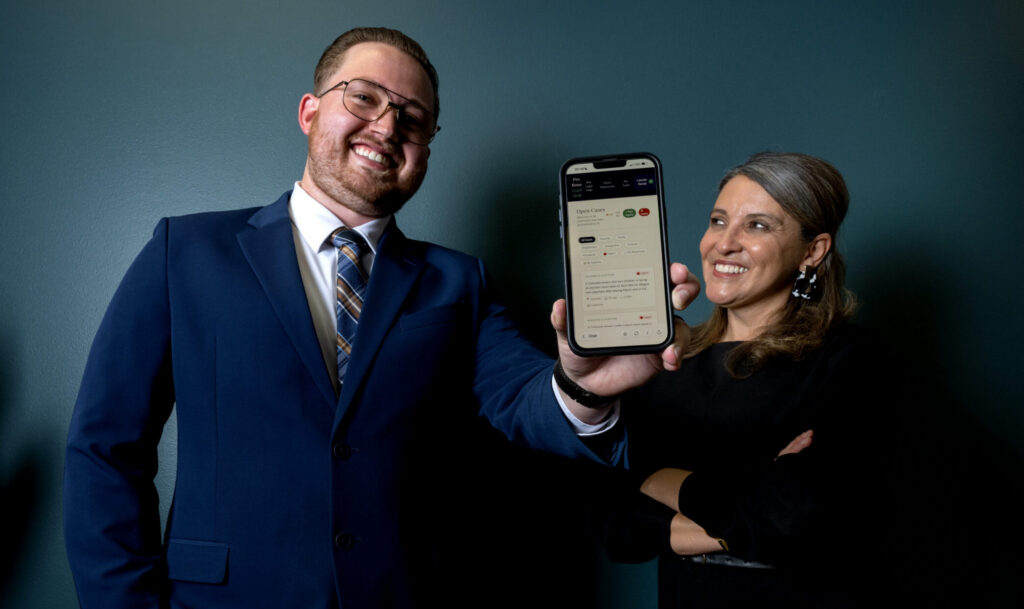
Denver law students create AI-powered tools in federal judge’s ‘design sprint’
Michael Karlik
michael.karlik@coloradopolitics.com
Updated 6 hours ago
A tenant discovered a handwritten note on his door stating he had 48 hours to move out. The landlord changed the locks without notice or court proceedings. The tenant paid rent on time and had never received any complaints about...
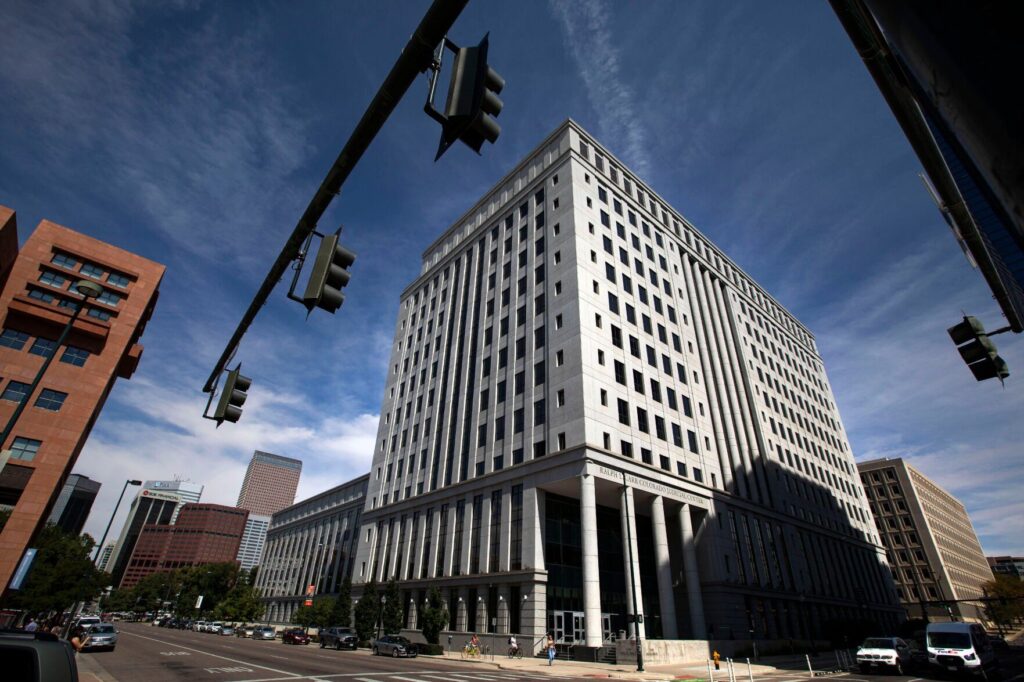
First ever disciplinary trial of a Colorado judge scheduled under new system
Michael Karlik
michael.karlik@coloradopolitics.com
Updated 2 days ago
A disciplinary panel on Thursday scheduled a mid-August hearing to adjudicate the alleged misconduct of Montezuma County Court Judge Ian J. MacLaren. Following voters’ passage of constitutional Amendment H in November 2024, adjudication of serious judicial misconduct allegations is open to public...
Appeals court recognizes weekend, holiday rule applies to judicial review deadline
Michael Karlik
michael.karlik@coloradopolitics.com
Updated 2 days ago
Colorado’s second-highest court clarified for the first time on Thursday that the rule extending deadlines in civil cases when the final day falls on a weekend or holiday also applies to litigants seeking review of governmental decisions. Nicholas A. Rigato...
SCOTUS arguments, varied workload: 6 Colorado solicitors general talk about job
Michael Karlik
michael.karlik@coloradopolitics.com
Updated 2 days ago
Six current and former solicitors general of Colorado, including two who have since become members of the bench, spoke to attorneys on Wednesday about how the role has changed over time, what the workload entails, and their experiences arguing at...
Federal judge declines to end Denver sheriff employee’s sex discrimination suit
Michael Karlik
michael.karlik@coloradopolitics.com
Updated 2 days ago
A federal judge tentatively green-lit a former Denver Sheriff Department sergeant’s sex discrimination lawsuit for trial last month, based upon allegations that three female employees were promoted ahead of him despite his qualifications. U.S. District Court Judge Nina Y. Wang...
Corrections officials may be sued for employee’s alleged abuse of detainee, federal judge rules
Michael Karlik
michael.karlik@coloradopolitics.com
Updated 3 days ago
High-level corrections officials may be sued for their own alleged failures to prevent or respond to an employee’s sexual misconduct toward a detainee, a federal judge decided last month. Rajae Bouhamidi was incarcerated at the Denver Women’s Correctional Facility. In...
Colorado GOP request to block unaffiliated voters from receiving Republican primary ballots denied by judge
Ernest Luning
ernest.luning@coloradopolitics.com
Updated 3 days ago
A federal judge on Tuesday denied the Colorado Republican Party’s request for an emergency injunction barring unaffiliated voters from participating in the state’s upcoming Republican primary election. U.S. District Court Judge Philip A. Brimmer said that preventing unaffiliated voters from...
Aurora not liable for suspended officer’s attack on woman, federal court rules
Michael Karlik
michael.karlik@coloradopolitics.com
Updated 3 days ago
The Denver-based federal appeals court decided on Monday that the city of Aurora cannot be held liable for an officer’s attack on a woman while he was serving a suspension for shooting a different person. Wyoma Martinez filed suit against...

Colorado’s unprecedented AI law can’t be enforced yet, judge rules
Marianne Goodland
marianne.goodland@coloradopolitics.com
Updated 3 days ago
A federal judge on Monday issued a delay in enforcing Colorado’s artificial intelligence law, touted by backers as a tool to protect consumers and residents from algorithmic discrimination but which critics called heavy-handed and unworkable. The lawsuit against Senate Bill...

Lawsuit from men wrongly arrested for Denver shooting dismissed by federal appeals court
Michael Karlik
michael.karlik@coloradopolitics.com
Updated 4 days ago
The Colorado-based federal appeals court dismissed a lawsuit last week from two men who were arrested as suspects in a downtown Denver shooting when they instead appeared to be the targets. Trevor Puller and Deandre Hutchinson alleged that they were...
PREV
PREVIOUS
Aurora mayor condemns transportation of the homeless to other cities
Aurora Mayor Mike Coffman is calling on the state legislature to change Colorado law so that local governments cannot ship homeless individuals to another jurisdiction without that community’s permission. The request comes amid frustration with Douglas County after it was learned the county has provided transportation for the homeless to other locations. The mayor also […]

Recount confirms Democrat Bob Marshall as winner in Colorado's House District 43 race
Democrat Robert “Bob” Marshall was officially declared the winner in the election for Colorado’s House District 43 on Monday, following a recount requested by Republican opponent Rep. Kurt Huffman. Results from the Secretary of State’s Office show that Marshall and Huffman each lost one vote in the recount, keeping Marshall’s margin of victory exactly the same as the […]