

In Colorado and beyond, art therapy is a surprising route toward healing
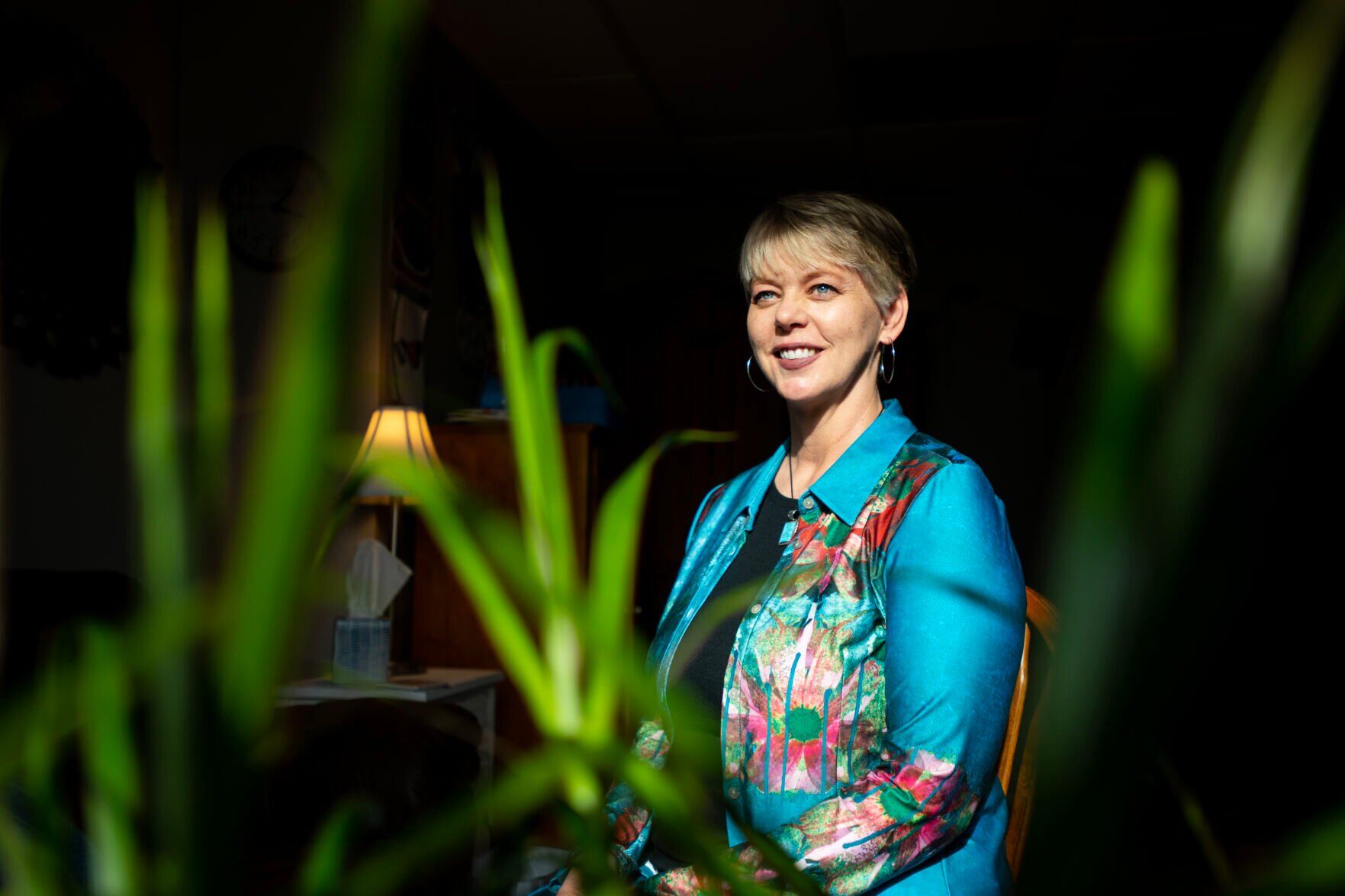
When the words won’t come, therapist Tara Alexander has an idea for her patients.
How about drawing? she might ask. Or painting? Or clay sculpting? The possibilities are endless from the cupboard in her Colorado Springs office, filled with markers, colored pencils, brushes, yarn, tinsel, pipe cleaners, bits of wood and textile, beads, confetti, googly eyes, jingle bells and on and on.
“Let’s create something,” Alexander might say.
“Some people are like, No way, this is too weird,” she says. “Maybe 10%.”
Most are willing to try anything to heal. Art has that power, Alexander insists, along with her fellow therapists certified to apply this particular practice.
Alexander is one of three dozen specialists listed by the Colorado Art Therapy Association. The group is an affiliate of the national organization committed to raising awareness of the profession, which, simply put, “uses the creative process to improve and enhance the physical, mental and emotional well-being of individuals of all ages,” according to the association’s website.
The association maintains art therapy is used to treat anxiety, depression, trauma, loss and victims of substance abuse and domestic violence, among others.
“The act itself is therapeutic in that it transports us away from our daily stresses,” the association states. And during the act, “we may inadvertently experience emotional expression, understanding of ourselves and moments of personal insight into problems.”
A therapist is meant to be a guide in those moments. But the treatment is believed to be deeply rooted in humanity, turned to long before clinics.
Research has focused on Indigenous cultures that have acknowledged the mental and emotional significance of art, dance, music and storytelling. In Western culture, art therapy emerged as a profession in the 1940s, around the time educators were increasingly connecting children’s artwork with their developmental growth.
By the mid-2000s, art therapy had entered the mainstream enough for a teenager in Colorado, Colleen Froehlich, to find it listed in a career book.

“It caught my attention,” she recalls now in her Colorado Springs office. “It seemed like this beautiful blend of creativity and working with people.”
Froehlich went on to earn a master’s degree and undergo two years of supervised work, as required to earn registered status. A lot of complex learning is involved – somewhat distilled, Froehlich says, in the Pixar movie “Inside Out,” a coming-of-age story about a girl and the characters inhabiting her: Joy, Sadness, Fear and Anger.
Art therapy is largely about externalizing, Froehlich explains. Art “gives (patients) distance,” she says. “Instead of saying, ‘I’m an angry person,’ they can kind of take this part of them, put it outside of themselves and say, ‘No, this is just an angry part of me. This is not all of who I am.'”
Nor are they all of their sadness and fear. Stephanie Williamson harbored this when she consulted Alexander.
“Art has been a way not only to express my feelings, but to improve myself,” she says. “It helps me feel better about myself, and it helped me discover where my issues were and to work through them in a visual process.”
While she went to therapy as a practicing artist, Jason Duffy went without as much experience. He suffers from depression and anxiety, which he’ll commonly treat by painting guitars.
“I notice when I got into an art therapy (session), it definitely calms me down,” he says. “I feel like it’s working a different part of the brain.”
Indeed it does, Alexander says.
“When you do talk therapy, you’re using the top part of your brain, that logical, top part,” she says. “There’s all these layers of the brain, and art therapy integrates all of it. Right, left, it integrates sight, smell, touch. It gets to the lower levels of your brain, where trauma is stored.”
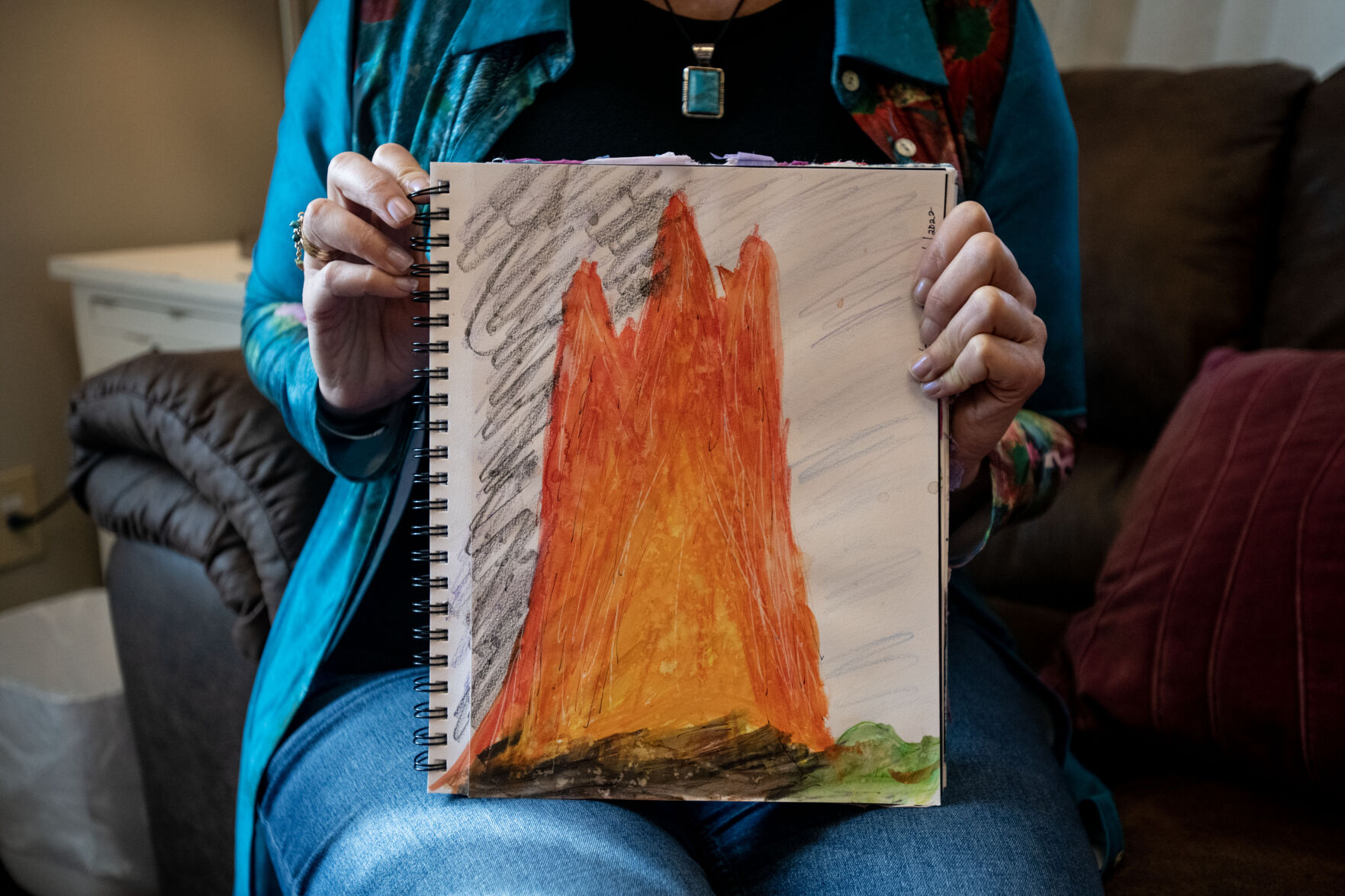
She was reaching for it before she knew it as a child, drawing and coloring as she loved to do. She still draws, keeping her work in binders.

She shows one now: a fiery scene with a dark sky. “I was pretty mad about something,” she says.
The next scene is brighter. “The sky is clearing,” she says.
Contact the writer: seth.boster@gazette.com


Immigration reporting measure fuels debate over Colorado’s role with ICE
Marissa Ventrelli
marissa.ventrelli@coloradopolitics.com
Updated 3 hours ago
A coalition of advocacy groups and several district attorneys rallied outside the Colorado Capitol on Thursday to oppose a ballot measure that, if approved by voters in November, would require state and local law enforcement to cooperate with federal immigration...

Colorado Politics Calendar Sept. 14-20
Rachael Wright, Special to Colorado Politics
rachael.wright@coloradopolitics.com
Updated 3 days ago
CoPo’s weekly political calendar will help you find political and public-policy events throughout Colorado. It includes candidate and issue campaign events, public policy meetings, court hearings, state and local party conventions, assemblies, debates, rallies, parades, speaking engagements, traveling dignitary appearances,...
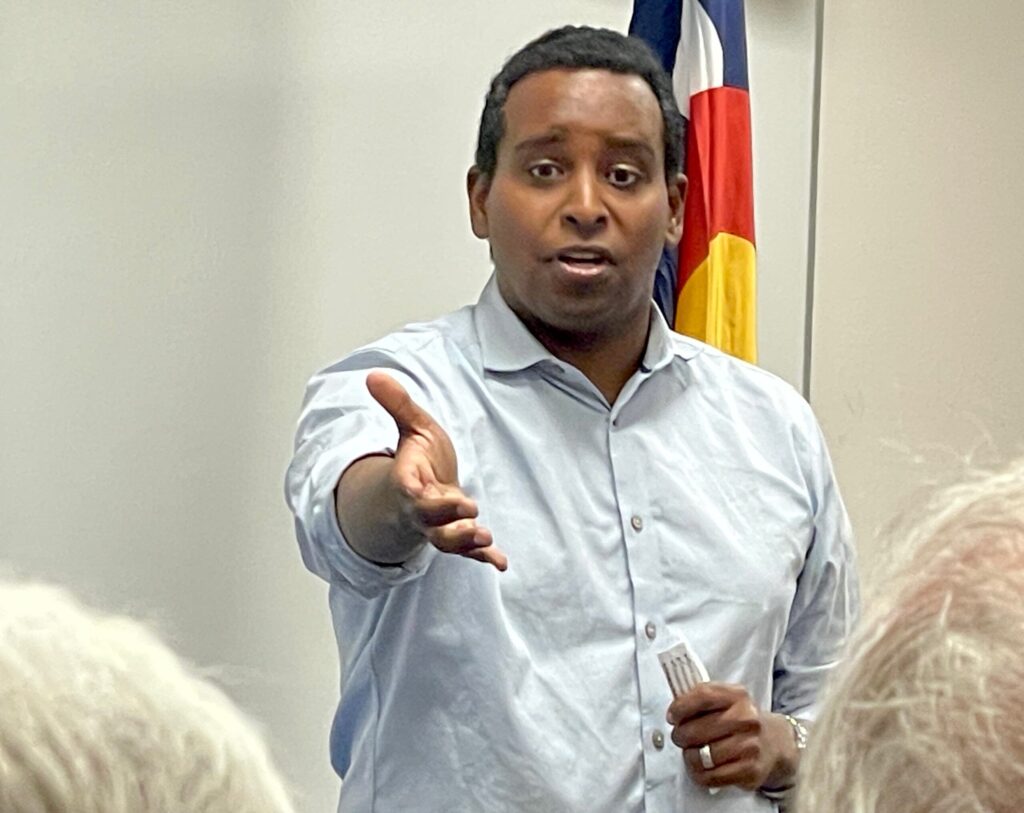
The African roots of three Colorado leaders | SONDERMANN
Eric Sondermann
eric-sondermann@coloradopolitics.com
Updated 2 days ago
Colorado’s political transformation is measured in many ways. A once reliably red state (with asterisks) became purple and is now a rather deep blue. For better or worse, probably the latter, power is ever more consolidated along the Front Range...
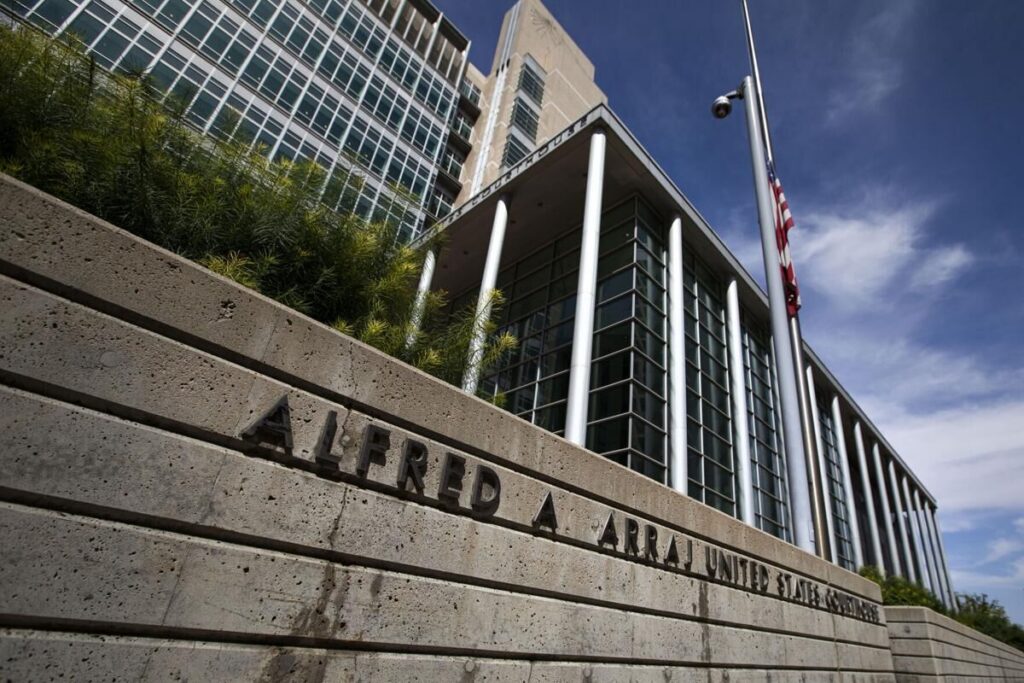
Federal judge green-lights civil trial against ex-Fort Collins DUI officer
Michael Karlik
michael.karlik@coloradopolitics.com
Updated 1 day ago
A federal judge ruled on Thursday that Fort Collins’ former “DUI officer” will face a civil trial for allegedly investigating a motorist for impaired driving without any reasonable suspicion to do so. In recent years, several people arrested by Officer...

Denver police reopen 13 sex assault cases after retesting Missy Woods’ CBI work
Jenny Deam
jenny.deam@gazette.com
Updated 1 day ago
Thirteen previously closed Denver sexual assault cases have been reopened after the city’s crime lab retested DNA evidence once analyzed by former Colorado Bureau of Investigation forensic analyst Yvonne Woods. A police spokesperson told The Denver Gazette the once-closed cases...

Ballot measure aims to shift Colorado sporting goods tax revenue to land, water and wildfire projects
Marissa Ventrelli
marissa.ventrelli@coloradopolitics.com
Updated 2 hours ago
Colorado voters this November will decide whether to direct a share of sales tax revenue from sporting goods — including bicycles and skiing equipment — toward land and water conservation, wildfire prevention and expanding outdoor recreation. Supporters say the measure...

Colorado Supreme Court suspends Mesa County judge pending misconduct investigation
Michael Karlik
michael.karlik@coloradopolitics.com
Updated 5 hours ago
The Colorado Supreme Court suspended Mesa County Court Judge Michael J. Grattan on Thursday amid a misconduct investigation. The court’s Sept. 10 order gave Grattan 21 days to explain why his paid suspension should not continue through the end of...

Trump honors the fallen of the 9/11 terrorist attacks during Pentagon speech
Mabinty Quarshie
mabinty-quarshie@coloradopolitics.com
Updated 1 day ago
President Donald Trump and first lady Melania Trump honored the roughly 3,000 Americans killed during the Sept. 11, 2001, terrorist attacks during a ceremony at the Pentagon. The event marking the 25th anniversary of the deadliest attack on American soil...
Colorado Supreme Court changes course, dismisses case about special district bonds
Michael Karlik
michael.karlik@coloradopolitics.com
Updated 5 hours ago
The Colorado Supreme Court declined on Friday to decide a dispute between a large-scale Commerce City development and the various districts financing it, after initially showing interest in the ongoing case. Colorado has roughly 2,800 special districts, which are local...
Colorado leaders express outrage and pain following 9/11 attacks | A LOOK BACK
Rachael Wright, Special to Colorado Politics
rachael.wright@coloradopolitics.com
Updated 2 days ago
Twenty-Five Years Ago This Week: “Responding to the 9/11 terrorist attacks, Colorado Gov. Bill Owens told reporters in a statement, “I join all Coloradans in expressing outrage and horror at the senseless terrorist bombings in New York and Washington D.C....
PREV
PREVIOUS

How sealed criminal records in Colorado may be released to the public
New footage obtained by The Gazette shows events during a 2021 bomb threat that lead to the arrest of 22-year-old Anderson Lee Aldrich, whose name and age match that of the suspect arrested in Saturday’s Club Q shooting. In this screen recording provided by the owner of the house where Aldrich’s mother lived at the […]

Convictions reversed in 2 cases due to faulty jury instructions
Colorado’s second-highest court reversed the convictions of two Arapahoe County criminal defendants earlier this month, citing the failure by the trial judges to properly instruct jurors about the law on self-defense. The circumstances of each case differed slightly. In one instance, the trial judge apparently forgot to read the proper self-defense instruction he had previously […]