

Colorado school district not required to disclose superintendent search records, appeals court says

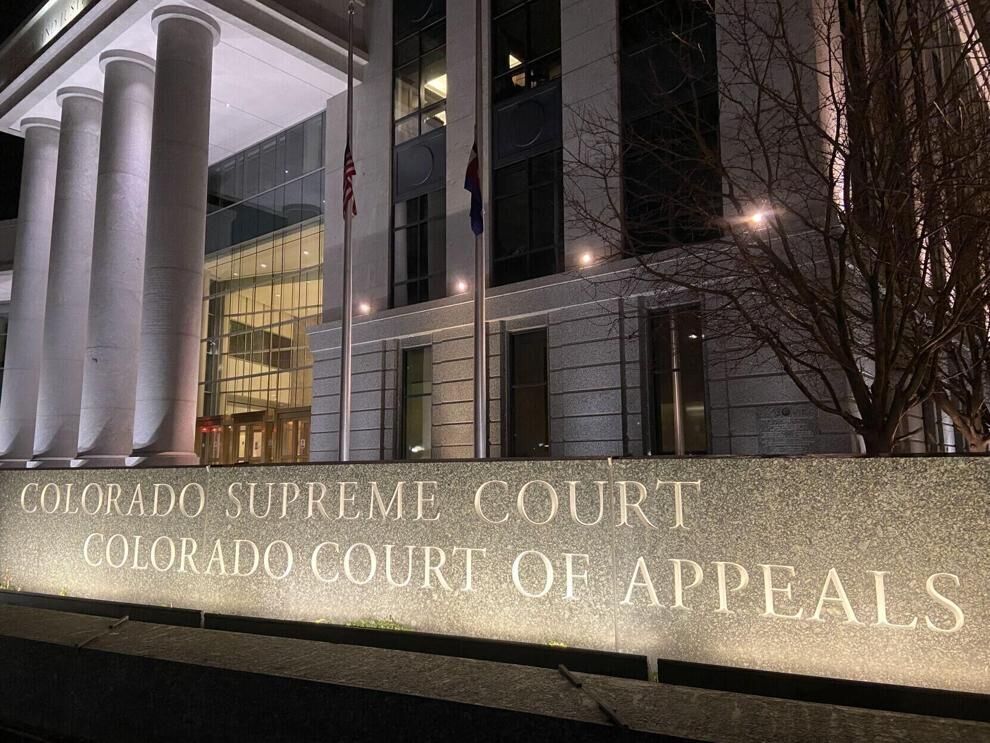
A Colorado Springs-based school district is not obligated to disclose additional candidate applications and closed-door session recordings from its 2019 search for a new superintendent, Colorado’s second-highest court has ruled.
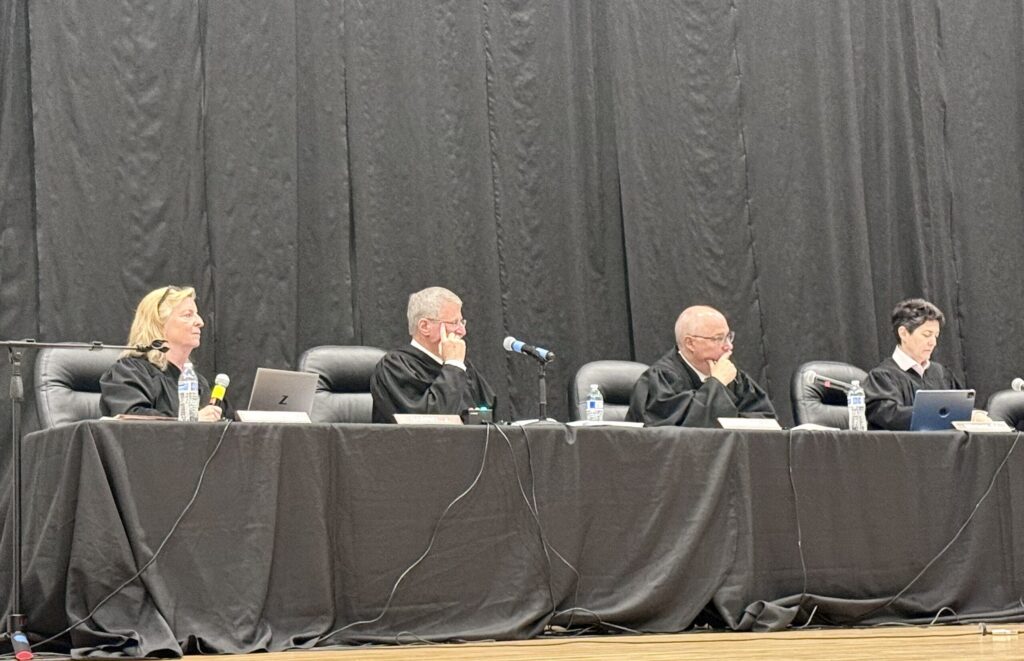
On Thursday, a three-judge panel for the Court of Appeals interpreted the state’s open records and open meetings laws to mean Academy District 20 could decide for itself who qualified as a superintendent “finalist.” Consequently, the district was within its rights to only name one finalist and to release records of that person alone.
The practice of designating sole finalists for executive positions has been a heated topic in the past few years. When the University of Colorado announced only one finalist for the presidency in 2019 after receiving dozens of applications, The Daily Camera sued for the names and applications of those who had received an interview with the board of regents.
But in a March 2021 decision, the Court of Appeals decided by 2-1 that the definition of a finalist was whoever the board designated as a finalist – and by law, only the applications of finalists may be disclosed.
“Many will argue, more than plausibly, that such a structure is inimical to principles of open government. And they might be right,” acknowledged Judge Michael H. Berger in Prairie Mountain Publishing Co. v. Regents of the University of Colorado.
Within months, however, the General Assembly doubled down on the ruling, passing a bipartisan bill expressly allowing for public entities to name a single finalist whose information is subject to disclosure. Although several news organizations and the Colorado Freedom of Information Coalition asked Gov. Jared Polis to veto the bill, he allowed it to become law without his signature while recognizing the tension between the privacy interests of applicants and the public’s interest in transparency.
Amid a decades-long trend in Colorado favoring less transparency and greater confidentiality, Melanie Knapp filed suit in El Paso County to obtain the names and application materials of the people she viewed as finalists in Academy District 20’s superintendent search. She also requested the recordings of closed-door executive sessions where the school board discussed the finalists.
Initially, 26 qualified people applied to be superintendent and a search firm worked to winnow the number to five. The board interviewed those candidates and eventually named Kimberly Hough as its sole finalist. However, Hough withdrew her name and the board again interviewed five people. It selected J. Thomas Gregory as the new sole finalist in May 2019.
District Court Judge Thomas K. Kane, interpreting the meaning of “finalist,” decided the five people who received interviews qualified under that definition, and not just Gregory.
“From the information produced by the Board, the final round of interviews was the last point at which there was meaningful competition among the candidates,” Kane wrote in a June 2020 order.
He directed the district to disclose the names and applications of the five finalists, as well as any recordings or transcripts of the executive session meetings after the selection of the five finalists.
Academy District 20 appealed, arguing the legislature had given school districts discretion to decide who is a finalist. It outlined the General Assembly’s repeated modifications to the law, beginning in 1994, that gradually restricted the information the public is entitled to receive.
The Colorado Association of School Boards submitted a brief in support of the district, noting there were 18 superintendent searches statewide during the 2020-2021 school year that would be affected by the ruling.
“The District Court did not address or define ‘meaningful competition’ – a phrase that does not appear” in the law, wrote attorney Samantha Jones-Rogers, predicting dire consequences if school districts were not allowed to decide which applications to keep confidential.
Although the Court of Appeals panel that considered Knapp’s lawsuit was not bound by the Prairie Mountain decision, the judges nevertheless drew comparisons to CU’s presidential search.
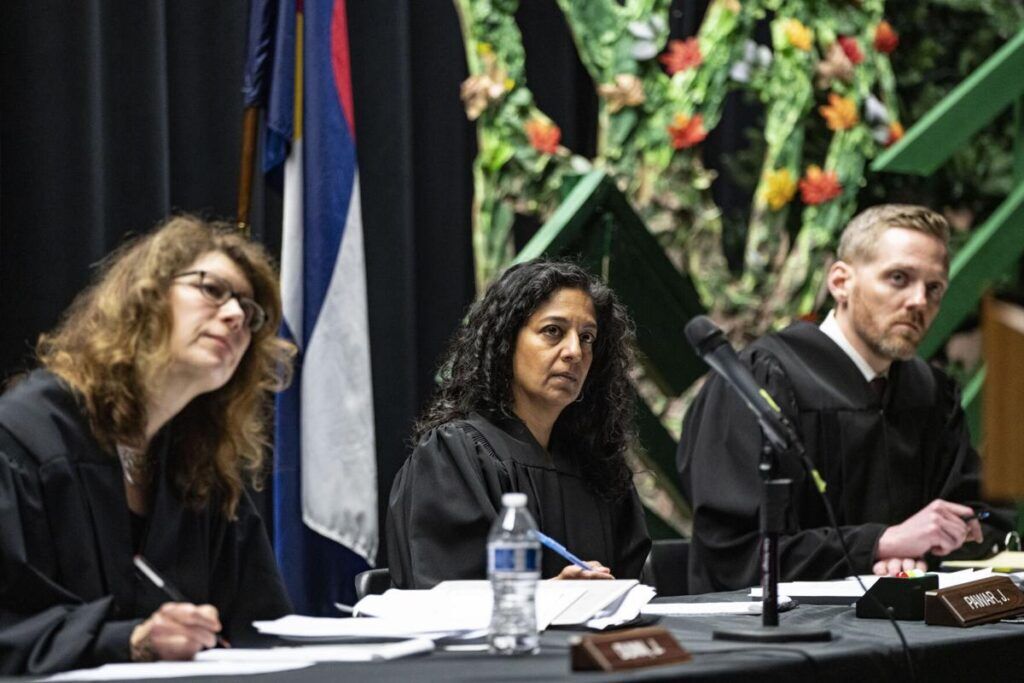
“Is there a factual distinction to be made? Because in the case we’re considering, the board announced publicly there were five candidates that they narrowed down,” observed Judge Neeti Vasant Pawar.
“The board never named those five individuals as finalists,” countered Catherine A. Tallerico, the lawyer for the school district. Allowing trial courts to determine who is a finalist after the fact, she added, is “a very litigious way of hiring a chief executive officer.”
Eric Maxfield, representing Knapp, downplayed the risk of other lawsuits, especially given the recent change in law.
“Under this statute, as it was in 2019, it permitted citizens and persons such as Ms. Knapp to view an assortment of candidates,” he said, “and to judge their relative qualifications and to provide feedback to elected officials. It also allowed people like Ms. Knapp to determine the quality of the decision making by the board so she and they could hold elected officials accountable.”
Ultimately, the appellate panel fell in line with the Prairie Mountain decision. It was permissible for the district to only release the information for Gregory, the sole finalist, wrote Pawar in the Oct. 13 opinion.
“Knapp argues this interpretation is tantamount to defining a finalist as someone who the Board says is a finalist,” she elaborated. “We conclude that is precisely what the plain language of the statute requires and serves to strike the balance between public transparency and the need for confidentiality.”
Jeffrey A. Roberts, executive director of the Colorado Freedom of Information Coalition, was disappointed in the ruling.
“Shrouding the hiring process in secrecy means communities have no way of knowing whether a diverse and well-qualified range of candidates received serious consideration or whether a hiring decision was pre-ordained,” he said.
The case is Knapp v. Board of Education Academy District 20.



Colorado Springs mother Deborah Nicholls’ murder conviction overturned
Nick Smith
nick-smith@coloradopolitics.com
Updated 7 hours ago
A Colorado Springs mother convicted in 2008 of murdering her three children in a house fire might get a new trial after a judge ruled that prosecutors withheld key evidence that could have impacted the jury’s verdict. Deborah Nicholls, whose...
Colorado court overturns illegal $7,000 restitution order
Michael Karlik
michael.karlik@coloradopolitics.com
Updated 7 hours ago
Colorado’s second-highest court overturned a Weld County defendant’s obligation to pay more than $7,000 in crime victim restitution on Thursday because a trial judge failed to issue a legally compliant restitution order at the time of sentencing. In Colorado, as...
Appeals court orders second look at Denver Water’s immunity for cyclist’s injury
Michael Karlik
michael.karlik@coloradopolitics.com
Updated 7 hours ago
Colorado’s second-highest court ordered another look at a bicyclist’s negligence lawsuit against Denver Water on Thursday, concluding that a trial judge needed to evaluate the utility’s potential immunity using the state Supreme Court’s new guidance. Joseph A. “Joey” Scott alleged...
Labels, duration not definitive proof of ‘intimate relationship,’ Colorado court rules in domestic violence case
Michael Karlik
michael.karlik@coloradopolitics.com
Updated 7 hours ago
Colorado’s second-highest court clarified on Thursday that the length of a couple’s relationship and the labels they attach to it are not conclusive evidence of whether it is an “intimate relationship” that can give rise to a domestic violence prosecution....

Colorado AG urges Supreme Court to let Boulder climate lawsuit proceed
Marissa Ventrelli
marissa.ventrelli@coloradopolitics.com
Updated 10 hours ago
Colorado Attorney General Phil Weiser has filed a court brief with the U.S. Supreme Court in a lawsuit brought by Boulder city officials seeking to hold oil companies liable for their environmental impact. The case began in 2018, when the...
10th Circuit says landowner cannot sue ex-Routt County judge for statements in decision
Michael Karlik
michael.karlik@coloradopolitics.com
Updated 1 day ago
A Routt County landowner cannot sue a former judge for his allegedly inaccurate statements in a case where the landowner was not a party, the Denver-based federal appeals court decided on Wednesday. Anne Fitzsimmons, who lives in Germany, owns a...

Defendant’s competency in question in El Paso County case involving slain Army police officer
Nick Smith
nick-smith@coloradopolitics.com
Updated 18 hours ago
It will be another 60 days before a 4th Judicial District court determines if a man charged in the shooting death of an Army police officer is competent to proceed in his case. Judge Erin Sokol granted a request Wednesday...
Parole, appeals deadlines and restitution: Colorado justices accept cases
Michael Karlik
michael.karlik@coloradopolitics.com
Updated 2 days ago
The Colorado Supreme Court announced on Monday that it will determine how a defendant’s parole-eligibility date should be calculated in instances where a new trial results in a sentence being imposed retroactively to the date of the original, since-overturned sentence....

Federal judge rejects DOJ bid to force Colorado to hand over voter information
Marissa Ventrelli
marissa.ventrelli@coloradopolitics.com
Updated 1 day ago
A U.S. district court judge has dismissed a lawsuit filed by the U.S. Department of Justice against Colorado Secretary of State Jena Griswold for refusing to provide the agency with personal voter information. Last December, the DOJ’s Civil Rights Division asked...
3 Colorado judges receive unfavorable retention recommendation as one performance commission violates rules
Michael Karlik
michael.karlik@coloradopolitics.com
Updated 3 days ago
Of the 123 Colorado judges standing for retention on the November ballot, citizen-led performance commissions found that three did not meet the required performance standards. However, in an unprecedented move, the commission charged with evaluating Supreme Court and Court of...
PREV
PREVIOUS

Fountain residents to vote on property tax increase
Support local journalism: As a public service, we have decided to put the 2022 Colorado General Election Guide in front of our paywall so you can access it for free. Would you support our work by subscribing to The Gazette? Your subscription allows us to pursue time-consuming projects, such as this voter guide, as well as […]

Appeals court upholds dismissal of gun group's lawsuit against Larimer sheriff
Colorado’s Court of Appeals has agreed a dispute in Larimer County over the adequacy of a gun group’s concealed carry training appears to have resolved itself, and the lawsuit against Sheriff Justin Smith must be dismissed. Guns For Everyone, based in Jefferson County, offers safety classes for people seeking concealed handgun permits. Certificates from such […]