

Appeals court pushes back against racial bias in jury selection
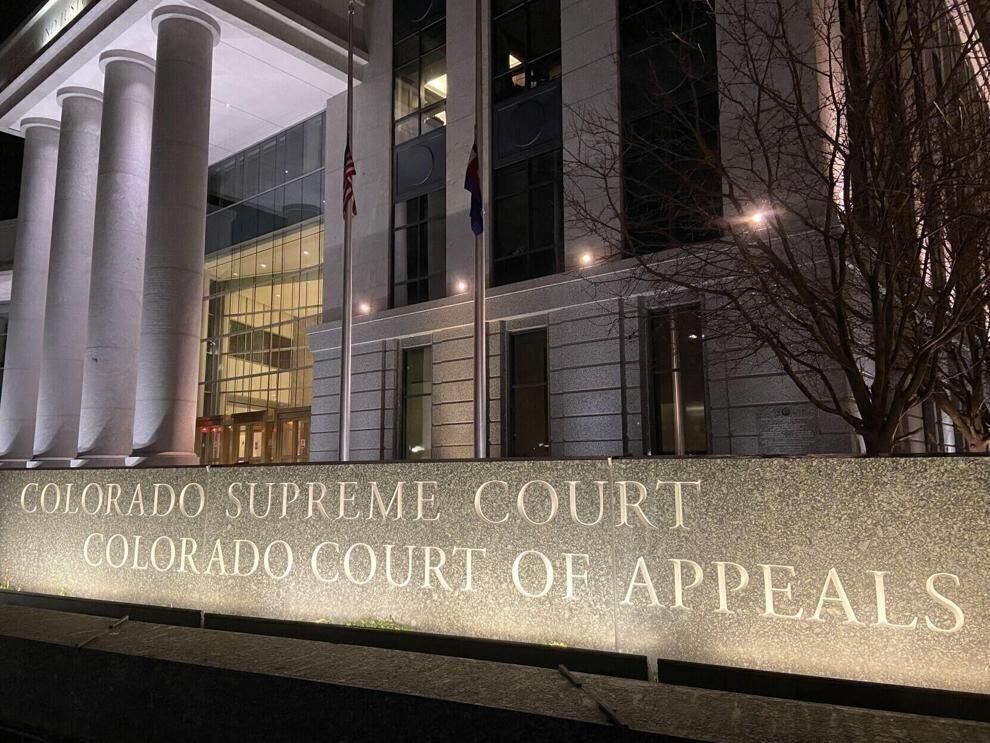
Colorado’s second-highest court laid down new rules on Thursday to discourage the exclusion of people of color from juries for reasons that, while not explicitly racial, are nevertheless correlated with race.
Two separate panels of the state’s Court of Appeals issued rulings that, in part, forbid the dismissal of Black jurors solely because they reveal they had a negative past experience with police due to their race. The decisions also prevent judges from dismissing jurors of color if prosecutors use any race-based reason in their request, or if a prosecutor’s allegedly nonracial justification has no evidence to back it up.
The Court of Appeals’ latest directive, said criminal defense lawyer Ann Roan, “makes it clear that racial bias has no place in Colorado courts.”
However, each decision from a three-judge appellate panel was not unanimous. Judge Michael H. Berger, who authored one of the two dissenting opinions, worried the Court of Appeals had overstepped by drawing a line against implicit racial bias – a move the state Supreme Court and the legislature have resisted to date.
“In essence, the majority has adopted, through its adjudicatory authority, precisely what the Colorado Supreme Court has so far rejected,” Berger warned. “This court is not a policy-making court and does not have rule-making authority.”
A policy change may be on the way, however, as a proposal to address implicit bias in jury selection was delivered to the state’s highest court earlier this month for the justices’ consideration.
The U.S. Supreme Court declared purposeful racial discrimination in jury selection to be unconstitutional in the landmark 1986 decision of Batson v. Kentucky. In a scenario where prosecutors dismissed the Black members of a jury pool, resulting in an all-white jury convicting the Black defendant, a majority of the court found such a practice undermined the public’s confidence in the fairness of the justice system.
As a result, parties may now raise a “Batson challenge” when they suspect there is an attempt to dismiss, or strike, a person from the jury pool because of their race. Although the prosecution and the defense are typically allowed to strike a certain number of jurors without providing a reason, a Batson challenge triggers a three-step process.
First, a defendant must raise an initial objection to the strike, then the prosecution needs to provide a “race-neutral” explanation for excusing the juror. After the defense has the opportunity to rebut that explanation, the trial judge must decide if intentional racial discrimination is likely taking place.
The Colorado Supreme Court, in a Batson challenge decision earlier this year, cautioned lawyers against getting offended if a judge declines to believe their race-neutral explanation.
Concluding a juror dismissal is racially motivated, wrote Justice Maria E. Berkenkotter, “is not the same as a finding that the proponent of the strike is racist. And equating the two substantially undermines Batson.”
People v. Johnson
In the first Court of Appeals case, which originated in Arapahoe County, a jury convicted Raeaje Resshaud Johnson of multiple domestic violence-related offenses in 2018, for which he received three years of incarceration.
During jury selection, a woman identified as Juror M responded to a portion of her questionnaire that asked whether she, a friend or a family member ever had a bad experience with police. Juror M wrote, “Yes. Many cases where cops are disrespectful due to certain racial identities.” She also wrote that she “would be great” as an impartial juror.
Juror M, like Johnson, was Black. She was, in fact, the only Black person in the first batch of jurors to be questioned. The prosecutor asked Juror M specifically if she would be able to focus on the facts of the case and not worry about the events that led up to the domestic violence.
“I would definitely wonder, but I’ll try to think of the present,” Juror M responded.
The prosecutor moved to strike Juror M, and Johnson’s lawyer raised a Batson challenge in response. The prosecutor immediately became defensive, saying she was being accused of “picking jurors based on race.”
Nevertheless, the prosecutor continued, “I think it is clear, based on her questionnaire alone – (Juror M) talked about how law enforcement was disrespectful. She talked about how people of different races were treated differently in her experience with law enforcement.”
Her questionnaire, the unnamed prosecutor added, provided “more than enough reason” to dismiss Juror M, but the juror’s verbal responses were also worrisome. The prosecutor even doubted whether Juror M was Black, arguing her race was “absolutely not readily apparent.”
The defense attorney replied that Juror M identified herself as a member of the Black Students Alliance. It was clear from Juror M’s questionnaire response that she had experienced racism in the past.
“I believe she’s experiencing racism as a juror by taking her off this panel for Mr. Johnson,” the lawyer added.
District Court Judge Ben L. Leutwyler found no likely discrimination had taken place. He believed the prosecutor’s dismissal of Juror M for her views on racially-biased policing amounted to a race-neutral justification, as it implicated Juror M’s ability to fairly decide the case. After Leutwyler upheld Juror M’s dismissal, Johnson’s attorney further objected that concerns about racially-biased policing should not count as a race-neutral reason.
By 2-1, a panel of the Court of Appeals agreed with the defense. Many jurors of color, wrote Judge Rebecca R. Freyre, will likely report poor experiences with law enforcement on account of their race. Those regular, and even common, experiences would translate to many juror strikes that correlate with the jurors’ race, if prosecutors could continue to use poor police encounters as nonracial justifications.
“For these reasons, we hold that the Equal Protection Clause of the United States Constitution and the due process clause of the Colorado Constitution are violated when a prosecutor strikes a Black juror solely because they or someone close to them have had a negative experience with law enforcement because of their race,” Freyre wrote for herself and Judge Lino S. Lipinsky de Orlov in the Oct. 13 opinion.
She added that Colorado’s appellate courts have not adopted a method for evaluating Batson challenges like Johnson’s, where a prosecutor offers both a race-based and a race-neutral explanation for striking a juror. The appellate panel chose to adopt the “per se” approach – the strictest of the three – which treats the juror strike as improper despite the nonracial justification.
The panel concluded Leutwyler committed an error by allowing for the dismissal of Juror M based on the prosecutor’s race-based explanation. The court reversed Johnson’s convictions and ordered a new trial.
Berger, writing in dissent, agreed Leutwyler had mishandled the Batson challenge and also believed adopting the “per se” approach for Colorado was correct. However, he could not go as far as the majority in forbidding prosecutors from dismissing jurors of color based solely on their poor experiences with police.
“I fear that the majority opinion will reasonably be read by lawyers and lower court judges for the proposition that once a prospective juror expresses the belief (held by many) that police do not treat minority persons equally, the prospective juror becomes immune,” Berger argued.
People v. Romero
In the second case, which originated in Weld County, Phillip Romero received a 96-year prison sentence after jurors convicted him on multiple domestic violence offenses in January 2019.
Juror F was the only man in the jury pool who was Hispanic. His sole interaction with the prosecutor during jury selection was his brief comment that people are capable of doing things when they are mad that they would not otherwise do. The prosecutor ultimately decided to strike Juror F, prompting a Batson challenge from the defense.
The reason for the strike, the prosecutor explained, “was due to the fact that he appeared very disinterested and kind of had seemed to have a wandering mind at times.” Juror F “just didn’t seem particularly focused or interested in what was going on.”
Romero’s lawyer countered that he never observed Juror F appearing disinterested. District Court Judge Shannon Lyons also doubted whether Juror F acted disinterested or was otherwise distracted.
Lyons ultimately found the prosecutor had offered a race-neutral reason for striking Juror F, but “I don’t have an independent reading on whether he was truly disinterested or not.”
A majority of the Court of Appeals panel reviewing Romero’s case found no evidence supporting the prosecutor’s allegations that Juror F was disinterested. Similarly, there was no reason why Lyons should have allowed the dismissal when the prosecution’s explanation ran counter to his own observations about Juror F.
The prosecutor’s impression of Juror F was insufficient as a race-neutral reason, “especially where all other relevant portions of the record tend to undermine the credibility of the unsupported and unexplained subjective impression,” wrote Judge Neeti Vasant Pawar for herself and Judge Jaclyn Casey Brown.
Judge David J. Richman dissented, believing the prosecutor provided a reasonable amount of detail to justify Juror F’s dismissal.
A broader solution on the horizon?
Last year, the Colorado Supreme Court declined to take action on a proposal from its Rules of Criminal Procedure Committee that would have expanded the prohibition on race-based juror strikes to instances where a prosecutor’s justification is not explicitly racial, but may nonetheless be correlated with a juror’s race.
Four Democratic legislators attempted to enact similar changes into law this year, but abandoned the effort after all 22 of the state’s elected district attorneys opposed the plan.
On Oct. 4, the chair of the criminal rules committee, Court of Appeals Judge John Daniel Dailey, forwarded the Supreme Court another proposed rule change after his committee voted 8-4 to try again at establishing protections against implicit racial bias.
Under the majority’s outline, there would be certain reasons presumed to be invalid for striking a juror of color – including a juror’s prior contact with or distrust of police. Demeanor-based justifications, such as a juror’s inattentiveness, would need corroboration from the judge or another attorney in order to be valid.
A change of that nature would have affected both Johnson and Romero’s cases.
One of the leaders of the committee’s effort, lawyer Kevin M. McGreevy, cautioned the Supreme Court that some committee members were unhappy that prosecutors persist in their opposition to the proposal.
“The target audience is not the prosecutors, but the public, especially those prospective jurors who do not currently serve because of their life experiences,” McGreevy wrote.

10th Circuit says landowner cannot sue ex-Routt County judge for statements in decision
Michael Karlik
michael.karlik@coloradopolitics.com
Updated 2 hours ago
A Routt County landowner cannot sue a former judge for his allegedly inaccurate statements in a case where the landowner was not a party, the Denver-based federal appeals court decided on Wednesday. Anne Fitzsimmons, who lives in Germany, owns a...
Parole, appeals deadlines and restitution: Colorado justices accept cases
Michael Karlik
michael.karlik@coloradopolitics.com
Updated 22 hours ago
The Colorado Supreme Court announced on Monday that it will determine how a defendant’s parole-eligibility date should be calculated in instances where a new trial results in a sentence being imposed retroactively to the date of the original, since-overturned sentence....
Federal judge rejects DOJ bid to force Colorado to hand over voter information
Marissa Ventrelli
marissa.ventrelli@coloradopolitics.com
Updated 1 day ago
A U.S. district court judge has dismissed a lawsuit filed by the U.S. Department of Justice against Colorado Secretary of State Jena Griswold for refusing to provide the agency with personal voter information. Last December, the DOJ’s Civil Rights Division asked...
3 Colorado judges receive unfavorable retention recommendation as one performance commission violates rules
Michael Karlik
michael.karlik@coloradopolitics.com
Updated 1 day ago
Of the 123 Colorado judges standing for retention on the November ballot, citizen-led performance commissions found that three did not meet the required performance standards. However, in an unprecedented move, the commission charged with evaluating Supreme Court and Court of...
10th Circuit weighs Gross Reservoir expansion, judge’s ‘punishment’ of Denver Water
Michael Karlik
michael.karlik@coloradopolitics.com
Updated 43 minutes ago
Members of the Denver-based federal appeals court considered on Friday whether they could intervene in an ongoing infrastructure project to enlarge a Boulder County dam after a trial judge deemed the underlying permit unlawful nearly two years ago. Denver Water...
10th Circuit upholds federal prohibition on juvenile handgun possession
Michael Karlik
michael.karlik@coloradopolitics.com
Updated 1 day ago
The Denver-based federal appeals court concluded on Monday that Congress acted within its constitutional powers to make it a crime for juveniles to possess handguns in most instances. The decision from the U.S. Court of Appeals for the 10th Circuit...

Senate advances judicial nominee, Montezuma County judge agrees to discipline | COURT CRAWL
Michael Karlik
michael.karlik@coloradopolitics.com
Updated 2 days ago
Welcome to Court Crawl, Colorado Politics’ roundup of news from the third branch of government. A U.S. Senate committee advanced a judicial nominee from Colorado, plus a Montezuma County judge agreed to receive discipline for his misconduct that stops short...
Judge denies Calderon injunction case against Denver, Johnston
Deborah Grigsby
deborah.smith@denvergazette.com
Updated 2 days ago
A U.S. District Court judge has denied a preliminary injunction in the case of Jessica Calderon, the Denver city employee who won a temporary restraining order preventing the City and County of Denver from terminating her amid the 2025 citywide...
10th Circuit partially revives lawsuit over 2020 Denver protest injuries
Michael Karlik
michael.karlik@coloradopolitics.com
Updated 3 days ago
The Colorado-based federal appeals court revived a man’s claims against Denver on Friday after concluding a trial judge resolved the case in the city’s favor without analyzing two of the three instances of alleged excessive force and other constitutional violations....
Federal judges find Colorado immigration judge violated several orders
Michael Karlik
michael.karlik@coloradopolitics.com
Updated 4 days ago
Multiple federal judges in Colorado have freed people from immigration custody after determining that one immigration judge violated their directives for properly conducting bond hearings. For nearly a year, Colorado’s U.S. District Court has faced a flood of habeas corpus petitions...
PREV
PREVIOUS

Denver mayoral candidate Andy Rougeot raises $25,000, self finances $250,000
Andy Rougeot, one of 12 candidates vying to be Denver’s next mayor, has released details on his campaign finances up to this point. The deadline for other candidates to report contributions is Monday Oct. 17. Paul Pazen reflects on four-year tenure as Denver’s police chief Rougeot said he has raised $25,000 for his mayoral bid. […]

2022 COLORADO GENERAL ELECTION GUIDE | Statewide
Support local journalism: As a public service, we have decided to put the 2022 Colorado General Election Guide in front of our paywall so you can access it for free. Would you support our work by subscribing to Colorado Politics? Your subscription allows us to pursue time-consuming projects, such as this voter guide, as well as […]