

Biased jurors cause appeals court to overturn burglary, theft convictions

Colorado’s second-highest court has overturned a woman’s convictions for burglary and theft after a Lincoln County judge permitted two biased jurors to serve.
Although the state and federal constitutions guarantee the right to an impartial jury, multiple people who sat on Kathyrn Therese Oakes’ jury voiced their opinion that the criminally accused may be “hiding something” if they choose not to testify in their own defense. In reality, the government has the burden of proving criminal charges beyond a reasonable doubt, and defendants have no obligation to prove their innocence.
Oakes stood trial in early 2020 for allegedly stealing $1,000 from the truck stop where she worked. During the part of jury selection where lawyers ask questions of potential jurors, known as voir dire, a man identified as Juror S indicated he wanted to hear Oakes testify.
“If somebody was accusing me of something, I would dang sure stand up and fight for myself,” Juror S explained.
The defense attorney asked if any other jurors felt that way. Another man, Juror B, said he was a “strong believer in the truth will set you free.”
“So when someone isn’t willing to say what the truth is from their perspective or what the facts are from their perspective,” he added, “that gives the indication they’re hiding something.”
Finally, Juror M said he did not see “why you wouldn’t stand up for yourself and speak what the truth is.”
The defense sought to dismiss all three jurors for bias. District Court Judge H. Clay Hurst, without elaboration, excused Juror S but kept Jurors B and M on Oakes’ jury. She did not testify at trial and the jury found her guilty.
On appeal, Oakes argued the information from Jurors B and M indicated they would not trust a defendant who exercised her constitutional right to remain silent. There was no rehabilitation of either man, a process that involves further questioning by the trial judge in an attempt to get a biased juror to commit to following the law.
The government countered that Jurors B and M were merely offering their personal opinions and were not saying they held a bias against Oakes specifically. Further, Hurst had asked at the beginning of voir dire whether the jury pool could decide the case fairly, and neither Juror B nor Juror M said anything to the contrary.
But a three-judge panel of the Court of Appeals, in reviewing Oakes’ case, was skeptical a trial judge’s blanket comments before any jurors began answering questions could clear up the question of bias.
“Is your point that somehow the court making that statement at the beginning before the jurors talk about testifying or not testifying, that that somehow has an effect on how we look at the jurors’ statements?” Judge Elizabeth L. Harris asked the prosecution during oral arguments last month.
In the panel’s opinion, Judge Neeti Vasant Pawar agreed with Oakes that nothing happened to rehabilitate Jurors B and M after they expressed doubts about any defendant who did not testify in their defense. While other jurors had the opportunity to clarify their thoughts about the prosecution’s burden of proof, Jurors B and M never committed to following the law.
“Juror B did not respond to a direct question as to whether that explanation made sense, and Juror M was not subject to any further questioning,” Pawar wrote in the Oct. 6 opinion.
She added that Hurst’s preliminary instructions to the jury pool did not count as rehabilitation. The panel ordered a new trial for Oakes.
The case is People v. Oakes.

Schoolchildren’s presence at child sex-related trial did not harm Arapahoe County defendant, appeals court says
Michael Karlik
michael.karlik@coloradopolitics.com
Updated 2 days ago
Colorado’s second-highest court decided on Thursday that the presence of a group of schoolchildren on the first day of a child sexual exploitation trial did not violate an Arapahoe County defendant’s constitutional right to a fair trial. Prosecutors charged Jerry...
Appeals court cites week-old Colorado law to reinstate child neglect case at child, father’s request
Michael Karlik
michael.karlik@coloradopolitics.com
Updated 2 days ago
Colorado’s second-highest court invoked a new state law for the first time on Thursday and reinstated a child neglect case that both the child and her father wished to reopen. House Bill 1227 took effect on Aug. 12, reversing a...
Colorado Supreme Court names William Hood as next chief justice
Michael Karlik
michael.karlik@coloradopolitics.com
Updated 3 days ago
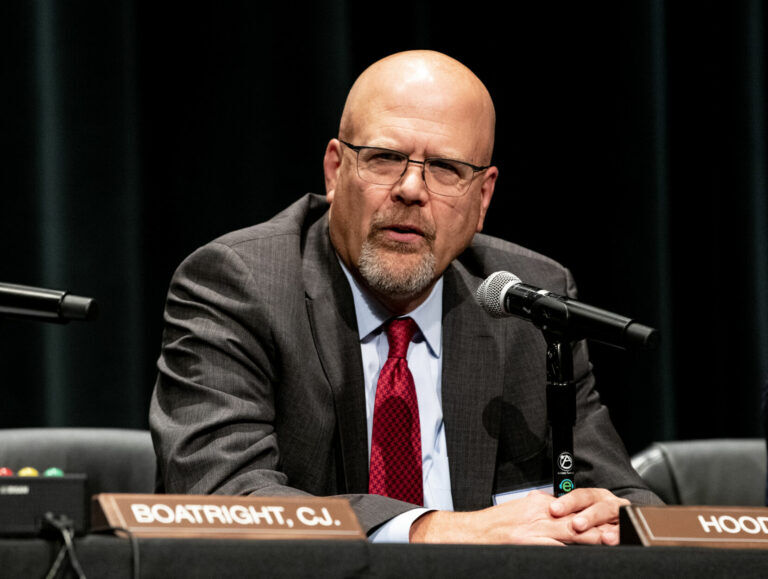
The Colorado Supreme Court has selected Justice William W. Hood III to be the next chief justice, the judicial branch announced on Friday. Hood will succeed Chief Justice Monica M. Márquez, who took over the role in July 2024. “I...
Family of slain Lakewood teacher releases statement as murder suspect makes first court appearance
Matt Kyle
matt.kyle@denvergazette.com
Updated 2 hours ago
Patrick Theodore Barnett, the Lakewood man accused of killing his wife, a Jeffco Public Schools art teacher, made his first court appearance Friday morning as his wife’s family looked on. The status conference hearing was held before District Court Judge...
Appeals court upholds Park County trophy hunting conviction
Michael Karlik
michael.karlik@coloradopolitics.com
Updated 3 days ago
Colorado’s second-highest court clarified on Thursday that a defendant may stand convicted under the state’s trophy hunting laws if he abandons a bear carcass but returns later to remove the meat. Under Colorado law, it is a felony to detach...
Judge grants partial injunction to GEO in fight against state health inspection law
Kyla Pearce
kyla.pearce@gazette.com
Updated 4 days ago
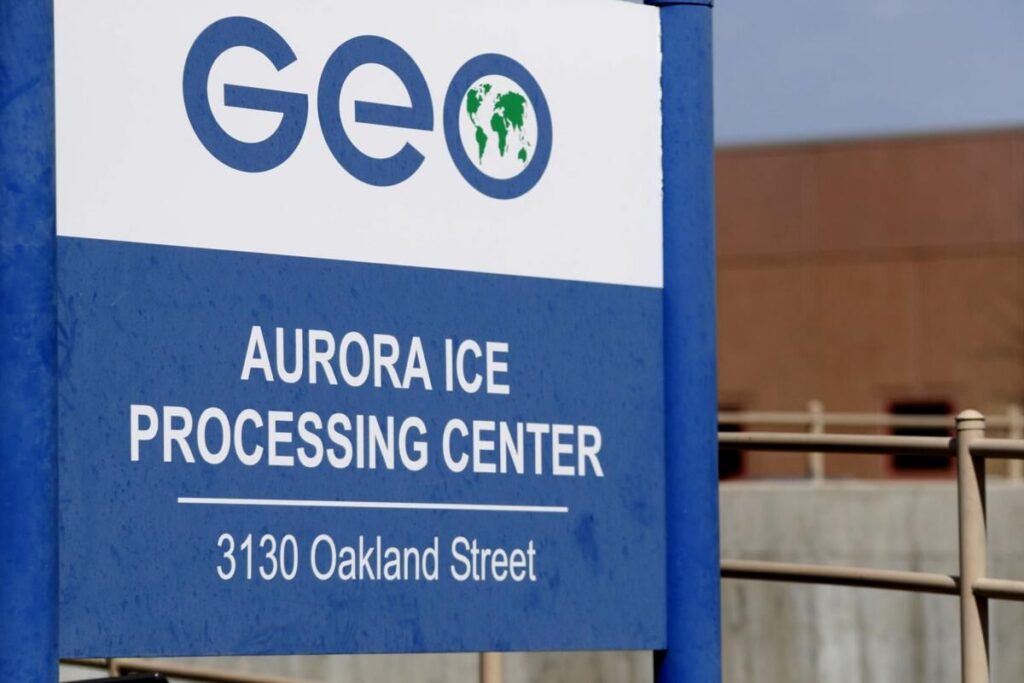
A judge ruled Thursday that The GEO Group does not have to follow parts of a new state law requiring more frequent health and safety inspections at the U.S. Immigration and Customs Enforcement processing center in Aurora. Under the order...

Parker man faces 20 years to life for serial sexual assaults
Nicholas Fogleman
nicholas.fogleman@denvergazette.com
Updated 4 days ago
A 25-year-old Parker man who sexually assaulted three women in 2025 pleaded guilty Wednesday and will serve 20 years to life in prison. Javier Rodriguez-Andrade pleaded guilty to charges stemming from three sexual assaults involving women ages 19 to 24. ...
Divided appeals court upholds warrantless DNA collection in Colorado cold case, cautions of government overreach
Michael Karlik
michael.karlik@coloradopolitics.com
Updated 4 days ago
Colorado’s second-highest court upheld the warrantless collection of a suspect’s DNA from a discarded soda can as constitutional on Thursday, while warning about potential abuse of DNA privacy in the absence of further guardrails. By 2-1, a three-judge Court of...
Man charged in Northglenn homicide of wife
Matt Kyle
matt.kyle@denvergazette.com
Updated 4 days ago
A man has been formally charged with murder and burglary relating to a homicide last week in Northglenn. Alexei Munive-Rodriguez, 48, was arrested Sunday after he was at large following the homicide, which occurred Friday. Police were dispatched around 10:30...

10th Circuit grants immunity to officers for fatal Manitou Springs shooting
Michael Karlik
michael.karlik@coloradopolitics.com
Updated 3 days ago
The Denver-based federal appeals court ruled on Wednesday that responding officers from Manitou Springs and El Paso County cannot be held constitutionally liable for shooting and killing a man after a 20-minute standoff. Wilford Deweese allegedly pulled out a gun...
PREV
PREVIOUS

Q&A with James Eklund | The 10,000-foot view with leading Colorado water attorney
A fifth-generation Coloradan, James Eklund is one of the region’s leading water attorneys, currently with Sherman & Howard where he leads the firm’s water and natural resources practice. He also manages his family’s Centennial Ranch, dating back to 1888, in the Plateau Valley on the Western Slope. After law school, Eklund served as assistant attorney […]

City Attorney Kristin Bronson to depart, Kerry Tipper nominated as replacement
Denver Mayor Michael Hancock announced Monday that City Attorney Kristin Bronson will resign her position effective Nov. 2. Hancock nominated Deputy City Attorney Kerry Tipper as Bronson’s successor. During her time in office, Bronson led one of the state’s most prominent legal offices. The news release from the mayor’s office said she applied herself in […]