

State Supreme Court upholds discipline against divorce attorney for misconduct
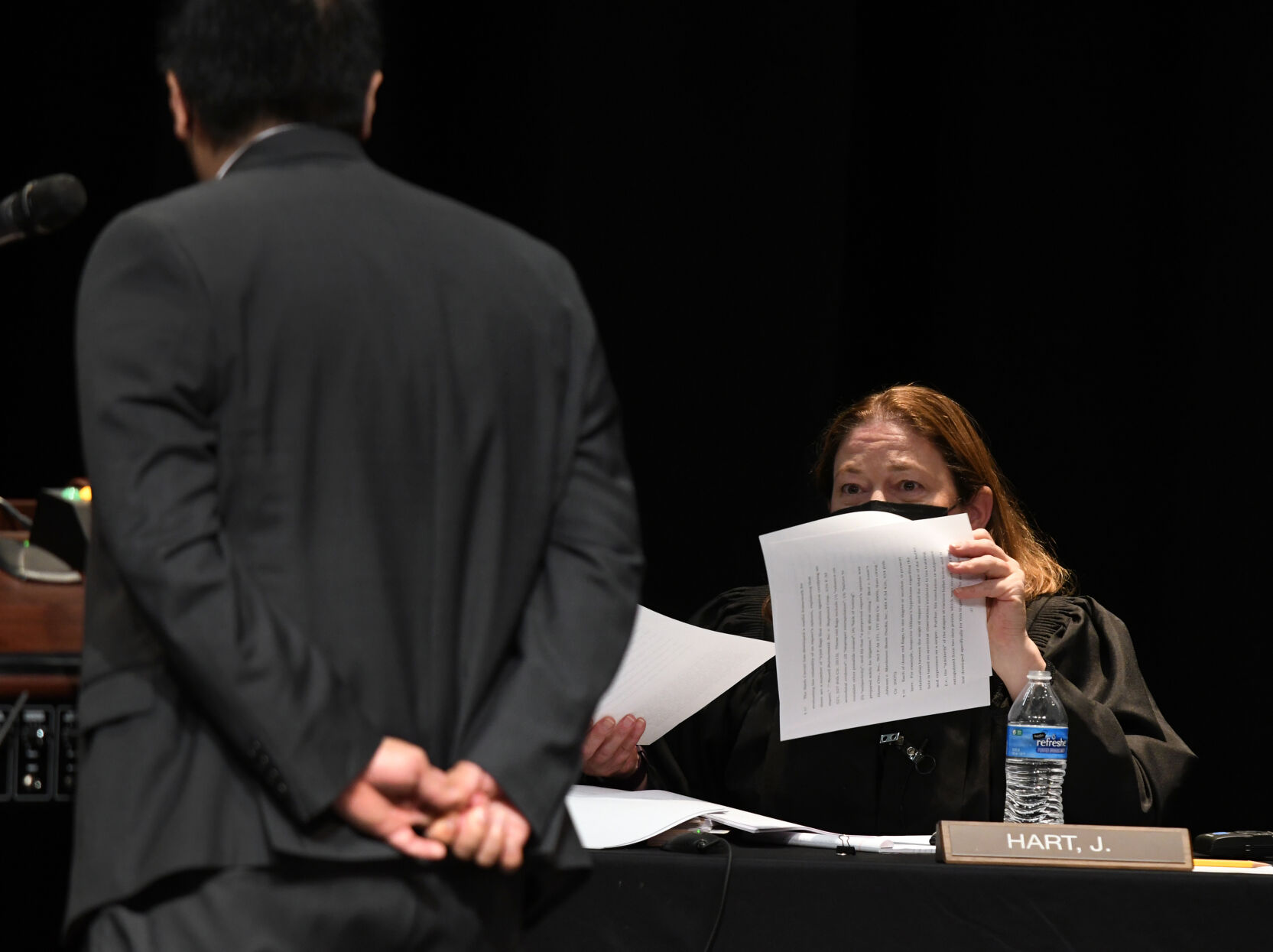
The Colorado Supreme Court on Tuesday upheld multiple findings of misconduct against a Denver divorce attorney for prioritizing her own payment above her client’s interests, going so far as to conceal a check she should have disclosed to the other side.
Following proceedings before the state’s presiding disciplinary judge last year, Brenda L. Storey received a one-year suspension from practicing law for violating the rules of professional conduct. Although the Supreme Court determined the evidence underlying one of the violations was inconclusive, the justices otherwise agreed Storey acted improperly when she used her client’s refund check from the Internal Revenue Service to pay her own bills – keeping it a secret from her client’s husband.
“Instead of pausing to consider the context surrounding the IRS check and the impact that distributing the funds without disclosing the check might have on the divorce proceedings, Storey accepted the check without question and immediately focused on what her next source of revenue would be,” wrote Justice Melissa Hart in the court’s Oct. 4 opinion.
Lawyers for Storey did not immediately respond to a request for comment.
The rare appeal of a misconduct sanction raised the question of whether Storey acted according to generally-accepted practices among family law attorneys or, as prosecutors at the Office of Attorney Regulation Counsel asserted, her behavior was “selfish and dishonest.”
Storey represented Cynthia Sullivan in her divorce from husband Caldwell Sullivan. Cynthia, who depended on her husband for income, paid her legal bills along with other expenses using a credit card. Caldwell ultimately paid off the balance each month.
In mid-2019, Caldwell placed a cap on the credit card, causing Cynthia to fall behind in her payments to Storey. Arapahoe County District Court Judge Peter Michaelson, who was overseeing the divorce proceedings, took a largely hands-off approach to the issue, prompting Storey to pursue her own attempts to recoup payment.
“You will owe me $40,000 by July 20th, and if it is not paid by someone, I am withdrawing. I highly suggest you start selling marital furniture you do not want, in addition to the whiskey, watch and bikes,” Storey instructed Cynthia on July 2, 2019 in one of many messages directing Cynthia to sell the couple’s possessions.
At the end of July, Storey told her client Cynthia she did “not have a choice as to whether you pay me in full. To me, my bill is the highest priority.” She then moved to withdraw herself as Cynthia’s lawyer.
On Aug. 1, Cynthia emailed Storey to propose a solution to the payment issue. A refund check from the IRS had arrived, payable to both Caldwell and Cynthia. The $47,578.43 check could go toward her outstanding balance, Cynthia offered.
“Yes, that is agreeable,” Storey emailed in response.
Storey accepted the check and transferred the bulk of it into her law firm’s operating account. She remained silent about the funds to Caldwell and his lawyer, even though Colorado’s procedural rules require disclosure of information that materially affects the rights and interests of parties to divorce proceedings.
Storey continued to represent Cynthia. Although she had multiple opportunities to disclose the existence of the check – including when she sent Caldwell’s lawyer a separation proposal on Aug. 23 and when she appeared at a court hearing on Aug. 27 – she did not. Only after Storey finally withdrew in early September did she inform Cynthia’s new lawyer about the IRS check.
At a hearing before the presiding disciplinary judge, multiple witnesses were surprised at Storey’s behavior, given her otherwise positive reputation in the legal community. An expert witness said he had “never seen anything like that,” in reference to Storey’s directive to sell marital furniture.
Nevertheless, the hearing board determined she violated multiple standards of professional conduct and imposed a suspension of one year and one day.
In oral arguments to the Supreme Court earlier this year, Storey’s lawyers explained it is a common practice for divorce attorneys to be paid through a couple’s marital assets.
“An attorney could have very easily avoided the land mines that Ms. Storey walked into by disclosing the asset to the other side,” countered Justin P. Moore with the Office of Attorney Regulation Counsel.
The Supreme Court ultimately upheld most of the disciplinary findings against Storey. First, the justices agreed she had a conflict of interest with her client. By making her own payment her highest priority and urging Cynthia to sell marital furniture – without informing her that doing so may actually violate the law governing divorce proceedings – Storey compromised her representation of Cynthia.
Second, Storey failed to disclose the IRS check, and did not advise Cynthia to do so either.
“The fact that Storey took none of these opportunities – effectively delaying disclosure until after she had transferred the remaining funds into her own account – demonstrated a conflict of interest between her personal desire for payment and her obligations of loyalty and independent judgment,” Hart wrote in the court’s opinion.
Third, Storey’s transfer of the IRS funds to her firm’s operating account violated the rule for lawyers to keep their property separate from that of their clients. Finally, the delayed disclosure was a “reckless omission” that fell under the professional prohibition on deceit.
The Supreme Court, however, disagreed that Storey could be held responsible for disobeying a September 2019 order from the trial judge, Michaelson, to return the funds. The facts surrounding the judge’s order were “confusing,” Hart noted, and the justices directed the hearing board to reconsider Storey’s punishment without the added violation.
In a footnote, Hart gently criticized Michaelson for not taking a more active role in managing the original dispute.
The case is In the Matter of Brenda Storey.



10th Circuit partially revives lawsuit over 2020 Denver protest injuries
Michael Karlik
michael.karlik@coloradopolitics.com
Updated 2 days ago
The Colorado-based federal appeals court revived a man’s claims against Denver on Friday after concluding a trial judge resolved the case in the city’s favor without analyzing two of the three instances of alleged excessive force and other constitutional violations....

Federal judges find Colorado immigration judge violated several orders
Michael Karlik
michael.karlik@coloradopolitics.com
Updated 12 hours ago
Multiple federal judges in Colorado have freed people from immigration custody after determining that one immigration judge violated their directives for properly conducting bond hearings. For nearly a year, Colorado’s U.S. District Court has faced a flood of habeas corpus petitions...

Misconduct complaints from ex-Colorado judicial discipline director dismissed against federal judges
Michael Karlik
michael.karlik@coloradopolitics.com
Updated 2 days ago
The administrative body for the Denver-based federal appeals court upheld a finding last week that misconduct complaints against Colorado’s chief federal trial judge and the chief appeals judge warranted dismissal and appeared to be a “litigation tactic” by the complaining...

First-ever Red Rocks naturalization ceremony draws most diverse group of new citizens
Michael Karlik
michael.karlik@coloradopolitics.com
Updated 10 hours ago
Colorado’s federal trial court held its first-ever naturalization ceremony for nearly 300 new citizens on Thursday at Red Rocks Park and Amphitheatre. “We’re doing it to commemorate the 250th anniversary of the Declaration of Independence and the United States. Red...

Jeffco taxpayers could be on the hook for a possible child sex assault settlement
Matt Kyle
matt.kyle@denvergazette.com
Updated 2 days ago
Taxpayers may end up on the hook for a child sexual assault settlement, possibly worth up to $15 million, after Jeffco Public Schools failed to notify its insurance company in a timely manner about the case. The incident stems from...
10th Circuit finds no fair housing violation by Littleton landlord for worker’s alleged rape of tenant
Michael Karlik
michael.karlik@coloradopolitics.com
Updated 12 hours ago
The Denver-based federal appeals court concluded on Monday that Littleton’s housing authority could not be held liable for a maintenance worker’s alleged rape of a tenant, as the worker’s employment did not provide any special access to the victim. A...

Jeffco Public Schools sues Trump administration to protect funding after alleged transgender policies violation
Matt Kyle
matt.kyle@denvergazette.com
Updated 3 days ago
In the wake of several threats by the Trump administration to revoke federal funding, Jeffco Public Schools filed a lawsuit against the Department of Education seeking to protect that badly needed money. Jeffco has been under investigation by the DOE’s...
Denver detox center did not violate man’s rights with 10-hour hold, 10th Circuit says
Michael Karlik
michael.karlik@coloradopolitics.com
Updated 4 days ago
The Colorado-based federal appeals court concluded on Tuesday that Denver’s detoxification facility did not violate a man’s rights by holding him against his will for 10 hours until his blood alcohol content was projected to reach zero. Unusually, Brian Garrett’s...

Federal judge clarifies ex-GOP treasurer candidate’s burden to prove defamation claims
Michael Karlik
michael.karlik@coloradopolitics.com
Updated 4 days ago
A federal judge clarified last week that businessman and former Republican statewide candidate Brian Watson will need to surmount a higher hurdle in proving his claim that a party guest’s alleged description of him as a “criminal” amounted to defamation....
Colorado board permits state to appeal injunction against arthritis drug price cap
Marissa Ventrelli
marissa.ventrelli@coloradopolitics.com
Updated 5 days ago
A Colorado board voted Friday to allow the Attorney General’s Office to fight an injunction against a price cap on a drug that treats arthritis. A U.S. district court judge had granted the company Amgen a preliminary injunction, temporarily blocking...
PREV
PREVIOUS
Proposed $473M El Paso County budget boosts employee salaries, roads funding in 2023
El Paso County expects to boost employee salaries and allocate more money to fix local roads in 2023, according to a proposed spending plan finance officials presented Tuesday. More than $16 million is allocated in the $472.5 million recommended budget for pay increases for county employees, including a 5% cost of living increase and a […]

U.S. Rep. Jason Crow appointed to NATO Parliamentary Assembly
House Speaker Nancy Pelosi appointed Colorado U.S. Rep. Jason Crow to the NATO Parliamentary Assembly on Tuesday. Created in 1955, the NATO Parliamentary Assembly brings together legislators from all 30 nations in the Atlantic Alliance to facilitate dialogues on defense and diplomacy. Currently, the assembly consists of 269 members, 36 of whom represent the U.S. […]