

TRAIL MIX | Republican-turned Democrat Kevin Priola joins long line of Colorado party switchers
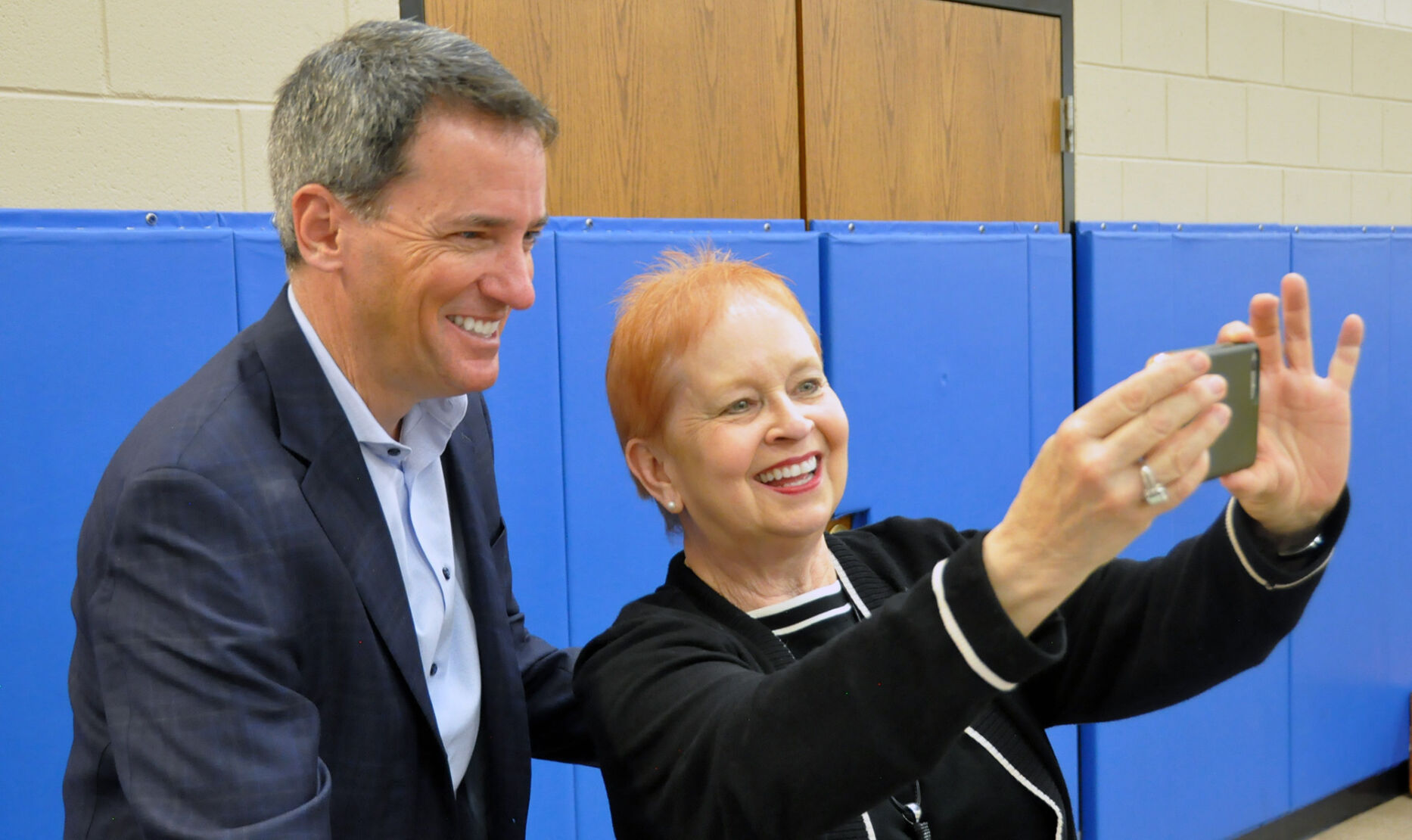
State Sen. Kevin Priola stirred things up a couple weeks ago when he announced that he had changed his registration from Republican to Democrat, citing the GOP’s ongoing embrace of conspiracy theories surrounding the 2022 election and his erstwhile party’s refusal to face climate change.
“I haven’t changed much in 30 years, but my party has,” Priola said in a letter announcing his decision to leave the party he joined in college.
“Coloradans can’t afford for their leaders to give credence to election conspiracies and climate denialism,” Priola wrote. “Simply put, we need Democrats in charge because our planet and our democracy depend on it.”
Angry Republicans almost immediately launched a campaign to recall the term-limited Adams County lawmaker, who has two two years left in his second term in the state Senate, where Democrats hold a 21-14 majority after his switch.
If Priola’s critics gather the required 18,291 signatures — they’ll have 60 days to do it once the recall petition is approved — Priola could face a special recall election that will ask voters whether to remove him from office, costing taxpayers around $200,000, election officials estimate.
Democrats say they’ll defend their new party member, though Priola will have the option to resign and let a Democratic vacancy committee name a replacement if it comes to a special recall election, potentially short-circuiting Republican attempts to boost their numbers in the Senate.
Organizers learned that their recall effort will be easier after an announcement this week by the Colorado Secretary of State’s Office that voters in Priola’s new, Republican-leaning Senate District 13 will have the say over whether the lawmaker remains in office.
Priola was elected in 2020 by voters in Senate District 25, which favors Democrats, but after once-a-decade redistricting takes effect following the November election, he’ll represent the new district, where Republicans enjoy a 4-point edge in recent benchmark elections, according to data compiled by the state’s redistricting commission.
Priola said his new party label doesn’t mean he’ll change his positions, including on issues where he’s squarely at odds with his new party’s orthodoxy, such as his staunch opposition to abortion and gun control. Never one to hew the party line, Priola vexed Republicans throughout his tenure in the legislature by joining with Democrats on bills opposed by party bosses, sometimes being the only aisle-crosser on legislation Democrats could were able to call bipartisan.
Priola’s move recalls Colorado’s most prominent modern party switch, which occurred 27 years ago when U.S. Sen. Ben Nighthorse Campbell scrambled the board in the state and nationally by announcing he was a Republican after winning election six times as a Democrat — two terms in the state House, three terms in the U.S. House of Representatives and his first term in the U.S. Senate.
A member of the Northern Cheyenne Tribe, the Air Force veteran, renowned jeweler and former Olympian — he competed in judo in the 1964 Games but didn’t medal — Campbell is the last Native American to have served in the U.S. Senate. He won a second term as a Republican in 1998 but declined to seek a third.
A few months after Republicans took control of the House and Senate in the first Clinton midterms, Campbell rejoined the majority, bringing the GOP’s advantage to 54-46.
“I can no longer represent the agenda that is put forth by the party, although I certainly agree with many of the things that Democrats stand for,” Campbell told reporters at a news conference in March 1995.
While some Republicans offered their new fellow partisan a tepid welcome, Campbell won reelection on the GOP ticket in 1998 but declined to seek a third term.
“My loyalty and sense of values is higher than party politics,” Campbell said a couple weeks after his announcement at a meeting of the state GOP central committee, where he vowed he would stick with his support for abortion rights despite “the shrill voices” of fellow Republicans. “The moderates are a little shy, but I’m not a bit shy!” he added.
Campbell wasn’t the first Colorado senator to switch parties, though he remains the only one in the modern era to change horses while in office.
Republican Cory Gardner, who served a term in Colorado’s other U.S. Senate seat from 2015 to 2021, spent eight years at the start of his poltiical career as a Democrat, even helping nominate a Democrat in 1998 for the 4th Congressional District seat Gardner would go on to win as a Republican in 2010, a decade after he switched parties.
Before he won election to a single term in the U.S. Senate in 1972, Democrat Floyd Haskell served two terms in the state House as a Republican but left the party to protest the Nixon administration’s expansion of the Vietnam War by bombing Cambodia.
Priola’s party-switching predecessors in the legislature include a spate of current and former Democratic lawmakers who became Republicans in the 1980s, starting with then-former state Rep. Kenneth Monfort of Greeley, the president of meatpacking giant Monfort of Colorado.
“Maybe I’ve shifted a little,” Monfort said in October 1980, explaining his decision to re-register as a Republican. “But the Democrats have moved a lot.”
After losing his position as House minority leader in a leadership battle ahead of the 1981 legislative session, longtime Democrat Bob Kirscht switched his affiliation, telling The Colorado Statesman he could do a better job representing Pueblo as a Republican.
“The Democrats are out of step with the mainstream of thinking in Colorado,” Kirscht said at the time, adding, “If I had stayed in the Democratic party, I would have been viewed as an antagonist, an obstructionist, a negative figure.”
As the Reagan years neared their end, state Rep. Faye Fleming changed her affiliation from Democratic to Republican in February 1987, just six weeks into her first term representing Thornton, prompting a recall drive that soon fizzled.
Noting that she supported organized labor from both partisan perches, Fleming said she switched, in part, because of her former caucus’s hostility toward dissenters.
“Those who hold moderate to conservative viewpoints have no place in the Democratic Party,” she insisted.
That same year, state Sen. Martha Ezzard of Cherry Hills Village moved the other direction, changing from a Republican to a Democrat. A year later, midway through his second term as attorney general, Duane Woodard ditched the Republican Party to become a Democrat, though he lost a bid in 1990 for a third term as the Democratic nominee.
State Rep. Kathleen Curry and state Sen. Cheri Jahn shed their Democratic affiliation to become unaffiliated, in 2009 and 2017, respectively.
The most recent switch by a sitting legislator only lasted a few hours in March 2018, when former state Rep. Steve Lebsock of Thornton quietly changed his registration from Democrat to Republican in the middle of a tense, day-long session that ended in the lawmaker’s expulsion from the state House over sexual harassment allegations. The move allowed a GOP vacancy committee to name his replacement for the remainder of his term.
In 2007, term-limited state Rep. Debbie Stafford made the switch from Republican to Democrat, citing the reaction she got when she attempted to take on defective construction by homebuilders, who were among the GOP’s biggest donors.
“When either party crosses that line, I think people should feel comfortable saying, ‘I can’t stay with this,'” Stafford, the legislative director for Aurora Mental Health Center, told Colorado Politics after Priola’s switch.
“I did a lot of soul searching before I made my choice. It was not an easy choice,” Stafford said, though the auctioneer and part-time substance use and domestic violence counselor said she had no regrets about changing parties.
“I did not change my positions. I try to stay focused not he issues that really impact people’s quality of life,” she added.
“I kept a plumb bob on my desk the whole time. The purpose was to keep a balance in my life, to not go too far one way or not go too far the other. When I die, I know who I’m going to answer to about my positions and the things I’ve said and done.”

‘CoCo’ would take taxpayers for a ride | John Caldara
Jon Caldara
jon-caldara@coloradopolitics.com
Updated 2 days ago
Colorado wants taxpayers to spend another $4.73 billion on passenger rail. Don’t worry. They have a plan. Which is a little like your brother-in-law announcing he’s launching another exciting restaurant venture after his last three restaurants ended in bankruptcy. Please....

Colorado Politics Calendar July 27-Aug. 2
Rachael Wright, Special to Colorado Politics
rachael.wright@coloradopolitics.com
Updated 4 days ago
CoPo’s weekly political calendar will help you find political and public-policy events throughout Colorado. It includes candidate and issue campaign events, public policy meetings, court hearings, state and local party conventions, assemblies, debates, rallies, parades, speaking engagements, traveling dignitary appearances,...
Armstrong staffer considers congressional bid, DeGette angers rural communities with wilderness act | A LOOK BACK
Rachael Wright, Special to Colorado Politics
rachael.wright@coloradopolitics.com
Updated 3 days ago
Forty-five years ago this week: If the lines were drawn just right, Republican Sen. Bill Armstrong stood the chance of losing his office manager, Ruth Fountain. Fountain admitted she was seriously thinking about running for Colorado’s new congressional seat in...

Colorado districts prepare for school year amid mental health cuts. But will less cellphone distractions help?
Marissa Ventrelli
marissa.ventrelli@coloradopolitics.com
Updated 2 days ago
The signs of a new school year are everywhere — buses in the shop, teachers unpacking boxes, families ticking through supply lists — but behind the familiar rituals, Colorado districts are preparing for a year defined less by routine than...
The through line from Donald Trump to Victor Marx | SONDERMANN
By Eric Sondermann
by-eric-sondermann@coloradopolitics.com
Updated 4 days ago
Over 10 years ago, before Donald Trump could ever defeat Hillary Rodham Clinton, he had to first engineer a hostile takeover of the Republican Party. Prior to his descent of that golden escalator, the previous seven Republican presidential nominees had...
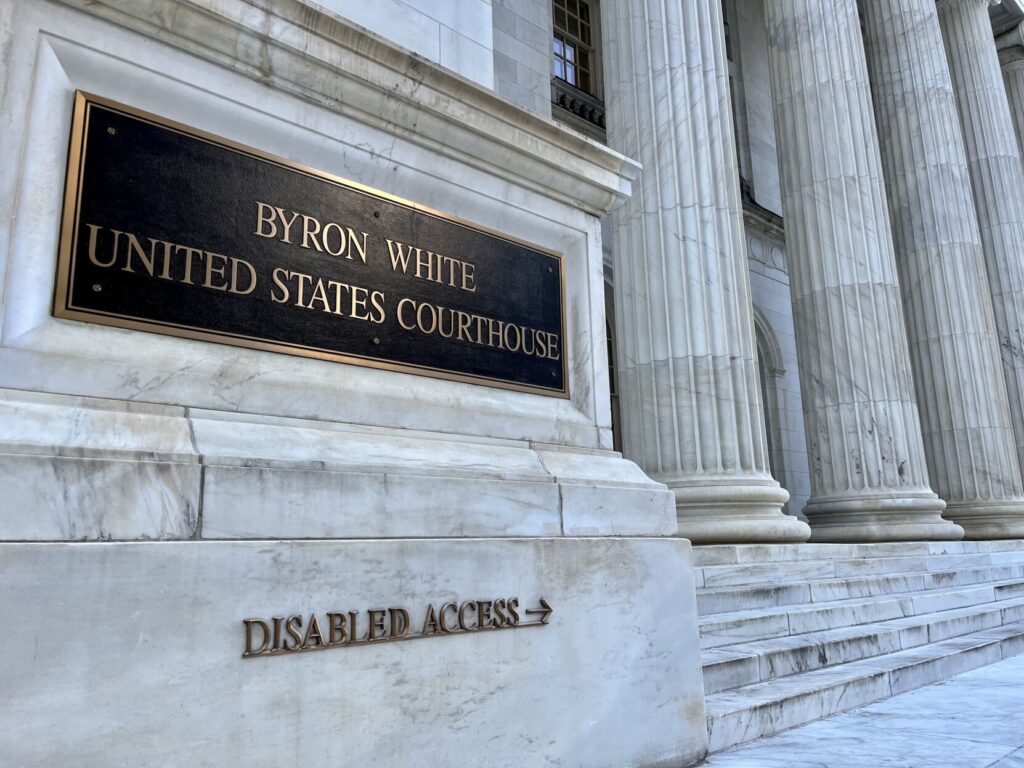
10th Circuit dismisses woman’s lawsuit following 10-year attempt to undo restraining order
Michael Karlik
michael.karlik@coloradopolitics.com
Updated 2 days ago
The Denver-based federal appeals court rejected a woman’s challenge on Friday to a restraining order imposed on her more than a decade ago, finding that she cannot credibly claim she will be prosecuted for violating the restraining order through her...
10th Circuit dismisses woman’s lawsuit following 10-year attempt to undo restraining order
Michael Karlik
michael.karlik@coloradopolitics.com
Updated 2 days ago
The Denver-based federal appeals court rejected a woman’s challenge on Friday to a restraining order imposed on her more than a decade ago, finding that she cannot credibly claim she will be prosecuted for violating the restraining order through her...
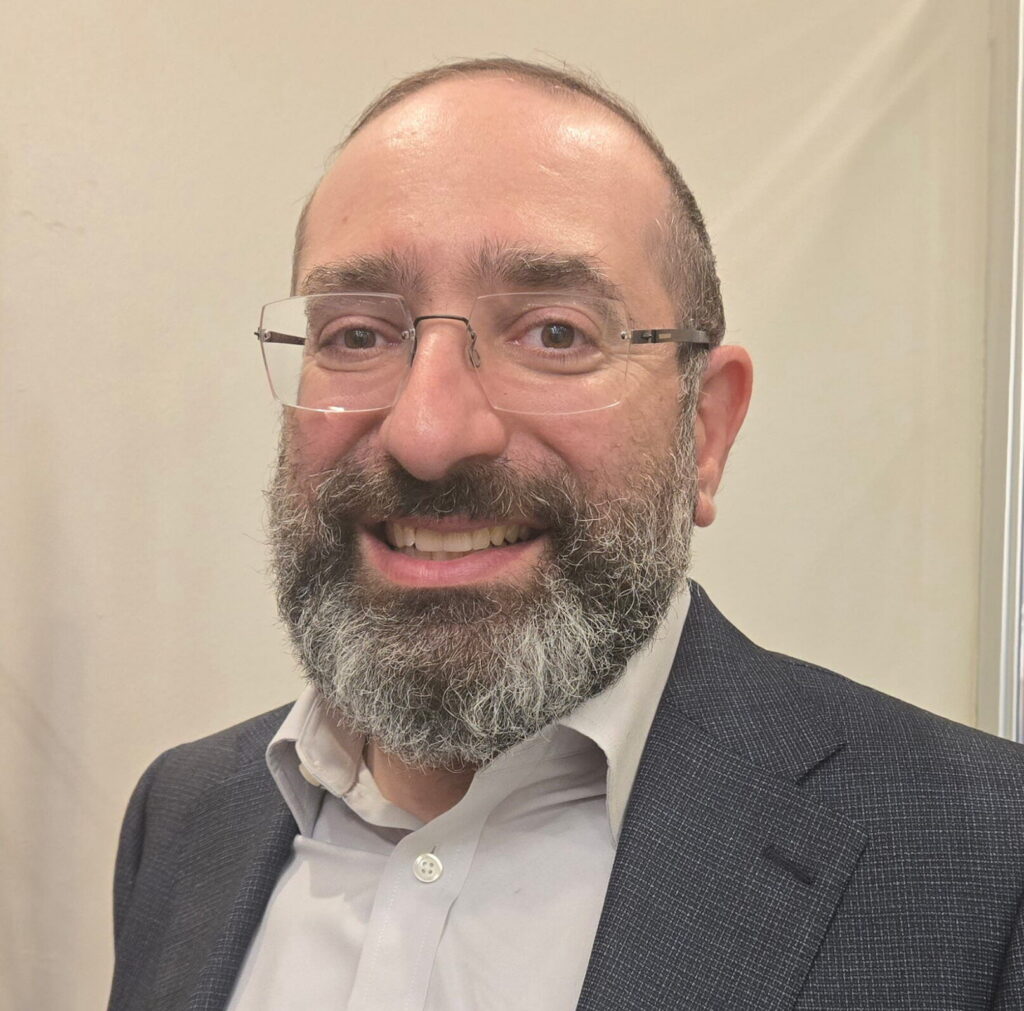
Surprise candidate Shimon Blau cleared to face off against Melat Kiros in November
Ernest Luning
ernest.luning@coloradopolitics.com
Updated 2 days ago
Unaffiliated congressional candidate Shimon Blau, a Denver doctor, has qualified by petition for the general election in Colorado’s 1st District, where Democrat Melat Kiros defeated 15-term U.S. Rep. Diana DeGette in last month’s primary, the Colorado Secretary of State’s Office...
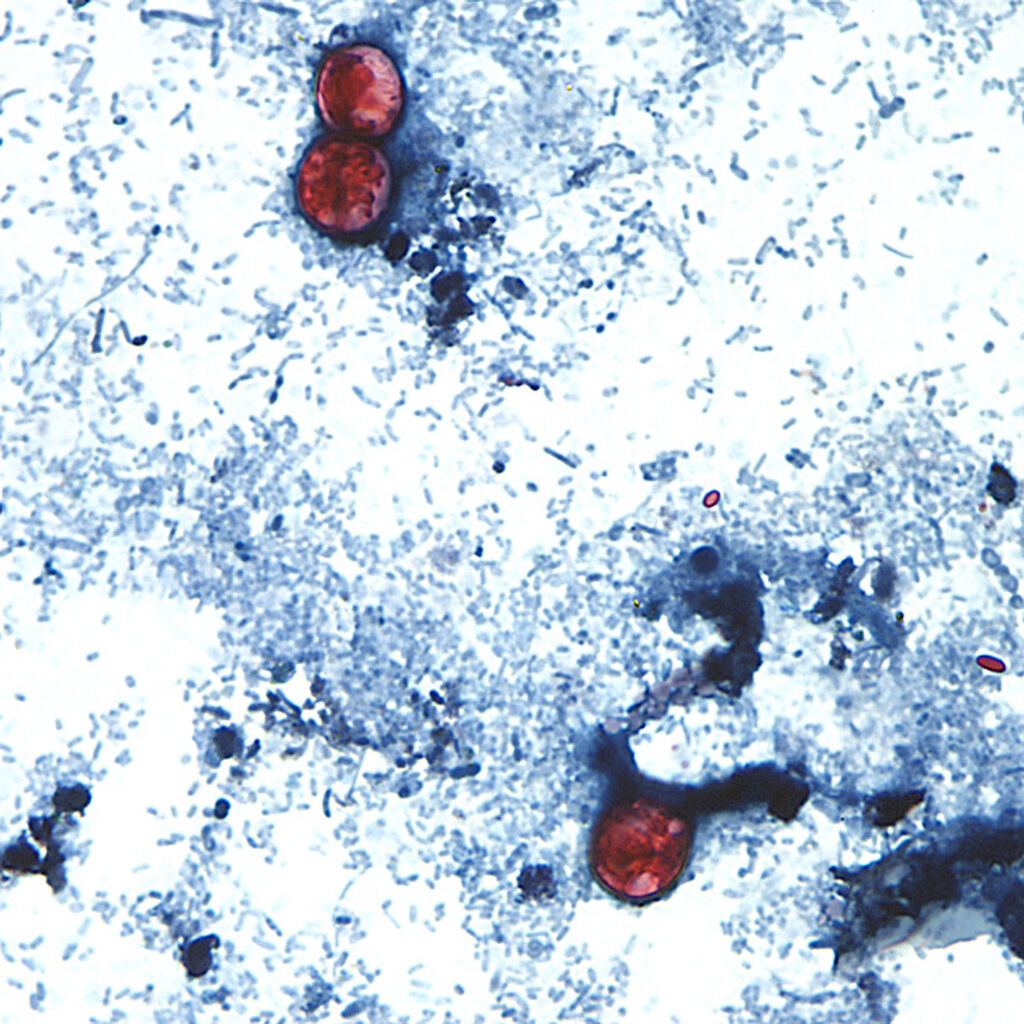
Colorado produce not tied to nationwide cyclospora outbreak, agriculture officials say
Marissa Ventrelli
marissa.ventrelli@coloradopolitics.com
Updated 1 day ago
There is no indication that the recent outbreak of cyclospora, a fecal parasite that has contaminated food and water across nearly every state, can be linked to produce grown in Colorado, according to the state’s Department of Agriculture. “Colorado growers...
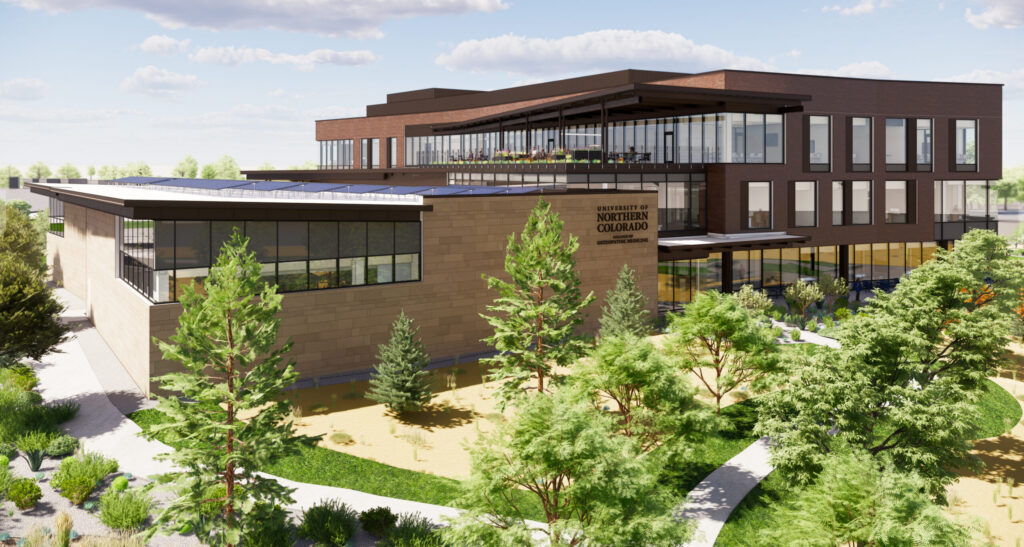
UNC opens College of Osteopathic Medicine
Marissa Ventrelli
marissa.ventrelli@coloradopolitics.com
Updated 2 days ago
The University of Northern Colorado held a grand opening for its new College of Osteopathic Medicine on Friday, with Gov. Jared Polis in attendance to celebrate the culmination of a two-year, $127.5 million project. The project was funded through legislation...