

Federal, state officials meet in Aurora to tout grants for electric buses

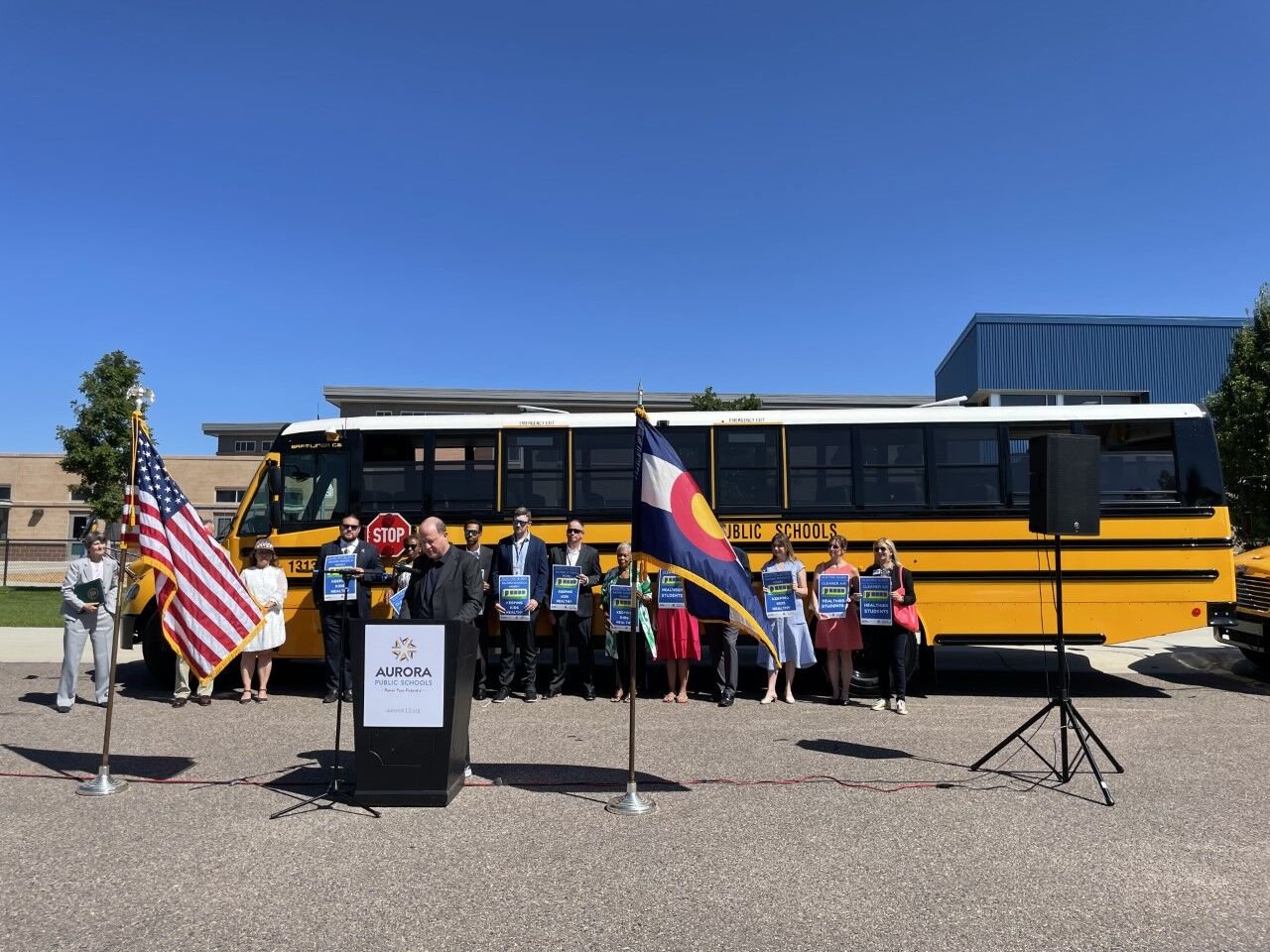
When state and federal officials wanted to showcase electric buses to entice Colorado school districts into swapping their diesel guzzling rigs for ones fueled by the grid, they called Aurora Public Schools.
The school district has added seven electric buses to its fleet of 147. It put two on display outside Edna & John W. Mosley P-8 on Wednesday where district representatives joined Gov. Jared Polis, U.S. Environmental Protection Agency officials and environmental advocacy organization to tout state and federal grant programs aimed at getting districts to ditch diesel buses.
Federal grants open for electric school buses, state grants on the way
“It’s a great day in Aurora Public Schools,” district Chief of Staff Mark Seglem said.
At first glance, the electric buses look like the quintessential school bus – except there is no tailpipe, and instead of a diesel fuel rumble, the electric vehicles reverberate a low hum as they pass by.
The district received $2.2 million in grants from the Regional Air Quality Council, Seglem said, which covered 80% of the cost to buy the district’s electric buses and will pay for three charging stations. The district funded the remainder of the bill, Seglem said. It is also forming plans to install a solar-powered bus canopy to house all its buses.
Polis urged other Colorado districts to follow Aurora’s lead by applying for federal and state grants to buy electric buses and install the necessary infrastructure before approaching deadlines.
Reducing pollutants is better for Coloradans’ health, officials said. And the EPA has proposed classifying Front Range communities as severe violators of federal air quality standards, so reducing the metro area’s carbon footprint is urgent.
EPA Deputy Administrator Janet McCabe said emissions from a bus “comes out right about stroller height.” It’s time to reimagine a bus without a tailpipe, McCabe said, adding that every child deserves healthy air and water. Federal, state and local leadership need to collaborate on initiatives to do that, McCabe said.
“It absolutely takes all of us,” McCabe said.
The federal Bipartisan Infrastructure Law includes $5 billion in funding over the next five years to help schools replace buses with low or zero-emission school buses. A zero-emission bus does not emit exhaust, pollutants or greenhouse gas. A “clean school bus” as defined by the law partially or fully relies on alternative fuel and reduces emissions.
The first round of that funding was announced by the EPA in May, with $500 million available to districts if they apply by the mid-August deadline.
Those federal dollars are being boosted by another $65 million in state grant dollars approved with the passage of SB22-193, signed into law this year.
Despite millions dedicated to the cause, the reach of those grants isn’t clear and entirely replacing diesel buses in Colorado is expected to take years.
The buses can cost upward of $375,000 and the exact price tag depends on what type of bus a district purchases, the EPA Regional Administrator KC Becker said. Becker said they don’t know how much it might cost to completely replace the state’s fleet of diesel buses as costs will change over time.
Dollar General to build large distribution facility in Aurora
Polis did not say how many districts have applied for the grants, only that “many have.” The state has requested at least 80 buses for Colorado schools so far, Becker said. A spokesman for the governor’s office said there are 6,000 school buses in the state, “with many electric buses already operating in rural and urban districts.”
It will likely take a decade or more to fully transition the state to an electric bus fleet, but nearly all new buses purchased in the next two years should be electric, Polis said. The governor expects a majority of buses in the state fleet will be electric within five or six years.
Districts that do apply for electric bus grants would likely begin deploying the buses next year, Polis said, although recently-purchased diesel buses could stay on the road for years. Replacing older buses is a priority of the programs.
Polis said manufacturers are aware of the increased demand, are working to boost their supplies of electric buses, and that the grant programs send them a message “to get moving quickly.”
“The state program alone wasn’t enough to drive manufacturers to prepare to gear up manufacturing electric buses. The EPA program is because they know the demand will be there nationally,” Polis said.
Sabrina Pacha, the senior director of Health Air and Water Colorado, said children are already facing the health ramifications of climate change. The organization works with a Denver-based pediatric clinic that knows it will see an influx of asthmatic patients or those with respiratory illnesses struggling to breath on days of poor air quality, Pacha said.
“Unfortunately, the reality is that in the metro area every day in the summer, more often than not, there is a hazy skyline or brown cloud hanging there,” Pacha said.
Improving air quality is an issue of health equity, Pacha said. Communities of color and low-income communities are exposed to transportation pollution “at much higher rates, exacerbating already existing health inequities and putting these folks at higher risk of health consequences of health consequences from pollution and climate change.”
Green Latinos Colorado State Program Director Ean Thomas Tafoya said “Latino communities are directly impacted by pollution and of course, climate crisis.”
“In recent polling more than 78% of Latinos in Colorado said they have personally experienced the effects of climate change,” Tafoya said.
The funding is a first of many steps needed to combat the climate crisis, Tafoya said.
Denver to increase its minimum wage to $17.29 an hour
“We all have the right to clean air. The children, the drivers and everyone else, and it is important that we advocate with our school districts to implement this new technology,” Tafoya said.
Upfront costs can be daunting but with rebates and grants Polis wants districts to see making the switch as a cost-saver. Electric buses have lower maintenance costs, fuel costs and significantly lower operating costs, he said.
Money saved by going electric could be put toward teacher pay or smaller classes, Polis said, and “to add enrichment programs like the arts back into our schools.”
“Making better use of the resources that we have rather than just spending it on gas is a big part of what electric vehicles can bring here in Colorado,” Polis said.

Top officials in Arizona’s Maricopa County agree on how to oversee elections | OUT WEST ROUNDUP
The Associated Press
the-associated-press@coloradopolitics.com
Updated 4 days ago
ARIZONA Officials agree on election oversight PHOENIX — Election officials in Arizona’s most populous county reached an agreement a week before the state’s July 21 primary on how to jointly oversee the vote, ending a prolonged legal battle. Republican Maricopa...
Colorado Politics Calendar Aug. 3-9
Rachael Wright, Special to Colorado Politics
rachael.wright@coloradopolitics.com
Updated 4 days ago
CoPo’s weekly political calendar will help you find political and public-policy events throughout Colorado. It includes candidate and issue campaign events, public policy meetings, court hearings, state and local party conventions, assemblies, debates, rallies, parades, speaking engagements, traveling dignitary appearances,...
The primary political reform and precondition for all others | SONDERMANN
Eric Sondermann
eric-sondermann@coloradopolitics.com
Updated 4 days ago
In its current state, the American political system has no end of ailments. Far too many factors accelerate polarization and work against moderation and narrowing the differences. Media, and the way so many citizens limit themselves to agreeable, reinforcing sources,...
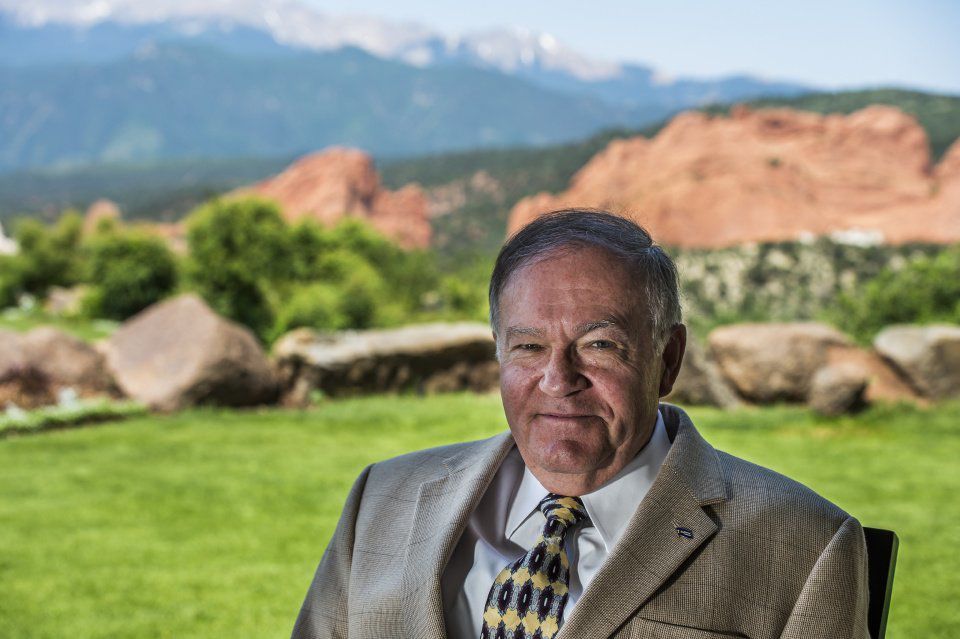
Susemihl wins surprise victory to replace Steve Durham as Colorado Springs state senator | A LOOK BACK
Rachael Wright, Special to Colorado Politics
rachael.wright@coloradopolitics.com
Updated 4 days ago
Forty-five years ago this week: In a closed session, the vacancy committee for Colorado’s Senate District 12 selected attorney Peter Susemihl to complete Sen. Steve Durham’s, R-Colorado Springs, term. Durham resigned his seat to become Region 8 Director of the...

10th Circuit partially revives lawsuit over 2020 Denver protest injuries
Michael Karlik
michael.karlik@coloradopolitics.com
Updated 29 minutes ago
The Colorado-based federal appeals court revived a man’s claims against Denver on Friday after concluding a trial judge resolved the case in the city’s favor without analyzing two of the three instances of alleged excessive force and other constitutional violations....
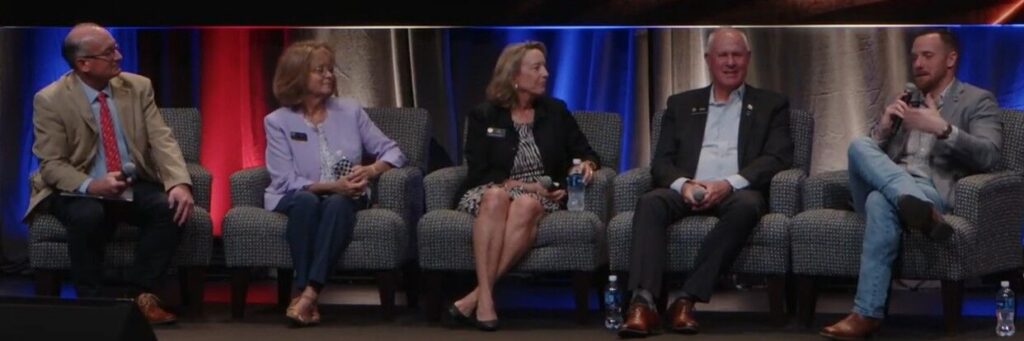
At conservative summit, Colorado Republican leaders concede Democrats’ election edge
Marissa Ventrelli
marissa.ventrelli@coloradopolitics.com
Updated 1 day ago
Four Republican state lawmakers told attendees at a gathering of conservative leaders on Friday they doubt their party can win statewide races, noting that Colorado’s electorate has been shifting toward Democrats but adding they see an opening in several pockets....
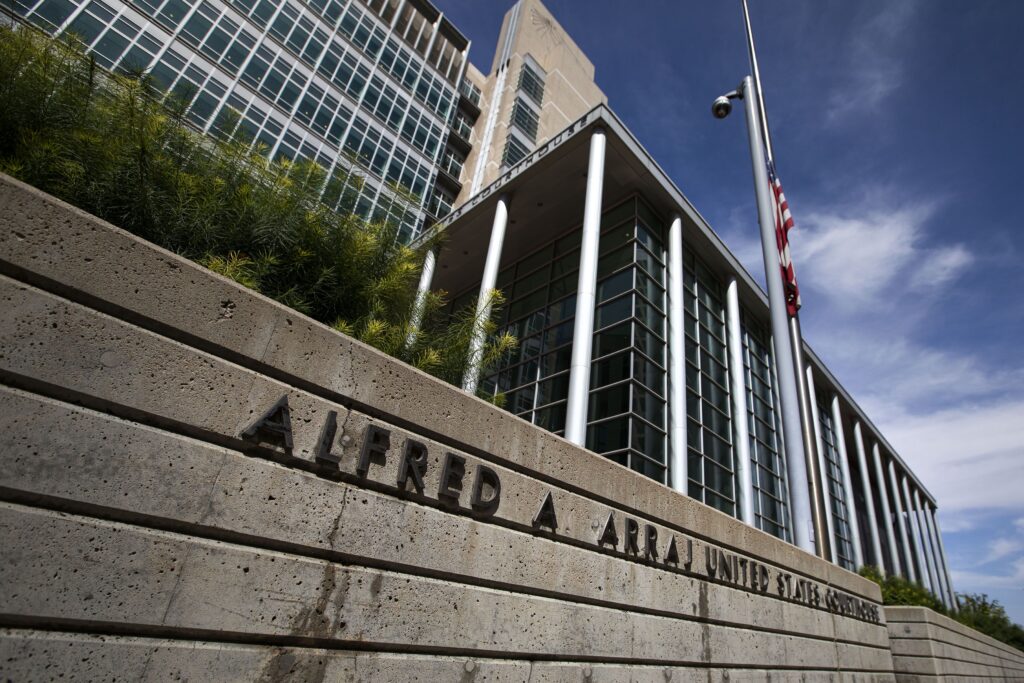
Federal judges find Colorado immigration judge violated several orders
Michael Karlik
michael.karlik@coloradopolitics.com
Updated 21 hours ago
Multiple federal judges in Colorado have freed people from immigration custody after determining that one immigration judge violated their directives for properly conducting bond hearings. For nearly a year, Colorado’s U.S. District Court has faced a flood of habeas corpus petitions...
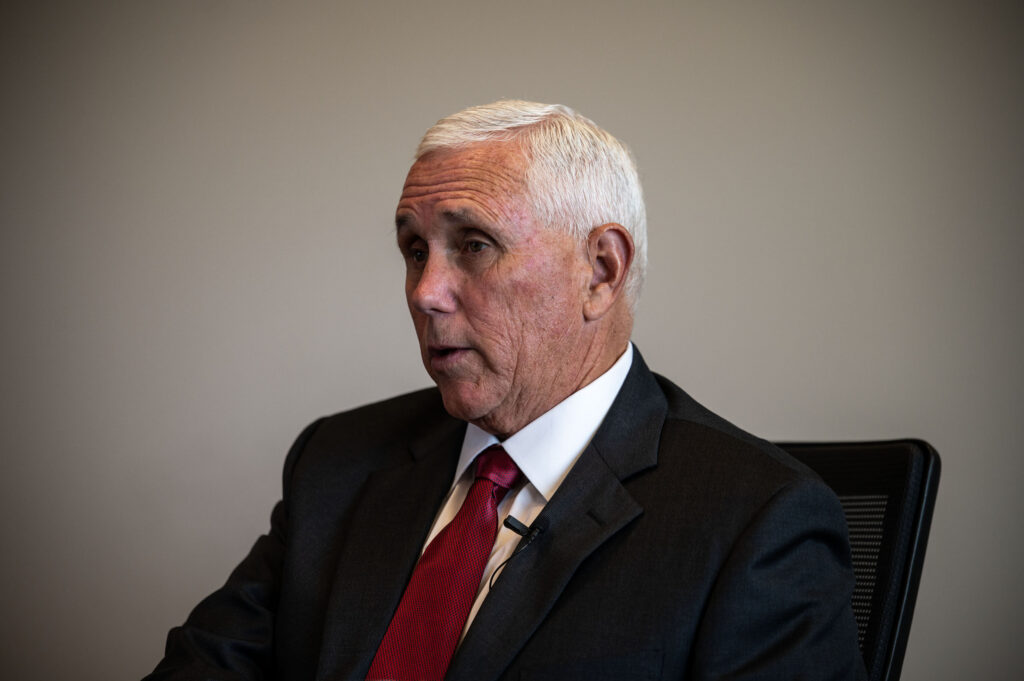
Q&A with Mike Pence | Former vice president says GOP’s populist turn from conservatism isn’t permanent
Ernest Luning
ernest.luning@coloradopolitics.com
Updated 1 day ago
Former Vice President Mike Pence says he’s concerned that the Republican Party has taken a populist turn away from bedrock conservative principles during President Donald Trump’s second term, but he believes the party will return to its roots when Trump...
New federal plan sets short-term rules for Colorado River management
Marianne Goodland
marianne.goodland@coloradopolitics.com
Updated 2 days ago
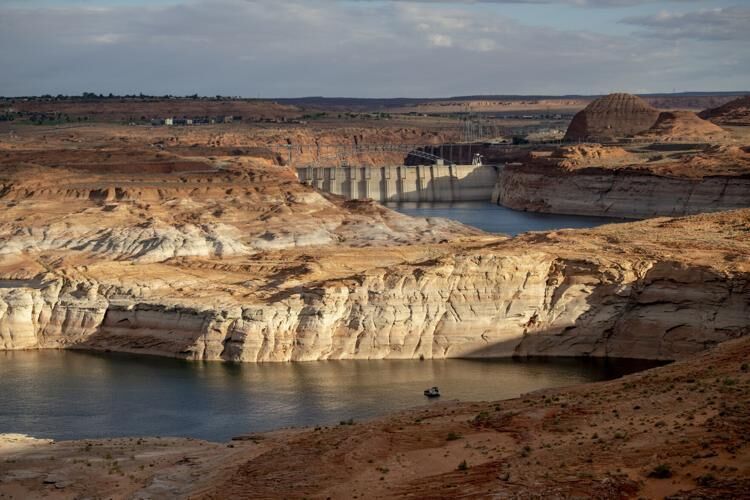
Interior Department’s plan spares Colorado from mandatory cuts for now After years of stalled negotiations among the seven states that rely on the Colorado River, the federal government on Friday released its own plan for managing the drought-strained system. Calling...
Fauci’s diary details blooming outrage toward ‘far right,’ softness toward Biden and China
Hudson Crozier
hudson.crozier@washingtonexaminer.com
Updated 2 days ago
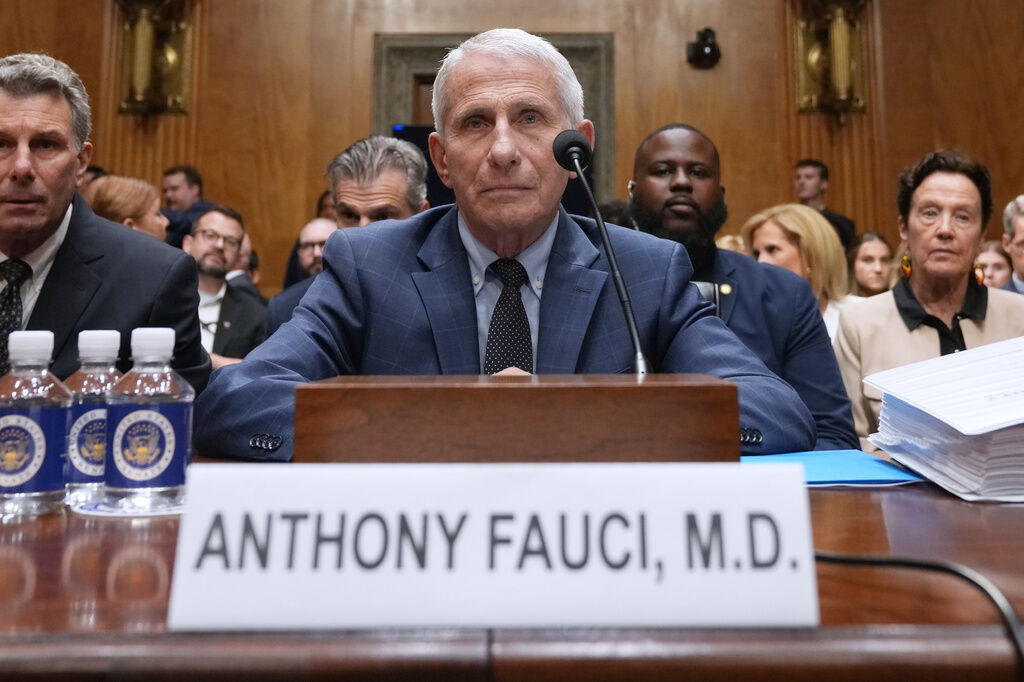
Dr. Anthony Fauci increasingly railed against “far right” critics of his approach to COVID-19 issues while describing strong support from the Biden White House in his pandemic-era diary, which was recently released by Congress. The former National Institute of Allergy...
PREV
PREVIOUS

Colorado schools should take 'layered' approach to COVID-19 prevention, state says
Colorado health officials are again recommending schools take a “layered” approach to COVID-19 prevention, but they’re advising districts not to require mask or quarantine for in-class exposures unless there are larger outbreaks or cases are rising to high levels in the broader community. The guidance, drafted and released by the state Department of Public Health […]

Michael Bennet, Colorado Springs veterans discuss 'burn pit' bill and how to improve health care
U.S. Sen. Michael Bennet visited Colorado Springs on Thursday, in part to tout the PACT Act, which President Joe Biden signed into law Wednesday, expanding health care benefits for veterans who developed illnesses from exposure to toxic substances from burn pits on military bases. Burn pits are used to dispose of waste collected on overseas […]