

PODIUM | Colorado must curb ozone pollution now
Meredith Leighty

Up and down the Front Range, Coloradans have come to know bad air-quality days as the norm during summer months. The sky turns hazy, the air feels thick, eyes burn, throats scratch and we are reminded to hunker down inside. Without action from our state leaders, and the appointees who have been charged with cleaning up our air and protecting our health, we will have more days like this, moving further away from the Colorado of bluebird skies and endless opportunity for outdoor activity that we know and love.
Nearly 58% of the state’s population lives in the Denver metro and north Front Range region, with Denver listed as the eighth-most ozone-polluted city in the United States. That’s 3.3 million people who deal with the adverse effects of poor air quality. Local government leaders have stepped up to the plate to do everything we can to support our communities and address these challenges. But the air doesn’t pay attention to city and county lines; we desperately need the support of the state. It is time for the Regional Air Quality Council (RAQC) and Air Quality Control Commission (AQCC) to open their eyes to the realities that Coloradans, especially those in marginalized and low-income communities, are facing and act.
In the coming weeks and months, both the RAQC and AQCC will be hearing from local leaders like me about individual air-quality monitoring and modeling studies, elevated ozone levels and continued methane emissions from oil and gas locations, and making decisions about the State Implementation Plans (SIPs). The evidence that we have to show them is overwhelming.
In 2021 there were 75 Ozone Action Alerts. During high ozone days public health officials recommend staying indoors and limiting exercise. This means that last summer there were 75 days where Colorado residents were told to stay inside and minimize their physical activity during the afternoon and evening. During that same time period, all 13 of the ozone monitors in the Denver Metro/North Front Range area recorded one or more exceedances of the more protective 2015 ozone National Ambient Air Quality Standards (NAAQS) of 70 parts-per-billion (ppb) while 11 monitors exceeded the 2008 NAAQS of 75 ppb.
These dangerous trends put millions of Coloradans’ health at risk. Ozone pollution is not just dangerous for our lungs. Scientists have linked ozone pollution to cardiovascular disease, stroke, Alzheimer’s disease and diabetes. To make matters even worse, ozone impacts hit especially hard in disproportionately impacted communities. These communities suffer from the cumulative impacts of additional air pollution as well as soil and water pollution. High ozone levels on top of high localized pollution can lead to even worse health outcomes in the very communities that often have limited access to health care.
There is so much more that Colorado can be doing much more to protect its residents. A coalition of local governments in and near the non-attainment area recently submitted a letter outlining nine additional control measures the State can take to reduce pollution and protect the health and safety of its residents. These were: committing to adopt Advanced Clean Cars II as soon as possible to reduce emissions from vehicles; adopt programs to increase public-transit ridership and pedestrian infrastructure; adopt indirect source rules; limit high-emitting oil and gas activities during ozone season; adopt strong flare minimization plans for oil and gas operations; require stronger flaring control and flare minimize plans at Suncor; adopt California’s non-road engine standards; adopt small off-road engine emissions standards; and adopt low Nitrogen Oxides (NOx) appliance requirements for residential and commercial buildings.
In the grand scheme of challenges that we are facing as a state and a country and what we will need to do to address them, these are not monumental changes. It will take sustained, committed, collaborative effort, but our shared vision of a beautiful and healthy state is possible — the RAQC and AQCC just have to get onboard.
Meredith Leighty, a Democrat, is the mayor of Northglenn.


Processing plants are an important piece of the ag puzzle | Rachel Gabel
Rachel Gabel
rachel-gabel@coloradopolitics.com
Updated 17 hours ago
Concrete barricades blocked the entrance to the Cargill beef plant in Ft. Morgan, Colo., on May 20. About 1,700 workers had been locked out by the company after months of contract negotiations ended with workers voting to reject the company’s...

As AI advances, are the accompanying AI advances for the better? | Miller Hudson
Miller Hudson
miller-hudson@coloradopolitics.com
Updated 17 hours ago
You may have noted Elon Musk was in court suing Sam Altman of OpenAI. If you were praying there was a way both of these greed bros could lose, you nearly got your wish. Emails exchanged between the parties reflect...

Too much Tina | Jon Caldara
Jon Caldara
jon-caldara@coloradopolitics.com
Updated 4 days ago
Really? This much hullabaloo over Tina Peters? We enjoy being distracted by the silliest things, don’t we? Our governor’s commutation of Peters’ sentence is just that — a silly thing. Just as it was nonsensical for the “Free Tina Peters”...
A mistaken commutation and an over-the-top reaction | SONDERMANN
By Eric Sondermann
by-eric-sondermann@coloradopolitics.com
Updated 4 days ago
It seemed an itch that Gov. Jared Polis just had to scratch. After months of hints and speculation, Polis put his signature on a commutation of the prison sentence of Colorado’s election-denying queen, former Mesa County Clerk Tina Peters. True,...

Colorado is too wealthy to keep cutting basic services | GUEST COLUMN
Colorado Politics
colorado-politics@coloradopolitics.com
Updated 4 days ago
By Kathy White and Lydia McCoy Colorado is a wealthy state. It may be hard to believe right now because so many of us are feeling the strain. Costs are high. Many families are struggling to keep up. There is...
Polis’ — and the replacement candidates’ — positions on Colorado’s most contested 2026 legislation | Paula Noonan
Paula Noonan
paula-noonan@coloradopolitics.com
Updated 4 days ago
The knock on the word “assume” is it can make an “a**” out of “(yo)u” and “me.” Let’s nevertheless assume the 2026 General Assembly addressed big problems facing the state. Let’s further assume the current governor can move on these...
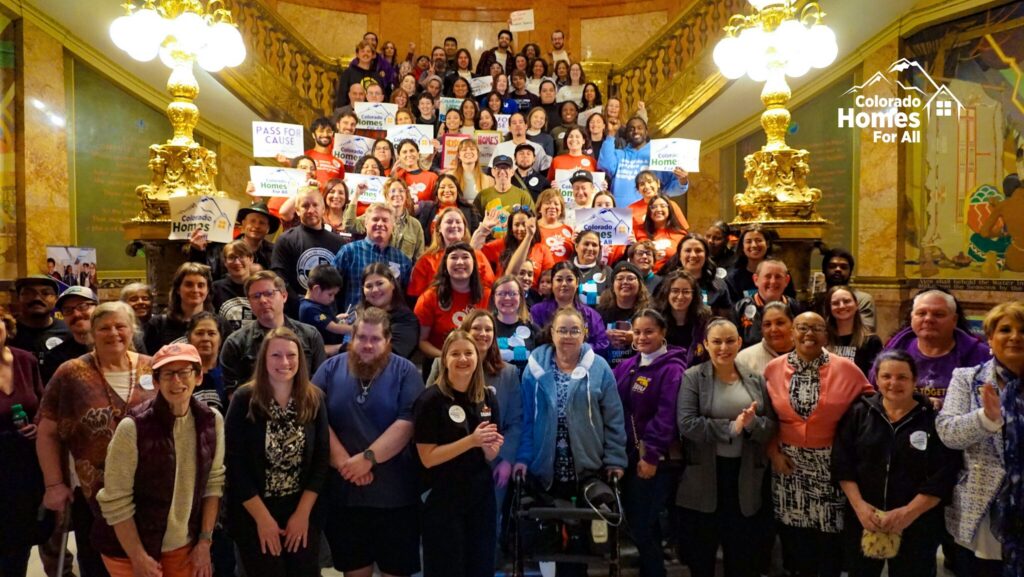
SPONSORED: What you’re missing about housing — an open letter to all of Colorado’s candidates for governor
Colorado Politics
colorado-politics@coloradopolitics.com
Updated 5 days ago
By Colorado Homes For All You say affordable housing, we say housing we can actually afford. As working-class people from across the state who are renters, we are struggling to keep up with our housing costs and we are being...
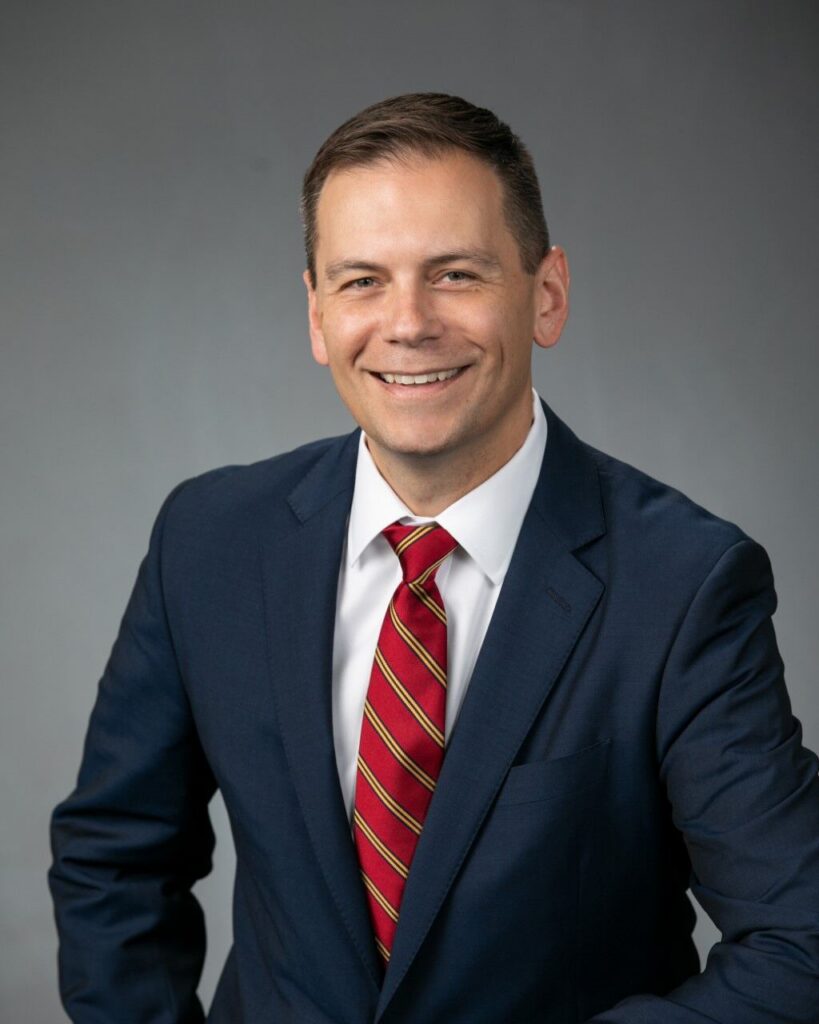
Colorado’s prisons are underfunded, not overcrowded | PODIUM
Colorado Politics
colorado-politics@coloradopolitics.com
Updated 5 days ago
By John Kellner The state does not have a “prison crowding” problem. It has a prison under-capacity problem. This is a crucial distinction for lawmakers and the public to understand. If it is not properly understood, the state risks falling...
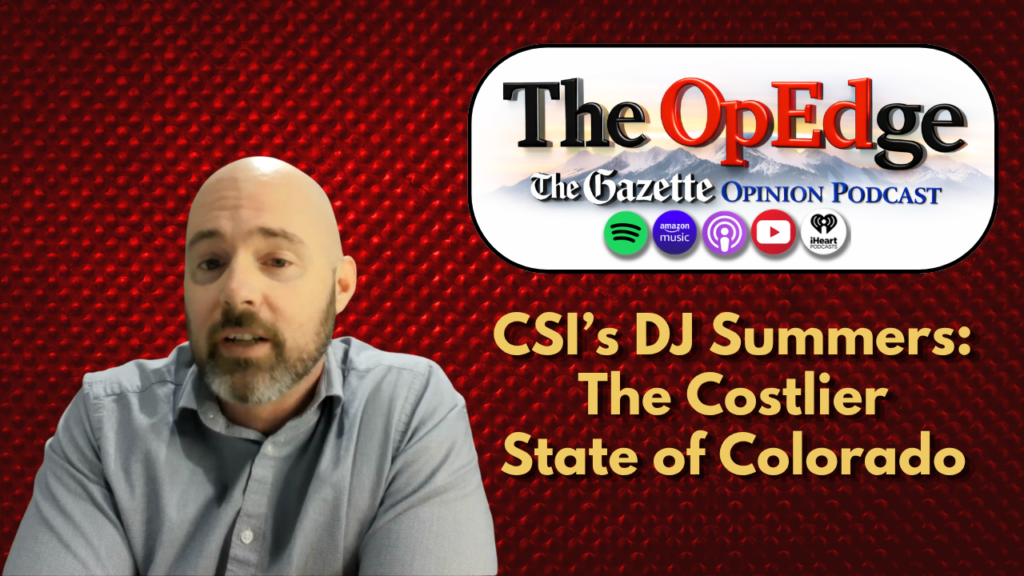
DJ Summers dives into the costlier state of Colorado | The OpEdge Podcast
Tony Olivero
tony.olivero@gazette.com
Updated 6 days ago
Common Sense Institute’s Director of Communications & Research Operations DJ Summers dives deep with The OpEdge Podcast host and investigative columnist Jimmy Sengenberger regarding Colorado’s drop in the institute’s Free Enterprise Competitive Index. Summers shares shrewd insights regarding Colorado’s curious,...
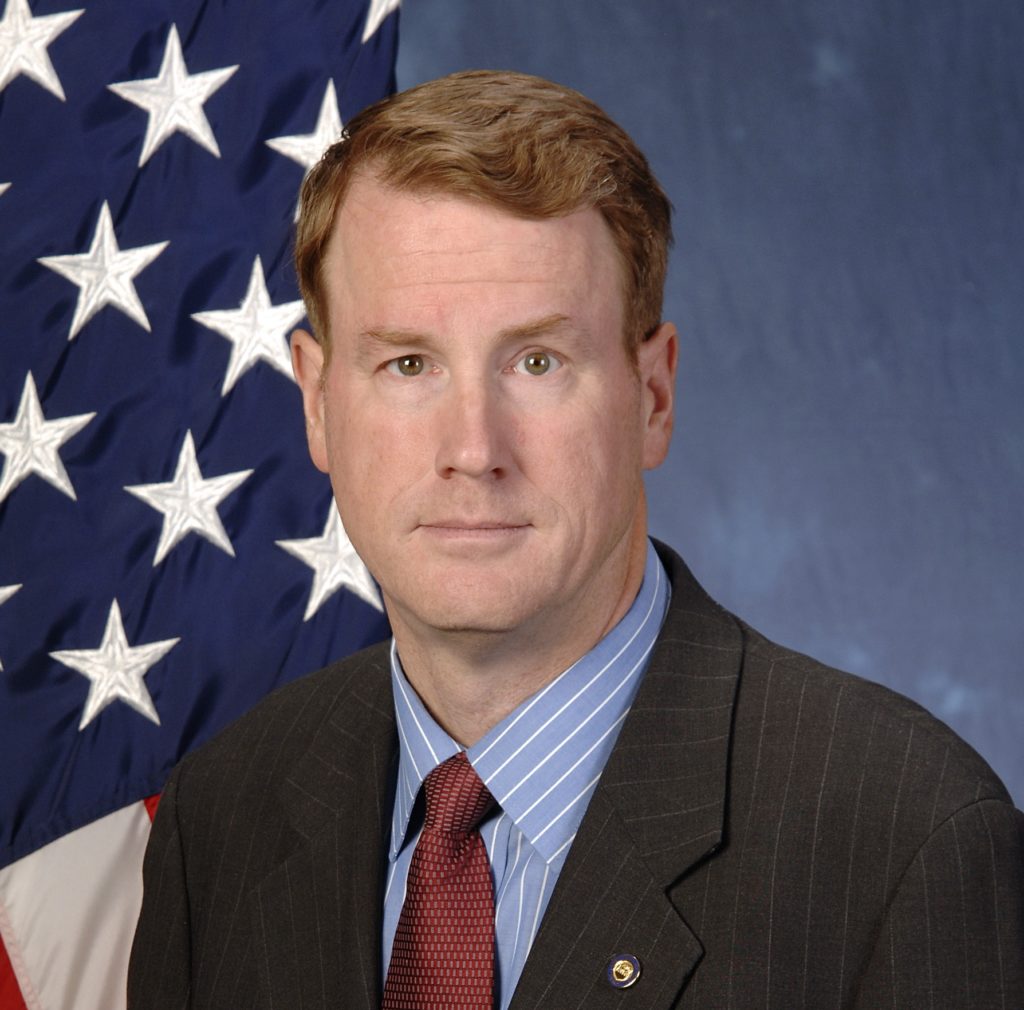
Sorry, Governor — you are wrong on this one | Hal Bidlack
Hal Bidlack
hal-bidlack@coloradopolitics.com
Updated 7 days ago
If you have read even a handful of my several hundred columns during the past few years, you likely ran across me saying nice things about Gov. Jared Polis. I genuinely like the guy, whom I met during our mutual...
PREV
PREVIOUS

Colorado Springs Gazette: Colorado’s crime fight claims another hero
Another name was added to Colorado’s list of fallen law officers this past weekend. It served as a grim reminder — yet another — of the perils faced routinely by members of law enforcement. They risk all on a daily basis so that the rest of us don’t have to. Andrew Peery, a SWAT officer […]

Colorado Springs Gazette: Don't restore racist housing discrimination
Colorado’s housing crisis hurts the poor, whether they are Black or white. It wasn’t always like that. Before the federal Civil Rights Act of 1964 and the Fair Housing Act of 1968, we had rampant race-based housing discrimination. Merely affording a home wasn’t enough. One often had to look a certain way. Real estate agents […]