

State court administrator admits he ‘missed’ discipline advisory and allowed ‘hairy chest’ jurist into senior judge program

Colorado State Court Administrator Steven Vasconcellos on Tuesday said he overlooked the discipline record of a retiring district court judge when he approved the jurist’s application for the senior judge program in 2018, then recently admonished the state’s judicial discipline commission for not telling the Judicial Department about it.
That judge — former Adams County District Court Judge Thomas Ensor — was fired from the program on June 1, 2021, by Supreme Court Chief Justice Brian Boatright after the latter determined Ensor was one of several judges whose misconduct was detailed in a two-page memo that’s at the center of an ongoing judicial scandal.
Federal judge dismisses charges in long-running case, faulting government, self for delay
Vasconcellos was the department’s director of court services at the time of Ensor’s application and was one of four people to sign off on admitting him to the senior judge program — after the discipline commission told the department of the discipline, but offered no details behind it.
Vasconcellos said he goofed and should have inquired further.
“When reviewing the senior judge program application, I missed the notation that a private admonition had been assessed,” Vasconcellos wrote The Gazette in an email. “I should have highlighted the matter directly with the State Court Administrator at the time for him to confer with the Chief Justice on how to move forward. I take responsibility for the mistake.”
Vasconcellos said he was similarly unaware of the admonishment when he wrongly accused the discipline commission in a letter last year of not making the discipline known to the department when it inquired about the judge’s background as part of the program’s application process. The commission pointed out Vasconcellos’ accusation in its own letter Monday to a legislative committee considering changes to the state’s discipline process.
Ensor did not immediately return several messages from The Gazette seeking comment.
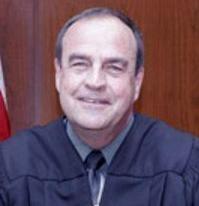
Former Adams County Judge Thomas Ensor

Retired judge Nathan “Ben” Coats was chief justice at the time Ensor was approved, and Christopher Ryan was the state court administrator. Each signed off on the application.
Both men are at the core of the judicial scandal in which Ryan alleged Coats approved a contract to former Chief of Staff Mindy Masias in return for her not suing the department for sex discrimination. The two-page memo detailing the judicial misconduct was at the root of that decision, Ryan has said. An investigation by a firm hired by the department to look into the allegation determined there was no quid pro quo. The investigating firm, however, did not interview Ryan, Masias or Eric Brown, the memo’s author.
Senior judges are retired jurists who are contracted yearly by the department to fill in wherever needed. The judges are assigned duties by Vasconcellos’ office.
Boatright fired Ensor following a private telephone discussion the two had that same day, according to copies of emails and the firing letter obtained by The Gazette through the department’s open-records rules. Ensor’s conduct or the specific reason for his firing are not detailed in the correspondence, but instead refer to the private conversation the two men had.
State Sen. Pete Lee indicted on felony charge of falsifying residence information
Several sources familiar with the case confirmed Ensor was the judge who was privately admonished by the discipline commission in May 2008. The admonishment was over “serious misconduct including displaying naked skin, the physical touching/rubbing of his chest on a woman’s back, and inappropriate commentary,” according to a report by Investigations Law Group released by the department last month. The judge’s conduct included a solicitation to “come sit on my lap,” according to ILG.
Ensor was referred to in the Masias memo as a judge who “exposed and rubbed his hairy chest on a female employee’s back” and who received no serious discipline for the conduct. The commission’s punishment was secret and by law not disclosed to the public, so Masias, even in her role as the department’s human resources director at the time, would not have known of the admonishment.
ILG concluded that “insufficient action occurred” by the discipline commission, calling the admonishment “the mildest sanction possible.”
ILG also wagged a finger at Vasconcellos and three others who signed off on Ensor’s application without inquiring what the admonishment was about. ILG did not identify Ensor by name in its report or identify Vasconcellos as one of the signatories of Ensor’s application. Vasconcellos signed the contract that hired ILG on behalf of the Judicial Department.
“From the perspective of Judicial administration, this Judge was allowed to serve as a Senior Judge after these events, despite at least four senior leaders at the State Court Administrator’s Office being notified that he had been the subject of a private admonition in the past,” ILG wrote.
Tina Peters arraigned on 10 felony, misdemeanor charges in case alleging election equipment breach
“None of these four individuals investigated what had taken place before approving him for the Senior Judge Program. Although I found no evidence to suggest that any of these individuals had actual knowledge of the facts underlying the admonition, it is striking that none of them asked any questions about it. Any one of these four could have, and should have, done more to unearth the facts underlying the private admonition the Commission on Judicial Discipline disclosed.”
Vasconcellos was named administrator, the highest civilian position in the judicial branch, in October 2019 after Ryan resigned following a newspaper investigation into the Masias contract.
ILG said although Ensor’s case was 15 years old, it “demonstrates failures in process and oversight as well as a failure to provide serious consequences on both the Commission on Judicial Discipline’s and Judicial Administration’s accounts. The Branch and the Commission on Judicial Discipline can and should do better to treat this kind of misbehavior seriously.”

10th Circuit dismisses woman’s lawsuit following 10-year attempt to undo restraining order
Michael Karlik
michael.karlik@coloradopolitics.com
Updated 2 days ago
The Denver-based federal appeals court rejected a woman’s challenge on Friday to a restraining order imposed on her more than a decade ago, finding that she cannot credibly claim she will be prosecuted for violating the restraining order through her...
10th Circuit dismisses woman’s lawsuit following 10-year attempt to undo restraining order
Michael Karlik
michael.karlik@coloradopolitics.com
Updated 2 days ago
The Denver-based federal appeals court rejected a woman’s challenge on Friday to a restraining order imposed on her more than a decade ago, finding that she cannot credibly claim she will be prosecuted for violating the restraining order through her...
Colorado equal pay law does not require plaintiffs to allege gender-based retaliation, appeals court finds
Michael Karlik
michael.karlik@coloradopolitics.com
Updated 1 day ago
The 2019 Colorado law aimed at rooting out pay discrimination on the basis of sex does not require a plaintiff to allege their employer retaliated against them for sex- or gender-related reasons, the state’s second-highest court decided on Thursday. Lawmakers...
Hudson faces lawsuit over ICE detention facility
Nicole C. Brambila
nicole-c-brambila@coloradopolitics.com
Updated 2 days ago
A nonprofit organization filed a lawsuit against the Town of Hudson Wednesday, challenging plans to reopen a former federal prison in the town as a U.S. Immigration and Customs Enforcement detention facility. Together Colorado, along with Janet E. Carlson, filed...
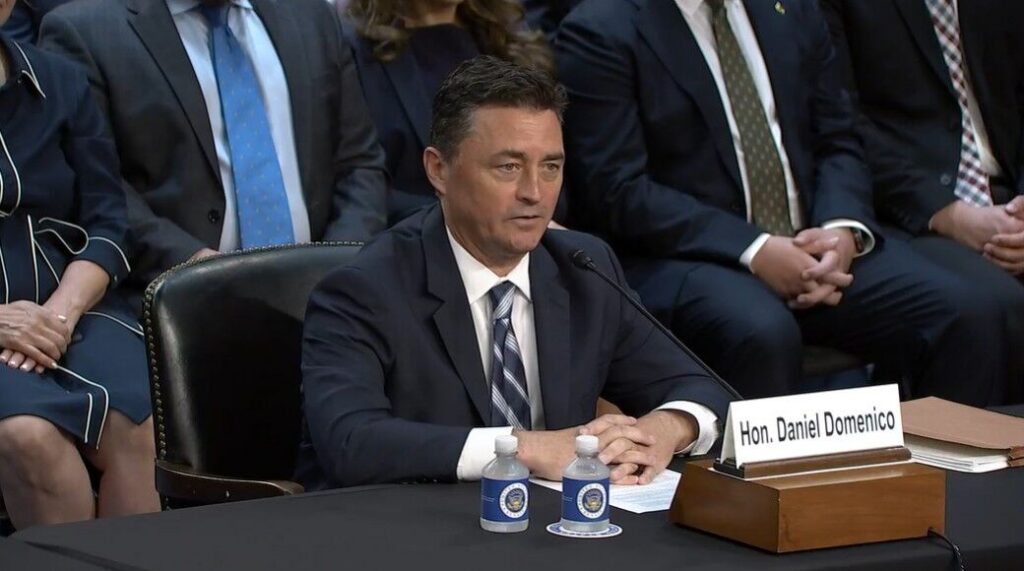
Senate committee advances Trump’s 10th Circuit nominee, as Domenico responds to questions about delays
Michael Karlik
michael.karlik@coloradopolitics.com
Updated 2 days ago
The U.S. Senate Judiciary Committee advanced President Donald Trump’s nominee to the Denver-based federal appeals court on Thursday by a party-line vote of 12-10. U.S. District Court Judge Daniel D. Domenico, who was Trump’s first-term appointee to Colorado’s federal trial...
Colorado justices to hear embryonic donation dispute
Michael Karlik
michael.karlik@coloradopolitics.com
Updated 3 days ago
The Colorado Supreme Court announced on Monday that it will decide whether lower court judges properly applied its framework for adjudicating disputes over the fate of pre-embryos, in which one person wants to use them to become a parent and...

Isolation, emotion, persona: Colorado judicial programming prepares people for life on the bench
Michael Karlik
michael.karlik@coloradopolitics.com
Updated 3 days ago
As a trial judge and now as a member of the Colorado Supreme Court, Justice Carlos A. Samour Jr. has heard the view that being a judge is isolating. “In neither court have I felt isolated. I’ve always interacted a...

Federal judge dismisses Colorado county sheriff’s challenge to law limiting immigration cooperation
Michael Karlik
michael.karlik@coloradopolitics.com
Updated 1 day ago
A federal judge dismissed a challenge from Mesa County Sheriff’s Office leaders last week to a Colorado law limiting public employees’ cooperation with immigration authorities, concluding that the plaintiffs did not allege they engage in any conduct that the law...
10th Circuit raises bar for fraud victims to sue debt collectors over inaccurate information
Michael Karlik
michael.karlik@coloradopolitics.com
Updated 21 hours ago
The Denver-based federal appeals court wiped away a jury’s $500,000 award to a fraud victim on Monday and made it more difficult for consumers to hold companies liable for disseminating inaccurate credit information. The Fair Credit Reporting Act regulates credit...
Montezuma County judge’s censure, suspension approved by discipline panel
Michael Karlik
michael.karlik@coloradopolitics.com
Updated 4 days ago
A three-member disciplinary panel accepted, on Monday, an agreement between a Montezuma County judge and the Colorado Commission on Judicial Discipline that specifies he will receive a censure, a suspension, and additional education for his admitted instances of misconduct. Under...
PREV
PREVIOUS
Disciplinary information rarely considered in decisions on judge retention
Colorado’s system of judicial discipline is so secret that the state’s nearly two dozen performance review commissions that evaluate judges have rarely known for sure whether a jurist they recommended voters keep on the bench had a record of misconduct or not. That shortfall is a critical flaw in the state’s judicial retention process that […]

Appeals court reverses Mesa County murder conviction after faulty jury instruction
Colorado’s second-highest court has found a Mesa County judge provided a jury instruction that was unsupported by the evidence, requiring reversal of the defendant’s 2019 murder conviction. Although the defense attorney for Joseph William Peace did not object to the faulty self-defense instruction at the time, a three-judge panel for the Court of Appeals deemed […]