

Investigators of Judicial Department misconduct to appear before legislative committee
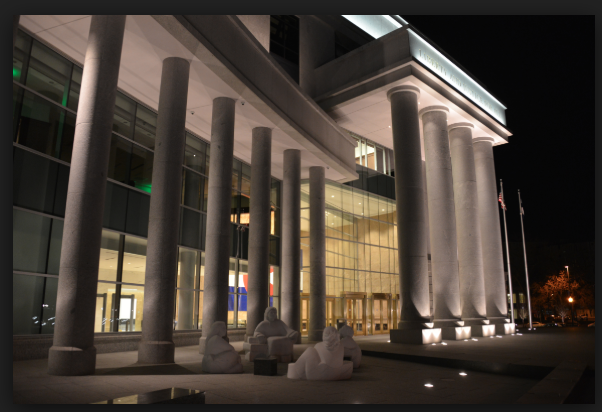
The two main investigators behind a recent report that said no contract-for-silence deal existed in the Colorado Judicial Department are expected to testify Tuesday before a legislative committee on judicial discipline.
Former U.S. Attorney in Colorado Robert Troyer and former Denver Independent Monitor Nicholas Mitchell are scheduled to appear before the special committee to discuss their 70-page report that found misconduct surrounded a multimillion-dollar contract awarded to a former judicial employee — but no quid-pro-quo deal.
It will be the first time the men have spoken publicly about the investigation they conducted into the circumstances surrounding a contract given to the department’s former chief of staff, Mindy Masias, who was being fired for financial irregularities.
The interim committee of eight legislators was formed this spring as part of a bill that independently funded the Colorado Commission on Judicial Discipline, which had been trying to investigate the scandal but met with resistance from the state Supreme Court. The commission had been funded through attorney registration fees controlled by the Supreme Court.
Troyer and Mitchell concluded that while several instances of misconduct occurred in the acquisition and awarding of the Masias contract, it was not the result of threats to disclose judicial misdeeds, many of them sexual in nature, in a discrimination lawsuit.
It had been alleged that then-Chief Justice Nathan “Ben” Coats had agreed to the contract in order to avoid the embarrassment of a lawsuit. Troyer and Mitchell said it didn’t happen that way, although they did say Coats approved of the Masias contract despite her being fired for allegedly forging reimbursement receipts.
The investigators did not interview the three main players in the contract — Masias, former Human Resources Director Eric Brown and former State Court Administrator Chris Ryan. All three were under criminal investigation at the time of Troyer’s inquiry and refused to be interviewed.
The report was produced by RCT Ltd. under a $75,000 deal the Judicial Department inked last October following a lengthy public bid process.
At the center of the scandal is a two-page memo that highlighted several instances of alleged personal misconduct by judges over several years that were either never reported or were glossed over. The memo also contained numerous examples of mistreatment of women within the department.
Troyer’s firm investigated the circumstances of the contract, but not the allegations of misconduct contained in the memo.
A different firm, Investigative Law Group, is looking into the alleged culture of sexual harassment in the department and its report is expected before the end of the month. It began that inquiry last fall under a $250,000 contract it signed with the Judicial Department.
The interim committee’s focus is on whether the state’s system of judicial discipline needs an overhaul, specifically if a constitutional amendment to separate the process from Supreme Court oversight is warranted.
Troyer and Mitchell found a department largely devoid of knowledge — even by the Supreme Court justices themselves — about how judges are investigated or disciplined in Colorado. That made it difficult for anyone to trust whether their complaints would be investigated.
“During our investigation, employees, including Justices, were unable to describe the complaint-handling process and relevant standards for handling complaints against judges,” the RCT report said. Employees couldn’t “… describe how such complaints were received, by whom, when they would be referred (to the discipline commission), how they would be tracked, and what steps would be taken to make sure that complainants were protected against retaliation.”
Because Masais handled many of the complaints while she was human resources director, there was a perception she was a “fixer” for the Supreme Court with the power to make complaints disappear if she wanted, according to the report.
At the committee’s inaugural meeting in June, the discipline commission revealed how the Supreme Court had ignored a subpoena for evidence in its investigation into the scandal for more than five months.
The commission has recommended nine changes to the discipline process, many of them requiring a change to the Colorado Constitution, which can only occur by voter referenda.

The outrages mount | Hal Bidlack
Hal Bidlack
hal-bidlack@coloradopolitics.com
Updated 9 hours ago
My kindly and forgiving editors understand that, from time to time, I can’t help myself from leaping atop my rickety soapbox to vent. And, like many other political commentators have already done, I could easily fill this entire missive with...
Rural Colorado deserves a tax holiday | GUEST COLUMN
Eric Mulder
jstooksberry@gmail.com
Updated 9 hours ago
Spend enough time in Colorado’s Eastern Plains, the San Luis Valley, or the Western Slope, and you’ll see boarded-up storefronts, schools consolidating classrooms, and small rural communities stretching every dollar to keep basic services afloat. Once the backbone of Colorado’s...
Colorado board permits state to appeal injunction against arthritis drug price cap
Marissa Ventrelli
marissa.ventrelli@coloradopolitics.com
Updated 13 hours ago
A Colorado board voted Friday to allow the Attorney General’s Office to fight an injunction against a price cap on a drug that treats arthritis. A U.S. district court judge had granted the company Amgen a preliminary injunction, temporarily blocking...

Federal judge rejects constitutional claims, ‘expressions of hatred’ by Club Q defendant
Michael Karlik
michael.karlik@coloradopolitics.com
Updated 13 hours ago
A federal judge rejected a defendant’s claims that he received constitutionally ineffective assistance of counsel while facing federal hate crime and firearms charges for murdering five people at a Colorado Springs LGBTQ nightclub in 2022. Anderson Lee Aldrich is serving...

Divided 10th Circuit upholds Colorado congestion fee on car rentals
Michael Karlik
michael.karlik@coloradopolitics.com
Updated 9 hours ago
The Denver-based federal appeals court concluded on Monday that a 2024 “congestion impact fee” that lawmakers imposed on short-term vehicle rentals did not conflict with a federal prohibition on certain airport-related charges. Beginning in the 1970s, Congress began limiting the...

Chamber names its Top 25 Most Powerful Women in Business | NONPROFIT REGISTER
Joanne Davidson Special to Colorado Politics
joanne-davidson-special-to-colorado-politics@coloradopolitics.com
Updated 16 hours ago
COLORADO WOMEN’S CHAMBER OF COMMERCE Denver News: Marielena DeSanctis, chancellor of the Colorado Community College System; Terri Jackson, executive director and co-founder of the African American Trade Association and Emily Trujillo, chief operating officer at HCA HealthONE Centennial, are among the 2026 Top 25 Most Powerful Women...

Space Force should measure workforce needs as it prepares to double in size, GAO report says
Mary Shinn
mary-shinn@coloradopolitics.com
Updated 19 hours ago
The Space Force needs more people. It’s just not precisely sure how many more. A Government Accountability Office report released earlier this month found that the youngest and smallest military branch does not have a process to consistently or accurately...

Colorado schools receive $24 million for free meals program
Marissa Ventrelli
marissa.ventrelli@coloradopolitics.com
Updated 13 hours ago
The Colorado Department of Education is providing Colorado schools with nearly $24 million in grant funding to implement a free lunch program. Approved by voters in 2022, the Healthy School Meals for All provides free breakfast and lunch to all...
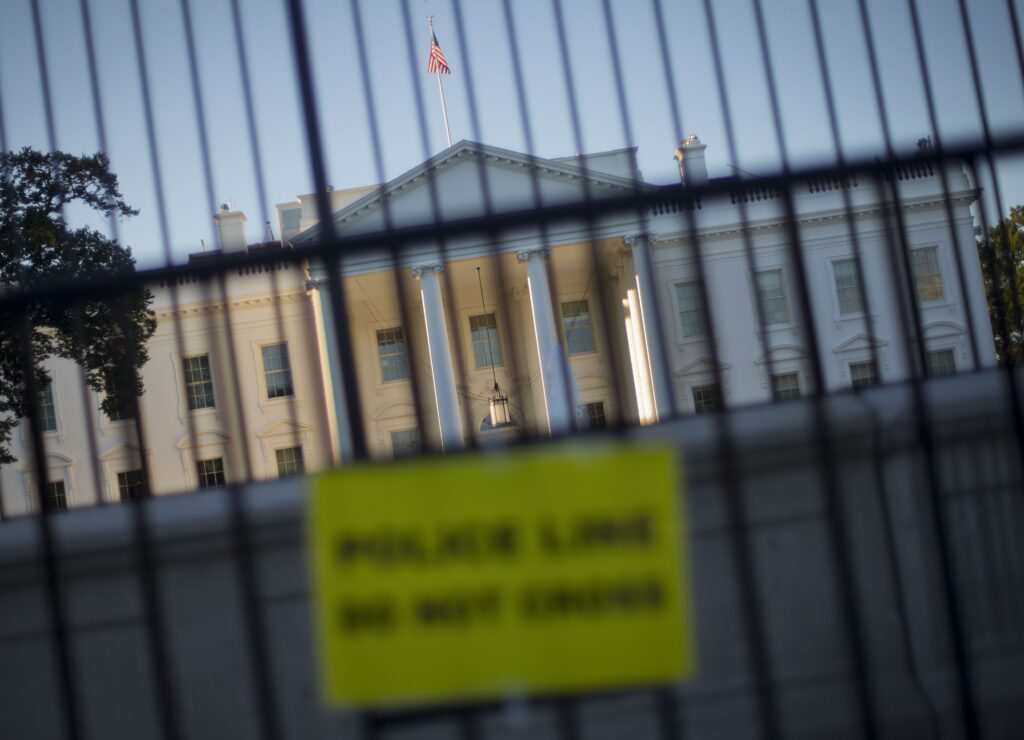
Secret Service agent placed on administrative leave after arrest for near-deadly hazing ritual
Claire Carter
claire.carter@washingtonexaminer.com
Updated 20 hours ago
A Miami Secret Service agent in Florida was placed on administrative leave following his arrest on Sunday in connection with a near-deadly hazing incident at a University of Miami fraternity. Marquez Christopher Pinder, 29, was arrested alongside two other individuals...
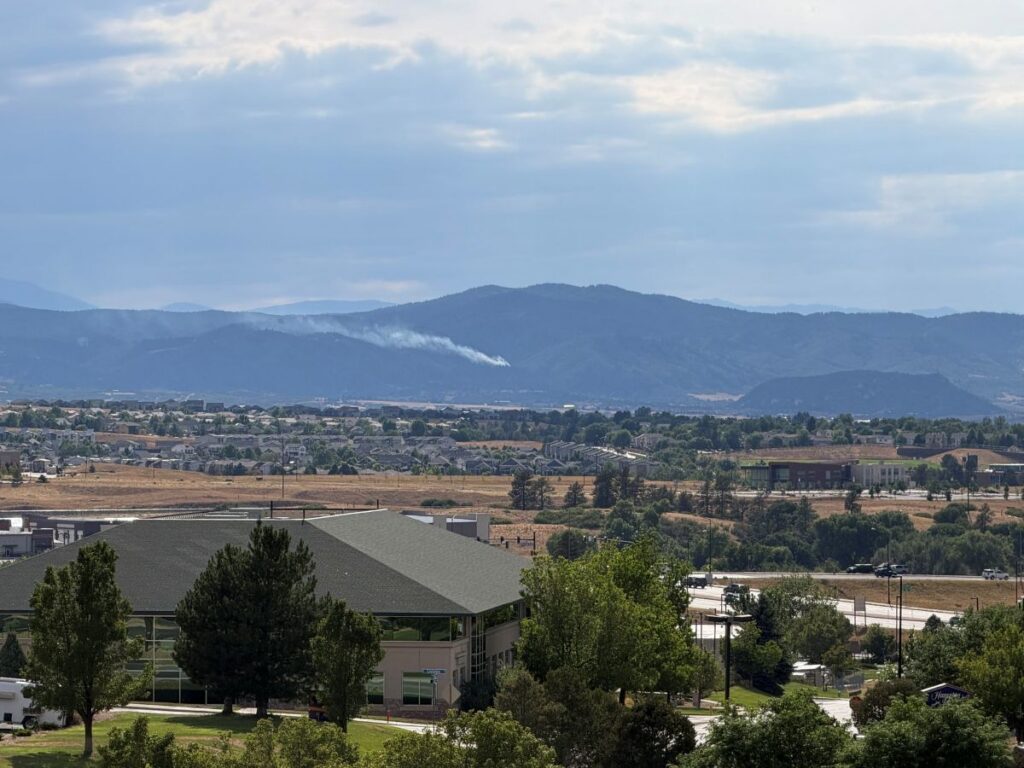
Forest fire west of Sedalia prompts evacuations in Douglas County
Nicholas Fogleman
nicholas.fogleman@denvergazette.com
Updated 23 hours ago
Emergency crews are responding to a forest fire burning west of Sedalia, prompting evacuation orders for nearby residents Sunday afternoon. At about 5 p.m. Sunday, the Douglas County Sheriff’s Office issued an evacuation order for residents within a 2-mile radius...