

Biden to suspend tariffs on Asian solar panels following outcry over federal probe

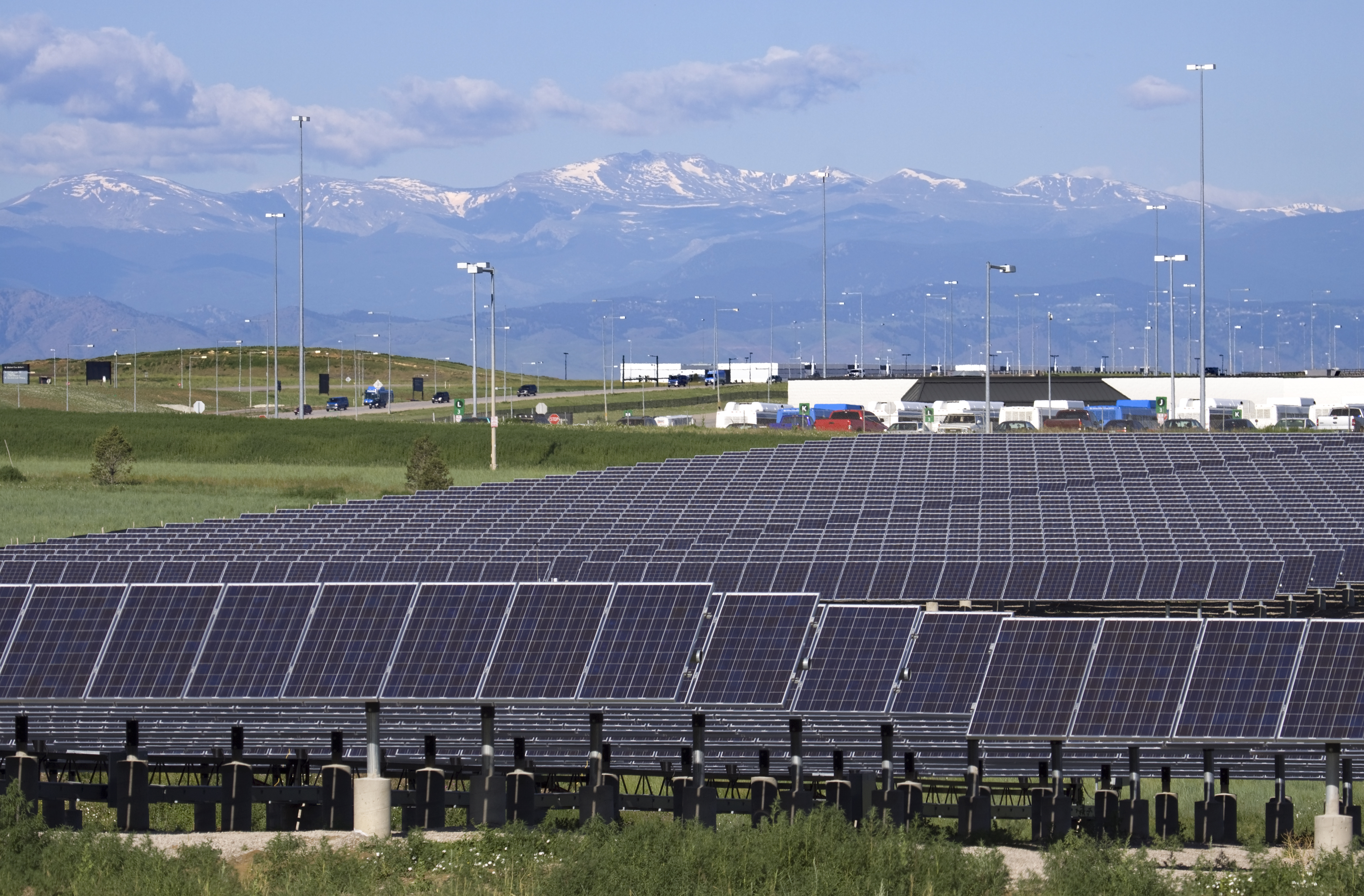
The White House on Monday announced plans to suspend tariffs on solar panels imported from four Asian countries suspected of serving as proxies for China to evade trade sanctions imposed by the Obama administration on Chinese solar imports as far back as 2012.
The import of solar panels from Asia by American businesses came to a sudden stop April 1, when U.S. Secretary of Commerce Gina Raimondo announced an investigation into allegations raised by Auxin Solar, a U.S. solar panel producer. The company claimed panels imported from four Asian countries were being built with Chinese parts and raw materials.
The White House’s decision to suspend tariffs on solar imports from Cambodia, Malaysia, Thailand and Vietnam followed intense lobbying by the solar industry and politicians, including Colorado Gov. Jared Polis and U.S. Sen. Michael Bennet, D-Colo., to end the federal investigation.
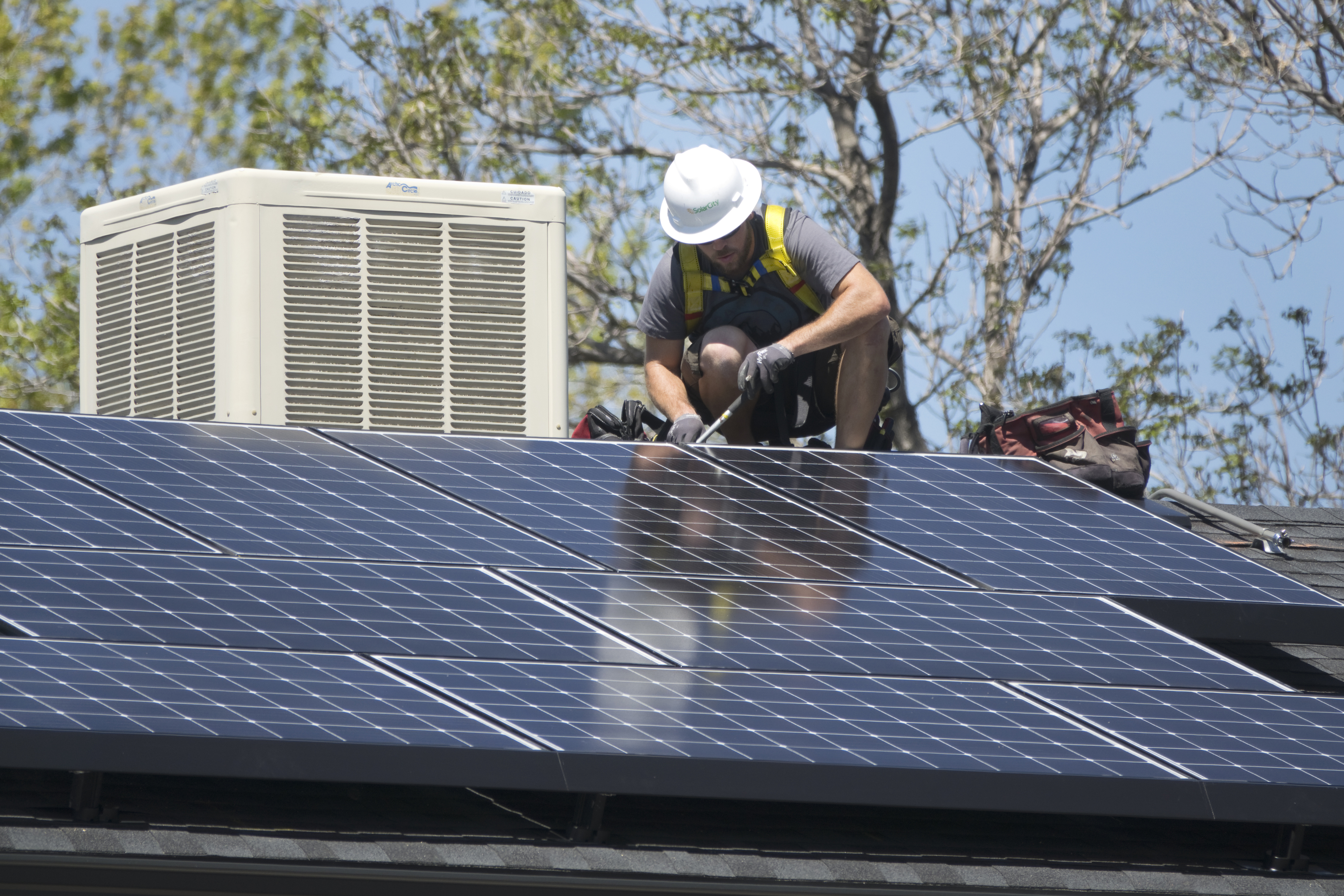
Ending that investigation, Polis and others said, would restart the stalled solar installation industry, prevent price hikes in solar energy and minimize supply chain disruptions to critical solar projects.
In a statement, a spokesperson for Polis said the governor applauds the Biden administration’s decision, saying it would “save Coloradans money on energy bills, grow Colorado’s good-paying green jobs, and support the transition to 100% renewable energy by 2040.”
Hickenlooper and Bennet released a joint statement this afternoon echoing Polis’ position.
“This is the moment when we should be doing everything we can to invest in America’s solar industry and accelerate deployment of clean energy,” said Bennet. “I’m pleased that President Biden has listened to our calls.”
“We must prioritize U.S. solar power to expand our clean energy economy,” said Hickenlooper. “It’s critical to reaching net-zero emissions. President Biden’s executive order will ensure our domestic solar industry can grow and create good jobs.”
Under the White House’s plan, the tariff suspension will “create a 24-month bridge as domestic manufacturing rapidly scales up to ensure the reliable supply of components that U.S. solar deployers need to construct clean energy projects.”
The Obama administration put tariffs in place in 2012 following reports China was engaged in predatory pricing that drove almost all U.S. panel producers out of business and because of claims of the use of slave labor in China’s Xinjiang region, where the bulk of manufacturing takes place to produce base materials from which solar panels are made.
China manufactures about 75% to 80% of the world’s production of polysilicon cells that are assembled into solar panels.
The tariff assessed on Chinese panel components varies between 12% and 20%, and it applies to China-run companies, including Canadian Solar, LONGi Solar, JinkoSolar, JA Solar, BYD, Trina Solar and Hanwha Q Cells.
Amicus Solar, an American purchasing cooperative that comprises some 70 solar energy small businesses, sent a letter to Raimondo in March, saying the federal probe is threatening the viability of solar companies.
“We feel it is imperative for you to know that this petition is the single largest threat to the viability of our small businesses that we have seen in the last 20 years,” the cooperative said.
Colorado’s politicians echoed those fears.
Polis urged Raimondo to end the federal investigation noting Colorado’s efforts to transition to 100% renewable energy by 2040.
“This investigation jeopardizes our shared interest in providing financial relief to residents in the transition to affordable clean energy,” Polis said in a statement last month.
In a Senate subcommittee hearing, Raimondo said she has no choice, as she is statutorily obligated to investigate the complaint under federal law.
Section 337 of the Tariff Act of 1930 regulates unfair competition in importation that has the “effect or tendency to destroy or to substantially injure an industry efficiently and economically operated in the United States.”
Investigations under Section 337 are carried out by the United States International Trade Commission. This investigation is scheduled to wrap up in August.
Biden has 60 days after a final ruling by the commission to deny the order. Otherwise, it goes into effect automatically.
Neither Hickenlooper, Bennet nor Polis responded to a request for comment before press time on the issues of unfair trade practices or the use of Uighur forced labor.


Grand Canyon flooding threatens economy that’s still recovering from a fire | OUT WEST ROUNDUP
Ernest Luning
ernest.luning@coloradopolitics.com
Updated 3 days ago
ARIZONA Flooding slams park’s economy Deadly flooding at the Grand Canyon is damaging the area’s economy, with a washed-out pipeline severing the South Rim’s water supply and shutting down lodging at the popular tourist vista for an indefinite period. The...

Immigration reporting measure fuels debate over Colorado’s role with ICE
Marissa Ventrelli
marissa.ventrelli@coloradopolitics.com
Updated 14 hours ago
A coalition of advocacy groups and several district attorneys rallied outside the Colorado Capitol on Thursday to oppose a ballot measure that, if approved by voters in November, would require state and local law enforcement to cooperate with federal immigration...

Colorado Politics Calendar Sept. 14-20
Rachael Wright, Special to Colorado Politics
rachael.wright@coloradopolitics.com
Updated 4 days ago
CoPo’s weekly political calendar will help you find political and public-policy events throughout Colorado. It includes candidate and issue campaign events, public policy meetings, court hearings, state and local party conventions, assemblies, debates, rallies, parades, speaking engagements, traveling dignitary appearances,...
The African roots of three Colorado leaders | SONDERMANN
Eric Sondermann
eric-sondermann@coloradopolitics.com
Updated 3 days ago
Colorado’s political transformation is measured in many ways. A once reliably red state (with asterisks) became purple and is now a rather deep blue. For better or worse, probably the latter, power is ever more consolidated along the Front Range...
Federal judge green-lights civil trial against ex-Fort Collins DUI officer
Michael Karlik
michael.karlik@coloradopolitics.com
Updated 2 days ago
A federal judge ruled on Thursday that Fort Collins’ former “DUI officer” will face a civil trial for allegedly investigating a motorist for impaired driving without any reasonable suspicion to do so. In recent years, several people arrested by Officer...

Denver police reopen 13 sex assault cases after retesting Missy Woods’ CBI work
Jenny Deam
jenny.deam@gazette.com
Updated 2 days ago
Thirteen previously closed Denver sexual assault cases have been reopened after the city’s crime lab retested DNA evidence once analyzed by former Colorado Bureau of Investigation forensic analyst Yvonne Woods. A police spokesperson told The Denver Gazette the once-closed cases...

Ballot measure aims to shift Colorado sporting goods tax revenue to land, water and wildfire projects
Marissa Ventrelli
marissa.ventrelli@coloradopolitics.com
Updated 14 hours ago
Colorado voters this November will decide whether to direct a share of sales tax revenue from sporting goods — including bicycles and skiing equipment — toward land and water conservation, wildfire prevention and expanding outdoor recreation. Supporters say the measure...

Colorado Supreme Court suspends Mesa County judge pending misconduct investigation
Michael Karlik
michael.karlik@coloradopolitics.com
Updated 17 hours ago
The Colorado Supreme Court suspended Mesa County Court Judge Michael J. Grattan on Thursday amid a misconduct investigation. The court’s Sept. 10 order gave Grattan 21 days to explain why his paid suspension should not continue through the end of...

Trump honors the fallen of the 9/11 terrorist attacks during Pentagon speech
Mabinty Quarshie
mabinty-quarshie@coloradopolitics.com
Updated 2 days ago
President Donald Trump and first lady Melania Trump honored the roughly 3,000 Americans killed during the Sept. 11, 2001, terrorist attacks during a ceremony at the Pentagon. The event marking the 25th anniversary of the deadliest attack on American soil...
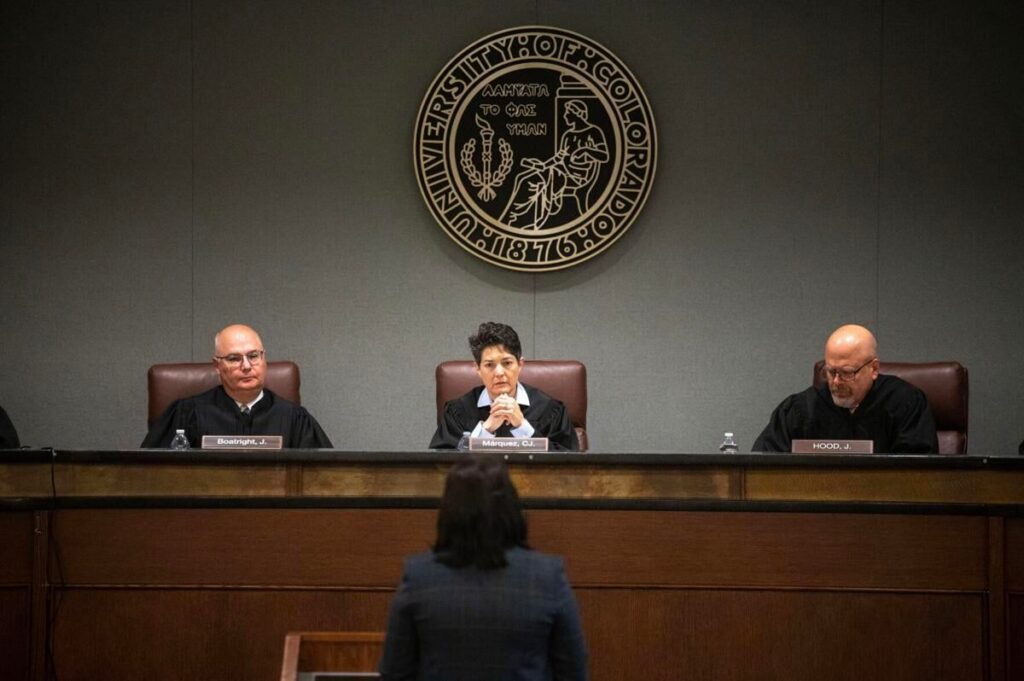
Colorado Supreme Court changes course, dismisses case about special district bonds
Michael Karlik
michael.karlik@coloradopolitics.com
Updated 17 hours ago
The Colorado Supreme Court declined on Friday to decide a dispute between a large-scale Commerce City development and the various districts financing it, after initially showing interest in the ongoing case. Colorado has roughly 2,800 special districts, which are local...
PREV
PREVIOUS

Biden nominates Pueblo County sheriff as U.S. Marshal for Colorado
President Joe Biden has nominated Pueblo County Sheriff Kirk Taylor as U.S. Marshal for Colorado, the White House announced in a news release on Monday. The U.S. Marshals Service serves as the enforcement arm of the federal courts. Taylor has been serving as sheriff of Pueblo County since 2007. He previously served as an investigator for […]

Denver council gives initial approval to HOA requirement to provide foreclosure rights informatio
Denver City Council approved on first reading a bill that would require homeowners associations to notify homeowners of their foreclosure rights. The bill stemmed from Council President Stacie Gilmore’s district, where at least 50 Green Valley Ranch homes were foreclosed on over unpaid HOA fines. Most homeowners were not given notice of citations and were […]