

Critics from both sides of fentanyl debate vent frustrations, some urge Polis to veto bill
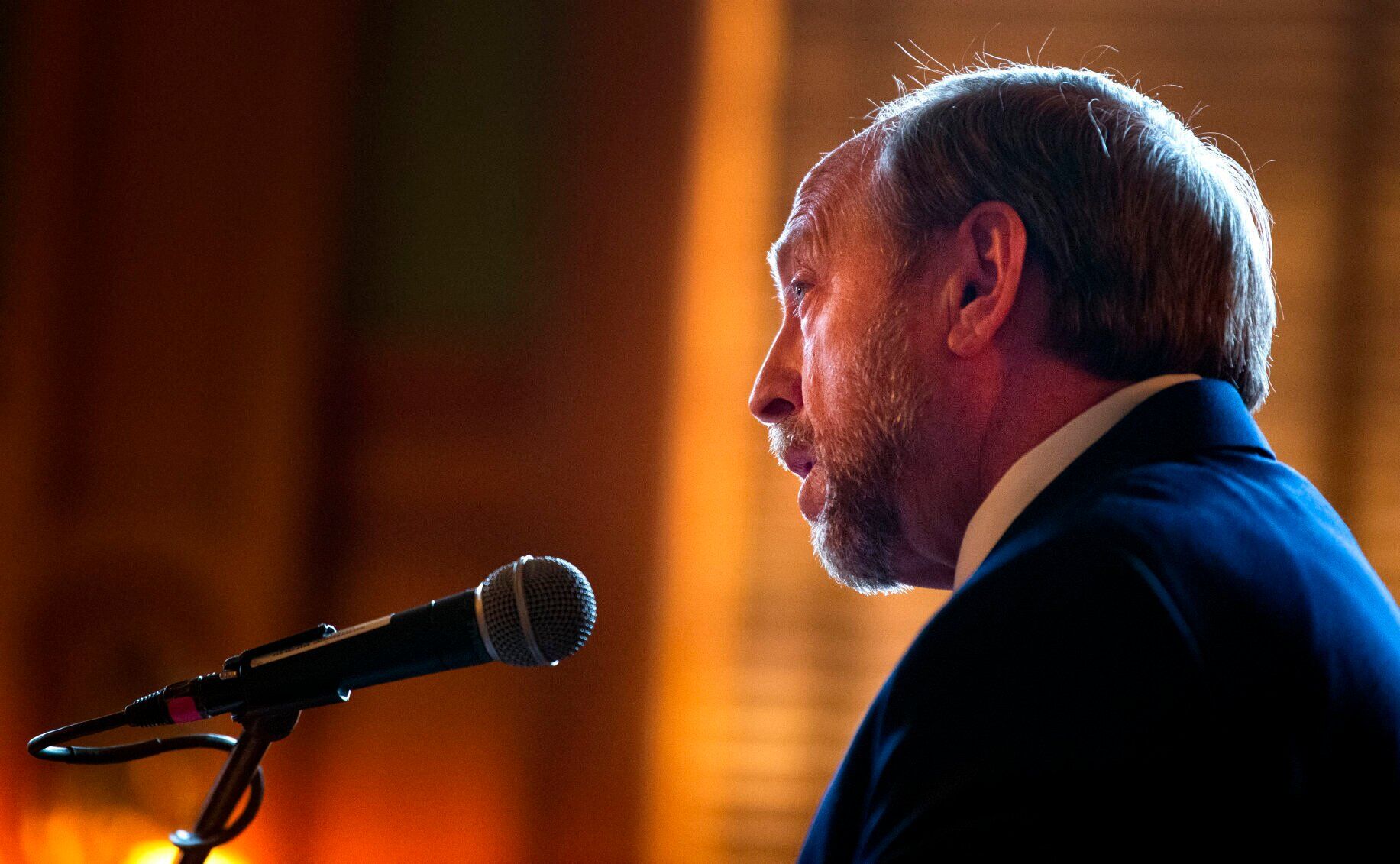
The mayor of Colorado Springs, some district attorneys and several doctors have come out against the fentanyl bill passed by the legislature late Wednesday night, albeit for diametrically opposed reasons.
The entire bill spans 90 pages and includes tens of millions of dollars in funding for naloxone, fentanyl test strips and a key treatment program in jails, among other provisions that have largely attracted no controversy. But like the weeks of debate that precipitated the bill passing Wednesday night, the reaction on Thursday revolved almost entirely around how it treats simple possession of fentanyl.
For Mayor John Suthers and some district attorneys, the measure doesn’t go far enough in punishing possession of fentanyl. Suthers called for a veto and a special session, a sentiment shared by Michael Allen, the district attorney overseeing El Paso County. Allen called the bill “rushed and flailing.”
“The bill that the Colorado legislature passed is wholly inadequate to address this critical problem that is resulting in the death of far too many Coloradans,” Suthers said in a statement. “In placing upon prosecutors the burden to prove beyond a reasonable doubt that the defendant knew the substance they possessed was fentanyl, the legislature, in almost every instance, is protecting the defendant from felony prosecution.”
The opposition from the ACLU, various physicians who work with substance users, and a leading harm reduction advocate similarly center around the bill’s approach to simple possession of any substance containing fentanyl. They, too, decried it as a misplaced attempt to address a drug that killed more than 900 Coloradans last year. But unlike Suthers and some in law enforcement, their frustration comes from the bill including penalties for low levels of drug possession.
“Colorado is doubling down on the worst parts of the drug war, which are criminalization and incarceration,” said Lisa Raville, who runs Denver’s Harm Reduction Action Center and has been a vocal opponent of the bill. The ACLU’s director of advocacy, Taylor Pendergrass, called the bill a “huge missed opportunity” to address the crisis from a public health lens.
When House Bill 22-1326 first entered the Senate earlier this month, it required that people knew or should’ve known they possessed fentanyl in order to face a felony charge. But the Senate stripped that provision, and in a Wednesday night compromise, lawmakers inserted language that, according to proponents, requires defendants to convince a judge or jury that they didn’t know they possessed fentanyl. If they’re successful, then they would face a misdemeanor penalty, rather than a felony. But there are different interpretations around that language.
John Kellner, the district attorney for the 18th Judicial District, said the new language “operates a lot like an affirmative defense.”
“Prosecution would have to prove they knew that the chemical compound had, in fact, fentanyl,” Kellner said, adding that’s a higher standard than is applied on meth, cocaine and other drugs. He said lawmaker should go back to the drawing board, even if it requires a special session.
“This is a missed opportunity,” he said.
But Michael Dougherty, the district attorney for the 20th Judicial District, offered a different take on the same language: He countered that the burden lies with defendants to prove at trial “they truly didn’t know it was fentanyl.”
Dougherty, who supports the legislation, said inaction on the part of the state would have been unacceptable. He noted that the bill strengthens penalties for distributing any amount of a substance containing fentanyl, and it creates additional penalties for dealers whose pills contribute to a user’s death.
“I strongly support the bill because people are drying tomorrow and everyday this week,” he said. “And the families are counting on elected officials, including legislators, to improve and strengthen the laws around fentanyl.”
While the bill is not perfect, it “cannot wait until next year, this bill cannot wait until another single day,” he said.
Similarly, Brian Mason, the district attorney for the 17th Judicial District, called the bill a “huge step forward” that provides law enforcement the tools necessary to “get this poison off the street.”
“This is a pro-law enforcement bill,” Mason said.
While much of the criminal penalty portion of the bill is contentious, fentanyl’s increasing presence across different kinds of drugs is perhaps the most difficult to tackle. Fentanyl – a cheap, synthetic drug that’s largely replaced heroin as the dominant opioid on the street – has saturated the drug market and is mixed into a broad array of substances, often without the knowledge of users.
Legislators, who for months disagreed on a strategy to confront the state’s spiraling fentanyl crisis, finally settled on a compromise on Wednesday night and sent the measure to Gov. Jared Polis, who praised it.
In addition to the compromise giving defendants the ability to argue they were ignorant of what they possessed at trial, the deal also eliminates a three-year automatic repeal of the felony charges for simple possession of 1 to 4 grams of fentanyl, one of the many sticking points.
The compromise failed to satisfy several physicians who treat patients with substance-use disorders. Sarah Axelrath, a Denver addiction medicine doctor, tweeted Wednesday that she is “profoundly disappointed” with the bill and that Democrats in the House and Senate “ignored” experts.
“I have to go to work tomorrow and explain to my patients what this bill will mean for them,” she wrote. “Incarceration. Homelessness. Death. I am dreading the looks of fear and horror on their faces when I explain to them the consequences they will be subjected to for their addiction.”
Josh Barocas, another physician who testified against the bill, also tweeted that lawmakers had worsened the lives of people struggling with substance use. Ramnik Dhaliwal, an emergency medicine physician and the president of the Colorado chapter of the American College of Emergency Physicians, told the Gazette that he is pleased with the improvements around treatment and the money set aside to buy more naloxone. But he, too, said he is concerned about the the bill’s criminal provisions.
Suthers echoed that level of frustration – from the opposite of that debate.
“The Democrat majorities in the legislature have thus far shown themselves wholly incapable of adequately dealing with this public health crisis,” he said. “I hope the governor will attempt to rectify the situation and I hope the voters of Colorado recognize this as the failure of leadership that it is.”
Responded to Suthers’ discontent, Polis, who previously had likened fentanyl to a chemical weapon, said, “You obviously can’t make everybody happy on every bill.”
The bill is a big step forward, he continued, noting the additional criminal penalties for dealers, as well as the tools to deal with addiction. That said, Polis said he remains open to doing more, even on some of the suggestions Suthers made.
Like his Colorado Springs counterpart, Denver Mayor Michael Hancock also eyed the legislation with skepticism and effectively traced the sharp rise in overdose deaths to a 2019 law that reduced the charges for possession of up to 4 grams of schedule II drugs, which includes fentanyl, from a level four drug felony to a level one drug misdemeanor. He said it “remains to be seen” if the bill will “punish dealers and get those suffering from addiction into treatment.”
“Following passage of the 2019 law we saw a sharp spike in overdose deaths and drug-related crime, and that is why we called for corrections, particularly around felony possession,” Hancock said in a statement. “The goals of effective law enforcement should be to get dangerous people off the street, punish drug dealers and get those suffering from addiction into treatment. Whether the new legislation will have a positive impact to secure these goals remains to be seen, but we are hopeful it will, and if additional changes to the law are needed, we will push for them in the next legislative session.”
In a statement, Allen, the district attorney, described the legislation as “rushed and flailing.” The measure, he said, will “prove to be inadequate to address the impact fentanyl is having across Colorado, and here in the Pikes Peak Region.”
While giving a nod to the bill’s provisions on treatment and education, Allen said the bill “fails miserably” on the enforcement front, arguing that possessing 1-4 grams of fentanyl will “now be harder to prosecute than any other illicit drug, despite fentanyl being the deadliest drug on our streets today.”
Attorney General Phil Weiser, who had supported tighter penalties on possession, called the bill an important step to combatting the crisis, although he added that it doesn’t include “everything I would have liked to see.”
“But it makes significant improvements on the harm reduction, public awareness, addiction treatment, and criminal justice fronts,” he said. “The opioid crisis demands ongoing vigilance and focus as we confront this next chapter, and I look forward to working with the addiction treatment, harm reduction, and law enforcement communities to address the challenges ahead.”
Colorado Politics’ Marianne Goodland contributed to this report.

U.S. Rep. Lauren Boebert’s son arrested, faces charges of sexual exploitation of minor
Matt Kyle
matt.kyle@denvergazette.com
Updated 1 hour ago
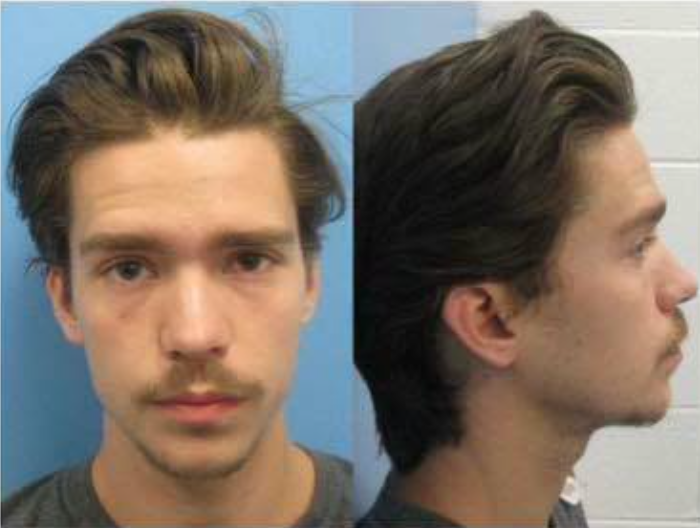
U.S. Rep. Lauren Boebert’s son Tyler Jay Boebert has been arrested and accused of recording and sharing a video depicting himself having intercourse with a minor, according to court records. The case originated in Garfield County in Western Colorado and...

Colorado audit finds $175K wasted on unused state-issued cellphones
Marissa Ventrelli
marissa.ventrelli@coloradopolitics.com
Updated 3 hours ago
Colorado spent nearly $175,000 on government issued cellphones for employees of various departments that went unused last year, according to a recent state audit. About 400 of the 6,688 cellphones issued to state employees received no calls or texts and...

Adams County water district may proceed with cost-recovery lawsuit against Denver for contamination
Michael Karlik
michael.karlik@coloradopolitics.com
Updated 3 hours ago
A federal judge rejected Denver’s arguments last week for pausing or dismissing a lawsuit brought by an Adams County special district seeking to recover its costs for addressing water contamination as a result of Denver firefighting activities. In January, the...

Hunter shot Colorado wolf after mistaking it for a coyote, wildlife office says
Marianne Goodland
marianne.goodland@coloradopolitics.com
Updated 3 hours ago
Colorado Parks and Wildlife said Monday that a female wolf from British Columbia that died in January was shot by a hunter who mistook her for a coyote. The wolf, identified as 2504‑BC, was one of 17 wolves relocated since...
Federal judge declines to dismiss First Amendment retaliation claim against prison official
Michael Karlik
michael.karlik@coloradopolitics.com
Updated 2 hours ago
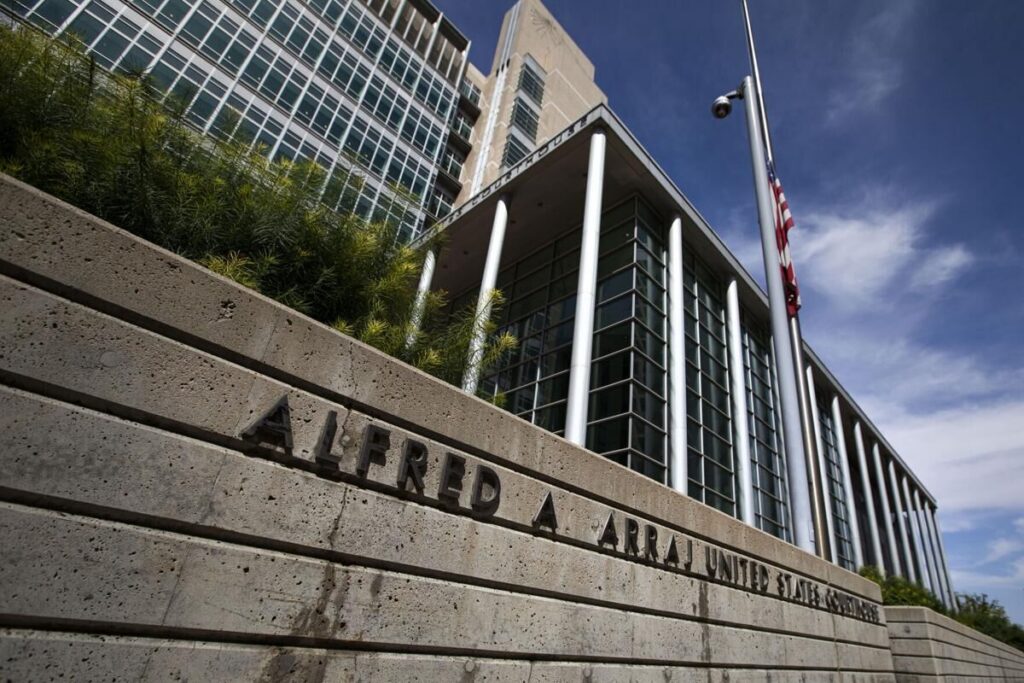
A federal judge agreed last month that an incarcerated Native American woman may pursue her claim of First Amendment retaliation against a prison official who allegedly interfered with her religious exercise. Yvonne Peterson resided at Buena Vista Correctional Facility for...
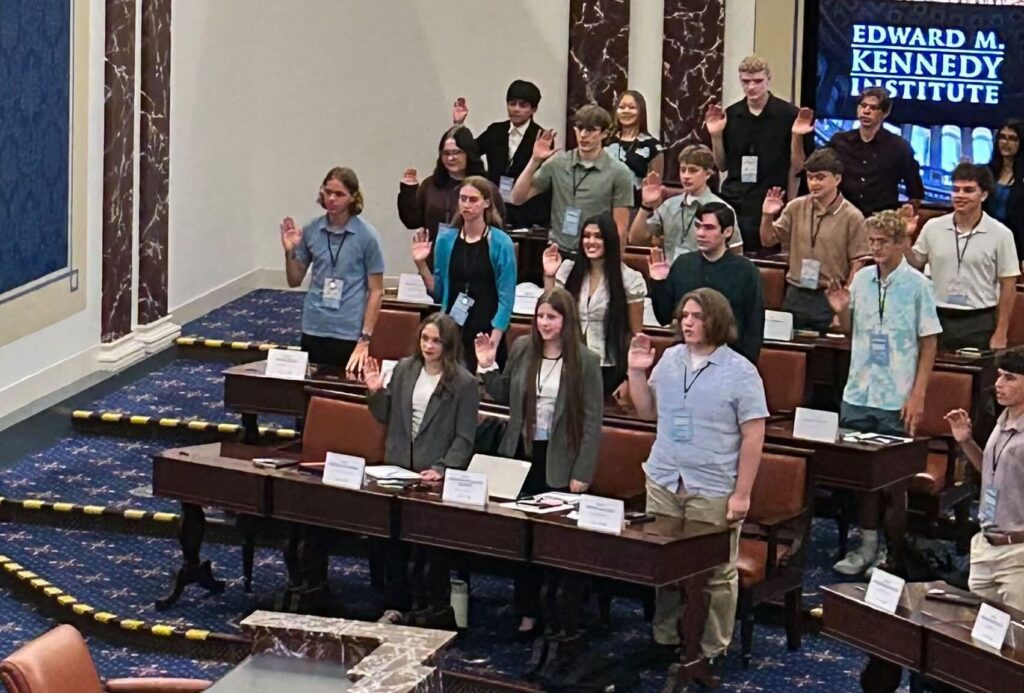
By the students, for the students: Sierra High School represents Colorado in developing national AI framework
Eric Young
eric.young@gazette.com
Updated 50 minutes ago
To many, the recent, rapid development of generative artificial intelligence and its lack of frameworks and oversight may evoke comparisons to the unrestrained Wild West in the 1800s or the economic potential of the dot-com boom in the early 2000s....

Colorado’s troubled guardianship office pursues ‘cultural reset’
Marianne Goodland
marianne.goodland@coloradopolitics.com
Updated 16 minutes ago
Colorado’s guardianship program, long criticized for mismanagement and high staff attrition, is undergoing a “cultural reset,” as its new director works to repair partnerships and prepare for a major expansion under recent legislation. Created by lawmakers in 2017, the Office...
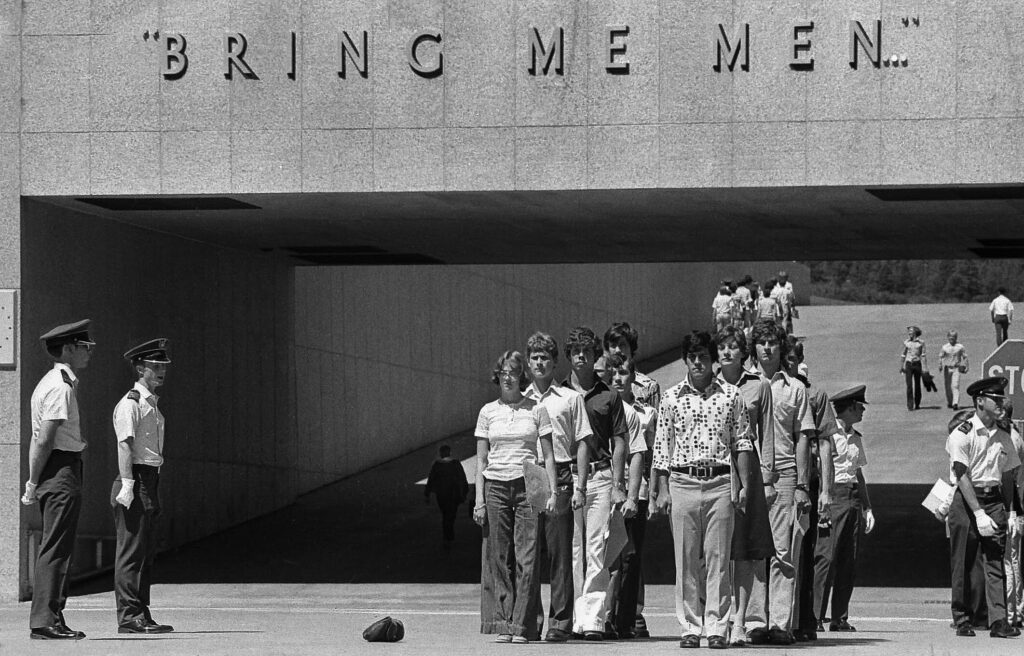
Fifty years later, women reflect on first coed class at the Air Force Academy, struggle for equality
Mary Shinn
mary-shinn@coloradopolitics.com
Updated 2 days ago
When the first female Air Force Academy cadets arrived 50 years ago this summer, they stood in front of an enormous sign on campus that read “Bring me men.” In the shadow of that sign, Kathleen Utley Kornahrens, one of...

As Lake Powell shrinks, marinas are having to adapt to dwindling water levels | OUT WEST ROUNDUP
The Associated Press
the-associated-press@coloradopolitics.com
Updated 5 days ago
ARIZONA Reservoirs near record lows PAGE — The Colorado River’s Lake Powell, the second largest reservoir in the U.S., is shrinking. A record-dry winter and extreme heat — as well as decades of overuse, chronic drought and climate change —...
U.S. Senate OKs funding bill to avoid government shutdown
Wire Services
wire-services@coloradopolitics.com
Updated 2 days ago
Hemp provision became point of contention WASHINGTON • The U.S. Senate in an overnight vote Saturday approved a short-term measure to fund federal agencies into early December and avoid a government shutdown during the middle of campaign season. The late-summer...
PREV
PREVIOUS

Colorado Supreme Court considers appeal from JUUL executives in AG's lawsuit
The Colorado Supreme Court will consider an appeal from four executives of e-cigarette manufacturer JUUL who claim that the attorney general cannot hold them personally liable in state court for recklessly advertising addictive products to children. Attorney General Phil Weiser originally filed a sprawling lawsuit in mid-2020 accusing JUUL Labs, Inc. of carrying out a […]

Colorado's Bennet wants new federal body to regulate Twitter, FB, other digital platforms
U.S. Sen. Michael Bennet on Thursday unveiled legislation to create a new federal entity with vast powers to regulate, investigate and sanction Twitter, Facebook and other digital platforms. The legislation establishes a five-member Federal Digital Platform Commission, giving it the authority to hold hearings, conduct investigations and establish rules for digital platforms, according to Bennet’s office. […]