

Larimer County judge wrongly tossed jury verdict and found child to be abused, appeals court says

A Larimer County judge was wrong to conclude that a child’s environment was harmful and that a jury had acted unreasonably by concluding otherwise, the state’s Court of Appeals determined on Thursday.
Under Colorado law, a court may deem a child to be dependent or neglected if, among other things, the environment is “injurious to his or her welfare.” The Colorado Supreme Court has clarified that there need not be a finding that a particular parent is responsible for causing such circumstances, only that the harmful environment exists.
Larimer County initiated its child welfare case involving a girl, E.O. in June 2021. The county’s department of human services alleged that E.O.’s mother had been physically and emotionally abusive. E.O.’s father admitted the girl was in an injurious environment, but the mother opted for a jury trial.
During the two-day proceedings, jurors heard competing representations about E.O.’s environment. The mother argued that E.O.’s father had “alienated” the child against her by convincing E.O. to lie about her mother’s abuse.
The county, on the other hand, presented testimony that the mother was actually physically and verbally abusive to E.O.
The jury ultimately decided that E.O.’s environment was not injurious to her welfare. Nevertheless, Larimer County asked then-District Court Judge Julie Kunce Field to enter a judgment notwithstanding the verdict. Such a move would allow Field to disregard the jury’s verdict if no reasonable person could reach the same conclusion after hearing the evidence.
Field granted the government’s request after concluding the evidence pointed to either E.O.’s mother being abusive or E.O.’s father turning her against her mother. Either scenario would amount to E.O. being in a harmful environment under the law.
“The Court has carefully weighed its decision to set aside the verdict of this jury. The Court does not make this determination lightly or without a great deal of thought and reflection on the role of a jury in this type of case, and the due process rights of those involved,” she wrote on Sept. 29. “But the Court does not discern any other conclusion that can logically be applied to the law and the evidence presented here other than that this Child must be adjudicated as dependent and neglected.”
A three-judge panel for the Court of Appeals, upon reviewing the case, disagreed that the jury reached an unreasonable conclusion. Jurors did not have to accept, based on the evidence, that E.O. was in an injurious environment and could have disbelieved both sets of allegations about her parents.
“Based on this record, there were disputed issues of material fact regarding both whether mother abused the child and whether father unduly influenced the child,” wrote Judge Lino S. Lipinsky de Orlov for the panel. “Because the evidence was disputed as to both situations, the jury could have inferred that mother did not abuse the child but that the child fabricated the allegations for reasons other than father’s influence over her.”
Ruchi Kapoor, the attorney for E.O.’s mother, said the Court of Appeals’ ruling means that Larimer County must now “get out of this family’s life, full stop.”
“Mom has only had supervised visitation with her child since the inception of the case, which means that, once the department is done, she must essentially reunify with her kiddo,” Kapoor said. “That will require family therapy to repair the bonds that were severed.”
She added the human services department’s “overreaction” to the allegations of abuse illustrated the power that government agencies have over families’ lives.
The case is People in the Interest of E.O.


10th Circuit dismisses woman’s lawsuit following 10-year attempt to undo restraining order
Michael Karlik
michael.karlik@coloradopolitics.com
Updated 2 days ago
The Denver-based federal appeals court rejected a woman’s challenge on Friday to a restraining order imposed on her more than a decade ago, finding that she cannot credibly claim she will be prosecuted for violating the restraining order through her...
10th Circuit dismisses woman’s lawsuit following 10-year attempt to undo restraining order
Michael Karlik
michael.karlik@coloradopolitics.com
Updated 2 days ago
The Denver-based federal appeals court rejected a woman’s challenge on Friday to a restraining order imposed on her more than a decade ago, finding that she cannot credibly claim she will be prosecuted for violating the restraining order through her...
Colorado equal pay law does not require plaintiffs to allege gender-based retaliation, appeals court finds
Michael Karlik
michael.karlik@coloradopolitics.com
Updated 17 hours ago
The 2019 Colorado law aimed at rooting out pay discrimination on the basis of sex does not require a plaintiff to allege their employer retaliated against them for sex- or gender-related reasons, the state’s second-highest court decided on Thursday. Lawmakers...
Hudson faces lawsuit over ICE detention facility
Nicole C. Brambila
nicole-c-brambila@coloradopolitics.com
Updated 2 days ago
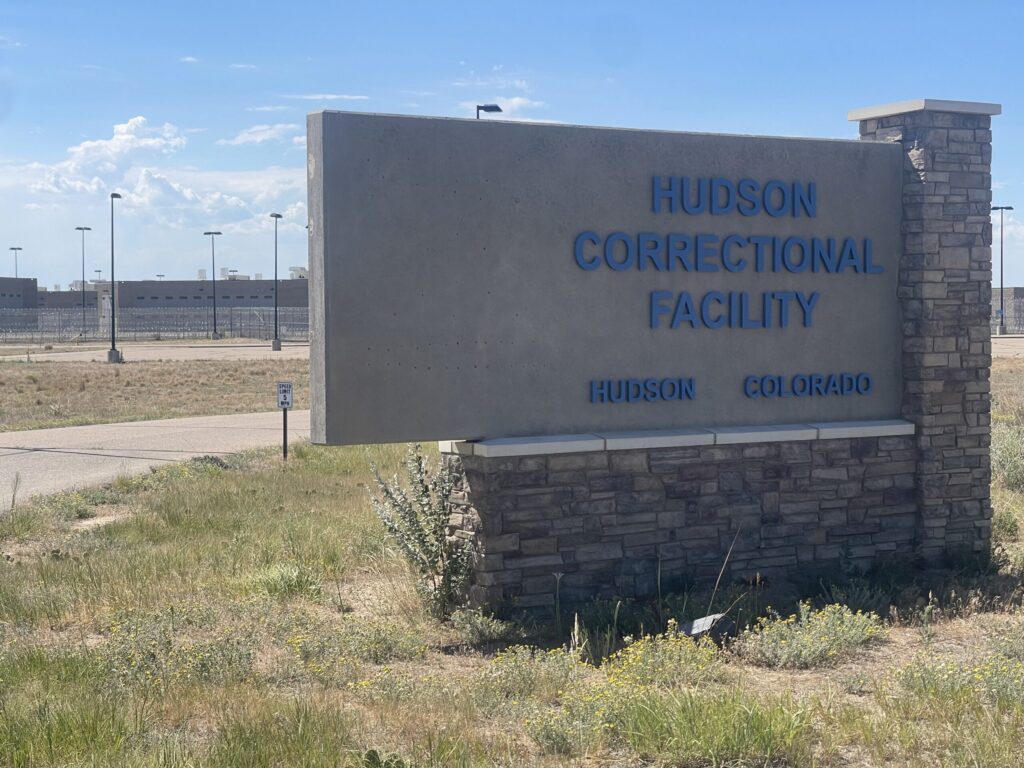
A nonprofit organization filed a lawsuit against the Town of Hudson Wednesday, challenging plans to reopen a former federal prison in the town as a U.S. Immigration and Customs Enforcement detention facility. Together Colorado, along with Janet E. Carlson, filed...
Senate committee advances Trump’s 10th Circuit nominee, as Domenico responds to questions about delays
Michael Karlik
michael.karlik@coloradopolitics.com
Updated 2 days ago
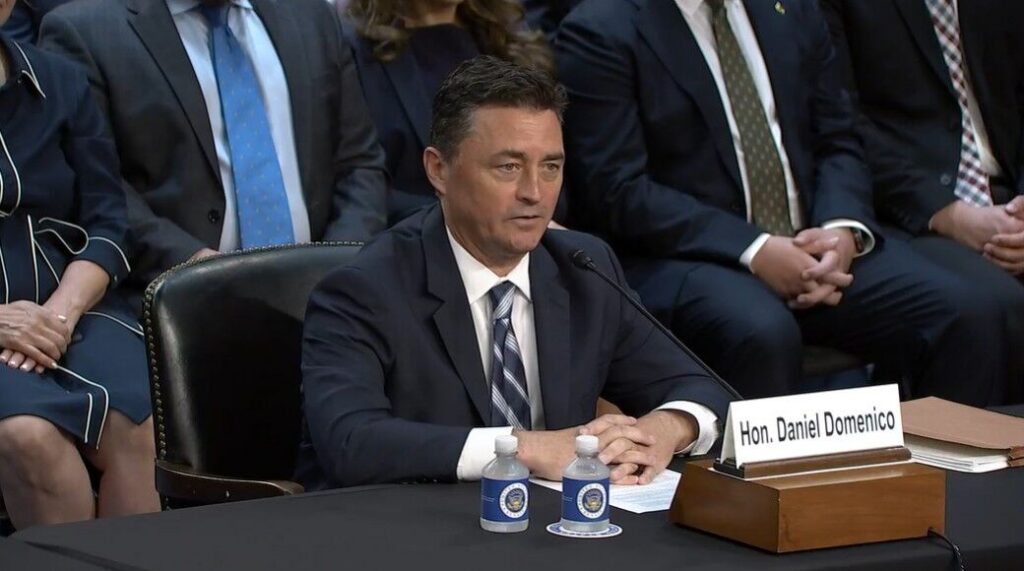
The U.S. Senate Judiciary Committee advanced President Donald Trump’s nominee to the Denver-based federal appeals court on Thursday by a party-line vote of 12-10. U.S. District Court Judge Daniel D. Domenico, who was Trump’s first-term appointee to Colorado’s federal trial...
Colorado justices to hear embryonic donation dispute
Michael Karlik
michael.karlik@coloradopolitics.com
Updated 2 days ago
The Colorado Supreme Court announced on Monday that it will decide whether lower court judges properly applied its framework for adjudicating disputes over the fate of pre-embryos, in which one person wants to use them to become a parent and...

Isolation, emotion, persona: Colorado judicial programming prepares people for life on the bench
Michael Karlik
michael.karlik@coloradopolitics.com
Updated 3 days ago
As a trial judge and now as a member of the Colorado Supreme Court, Justice Carlos A. Samour Jr. has heard the view that being a judge is isolating. “In neither court have I felt isolated. I’ve always interacted a...

Federal judge dismisses Colorado county sheriff’s challenge to law limiting immigration cooperation
Michael Karlik
michael.karlik@coloradopolitics.com
Updated 17 hours ago
A federal judge dismissed a challenge from Mesa County Sheriff’s Office leaders last week to a Colorado law limiting public employees’ cooperation with immigration authorities, concluding that the plaintiffs did not allege they engage in any conduct that the law...
10th Circuit raises bar for fraud victims to sue debt collectors over inaccurate information
Michael Karlik
michael.karlik@coloradopolitics.com
Updated 13 hours ago
The Denver-based federal appeals court wiped away a jury’s $500,000 award to a fraud victim on Monday and made it more difficult for consumers to hold companies liable for disseminating inaccurate credit information. The Fair Credit Reporting Act regulates credit...

Montezuma County judge’s censure, suspension approved by discipline panel
Michael Karlik
michael.karlik@coloradopolitics.com
Updated 4 days ago
A three-member disciplinary panel accepted, on Monday, an agreement between a Montezuma County judge and the Colorado Commission on Judicial Discipline that specifies he will receive a censure, a suspension, and additional education for his admitted instances of misconduct. Under...
PREV
PREVIOUS

Colorado legislature approves new office, alert system for missing and murdered Indigenous people
Investigations into missing and murdered Indigenous people may soon improve in Colorado – thanks to a bill legislators passed on Tuesday. More than four out of five Indigenous people in the U.S. have experienced violent crime, according to national data. Those are some of the highest rates of violence for any demographic, with Indigenous women […]

Colorado lawmakers approve removing anonymity in sperm, egg donations
The effort to end anonymous donations of sperm and eggs passed the Colorado legislature on Tuesday, and it now only needs the governor’s signature to become law. If signed, Senate Bill 224 would, beginning in 2025, require that donors agree to have their identity be released to children conceived from their donations when they turn 18. The […]